Appliances · Buying Guide
Best Cast Iron Roasting Pan Options for Every Kitchen Style

Selecting the right cookware for heavy-duty roasting and baking requires looking closely at dimensions, lid configurations, and finish types. Cast iron provides exceptional heat retention and steady distribution, making it a dependable material for everything from everyday weeknight casseroles to large holiday roasts. Whether you prefer traditional seasoned iron or smooth enamel coatings, understanding the physical design of each pan helps ensure it matches your specific cooking habits and oven space.
The marketplace offers diverse rectangular configurations, ranging from open-top baking dishes to convertible dual-purpose sets equipped with matching skillets and roasting racks. Evaluating features like side handles, total capacity, and included accessories allows you to narrow down choices effectively. This overview examines five distinct cast iron roasters based strictly on their documented physical attributes, helping you choose a model that integrates smoothly into your routine without relying on inflated claims or unverified testing.
As an Amazon Associate, StacyLaughs earns from qualifying purchases.
Buying guide
Sizing and Oven Fit
Measuring your oven interior before purchasing a cast iron roaster prevents clearance issues during baking. Rectangular pans spanning thirteen inches or more require adequate rack space to slide in smoothly alongside other dishes. Check both length and overall height specifications to ensure the cookware clears upper heating elements.
Compact ovens benefit from low-profile models or standard nine-by-thirteen-inch bases that maximize internal cooking area without hitting oven walls. Matching the footprint of your cookware to your daily baking volume ensures efficient heat circulation around the exterior surfaces.
Seasoned Versus Enameled Finishes
Cast iron cookware typically arrives either traditionally seasoned with vegetable oil or coated in protective enamel. Seasoned iron requires regular hand washing, drying, and light oiling to maintain its protective layer over time. This traditional finish darkens with use and develops a natural non-stick quality.
Enameled options feature a smooth glass-like coating that eliminates traditional seasoning steps. Interior enamel surfaces resist staining and simplify cleanup after sticky baking tasks, while exterior enamel options provide color choices while protecting the core metal from rust and chipping.
Versatility and Multi-Use Lids
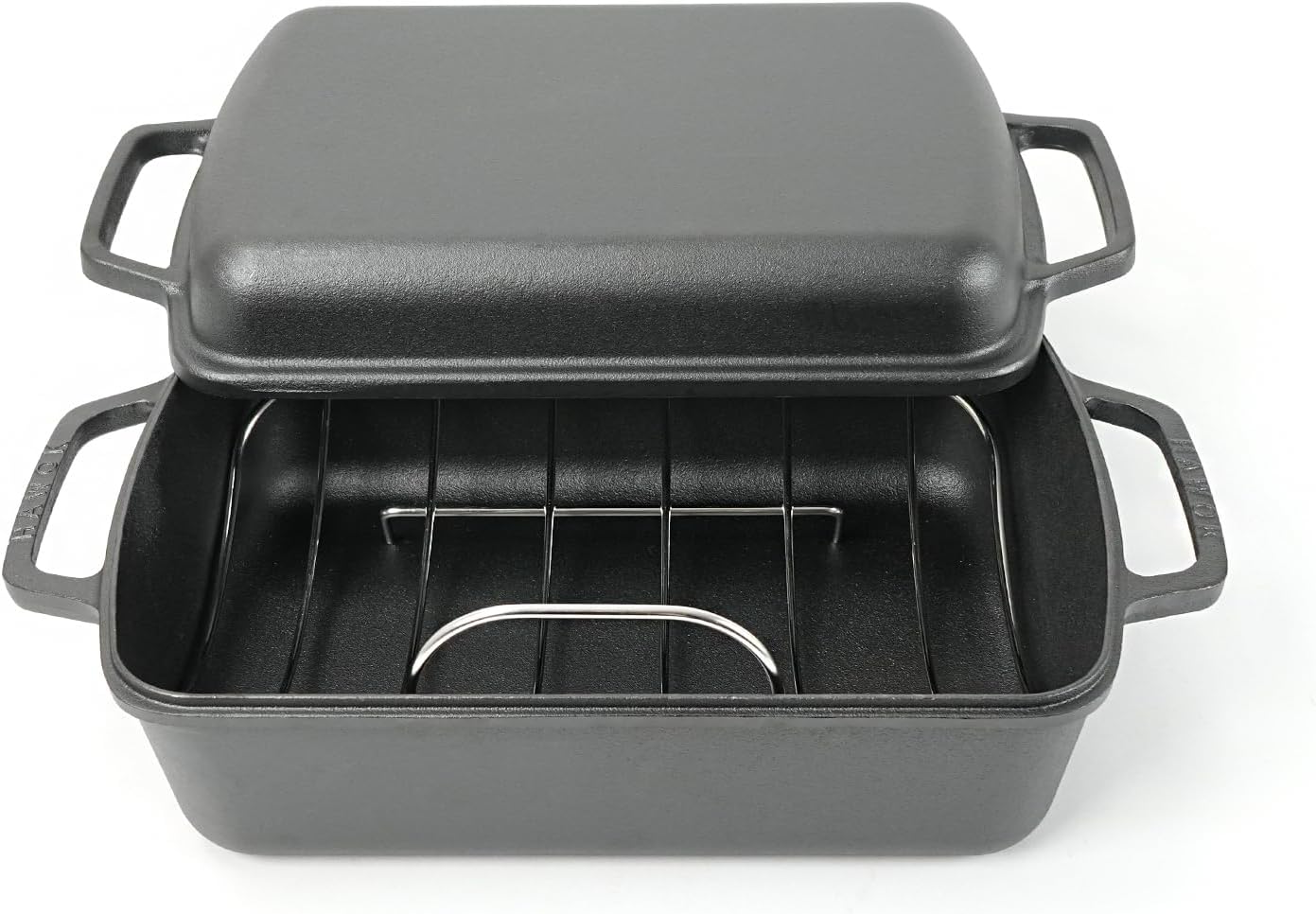
Many modern cast iron roasters feature convertible two-in-one designs where the lid doubles as an independent skillet. This configuration allows you to sear meats on a stovetop before covering the main dish to trap moisture during extended oven roasting sessions.
Consider whether you prefer a deep lid that expands your total cooking capacity or an open pan without a lid. Lidded configurations add weight and storage height, whereas open pans offer straightforward baking access for casseroles and traditional bakes.
Managing Weight and Handling
Cast iron is inherently heavy, with roasters often weighing between seven and seventeen pounds empty. Assessing handle design is critical for safe transport from hot stovetops or ovens to dining tables. Look for wide, sturdy side grips that accommodate bulky oven mitts.
Integrated iron handles offer permanent durability but conduct heat rapidly during cooking. Pans featuring auxiliary side loops or extended tabs give better leverage when lifting heavy loads, reducing the physical strain of maneuvering dense roasts and heavy bakes.
Racks and Accessories
Certain roasting pans come equipped with specialized U-shaped metal racks designed to elevate meats above accumulated cooking juices. Elevating poultry or roasts promotes all-around heat circulation and prevents bottom scorching while collecting pan drippings efficiently.
Beyond racks, some bundles include cleaning tools, gloves, aprons, and carry bags. Evaluate whether bundled accessories match your current kitchen setup or if you simply need the standalone cookware vessel for your specific culinary workflow.
Heat Source Compatibility
Cast iron roasters generally offer broad compatibility across gas, electric, induction, and ceramic cooktops, as well as ovens and outdoor grills. Verify that your chosen model matches the specific heat sources you use most frequently, whether indoor ranges or open campfires.
Temperature thresholds vary, with many enameled or seasoned pieces rated safely up to five00 degrees Fahrenheit. Always review manufacturer guidelines regarding maximum heat limits to prevent thermal shock or damage to specialized surface coatings.
Frequently asked questions
Can I use a cast iron roasting pan on an induction stovetop?
Yes, cast iron is inherently magnetic and works naturally with induction cooktops. The flat bottom of rectangular roasters makes direct contact with glass induction burners, allowing efficient heat transfer. Always lift the heavy pan rather than sliding it across glass cooktop surfaces to prevent scratches.
What is the advantage of a convertible lid skillet?
A convertible lid serves a dual purpose by functioning as a moisture-trapping cover during roasting and flipping over to act as a standalone frying skillet. This design saves cabinet storage space and gives you an extra cooking surface for searing meats or frying vegetables.
How do I clean a pre-seasoned cast iron roaster?
Pre-seasoned cast iron requires hand washing with warm water and stiff brushes without harsh chemical detergents. After washing, dry the pan completely over low heat on a stove burner to eliminate moisture, then apply a very light coat of vegetable oil before storing.
Do enameled cast iron roasters require seasoning?
No, enameled cast iron features a baked glass-like surface that seals the raw metal beneath, eliminating the need for traditional oil seasoning. You can clean enameled surfaces with mild dish soap and warm water, though metal utensils should be avoided to protect the coating.
Why would I need a U-shaped rack inside my roaster?
A U-shaped metal rack elevates heavy cuts of meat or poultry off the bottom of the pan. This elevation allows hot air to circulate freely around the entire roast while keeping the meat out of accumulated cooking liquids and excess rendered fats.