Appliances · Buying Guide
Best Cast Iron Skillet Induction Stove Options for Modern Kitchens
Finding the right cookware for modern kitchen cooktops requires balancing traditional material benefits with contemporary heating technology. A cast iron skillet induction stove setup offers exceptional heat retention and reliable durability while responding efficiently to magnetic cooktop surfaces for daily meal preparation.
Exploring various sizes, handle designs, and surface textures helps shoppers select pans that match specific cooking habits. Whether you need a compact single skillet or a multi-piece set, understanding these options ensures dependable performance across diverse culinary tasks.
As an Amazon Associate, StacyLaughs earns from qualifying purchases.
Buying guide
Understanding Induction Stovetop Compatibility
Cast iron is naturally magnetic, making it an exceptional match for induction cooktops. When shopping for a cast iron skillet induction stove setup, ensure the base of the pan is completely flat to maximize magnetic contact with the glass surface.
A flat, smooth base ensures efficient energy transfer and prevents wobbling during high-heat searing or simmering tasks. Checking the manufacturer specifications guarantees that your chosen iron cookware will perform reliably across modern magnetic heating zones.
Evaluating Sizing and Capacity Needs
Selecting the correct skillet size depends heavily on your household cooking volume and typical meal types. Smaller ten-inch pans handle daily eggs and single portions easily, while twelve-inch models accommodate family-sized meals and whole chickens.
Keep in mind that larger skillets increase overall pan weight and require larger storage spaces. Matching the pan diameter to your typical burner size ensures balanced heat distribution across the entire cooking surface.
Surface Finish and Texture Variations
Cast iron skillets vary from traditional textured surfaces to heavily machined smooth finishes. A smooth surface minimizes food sticking right out of the box and simplifies cleanup after cooking delicate items like eggs or pancakes.
Textured pans rely on initial seasoning layers that build up non-stick properties over time through regular use and oil maintenance. Consider your cooking preferences when deciding between a factory-polished surface and a classic textured iron build.
Handle Design and Lifting Ergonomics
Because cast iron is inherently heavy, handle design plays a critical role in safe kitchen handling. Long handles provide leverage for tilting, while dual assist handles offer balanced two-handed lifting control for heavy loads.
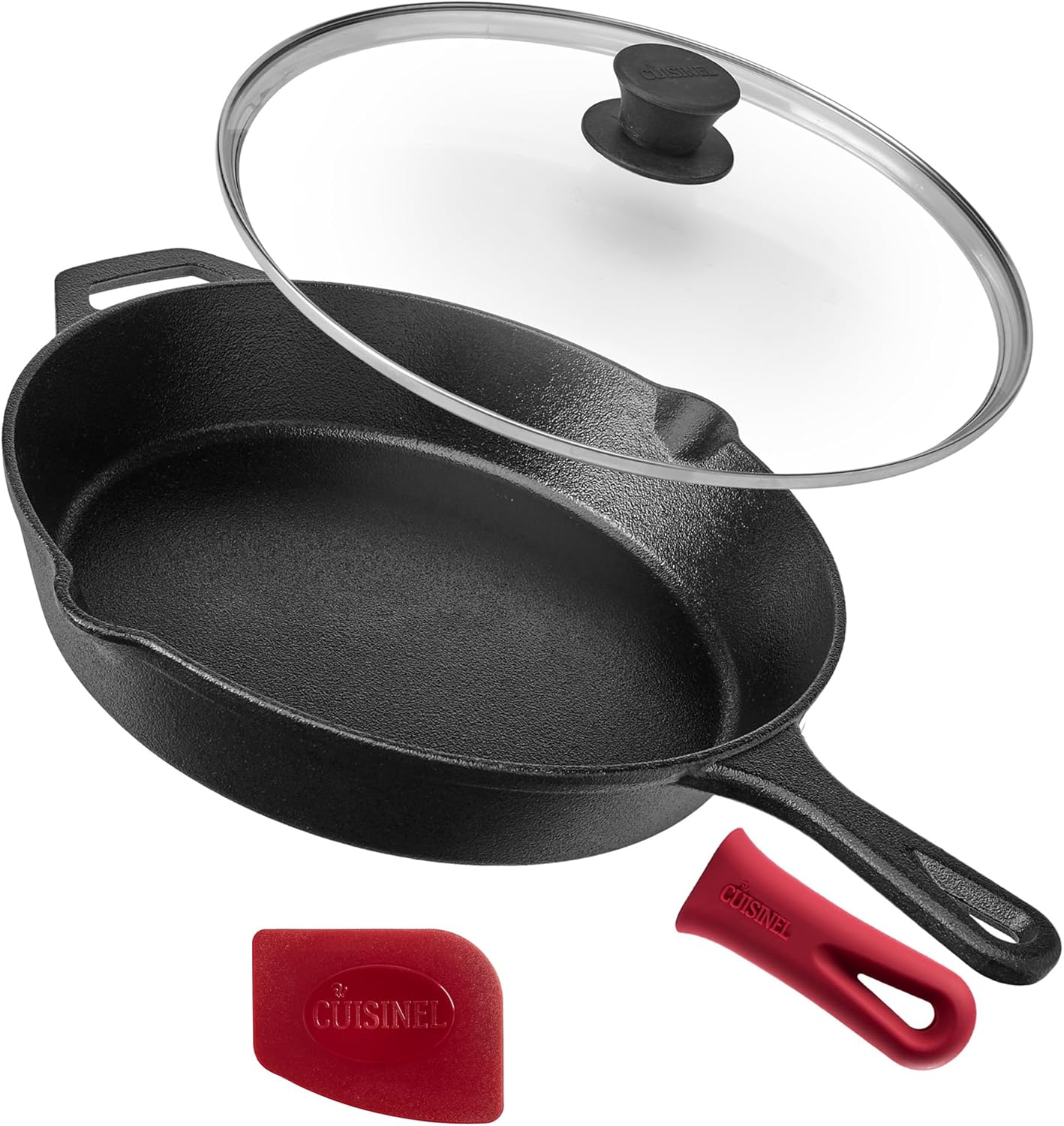
Some modern designs incorporate extended cooling properties or come with silicone grips to manage heat transfer. Assess your kitchen habits to determine whether a traditional long handle or dual short handles best fits your routine.
Managing Seasoning and Maintenance
Proper maintenance keeps cast iron cookware performing at its best for generations. Most pre-seasoned skillets require hand washing with mild soap, thorough drying over low heat, and a thin application of vegetable oil after use.
Avoiding harsh dishwashers and abrasive soaking preserves the natural seasoning layer. Establishing a consistent post-cooking oil routine prevents rust and continuously enhances the non-stick quality of your skillet over time.
Assessing Included Accessories and Lids
Some cast iron skillet packages include valuable extras like matching glass lids or silicone handle holders. Lids expand your cooking versatility by enabling braising, steaming, and simmering tasks that require trapped moisture.
Evaluate whether bundled accessories align with your culinary style or if a bare skillet meets your core needs. Choosing a set with a lid can save you from purchasing separate covers for multi-step baking and frying recipes.
Frequently asked questions
Can you use cast iron on an induction stove?
Yes, cast iron is inherently magnetic, which makes it fully compatible with induction cooktops. The magnetic material interacts directly with the electromagnetic field of the burner to generate fast and even heat. To protect your induction glass surface, always lift the heavy skillet rather than sliding it across the cooktop.
How do you clean a seasoned cast iron skillet?
You should wash your cast iron skillet by hand using warm water, a sponge, and mild dish soap when needed. Avoid soaking the pan in water for extended periods and never place it inside an automated dishwasher. Dry the skillet thoroughly over low heat immediately after washing to prevent moisture accumulation.
Why does a cast iron skillet need seasoning?
Seasoning involves baked-on layers of natural oil that create a protective barrier against rust and provide a naturally non-stick cooking surface. This polymerized oil layer fills the microscopic pores of the iron. Regular cooking with fats and oils helps maintain and strengthen this seasoning layer over time.
Do cast iron pans require special care after washing?
After washing and thoroughly drying your cast iron pan over low heat, it is recommended to apply a very thin layer of vegetable oil across the interior and exterior surfaces. Rubbing the oil into the warm metal helps protect the seasoning and keeps the iron conditioned for your next cooking session.
Can cast iron skillets be used inside a home oven?
Most quality cast iron skillets are rated safe for high-temperature oven use up to 500 degrees Fahrenheit. This makes them ideal for starting a dish on the induction stovetop and finishing it inside the oven, such as baking cornbread, searing steaks, or roasting vegetables.