Appliances · Buying Guide
Best Cast Iron Skillet Induction Options for Modern Kitchens
Choosing a reliable cast iron skillet for an induction cooktop requires careful consideration of heat retention, overall pan weight, and flat-bottom contact. Modern induction ranges rely on direct magnetic connection, making heavy iron cookware an exceptional pairing because it maintains steady cooking temperatures across smooth glass and ceramic cooking zones without shifting or losing thermal efficiency during heavy cooking sessions.
Whether you need a single compact pan for daily breakfasts, a multi-piece set for versatile meal preparation, or a large skillet equipped with a matching lid and assist handle, evaluating these design attributes ensures your chosen cookware fits your specific stovetop and oven routines seamlessly and effectively while maximizing daily results.
As an Amazon Associate, StacyLaughs earns from qualifying purchases.
Buying guide
Understanding Induction Compatibility
Induction cooktops operate using electromagnetic fields to heat cookware directly. Because cast iron is inherently magnetic, it serves as an ideal material for induction surfaces. When shopping for an induction-ready skillet, verify that the flat bottom makes complete, flush contact with the glass cooktop zone to maximize energy transfer and heating efficiency during meal preparation.
Selecting pans with smooth, flat exterior bases prevents scratching delicate glass cooktops. Avoid warped or uneven bottoms, as they reduce magnetic coupling and lead to inconsistent hot spots. Ensuring proper base alignment guarantees reliable performance whether you are searing steaks, frying eggs, or simmering delicate sauces across high-powered induction burners.
Evaluating Pan Weight and Mass
Cast iron skillets are prized for their heavy mass, which stores thermal energy effectively. However, this density translates into substantial empty weights ranging from modest single-pound pans to heavy multi-quart units. Consider your physical comfort when lifting loaded cookware from the burner to the oven or sink during daily kitchen routines.
Heavier pans retain heat better for deep searing and baking, but they require greater physical effort to maneuver. If you frequently transfer full dishes, balancing thermal retention against manageable weight helps prevent strain. Evaluating the listed weight specifications ensures you select an iron skillet that matches your daily handling preferences.
Choosing the Right Diameter Size
Skillet diameters dictate how much food you can cook simultaneously. Smaller eight-inch pans suit single portions or rapid egg frying, while twelve-inch models accommodate family-sized searing and whole chickens. Match the pan diameter to your typical recipe batch sizes and available burner dimensions on your induction stove.
Selecting a size that aligns with your household needs prevents overcrowding ingredients. Overcrowded pans trap moisture, preventing a proper sear. Conversely, choosing an oversized skillet for small portions wastes energy and makes maneuvering cumbersome. Assess your regular meal types to determine whether a compact or large skillet fits best.
Assessing Handle Designs and Grips
Handle ergonomics play a crucial role when handling heavy iron cookware. Traditional teardrop handles offer secure finger placement, while extended stay-cool grips help manage surface heat during long cooking sessions. Look for handle shapes that provide natural leverage when tilting or moving the skillet across your kitchen workspace.
Larger skillets often incorporate auxiliary helper handles opposite the main grip. These secondary attachment points allow two-handed lifting, which is essential when transferring heavy meals safely. Evaluating handle configurations ensures you maintain firm control, reducing accidental slips during high-temperature baking and stovetop frying tasks.
Considering Lids and Extra Features
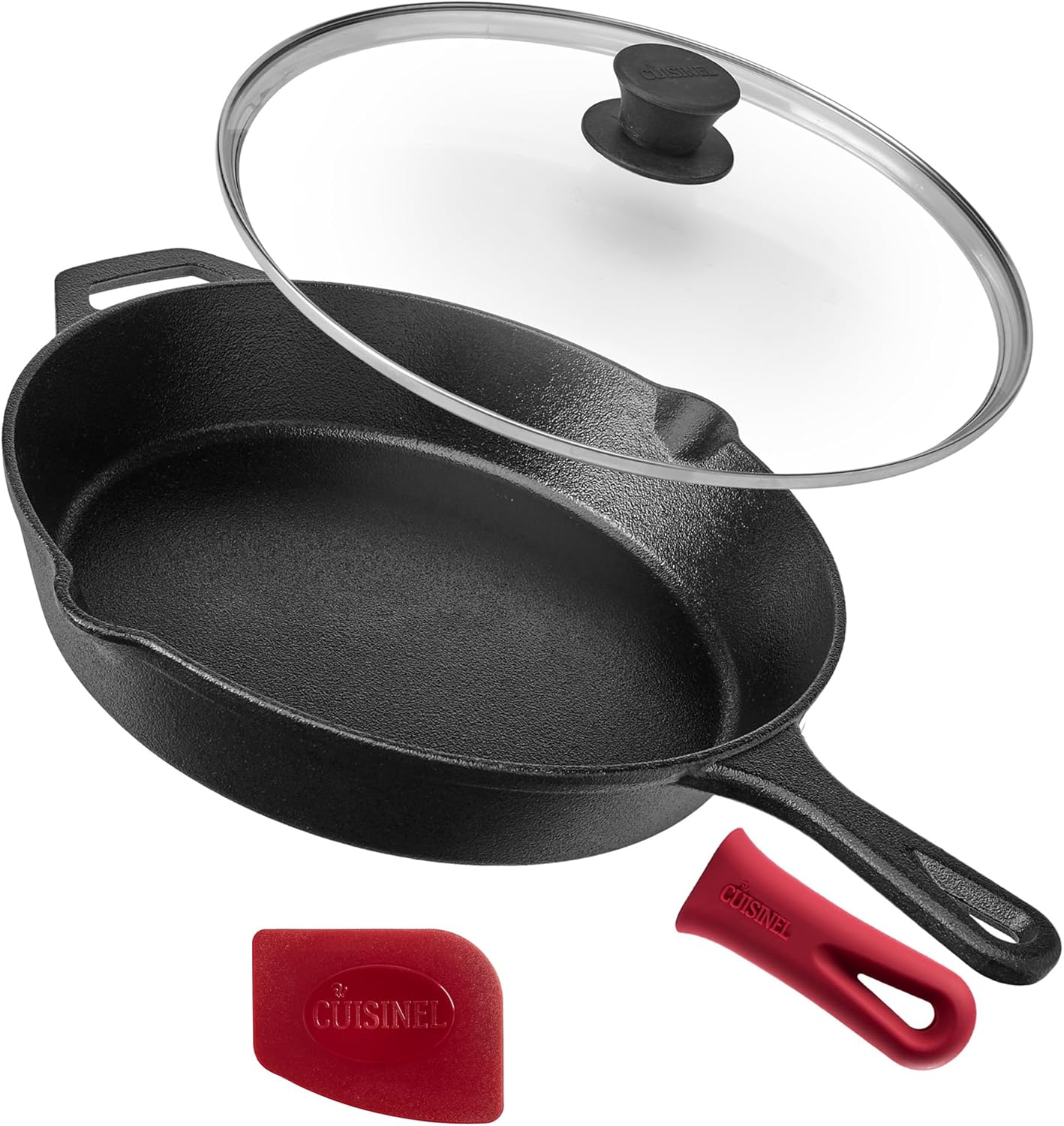
Some cast iron skillets include matching glass or iron lids designed to trap steam and moisture. Lidded pans expand your cooking versatility, allowing you to braise meats, simmer sauces, and steam vegetables effectively. Determine whether your recipes require covered cooking methods before selecting an open or closed skillet package.
Additional accessories, such as silicone handle holders or multi-piece sets, provide added value and convenience. Handle sleeves protect hands from hot metal during stovetop use, while multi-size bundles cover various culinary needs. Reviewing included components helps you choose a complete kit that addresses all your everyday cooking requirements.
Maintaining Seasoning and Surface Care
Proper maintenance preserves the natural non-stick seasoning of cast iron cookware. Most manufacturers recommend hand washing with warm water, drying thoroughly on low heat, and applying a thin coat of oil after every use. Avoid soaking or placing cast iron pans in automated dishwashers to prevent rust formation.
Consistent seasoning upkeep improves the cooking surface over time, making food release even easier with every use. Whether your skillet features a factory pre-seasoned finish or a machined smooth texture, adhering to basic care guidelines ensures long-lasting durability and reliable performance on your induction cooktop for decades.
Frequently asked questions
Can all cast iron skillets be used on an induction cooktop?
Yes, cast iron is inherently magnetic, making virtually all cast iron skillets naturally compatible with induction cooktops. Induction technology relies on a magnetic field to generate heat directly within the cookware base, and iron responds exceptionally well to this process. However, to ensure optimal performance and prevent scratching, it is important to select skillets featuring flat, smooth exterior bottoms that make complete flush contact with the glass induction burner surface. Avoid warped or deeply recessed bases that disrupt magnetic coupling.
Do cast iron skillets require special seasoning maintenance?
Cast iron skillets require regular maintenance to preserve their non-stick finish and prevent rust. Most pans arrive pre-seasoned, meaning a layer of baked-on oil is already established. To maintain this surface, you should wash the skillet by hand using warm water, dry it thoroughly on low heat to eliminate moisture, and apply a very thin coat of oil before storing. Avoid soaking cast iron in water or washing it in a dishwasher, as harsh detergents and prolonged moisture strip the seasoning and cause rust.
Why do some cast iron skillets include an assist handle?
Larger cast iron skillets, particularly twelve-inch models, carry substantial empty weights and become even heavier when loaded with food. An assist handle is a secondary grip positioned opposite the primary main handle, allowing cooks to lift and transport the heavy pan securely using both hands. This dual-handle design provides crucial stability and better leverage when moving hot dishes from a stovetop burner to a hot oven or serving table, significantly reducing the risk of accidental spills or drops.
Is a machined smooth surface better than a standard textured finish?
Machined smooth surfaces and standard textured finishes offer distinct cooking experiences. Standard textured cast iron provides a durable base that holds seasoning securely and excels at everyday searing. In contrast, machined smooth cooking surfaces are polished down to minimize food sticking, offering easier food release and simpler cleanup right out of the box. Choosing between them depends on personal preference for surface texture, though both styles deliver exceptional heat retention and long-lasting durability across induction cooktops.
Can I bake bread inside a cast iron skillet on induction?
While induction cooktops supply steady heat for stovetop baking tasks like cornbread or pancakes, baking artisan bread typically requires transferring the skillet into an oven. Cast iron skillets are oven safe up to high temperature limits, making them exceptional vessels for baking because the heavy iron holds and radiates intense heat evenly around the dough. When baking bread, you can preheat the skillet in the oven, place your dough inside, and use an optional lid to trap steam for a crusty loaf.