Appliances · Buying Guide
Best Ceramic Cast Iron Skillet Options for Everyday Cooking
Choosing a ceramic cast iron skillet brings together the heavy-duty heat retention of traditional metal cookware and the low-maintenance benefits of a smooth enamel coating. These versatile kitchen tools eliminate the traditional seasoning process entirely while providing a remarkably stable, even cooking surface for everything from searing thick meats to baking rustic breads across various cooktops.
Whether you are outfitting a busy home kitchen or looking for dependable cookware that transitions seamlessly from the stovetop directly into a hot oven, understanding specific dimensions, handle configurations, and manufacturer cleaning requirements helps you select the right match for your daily cooking routines, specific recipes, and available cabinet storage space without unnecessary guesswork.
As an Amazon Associate, StacyLaughs earns from qualifying purchases.
Buying guide
Evaluating Cooking Surface Coatings
When shopping for an enameled cast iron pan, understanding the interior coating is essential for daily meal preparation. Porcelain enamel surfaces eliminate the traditional seasoning steps required by raw iron, allowing you to start cooking immediately.
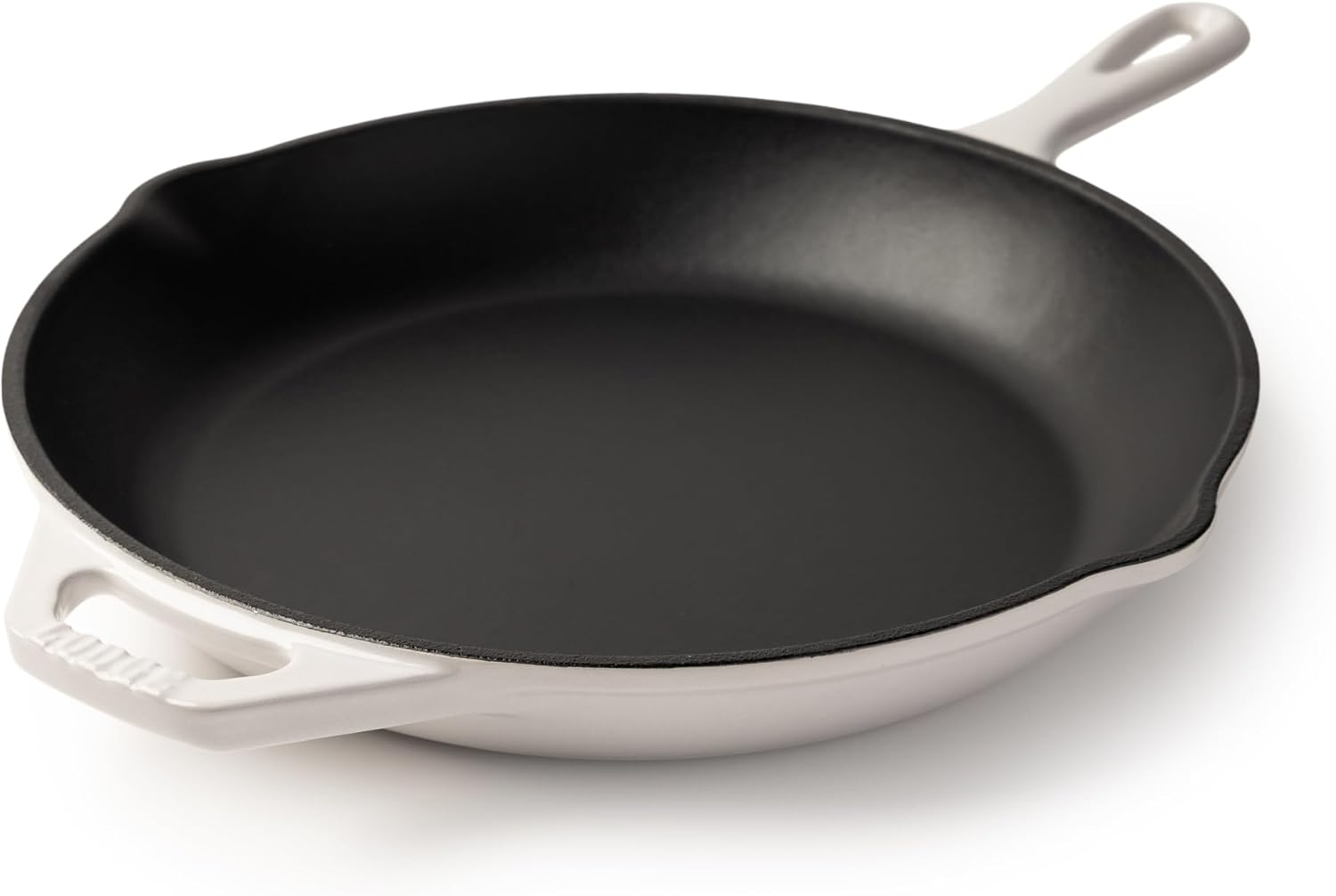
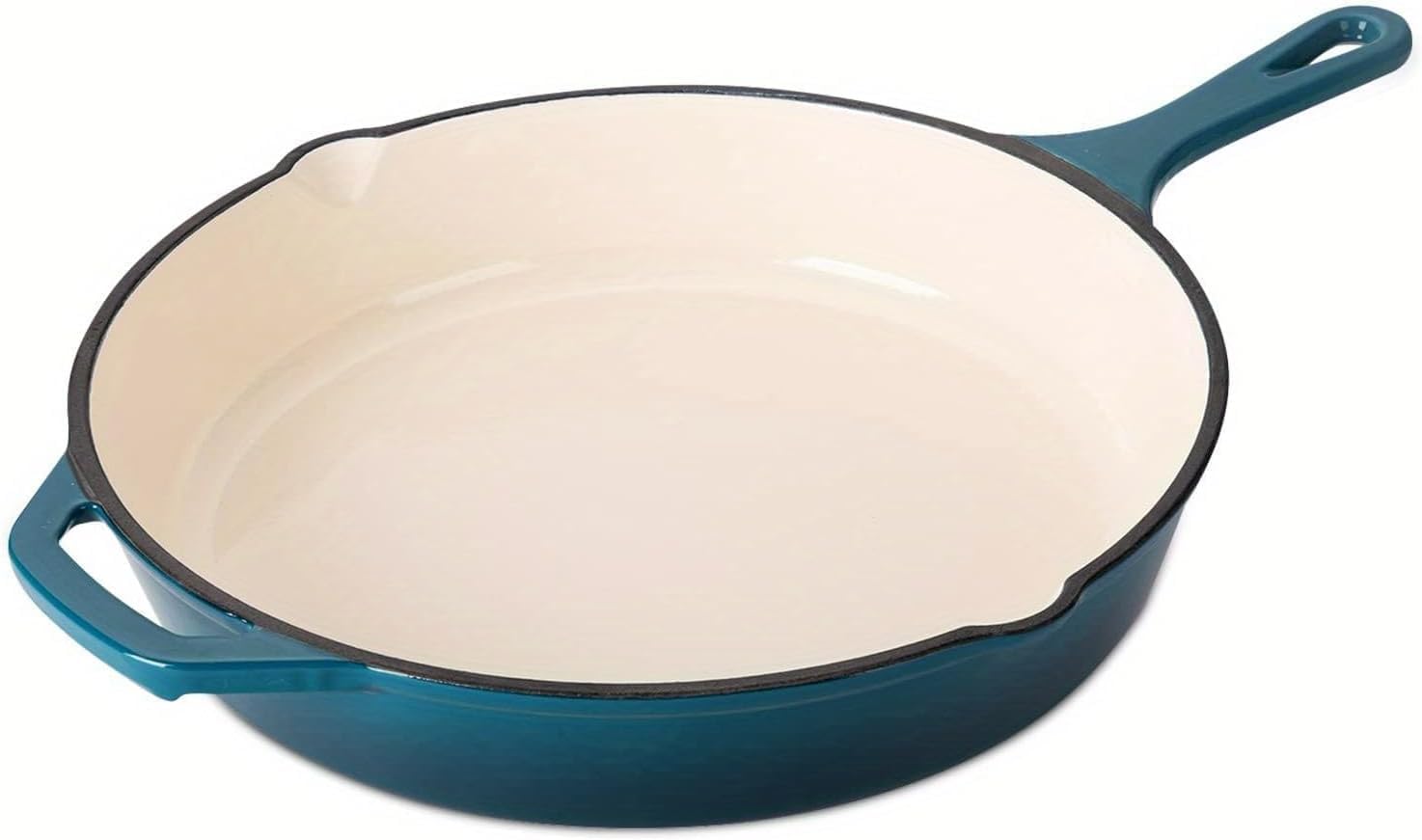
Different models feature either dark matte or smooth cream-colored finishes. Reviewing these interior types helps you choose a surface that matches your cleaning preferences and monitoring style during searing, frying, and braising tasks.
Understanding Size and Capacity
Skillet dimensions directly influence your daily cooking volume and portion management. Smaller 10-inch pans accommodate everyday side dishes, eggs, and single-serving proteins, while larger 12-inch options provide extra surface area for family meals.
Capacity measurements, ranging from 1.5 to 2 quarts, dictate how much liquid or batter a pan can hold safely during braising or baking without risking overflow during stovetop agitation.
Stovetop and Oven Compatibility
Modern enameled iron cookware works across a wide variety of heat sources, including gas, electric, ceramic, and induction cooktops. Checking the base compatibility ensures your selected pan sits flat and heats efficiently.
Oven safety thresholds are equally vital for recipes requiring high heat. Many models withstand temperatures up to 500 degrees Fahrenheit, letting you transfer dishes seamlessly from burner to oven cavity.
Handle Design and Maneuverability
Due to the heavy nature of cast iron cores, handle configurations heavily impact daily usability and safety. Long main handles provide leverage, while side helper handles assist with lifting heavy loads.
Some pans include removable silicone grips for stovetop comfort, whereas others rely entirely on wide, integrated iron loops that require thick pot holders during high-temperature baking tasks.
Maintenance and Cleaning Guidelines
Proper care extends the lifespan of your enameled cookware investment. Certain skillets are designated as dishwasher safe for convenient cleanup, while others strictly require gentle hand washing.
Following manufacturer care instructions prevents chipping on the exterior enamel and protects the interior cooking surface from thermal shock during rapid temperature changes in the kitchen.
Pour Spouts and Special Features
Design additions such as dual pour spouts greatly enhance functional utility when draining cooking oils, pouring pan sauces, or serving directly into bowls without messy kitchen drips.
Assessing whether these functional additions align with your cooking style ensures you select a pan that simplifies everyday meal preparation, outdoor camping cooking, or specialized baking routines.
Frequently asked questions
Do enameled cast iron skillets require seasoning before use?
No, enameled cast iron skillets feature a porcelain or ceramic coating that seals the iron core entirely. This smooth layer means you do not need to season the pan with oil before your first use, unlike traditional raw cast iron cookware. You can simply wash the pan and begin cooking right away, which saves significant preparation time for everyday kitchen tasks.
Can I use metal utensils on a ceramic cast iron skillet?
Using metal utensils on enameled surfaces can potentially scratch, chip, or mar the porcelain coating over time. Manufacturers generally recommend using wooden, silicone, or heat-resistant plastic utensils to protect the interior cooking surface from premature wear. Protecting the enamel layer helps maintain its smooth release properties and prevents chipping during daily cooking routines across various stovetops and ovens.
Are these skillets safe to use inside an oven?
Most enameled cast iron skillets are rated safe for oven use up to 500 degrees Fahrenheit. This allows you to start recipes on the stovetop and finish them inside the oven, such as baking frittatas, cornbread, or braising meats. Always verify specific temperature thresholds for your chosen model and remember to use protective pot holders when handling hot iron cookware.
How should I clean my enameled cast iron pan?
Cleaning methods depend on the specific manufacturer instructions provided for each skillet. Some models are approved for automatic dishwasher cleaning, while others require gentle hand washing with warm soapy water and a non-abrasive sponge. Avoid using harsh metal scouring pads that can damage the exterior enamel or dull the interior cooking surface over extended periods of regular maintenance.
What cooktop types work with enameled cast iron cookware?
Enameled cast iron skillets are widely compatible with gas, electric coil, smooth glass ceramic, and induction cooktops. The heavy iron core distributes heat evenly across all these stove types. Always lift the pan rather than sliding it across glass or ceramic cooktop surfaces to prevent scratching the glass cooktop or chipping the exterior pan base.