Appliances · Buying Guide
Best Ceramic Frying Pan Set Options for Everyday Kitchen Cooking
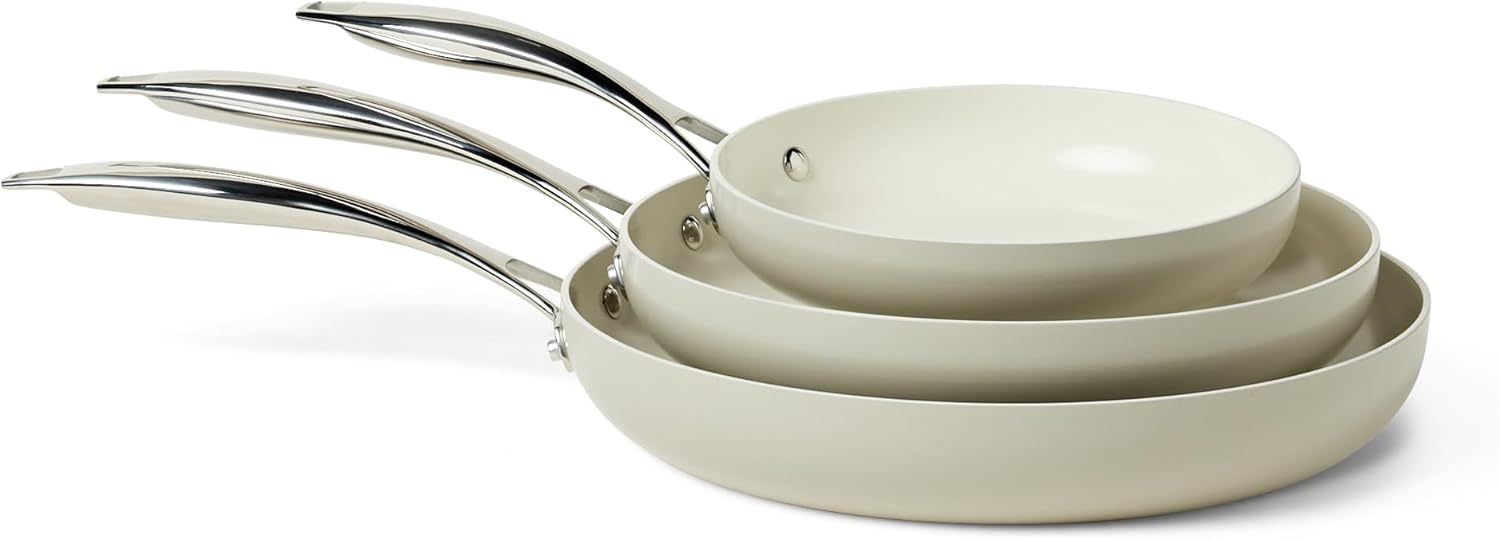
Finding the right cookware transforms how you manage daily meal prep, especially when switching to smooth ceramic nonstick surfaces for your favorite family recipes. A quality ceramic frying pan set brings together multiple versatile skillet sizes to handle everything from delicate morning eggs to hearty evening vegetable sautés without requiring excessive oil during cooking.
Exploring these popular market options reveals distinct choices in handle materials, maximum oven temperature limits, and diverse stovetop compatibility including induction support. Reviewing the specific physical traits of each collection helps you pick a reliable set that matches your routine cooking style, cleaning preferences, and overall kitchen setup for lasting performance.
As an Amazon Associate, StacyLaughs earns from qualifying purchases.
Buying guide
Stovetop Compatibility and Induction Support
When selecting a ceramic frying pan set, verifying your kitchen range compatibility is an essential first step for everyday cooking success in any household. Many modern aluminum and hard-anodized sets feature specialized magnetic stainless steel bases designed to work seamlessly across traditional gas burners, electric coils, and smooth surface induction cooktops without lagging or uneven heating issues during heavy use.
However, certain traditional hard-anodized collections lack induction support and operate exclusively on gas or standard electric coils. Checking your specific cooktop type beforehand prevents purchasing cookware that fails to heat properly on magnetic glass-ceramic ranges, ensuring reliable daily performance without unexpected heating failures during complex meal preparation tasks across different recipes.
Coating Composition and Safety Standards
Understanding the nonstick coating composition is vital for health-conscious buyers looking for reliable kitchen tools. Most quality ceramic skillet sets utilize advanced mineral-based coatings free from intentionally added PFAS, PFOA, PTFE, lead, and cadmium. These formulations provide smooth food release properties that let you cook with minimal oils or butter while maintaining confidence in everyday food safety standards.
Additionally, premium manufacturing processes often incorporate diamond reinforcements or specialized thermolon layers to improve scratch resistance and overall durability. Reviewing these material specifics helps ensure your chosen cookware withstands regular spatula movement and daily washing routines without prematurely losing its slippery release performance over months of consistent home cooking.
Oven and Broiler Temperature Limits
Temperature thresholds dictate how versatile your new frying pan set can be when moving food from the stovetop directly into the oven. Different collections specify maximum safe limits ranging from modest three-hundred-degree caps up to robust six-hundred-degree tolerances suitable for heavy broiling. Checking these exact ratings ensures you do not warp handles or damage coatings during high-heat finishing steps.
If your favorite recipes require finishing meat or casseroles under a hot broiler, selecting a hard-anodized set with stainless steel handles and high temperature limits is crucial. Conversely, if you only use pans for basic stovetop frying and sauteing, lower temperature thresholds will easily satisfy your daily routine without requiring premium heat ratings.
Handle Ergonomics and Stovetop Comfort
Handle design directly impacts your comfort and safety while managing active frying or sauteing tasks on a busy stove. Manufacturers typically use either riveted stainless steel or silicone-wrapped grips shaped ergonomically for secure handling. Stainless steel handles offer exceptional high-temperature oven safety, whereas silicone grips provide an extra layer of tactile comfort and cooler surface temperatures during stovetop use.
Evaluating how a handle feels in your hand helps prevent fatigue during extended cooking sessions involving heavy ingredients. Consider whether you prefer a sleek metal finish that transitions seamlessly into hot ovens or a softer silicone grip that prioritizes everyday stovetop comfort and secure lifting confidence throughout meal preparation.
Cleaning Methods and Maintenance Requirements
Proper maintenance significantly extends the operational lifespan of any ceramic nonstick cookware collection in your kitchen. While several sets advertise dishwasher-safe convenience for fast cleanup, many manufacturers recommend gentle hand washing with warm water and mild soap to protect the delicate nonstick surface from harsh detergents. Balancing your desire for automated cleaning with long-term coating care is an important buying factor.
Adhering to manufacturer guidelines regarding utensil choice, such as using silicone or wooden tools instead of metal, also preserves the finish. Reviewing these cleaning instructions before purchase ensures your maintenance habits match the specific care demands of your chosen ceramic frying pan set for enduring kitchen reliability.
Skillet Size Variety and Set Configuration
Evaluating the individual skillet diameters included in a package ensures the set meets your specific household cooking volume. Standard three-piece collections typically pair compact eight-inch or nine-inch pans with larger ten-inch or twelve-inch skillets to accommodate diverse recipes. Having multiple sizes allows you to fry a single egg efficiently in one pan while searing proteins in a larger skillet simultaneously.
Assessing your typical meal sizes helps determine whether a wider expanse of large pans or a more compact range better suits your pantry space. Ensuring the configuration covers your everyday breakfast, lunch, and dinner needs prevents buying redundant sizes or lacking adequate surface area for multi-course family cooking tasks.
Frequently asked questions
Can I use metal utensils on ceramic frying pans?
Whether you can use metal utensils depends entirely on the specific manufacturing technology of your chosen ceramic frying pan set. Standard ceramic coatings can scratch or chip when exposed to sharp metal forks and spatulas, so manufacturers often recommend silicone, nylon, or wooden tools. However, certain advanced diamond-reinforced collections explicitly engineer their tough ceramic surfaces to withstand metal utensils safely without compromising nonstick performance. Always verify the manufacturer guidelines for your exact product model before using metal tools in the kitchen.
Are ceramic frying pans safe from toxic chemicals?
Quality ceramic frying pan sets are specifically engineered to provide healthy, toxin-free cooking surfaces. Most reputable manufacturers design their ceramic coatings to be completely free of intentionally added PFAS, PFOA, PTFE, PFOS, lead, and cadmium. These mineral-based nonstick materials ensure that no hazardous substances or toxic fumes are released into your kitchen, even if the pan is accidentally overheated on the stovetop. Reviewing the product specifications confirms these safety standards for health-conscious home cooking routines.
Do ceramic frying pan sets work on induction cooktops?
Stovetop compatibility varies across different ceramic frying pan collections available on the market today. Many modern aluminum and hard-anodized sets feature specialized high magnetic conductive stainless steel bases that allow them to work seamlessly on all cooktops, including smooth surface induction ranges. However, some traditional hard-anodized or standard aluminum skillet sets are engineered exclusively for gas and electric coils and lack the magnetic properties required for induction cooking. Checking compatibility specifications beforehand is essential.
Should I wash my ceramic frying pans by hand or use a dishwasher?
Maintenance instructions differ depending on the brand and model of your ceramic frying pan set. While several manufacturers certify their cookware as dishwasher-safe for convenient cleanup, many strongly recommend gentle hand washing with warm water and mild dish soap. Automated dishwasher detergents and high heat cycles can gradually degrade ceramic nonstick properties over time. Hand washing helps preserve the protective coating and extends the functional lifespan of your skillets across years of regular daily meal preparation.
What is the maximum oven temperature these pans can handle?
Maximum oven temperature limits vary widely based on handle construction and body materials used in each specific ceramic frying pan set. Some collections feature silicone handles or protective coatings restricted to three hundred or three hundred fifty degrees Fahrenheit. Other heavy-duty hard-anodized sets equipped with riveted stainless steel handles safely withstand extreme oven and broiler temperatures up to six hundred degrees Fahrenheit. Always check the exact temperature rating of your cookware before transferring pans from stovetop to oven.