Appliances · Buying Guide
Best Ceramic Frying Pan with Lid Choices for Your Home
Finding the right cookware can transform your daily meal preparation by making food release effortless and cleanup remarkably fast. Ceramic frying pans paired with matching lids offer practical utility for everything from searing proteins to simmering sauces while keeping splatter off your stovetop surfaces. Manufacturers use various base materials like cast aluminum and hard-anodized bodies paired with natural ceramic nonstick coatings to achieve reliable heat distribution.
When evaluating these pans, matching the diameter, depth, and heat source compatibility to your cooking habits ensures optimal results. Whether you need a compact pan for quick morning eggs or a deep saute model capable of handling family-sized meals, understanding the specific design attributes helps you select a tool that fits your kitchen routines without unnecessary complications.
As an Amazon Associate, StacyLaughs earns from qualifying purchases.
Buying guide
Evaluating Stovetop Compatibility
Before selecting any ceramic frying pan with a lid, verify that its base material matches your specific cooktop type. Induction cooktops require magnetic stainless steel or specialized bonded plates embedded in the base.
Gas and electric coil stoves accept virtually any metal construction, but checking specifications prevents heating inefficiencies. Choosing the correct base ensures fast, even thermal distribution across your cooking surface.
Determining Capacity and Size
Pan dimensions dictate how much food you can prepare at once without overcrowding the cooking surface. Smaller 8-inch to 10-inch models suit single portions, breakfast eggs, and modest side dishes effortlessly.
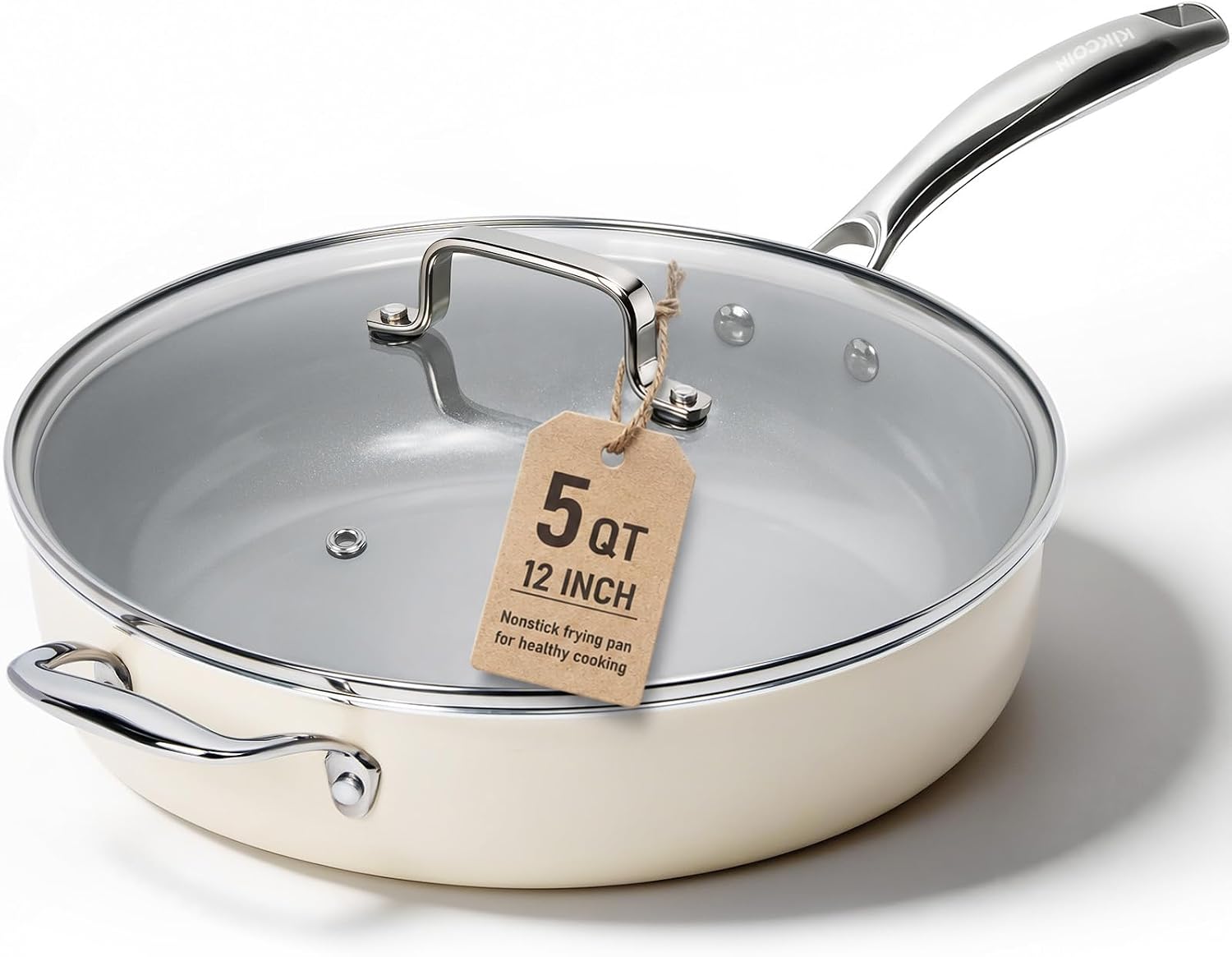
Larger 12-inch pans and deep saute models holding up to 5 quarts accommodate family-sized meals. Balance your typical portion sizes against available storage space in your kitchen cabinets.
Assessing Handle Materials
Handles affect both comfort during stovetop cooking and versatility inside the oven environment. Bakelite and plastic handles stay cool to the touch on burners but feature lower maximum temperature limits.
Stainless steel handles offer superior durability and oven safety but can conduct heat if left over active flames. Pick the handle style that aligns with your preferred cooking methods.
Understanding Lid and Accessory Design
Tempered glass lids let you monitor cooking progress visually without lifting the cover and releasing heat. Built-in steam vents and tight seals help manage moisture levels during simmering.
Additional features like pour spouts simplify draining excess oils or liquids directly from the pan. Consider which lid and rim configurations support your daily recipes.
Coating Care and Maintenance
Natural ceramic coatings provide slick nonstick surfaces that require less oil during food preparation. While many models state dishwasher safety, manufacturers frequently recommend hand washing with mild soap.
Following recommended maintenance guidelines preserves the nonstick lifespan and prevents premature wear. Avoiding metal utensils also protects the smooth ceramic layer from scratching.
Construction and Weight Considerations
Cast aluminum and hard-anodized bodies offer distinct advantages regarding weight and durability. Thicker forged bases resist warping over high heat and eliminate cold spots during searing.
Heavier pans provide thermal stability but require more effort to lift and maneuver. Match the pan weight to your physical comfort when pouring or transferring finished dishes.
Frequently asked questions
Are ceramic frying pans safe to use on induction cooktops?
Induction compatibility depends entirely on the specific pan's base construction. Models equipped with a magnetic stainless steel induction plate or bonded metal base work seamlessly on induction cooktops. Pans made exclusively from standard aluminum without an induction-ready base will not register on magnetic burners. Always check the manufacturer specifications for induction support before purchasing.
Can I put my ceramic frying pan with lid into the dishwasher?
Many ceramic frying pans are listed as dishwasher safe, but numerous manufacturers recommend hand washing to extend the lifespan of the nonstick coating. Harsh dishwasher detergents and high heat cycles can degrade ceramic surfaces over time. Cleaning the pan by hand with warm soapy water and a soft towel takes only seconds due to the slick nonstick finish.
Do ceramic nonstick pans require cooking oil?
Ceramic nonstick surfaces are designed for low-oil or oil-free cooking because food releases easily from the smooth coating. While you can cook without oil for certain foods like eggs or pancakes, adding a small amount of oil can enhance flavor and browning. Avoid using aerosol cooking sprays, as propellants can leave a residue that harms the nonstick performance.
What utensils should I use to avoid scratching the ceramic surface?
To preserve the integrity of the natural ceramic coating, use wooden, silicone, or plastic utensils. Metal spatulas, forks, and knives can scratch, chip, or gouge the smooth nonstick layer over time. Using non-metal tools ensures your pan retains its easy-release properties through months of daily meal preparation and regular cleaning routines.
Why do some ceramic pans have lower oven-safe temperature limits?
Oven safety limits are primarily determined by the handle and lid materials rather than the ceramic coating itself. Pans featuring plastic or bakelite handles typically have lower temperature restrictions around 300 to 350 degrees Fahrenheit. In contrast, models built with all-metal stainless steel handles can safely withstand much higher oven and broiler temperatures.