Appliances · Buying Guide
Best Ceramic Saute Pan Selections for Versatile Home Cooking
Finding the right cookware involves looking closely at materials, capacities, and how a pan fits your routine stovetop tasks. Ceramic options provide smooth nonstick surfaces that minimize oil usage while handling everyday searing, simmering, and frying duties across various meal types. Whether you are cooking for a large household or preparing quick weeknight dishes, understanding these features ensures a reliable fit.
Evaluating these pans means comparing physical dimensions, handle configurations, and cleaning requirements to match your specific kitchen space and cooking habits. Reviewing the core attributes of each model helps identify which design best supports your preferred meal preparation methods without guesswork. Each option brings distinct structural advantages for daily kitchen tasks.
As an Amazon Associate, StacyLaughs earns from qualifying purchases.
Buying guide
Evaluating Pan Capacity and Depth
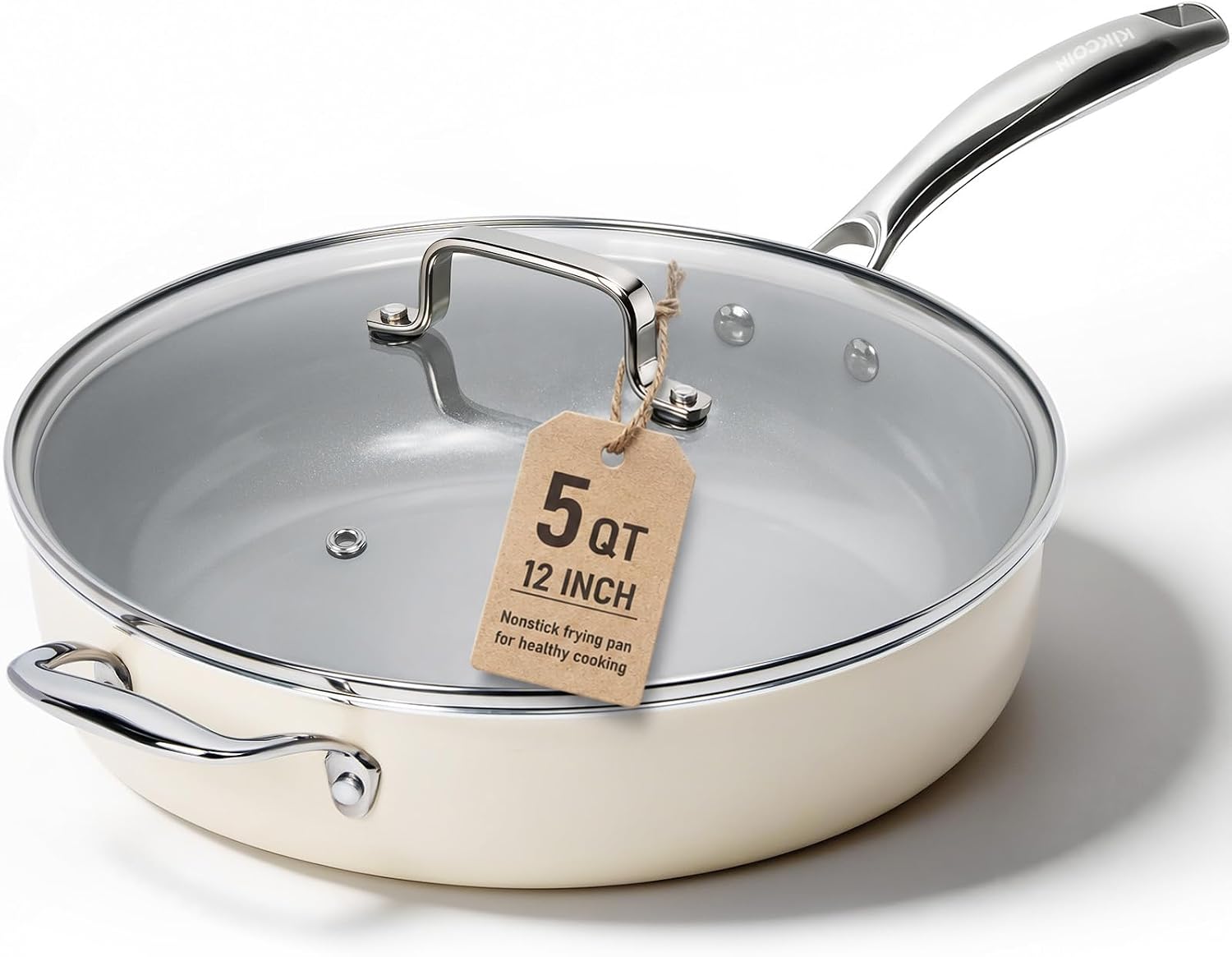
Choosing the right capacity depends heavily on your household size and the types of meals you prepare regularly. Smaller models around 3.5 quarts work well for side dishes, quick sauces, and single-portion sautés. Larger 5-quart and 6-quart options provide the deep walls needed for family-sized stews, braised meats, and one-pan pasta dishes.
Consider how high the walls are when selecting your pan. Taller sides prevent splatters and contain liquids effectively during simmering, whereas shallower rims make flipping items like pancakes or eggs much simpler on the stovetop.
Understanding Ceramic Coating Properties
Ceramic nonstick surfaces offer smooth cooking areas that require significantly less oil than traditional metal pans. This characteristic helps prepare lower-fat meals while allowing delicate foods like eggs to release without sticking to the base.
Because these surfaces rely on specialized nonstick formulations, checking the manufacturer guidelines regarding oil sprays and utensils is essential. Avoiding metal tools helps preserve the smooth ceramic layer over years of regular kitchen use.
Stovetop Compatibility and Base Design
Modern saute pans often feature encapsulated stainless steel bases or heavy cast aluminum bodies designed for versatile cooktop use. If you cook with induction, verify that the pan explicitly supports magnetic burners to ensure proper heating performance.
Thick bases help distribute heat evenly across the entire cooking surface, reducing hot spots that can burn food. A solid base also prevents warping when transitioning between high heat settings and cooler kitchen environments.
Handle Materials and Ergonomic Control
Handle construction directly affects how comfortable and secure a pan feels during lifting and transport. Bakelite and silicone handles generally stay cool on the stovetop, protecting your hands from direct thermal transfer during standard cooking tasks.
Stainless steel handles offer robust durability and allow the cookware to move safely from burner to oven. However, metal handles can absorb heat during prolonged oven baking, requiring protective mitts during removal.
Cleaning and Maintenance Requirements
Proper cleanup routines extend the working lifespan of ceramic nonstick coatings. While some models are rated safe for automatic dishwashers, many manufacturers recommend gentle hand washing with warm soapy water and a soft cloth.
Rivet-free interiors or flush rivet designs simplify cleaning by eliminating crevices where grease and food particles typically accumulate. Adhering to recommended care instructions protects the nonstick performance over time.
Lid Inclusion and Storage Considerations
Pans supplied with matching tempered glass lids help trap moisture, heat, and flavor while letting you monitor cooking progress without lifting the cover. Shatterproof glass adds safety during high-temperature simmering and braising tasks.
Evaluate your available kitchen storage before purchasing large-diameter pans. Features like flush stacking rivets or removable lids can significantly improve how neatly cookware fits inside crowded cabinets.
Frequently asked questions
Can I use metal utensils on a ceramic saute pan?
Using metal utensils on ceramic nonstick surfaces is generally discouraged by manufacturers because sharp edges can scratch or chip the coating. Opting for wooden, silicone, or plastic tools helps protect the smooth nonstick layer, ensuring food continues to release effortlessly without sticking or tearing during daily cooking tasks over time.
Are ceramic saute pans safe for induction cooktops?
Many ceramic saute pans include embedded stainless steel bases or induction-compatible plates embedded in the aluminum body. Always check the specific product specifications to confirm induction compatibility before purchasing, as non-magnetic aluminum pans alone will not activate magnetic induction cooktop burners properly.
Do ceramic pans require seasoning before use?
Unlike traditional cast iron or carbon steel cookware, ceramic nonstick pans typically do not require traditional seasoning with oils and high heat. Their factory-applied smooth ceramic coating is ready for cooking right out of the box, though applying a tiny amount of oil can help with flavor and release.
How should I clean my ceramic saute pan safely?
To maintain the nonstick coating, let the pan cool completely before washing. Use warm soapy water, a non-abrasive sponge, and a soft towel to wipe away residue. Even if a model is labeled dishwasher safe, hand washing generally extends the lifespan of the ceramic nonstick surface by avoiding harsh detergents.
Can I transfer my ceramic saute pan into the oven?
Oven safety depends entirely on the specific handle materials and lid construction of each pan. Models featuring stainless steel handles and oven-safe glass can usually withstand moderate to high oven temperatures, whereas Bakelite or plastic handles have strict heat limitations that restrict oven use.