Appliances · Buying Guide
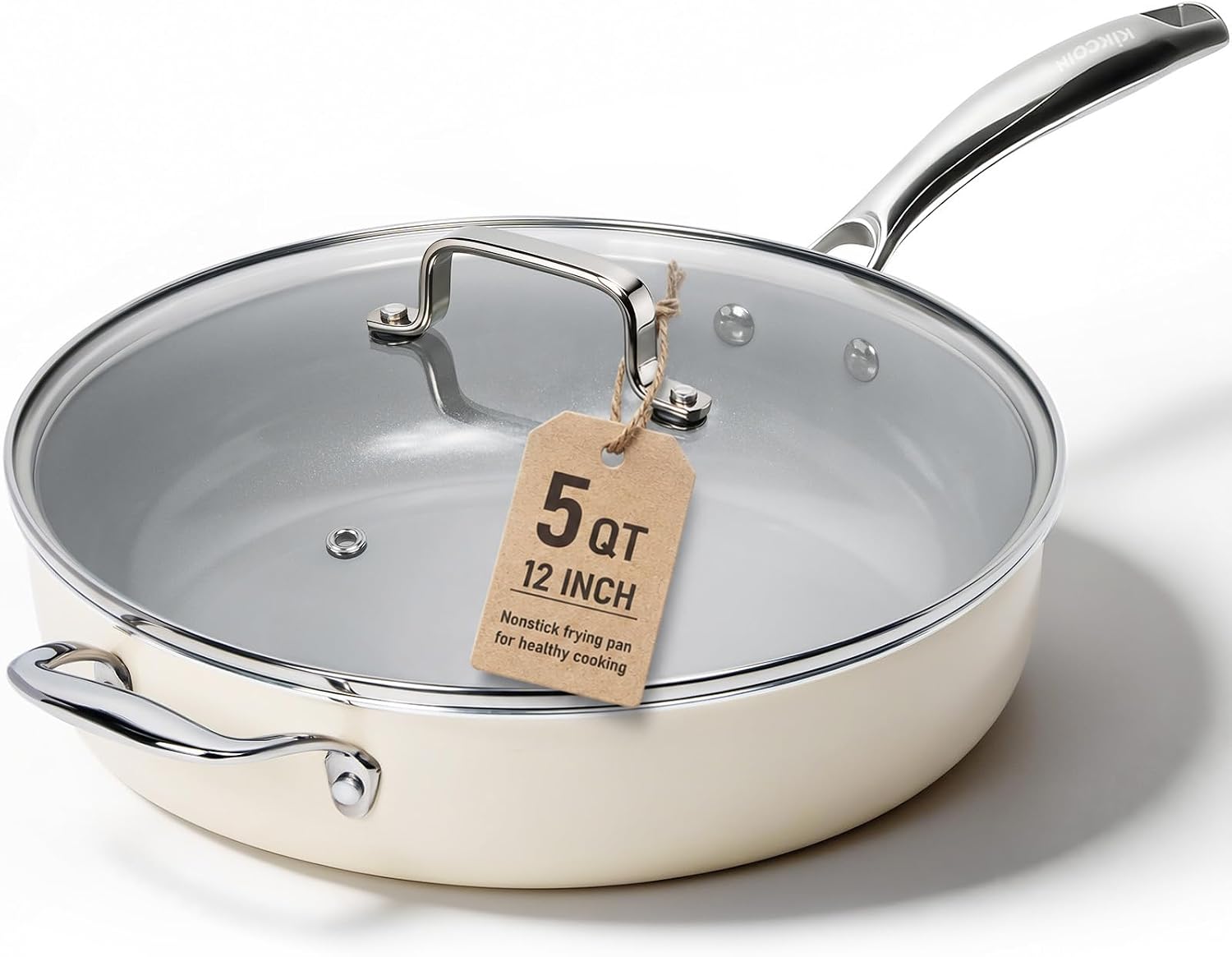
Best Ceramic Skillet with Lid Options for Everyday Cooking
Finding the right cookware for daily meal preparation involves balancing surface materials, capacity, and stovetop compatibility. A ceramic skillet with lid offers a versatile cooking surface designed to handle everything from gentle simmering to high-heat searing without relying on traditional chemical coatings. Modern kitchen spaces benefit greatly from reliable pans that distribute heat evenly while minimizing cleanup effort after cooking family meals.
Selecting an appropriate pan requires evaluating your household size, preferred cooking techniques, and cleanup preferences. Exploring various options helps match specific design features like helper handles, tempered glass lids, and induction-ready bases to your kitchen requirements. Understanding these foundational attributes ensures you choose cookware that aligns smoothly with your daily culinary habits and stove specifications.
As an Amazon Associate, StacyLaughs earns from qualifying purchases.
Buying guide
Size and Capacity Selection
Choosing the correct size ceramic skillet depends directly on your household size and typical meal portions. Smaller diameters work exceptionally well for single-serving eggs, grilled cheese sandwiches, or quick side dishes, whereas larger capacities accommodate multi-person family dinners easily. Matching the pan diameter to your typical burner size ensures efficient heat transfer and prevents wasted energy during daily meal preparation.
Evaluating pan depth is equally important when planning your weekly menu and preferred recipes. Deeper skillets with high vertical walls support versatile cooking methods like braising, stewing, and deep-frying without risking messy stovetop spills. Considering these dimensional factors prevents overcrowding your cooking surface, ensuring food browns evenly rather than steaming inside an inadequately sized container.
Stovetop and Oven Compatibility
Modern ceramic skillets are designed to function across a wide variety of cooking surfaces, including gas, electric coil, ceramic, and smooth induction cooktops. Ensuring your chosen pan features a sturdy, flat induction-compatible base guarantees long-term versatility if you decide to upgrade your kitchen range or appliances later. A thick base also protects sensitive ingredients from scorching by diffusing thermal energy uniformly across the entire cooking zone.
Oven safety is another critical consideration for recipes that require starting food on the stovetop and finishing it in a heated cavity. Checking maximum temperature ratings helps prevent handle degradation or coating damage during high-heat baking tasks. Selecting models rated for high temperatures broadens your culinary repertoire, allowing seamless transitions from burner searing to oven roasting without changing cookware.
Nonstick Coating Maintenance
Natural ceramic nonstick coatings offer excellent food release with minimal oil or butter, promoting healthier cooking habits for everyday meals. However, preserving this slippery surface requires following manufacturer care instructions carefully to prevent premature wear. Using wooden, silicone, or plastic utensils instead of metal tools prevents scratches and preserves the smooth protective layer over thousands of cooking cycles.
Many ceramic pans recommend manual hand washing with mild soap and a soft sponge rather than harsh dishwasher cycles. Avoiding abrasive scrubbers and sudden thermal shocks, such as plunging a hot pan into cold water, further protects the structural integrity of the coating. Adhering to these maintenance guidelines ensures consistent nonstick performance and extends the usable lifespan of your kitchen investment.
Handle Design and Ergonomics
Handle construction significantly impacts comfort and safety while maneuvering heavy pans filled with food around a busy kitchen. Look for ergonomically shaped handles that provide a secure, non-slip grip during active cooking routines like tossing vegetables or transferring pans. Weight-balanced designs reduce wrist strain, making daily meal preparation much more manageable when working with heavy-duty cast aluminum cookware.
Heat-resistant materials like bakelite stay cool on the stovetop, preventing accidental burns during long simmering sessions. Conversely, stainless steel handles offer oven-safe durability but may absorb heat during extended high-temperature cooking tasks. Selecting models that include secondary helper handles on larger capacities also assists with lifting heavy loads safely and steadily from burner to countertop.
Lids and Moisture Control
A matching lid transforms a basic skillet into a versatile braising, steaming, and simmering vessel for complex recipes. Tempered glass lids let you monitor cooking progress closely without constantly lifting the cover and releasing valuable heat and moisture. This visibility helps you achieve precise texture control when reducing sauces or cooking delicate ingredients that require steady internal temperatures.
Shatter-resistant glass designs add an extra layer of safety in busy kitchens while containing messy oil splatters on your stovetop. Properly fitted lids also lock in natural juices, ensuring meats remain tender and vegetables cook evenly throughout the process. Evaluating how snugly the lid rests on the rim ensures efficient steam retention and cleaner cooking surroundings.
Material and Weight Considerations
The core material of your skillet determines how quickly and evenly it heats up across different stovetop burners. Cast aluminum provides an excellent balance of rapid thermal conductivity and warping resistance, ensuring your pan stays flat over time. A thick, well-constructed metal base prevents local hot spots that could scorch delicate ingredients, guaranteeing reliable cooking results across various recipes.
While heavier construction improves heat retention and cooking stability, it also increases the overall weight of the pan. Balancing physical weight against your personal handling comfort ensures you can lift, tilt, and clean the cookware effortlessly. Considering these material attributes helps you select a durable skillet that matches your physical preferences and daily culinary routine without causing fatigue.
Frequently asked questions
Can I use metal utensils on a ceramic skillet with lid?
Using metal utensils is generally discouraged when cooking with ceramic nonstick skillets. Sharp edges, forks, or metal spatulas can scratch or chip the natural ceramic coating, diminishing its nonstick performance over time. To protect the slippery cooking surface and extend the lifespan of your cookware, it is best to use wooden, silicone, or heat-resistant plastic utensils. These softer materials prevent surface abrasions while allowing you to flip, stir, and serve food effortlessly without compromising the integrity of the non-toxic coating.
Are ceramic skillets safe for induction cooktops?
Many modern ceramic skillets are fully compatible with induction cooktops, provided they feature a specialized magnetic metal base. Cast aluminum pans equipped with a bonded stainless steel or induction-ready plate heat up quickly and evenly across smooth glass surfaces. However, it is always wise to check the manufacturer specifications before purchasing to ensure the base matches your specific cooktop type. Induction-compatible pans deliver rapid thermal response and precise temperature control, making them a practical choice for modern kitchens.
How should I clean my ceramic nonstick skillet?
Cleaning a ceramic nonstick skillet is typically straightforward due to its slippery surface preventing stubborn food adhesion. Many manufacturers recommend manual hand washing using warm water, mild dish soap, and a soft sponge to preserve the coating's longevity. While some models indicate dishwasher safety, avoiding harsh automatic cycles and abrasive scouring pads protects the finish from premature wear. Allowing the pan to cool completely before washing also prevents thermal shock, ensuring the cast aluminum body remains flat and warp-free.
Do ceramic skillets require cooking oil or butter?
Ceramic skillets feature super nonstick surfaces designed to allow food to slide off effortlessly with very little oil or butter. This characteristic supports healthier, low-fat cooking habits without requiring heavy greasing for items like eggs or pancakes. While you can cook with minimal fat, adding a small amount of oil or butter is still common for flavor enhancement or specific searing techniques. The natural coating ensures that food releases smoothly even when using reduced amounts of cooking fats.
Can these ceramic skillets go in the oven?
Oven safety varies depending on the specific model construction, handle materials, and included lids. Some ceramic skillets feature oven-safe designs capable of withstanding high temperatures up to specific limits, allowing you to transition seamlessly from stovetop searing to oven baking. However, pans equipped with certain plastic or woodgrain bakelite handles may have strict temperature restrictions or be limited to stovetop use only. Always review the manufacturer guidelines regarding maximum temperature limits before placing any skillet or glass lid into a heated oven.