Appliances · Buying Guide
Best Ceramic Wok With Lid Options For Versatile Kitchen Cooking
Choosing a ceramic wok with lid brings reliable nonstick convenience and flexible cooking capabilities to everyday meal preparation. These versatile pans handle everything from rapid high-heat stir-frying to gentle braising, offering multiple surface materials, varied capacities, and specific heat tolerances suited for various modern stovetops, including induction ranges, and diverse household cooking routines.
Exploring the available market options reveals distinct differences in handle designs, coating technologies, and maintenance requirements. Reviewing these specific attributes helps align a chosen cookware piece with daily meal preparation habits, household sizes, and cleanup preferences, ensuring a practical fit for your kitchen setup without relying on unproven performance claims.
As an Amazon Associate, StacyLaughs earns from qualifying purchases.
Buying guide
Surface Coatings And Nonstick Performance
Selecting a ceramic wok with lid involves evaluating the specific nonstick coating technology applied to the interior surface. Modern options feature natural ceramic layers, diamond-infused compounds, or advanced multi-layer formulas designed to release food easily with minimal oil usage. These surfaces support everyday cooking tasks ranging from delicate vegetable sautés to high-heat stir-fries without demanding excessive scrubbing during cleanup sessions.
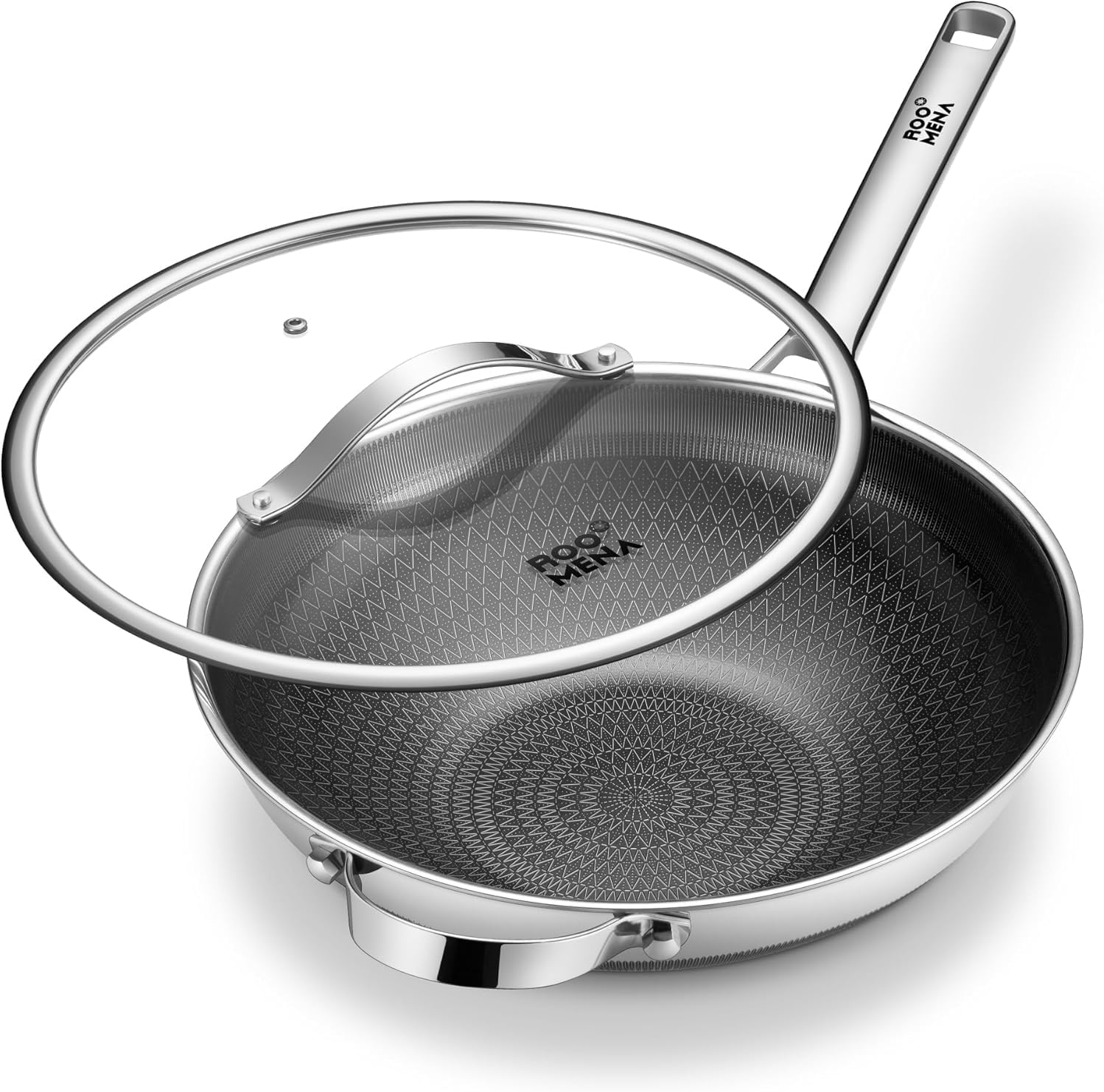
Reviewing coating durability also helps determine how well the pan handles metal utensils and frequent washing routines. Some advanced hybrid surfaces incorporate raised stainless steel patterns or reinforced boost layers to protect against wear. Matching the coating type to your daily cooking habits ensures long-lasting performance and maintains easy food release over extended periods of regular kitchen use.
Base Construction And Heat Distribution
The underlying structural materials of a ceramic wok significantly influence how heat travels from your stovetop into the food. Options constructed with die-cast aluminum cores provide rapid and even thermal conductivity, warming up quickly while keeping the overall weight manageable for everyday cooking. These aluminum builds often feature bonded stainless steel plates to ensure full compatibility with modern induction cooking surfaces.
Alternatively, tri-ply stainless steel clad woks distribute heat across the entire body using layered metal construction. This heavier approach excels at retaining high temperatures, making it suitable for aggressive searing and browning tasks. Evaluating your preferred cooking style and stovetop type will guide you toward either lightweight aluminum convenience or heavy-duty multi-clad thermal performance.
Stovetop And Oven Compatibility
Modern ceramic woks are engineered to accommodate a wide variety of kitchen heating appliances, including gas burners, electric coils, and smooth induction cooktops. High magnetic conductive bases allow aluminum and stainless steel pans to function seamlessly across induction zones. Verifying your specific stovetop requirements ensures the selected cookware establishes proper contact and heats efficiently during meal preparation.
Beyond stovetop use, maximum temperature thresholds dictate whether a wok can transition directly into the oven for broiling or finishing. Certain models support moderate baking temperatures, while stainless steel hybrid options withstand extreme oven environments up to 850 degrees Fahrenheit. Checking these thermal limits helps expand your cooking repertoire safely when preparing dishes that require multi-stage thermal application.
Size, Capacity, And Household Fit
Choosing the appropriate wok diameter and volume depends directly on your household size and typical meal portions. Woks measuring eleven inches work well for individuals and couples, providing manageable proportions for compact kitchens and smaller servings. Models featuring twelve or thirteen inch diameters offer larger surface areas and increased volumetric capacity, accommodating family meals for three to six people comfortably.
Physical dimensions also influence storage space requirements within standard kitchen cabinets and pantries. Wider pans with bulkier multi-ply construction demand more clearance room compared to lightweight, compact alternatives. Balancing your portion size needs with available storage space prevents kitchen clutter and ensures the chosen wok integrates smoothly into your daily culinary routines.
Handle Design And Ergonomic Comfort
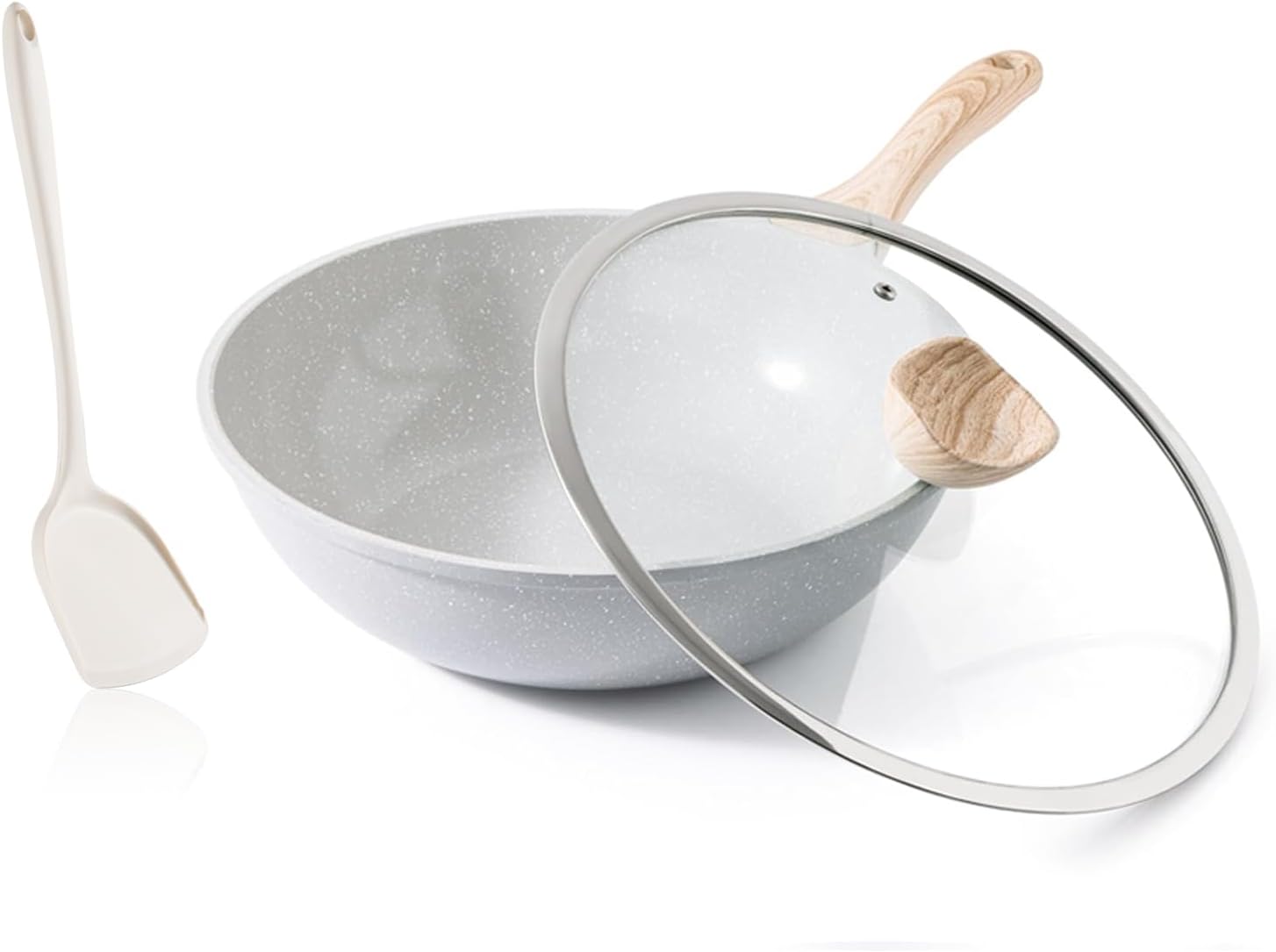
Handle construction plays a crucial role in maintaining comfort and control while maneuvering a loaded wok during active cooking. Bakelite handles featuring woodgrain designs offer cool-touch exterior surfaces, preventing heat transfer to your hand during prolonged stovetop sessions. These ergonomic plastic grips provide secure holds for everyday stir-frying without adding excessive weight to the cookware piece.
Stainless steel handles with hollow or V-shaped cutouts provide alternative gripping options designed to dissipate heat effectively. Riveted or welded metal handles offer robust attachment security, ensuring the handle remains firmly fastened over years of heavy use. Assessing your preference for lightweight insulated grips versus rigid metal structures ensures comfortable handling during meal preparation.
Maintenance, Cleaning, And Care Requirements
Proper upkeep preserves the longevity and nonstick integrity of a ceramic wok over countless cooking cycles. Many aluminum ceramic models specify hand washing with warm soapy water to protect the delicate nonstick surface from harsh dishwasher detergents. Following these manufacturer care guidelines prevents premature coating degradation and keeps food sliding off effortlessly during daily meal cleanup.
Conversely, advanced stainless steel hybrid woks frequently feature dishwasher-safe construction, offering automated cleanup convenience for busy kitchens. However, even dishwasher-safe pans benefit from prompt drying to prevent water spots on mirror-polished or textured metal exteriors. Matching your willingness to perform manual hand washing against your desire for automated cleaning convenience determines the most practical product choice.
Frequently asked questions
Can I use metal utensils with a ceramic wok?
Utensil compatibility depends entirely on the specific manufacturing technology of the chosen wok model. Standard ceramic nonstick coatings generally require wooden, silicone, or plastic tools to prevent surface scratches. However, certain advanced hybrid models feature diamond-infused layers or reinforced stainless steel structures explicitly rated safe for metal utensils up to a specific threshold. Always review the manufacturer specifications for your exact pan model before introducing metal spatulas or whisks to avoid unintentional surface damage.
Are ceramic woks compatible with induction stovetops?
Many ceramic woks are fully compatible with induction stovetops, provided they feature an embedded high magnetic stainless steel base. Manufacturers typically integrate these magnetic plates into the bottom of die-cast aluminum or multi-ply stainless steel bodies to ensure proper energy transfer on smooth induction surfaces. You should verify the appliance compatibility list in the product specifications to confirm that your chosen wok will activate induction burners correctly before purchase.
What is the difference between aluminum and tri-ply stainless steel ceramic woks?
Aluminum ceramic woks offer lightweight bodies that heat up quickly and reduce arm fatigue during one-handed stir-frying and tossing tasks. They often rely on hand-wash care instructions and provide efficient thermal distribution for everyday cooking. Tri-ply stainless steel ceramic woks utilize layered metal construction that adds overall weight while delivering robust durability, higher oven temperature tolerances, and frequently dishwasher-safe convenience. Your choice depends on whether you prioritize lightweight handling or heavy-duty clad construction.
How should I clean my ceramic wok to maintain its nonstick performance?
Cleaning methods vary according to the manufacturer guidelines specified for each individual wok model. Many aluminum ceramic woks require manual hand washing using warm soapy water and a soft sponge to preserve the nonstick coating. Conversely, robust stainless steel hybrid woks often support automated dishwasher cycles. Regardless of the cleaning method, avoiding abrasive scouring pads and harsh chemical cleaners helps maintain the nonstick release properties over extended periods of regular kitchen use.
What size ceramic wok should I choose for my household?
Selecting the correct wok size depends primarily on how many people you regularly cook for during meal preparation. Woks measuring eleven inches with moderate capacity suit individuals and small households of two to four people effectively while saving cabinet space. Larger twelve or thirteen inch woks provide expansive cooking surfaces and higher volumetric capacities ideal for preparing family-sized portions for three to six individuals, though they require more storage clearance in standard kitchen cabinets.