Appliances · Buying Guide
Best Cheap Non Stick Frying Pan Options For Every Kitchen
Finding a reliable yet affordable skillet for everyday cooking can transform how you handle morning eggs, delicate pancakes, and quick evening sautés without overspending your household budget. Budget-friendly cookware often raises questions about coating durability, safe materials, and heat distribution, yet several accessible options deliver solid performance across various stove types for home cooks.
When exploring these economical kitchen tools, focusing on core attributes like stove compatibility, handle comfort, and cleaning ease helps narrow down the choices. Whether you need a compact pan for single servings or a broader surface for family meals, understanding specific design details ensures you pick the right match for your daily cooking routine and cleanup preferences.
As an Amazon Associate, StacyLaughs earns from qualifying purchases.
Buying guide
Stove Compatibility and Base Construction
When selecting an affordable skillet, checking your kitchen stove type is the vital first step for successful daily meal preparation. Traditional gas and electric coil ranges accept nearly any metal pan, but modern induction cooktops require specific magnetic conductive properties to function properly. Always look closely at the manufacturer details for stainless steel plates or compatible base integrations before purchasing your new cookware.
Furthermore, a thick, flat base prevents annoying thermal warping and distributes heat evenly across the entire cooking surface. This structural quality ensures your morning eggs, pancakes, and seared meats cook uniformly without forming frustrating burnt spots or raw edges, giving you reliable daily performance across induction, gas, electric, and ceramic burner setups.
Nonstick Coating Materials and Safety
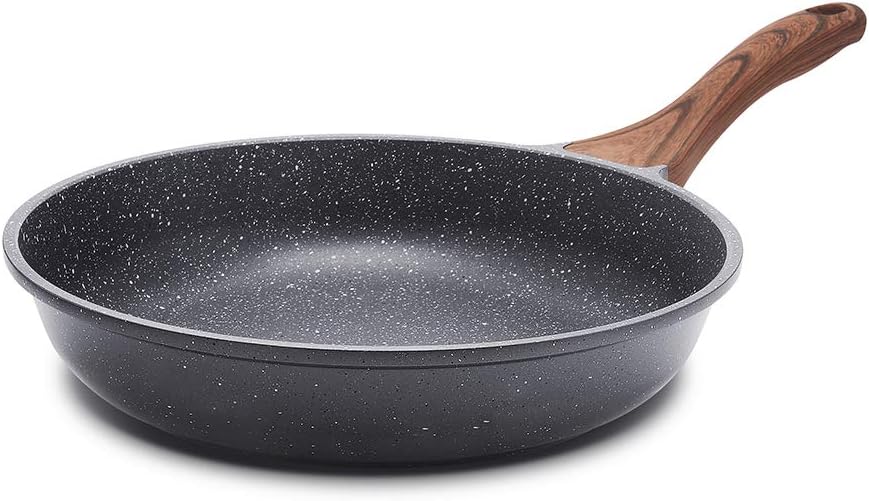
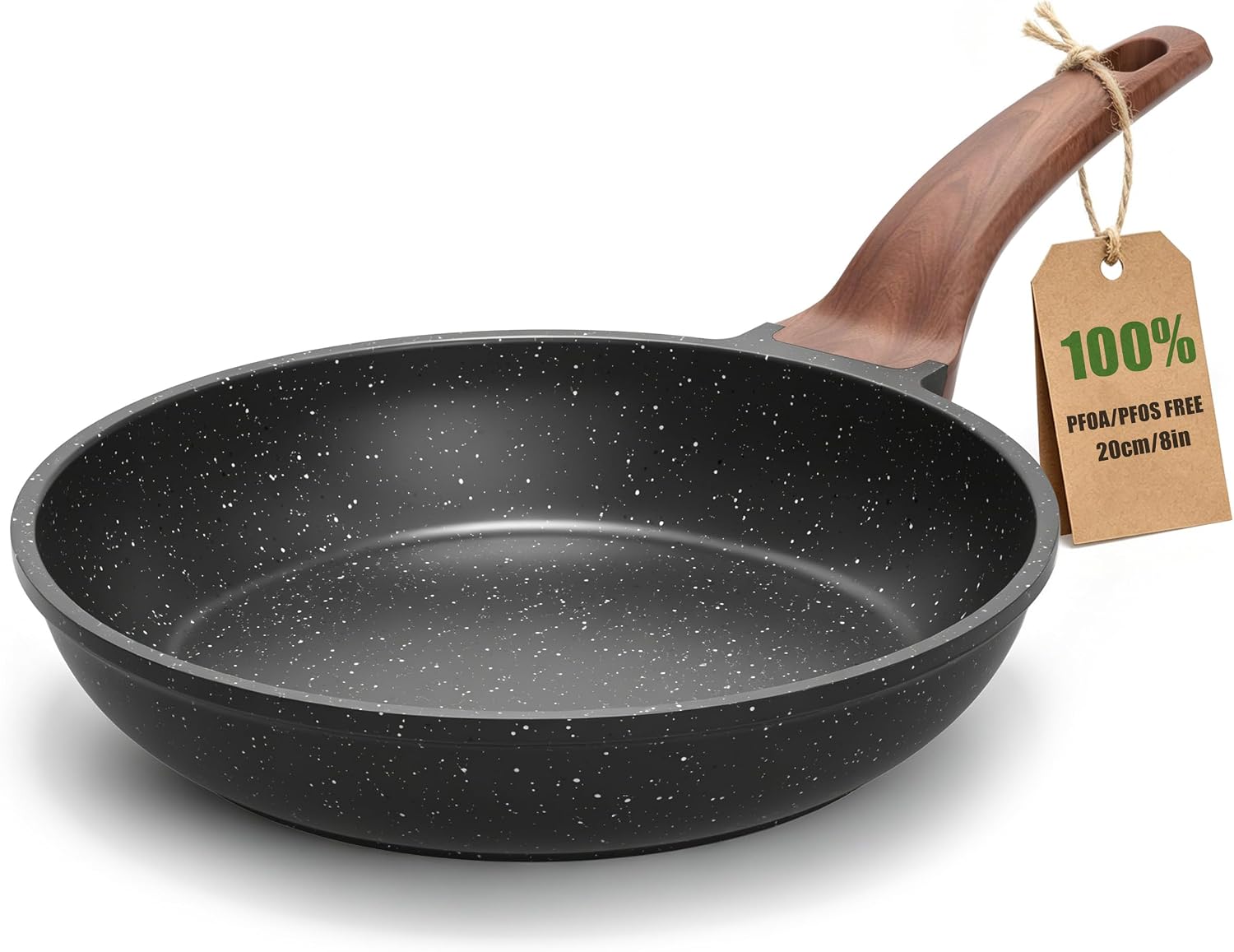
Nonstick coatings greatly simplify cooking and cleanup, but evaluating the underlying chemical composition is essential for peace of mind. Many modern budget pans feature advanced ceramic, granite, or stone-based layers designed to be completely free of harmful substances like PFOA, PFOS, lead, and cadmium. Reviewing these safety attributes helps ensure your food remains uncontaminated during everyday frying tasks.
Choosing a toxic-free coating also allows you to cook with significantly less oil or butter, supporting healthier dietary choices without sacrificing food release performance. A smooth nonstick layer prevents sticky foods like cheese and eggs from bonding to the metal, making post-cooking maintenance as simple as a quick wipe with a damp paper towel.
Handle Design and Ergonomic Comfort
The handle of your frying pan plays a major role in everyday cooking safety and comfort. Bakelite and plastic handles are popular choices because they typically feature heat-resistant properties that stay cool to the touch during standard stovetop use. This prevents accidental burns when moving the skillet between burners or lifting heavy ingredients out of the pan.
Ergonomic contours provide a secure grip, reducing hand fatigue during long sautéing sessions or rapid flipping motions. Additionally, many handles include a convenient hanging hole at the end, allowing you to store the pan vertically on a kitchen rack to save valuable cabinet space in smaller kitchens.
Pan Capacity and Serving Size
Matching the physical capacity of your frying pan to your household needs prevents daily cooking frustrations. Smaller 8-inch pans are exceptionally well-suited for single servings, individual omelettes, or quick breakfast tasks. However, if you regularly cook for multiple people or large families, stepping up to a wider 10-inch or higher-capacity skillet provides the necessary surface area.
Assessing your typical recipes helps determine the right size without cluttering your kitchen with oversized cookware. While compact pans heat up rapidly and store easily in tight spaces, they inherently limit batch cooking, requiring you to prepare ingredients sequentially rather than handling everything in a single cooking session.
Pour Spouts and Liquid Management
Pour spouts integrated into the rim of a frying pan offer a subtle yet impactful advantage during food preparation. These small indentations allow you to transfer sauces, warm soups, and excess pan juices smoothly from either side of the skillet. Without spouts, pouring liquids often leads to messy drips running down the exterior walls of the pan.
This feature benefits both left-handed and right-handed cooks who regularly prepare dishes involving batters or gravies. By ensuring a precise, controlled stream, pour spouts keep your countertops clean and eliminate the need for extra utensils or funnels when transferring fluids into storage containers or serving dishes.
Cleaning and Maintenance Requirements
Understanding the cleaning instructions provided by the manufacturer helps extend the lifespan of your affordable frying pan. Many nonstick skillets require hand washing with a soft sponge and mild soap rather than machine washing in a dishwasher. Harsh detergents and high-heat dishwasher cycles can degrade specialized coatings over time, reducing their nonstick effectiveness.
Adopting gentle cleaning habits preserves the smooth release properties and prevents premature wear on delicate stone or ceramic layers. Furthermore, using moderate heat settings during cooking protects both the handle and the coating, ensuring your budget-friendly cookware remains a reliable kitchen staple for years.
Frequently asked questions
Can I use metal utensils on these nonstick frying pans?
Using metal utensils on nonstick frying pans is generally discouraged because sharp edges can scratch, chip, or compromise the protective coating. Scratches ruin the smooth release properties, causing food to stick and reducing the overall lifespan of the skillet. Instead, manufacturers recommend opting for wooden, silicone, or heat-resistant plastic utensils when flipping eggs, pancakes, or sautéing vegetables. Adopting this simple habit preserves the integrity of ceramic, granite, and stone-based surfaces, ensuring your budget cookware maintains its effortless nonstick performance through countless everyday meals.
Do all cheap frying pans work on induction cooktops?
Not all affordable frying pans function on induction cooktops, because induction technology requires a magnetic metal base to generate heat. While traditional aluminum pans lack magnetic properties, many modern budget skillets incorporate specialized stainless steel plates or high magnetic conductive bases specifically designed for induction compatibility. Before purchasing a pan for an induction stove, you must verify the specifications to ensure the bottom supports magnetic induction cooking. Choosing an incompatible model will result in the burner failing to heat the pan entirely.
How should I clean a nonstick pan without ruining the coating?
Cleaning a nonstick pan safely involves letting the skillet cool completely before washing it to prevent thermal shock warping. You should use warm water, a mild dish soap, and a soft sponge or cloth rather than abrasive scouring pads or steel wool. Even when a listing indicates dishwasher safety, hand washing is frequently advised to protect the delicate nonstick layers from harsh detergents. Gently wiping away residue, rinsing thoroughly, and drying with a soft towel keeps the surface clean without damaging the coating.
Are PFOA-free nonstick coatings completely safe for daily cooking?
PFOA-free nonstick coatings are manufactured without perfluorooctanoic acid, addressing major health and environmental concerns associated with older cookware formulas. These modern stone, granite, and ceramic surfaces allow home cooks to prepare daily meals using minimal oil or butter. While they provide safe and toxin-free food release during normal cooking operations, it remains important to follow manufacturer guidelines regarding temperature limits. Avoiding excessively high heat settings prevents thermal degradation of the coating, ensuring safe and reliable performance over the lifespan of the pan.
Why do some small frying pans include dual pour spouts?
Dual pour spouts are incorporated into the rim of certain frying pans to simplify the transfer of liquids, sauces, and batters. When cooking eggs, pan sauces, or pancake mixtures, these side indentations provide a controlled channel that prevents messy drips down the outer walls of the skillet. Designed to accommodate both left-handed and right-handed users equally, pour spouts eliminate the frustration of spills during plating. This thoughtful design addition makes transferring fluids clean and precise without requiring extra kitchen tools or funnels.