Appliances · Buying Guide
Best Tools for Cleaning Old Cast Iron Skillets and Pans
Reviving vintage or neglected cookware requires the right physical tools and maintenance supplies to strip away built-up residue without harming the underlying metal seasoning. Whether you are dealing with years of accumulated carbon or light surface grime on your vintage cookware, selecting appropriate cleaning accessories makes the restoration process entirely manageable for home cooks.
From stainless steel chainmail scrubbers to natural plant-based soaps, conditioning oils, and traditional bristle brushes, various specialized options exist for daily skillet maintenance and deep restoration work. Understanding how each accessory operates helps you choose the most suitable items to restore your heavy-duty kitchen pans safely and keep them functioning for generations.
As an Amazon Associate, StacyLaughs earns from qualifying purchases.
Buying guide
Choosing Between Metal Mesh and Bristles
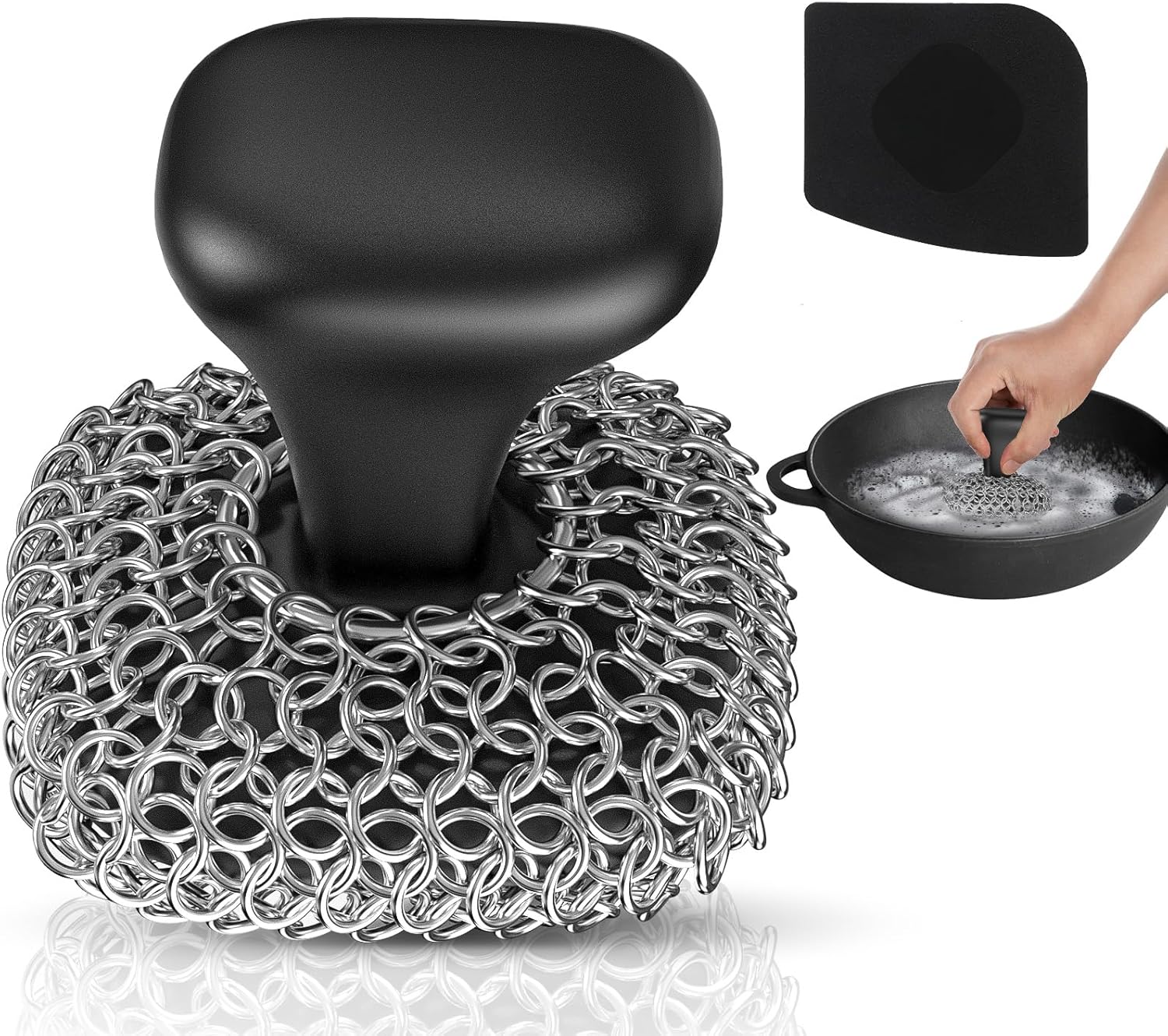
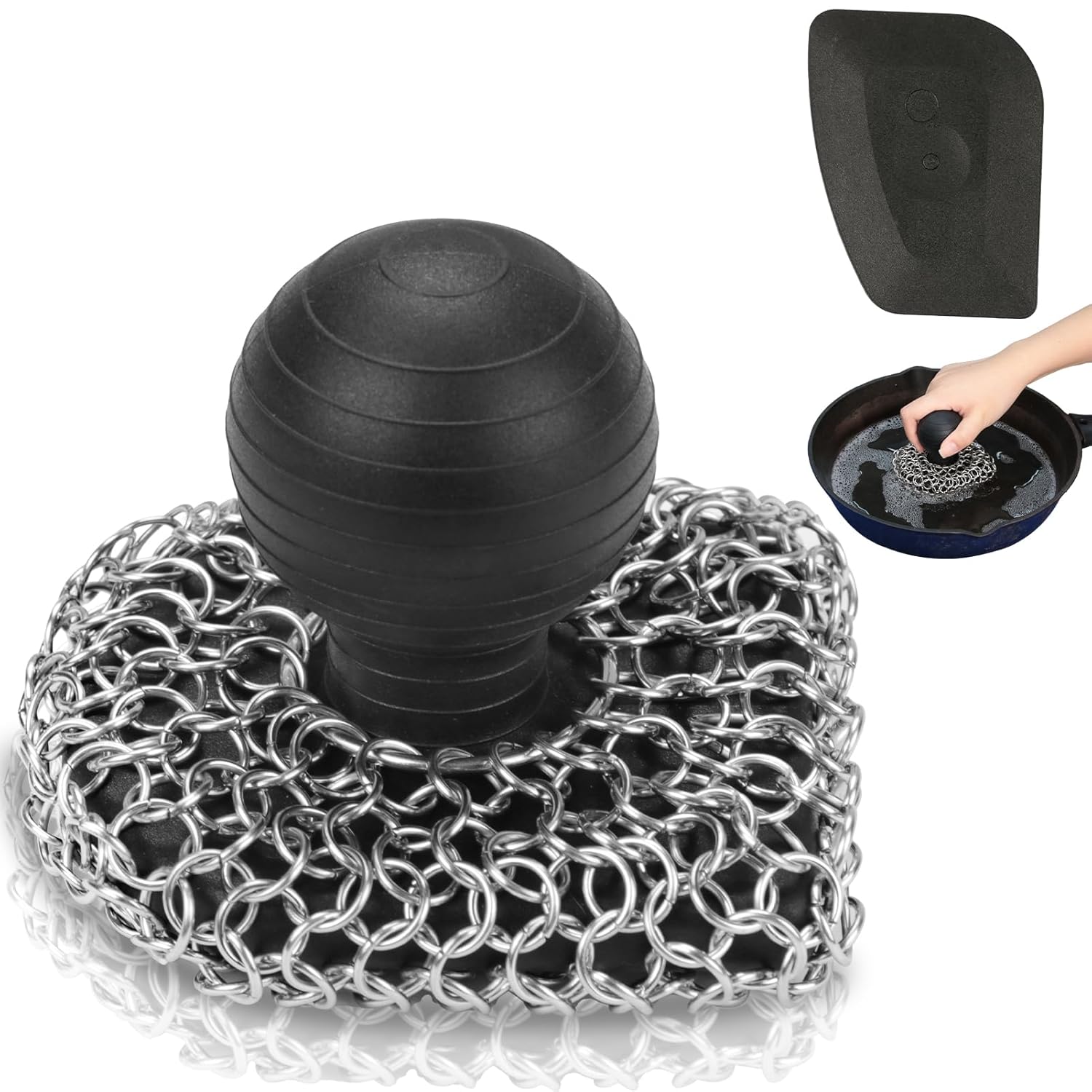
Selecting the right physical cleaning accessory depends heavily on the current condition of your vintage or daily cookware pieces. Metal mesh options excel at removing stubborn carbon, rust spots, and heavy buildup quickly without flattening underlying seasoning layers. These chainmail tools provide aggressive scrubbing power suited for neglected pans that require intensive restoration work.
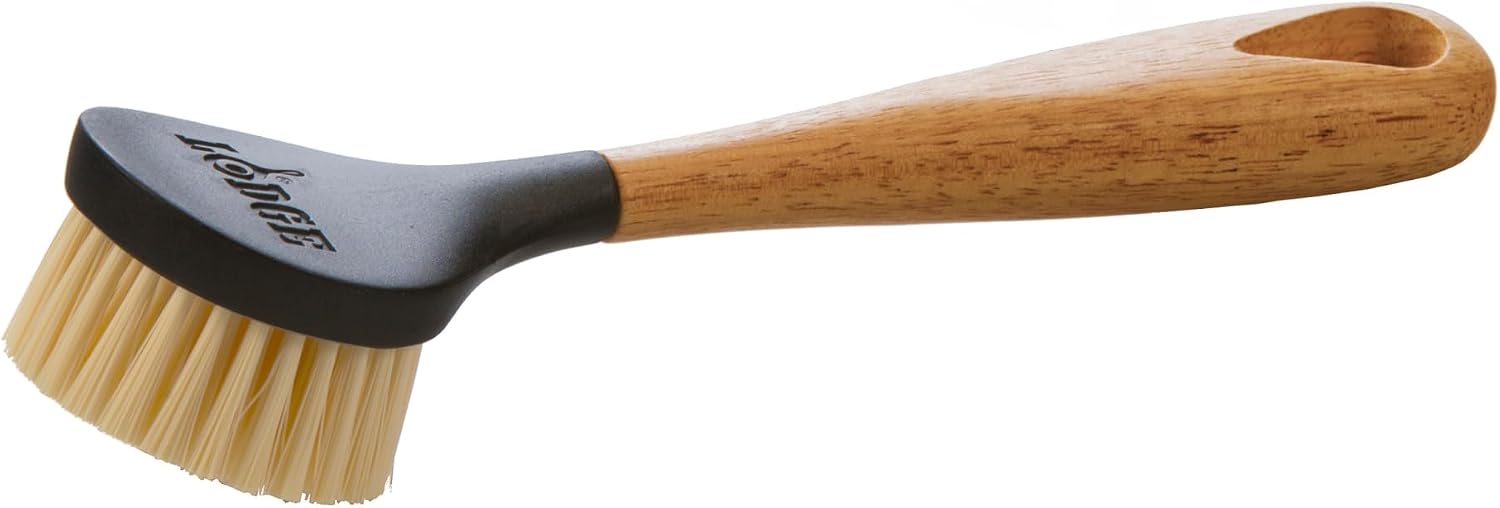
Traditional bristle brushes offer a familiar cleaning action that is ideal for routine daily maintenance and light food residue removal. While brushes lack the raw scraping power of stainless steel rings, they protect delicate surfaces and clean quickly under warm running water. Matching the tool to your pan's current state ensures efficient cleaning performance without unnecessary wear.
Evaluating Scraper Materials and Heat Resistance
Pan scrapers manufactured from durable synthetic polymers like ABS plastic or nylon play a vital role in lifting stuck-on food particles before wet scrubbing begins. Reviewing maximum heat resistance ratings ensures the chosen scraper withstands warm tap water or residual pan warmth safely during active kitchen chores. These rigid edges allow home cooks to wedge debris away from tight interior corners without gouging flat metal cooking surfaces.
Choosing high-quality polymers prevents premature cracking and extends the functional lifespan of your scraping tools across repeated heavy-duty washing sessions. A well-designed scraper handles angled edges efficiently, reducing the physical effort required to clear hardened grease. Pairing a solid scraper with your preferred scrubber creates a complete maintenance system for older iron skillets.
Selecting Soaps and Conditioning Oils
Maintaining older cast iron cookware requires specific cleaning formulas that remove grime without stripping away the protective seasoning layers built up over years of regular cooking. Plant-based liquid soaps free from harsh sulfates, parabens, and petrochemicals provide safe cleansing action while preserving the integrity of seasoned metal surfaces. These specialized cleansers clean effectively while remaining gentle on your hands during washing.
Post-cleaning conditioning oils formulated with food-grade ingredients prevent moisture accumulation and keep pans ready for future baking or searing tasks. Selecting refined oil options that resist turning rancid over time ensures long-term storage success without unpleasant odors developing inside your kitchen cabinets or pantries. Proper oil conditioning enhances food release properties and keeps your iron cookware looking rich and dark.
Ergonomic Handle Designs for Comfort
Scrubbing heavy iron skillets can easily strain hands and wrists during extended cleaning sessions or deep restoration projects. Look for cleaning accessories featuring thicker silicone handles, anti-slip grip textures, or raised palm supports specifically designed to distribute downward pressure evenly. These ergonomic enhancements reduce physical strain and ease hand fatigue while you tackle stubborn baked-on residues inside deep Dutch ovens or heavy skillets.
A secure, comfortable grip significantly improves manual control when applying extra force to stubborn carbon spots. Ergonomically shaped tools make routine kitchen cleanup feel less burdensome, which encourages consistent cookware maintenance after every heavy meal preparation task. Investing in comfortable grips transforms an ordinary chore into a manageable part of your daily kitchen routine.
Storage and Maintenance Considerations
Proper post-cleanup storage keeps your kitchen cleaning tools hygienic and reliably ready for future use. Accessories constructed from solid silicone and high-grade stainless steel prevent moisture, mold, and food particles from getting trapped inside hidden hollow cavities during washing. Selecting solid-core designs eliminates common sanitation hurdles associated with traditional hollow cleaning brushes or sponges.
Allowing all metal mesh rings, scrapers, and brushes to dry thoroughly before storing prevents unwanted rust formation or material degradation over time. Checking manufacturer dishwasher compatibility also simplifies routine sanitation between heavy cooking projects, saving valuable time in a busy kitchen. Organizing your cleaning gear neatly ensures effortless access whenever skillet maintenance is required.
Versatility Across Different Cookware Shapes
Cast iron cookware comes in many distinct configurations, including traditional round skillets, square griddles, curved woks, and deep Dutch ovens. Selecting cleaning tools equipped with adaptable corner designs or flexible mesh structures ensures thorough cleaning coverage across diverse interior contours and sloping walls. A flexible cleaning accessory conforms easily to changing pan geometries without leaving food residue behind in hard-to-reach areas.
Versatile cleaning kits handle multiple surface types, successfully extending their functional utility beyond simple frying pans to pizza stones and metal baking sheets. Evaluating shape compatibility before purchasing prevents missed spots and guarantees uniform cleaning results across your entire specialty cookware collection. Having adaptable tools simplifies the upkeep of mixed kitchen arsenals without requiring specialized gadgets for every single pan.
Frequently asked questions
Can I use soap when cleaning old cast iron skillets?
Traditional dish detergents were once avoided because they contained harsh lye, but modern formulated cast iron soaps use natural plant-based ingredients that clean safely without stripping seasoned layers. Using specialized gentle soaps helps eliminate stubborn food odors and washes away surface grease without harming the protective polymerized oil finish on your cookware. However, standard dishwashing liquids should still be used sparingly or avoided if you prefer purely mechanical cleaning methods involving water and a chainmail scrubber alone.
How do I remove heavy rust from a vintage cast iron pan?
Removing heavy rust and ancient carbon from a neglected vintage skillet requires physical abrasion combined with proper washing tools. Stainless steel chainmail scrubbers and rigid plastic scrapers work effectively to scour away flaking rust and hardened food debris down to the bare metal surface. Once the physical buildup is cleared and the pan is thoroughly washed and dried, applying a food-grade conditioning oil or seasoning oil helps restore the protective barrier against future moisture damage.
Are chainmail scrubbers safe for seasoned cast iron surfaces?
High-grade 316 stainless steel chainmail scrubbers are designed to remove baked-on food particles without damaging the underlying polymerized seasoning layers of your cast iron cookware. The smooth, rounded rings provide enough abrasive friction to lift stuck-on carbon while gliding smoothly over the hardened oil finish. As long as you avoid using excessive manual force or harsh metal scrapers on delicate spots, chainmail scrubbers offer a safe mechanical cleaning solution for daily maintenance and restoration.
Do I need to re-season my skillet after every cleaning session?
You do not need to perform a full oven seasoning cycle after every routine cleaning session, provided the protective oil finish remains intact. Routine washing with gentle soaps or water typically removes surface debris without harming the core seasoning layer. However, applying a very thin layer of food-grade conditioning oil after drying your pan helps maintain moisture resistance and keeps the cooking surface smooth and protected for your next meal preparation task.
Can cast iron cleaning tools go in the dishwasher?
Many modern cast iron cleaning accessories, such as silicone-backed chainmail scrubbers, plastic pan scrapers, and synthetic bristle brushes, feature dishwasher-safe construction for effortless sanitation. Placing these durable accessories in the dishwasher helps clear away trapped oils and food residues quickly after messy cooking projects. However, you should always ensure that metal components are dried completely after the dishwasher cycle finishes to prevent any potential water spotting or rust formation over extended periods of time.