Appliances · Buying Guide
Best Cooks Non Stick Cookware for Every Kitchen Setup
Finding the right cooks non stick cookware can transform daily meal preparation, helping you release food easily and clean up without frustration. Whether you are searing delicate proteins, simmering savory sauces, or boiling fresh vegetables, having dependable pots and pans makes all the difference in your kitchen routine and keeps daily cooking enjoyable.
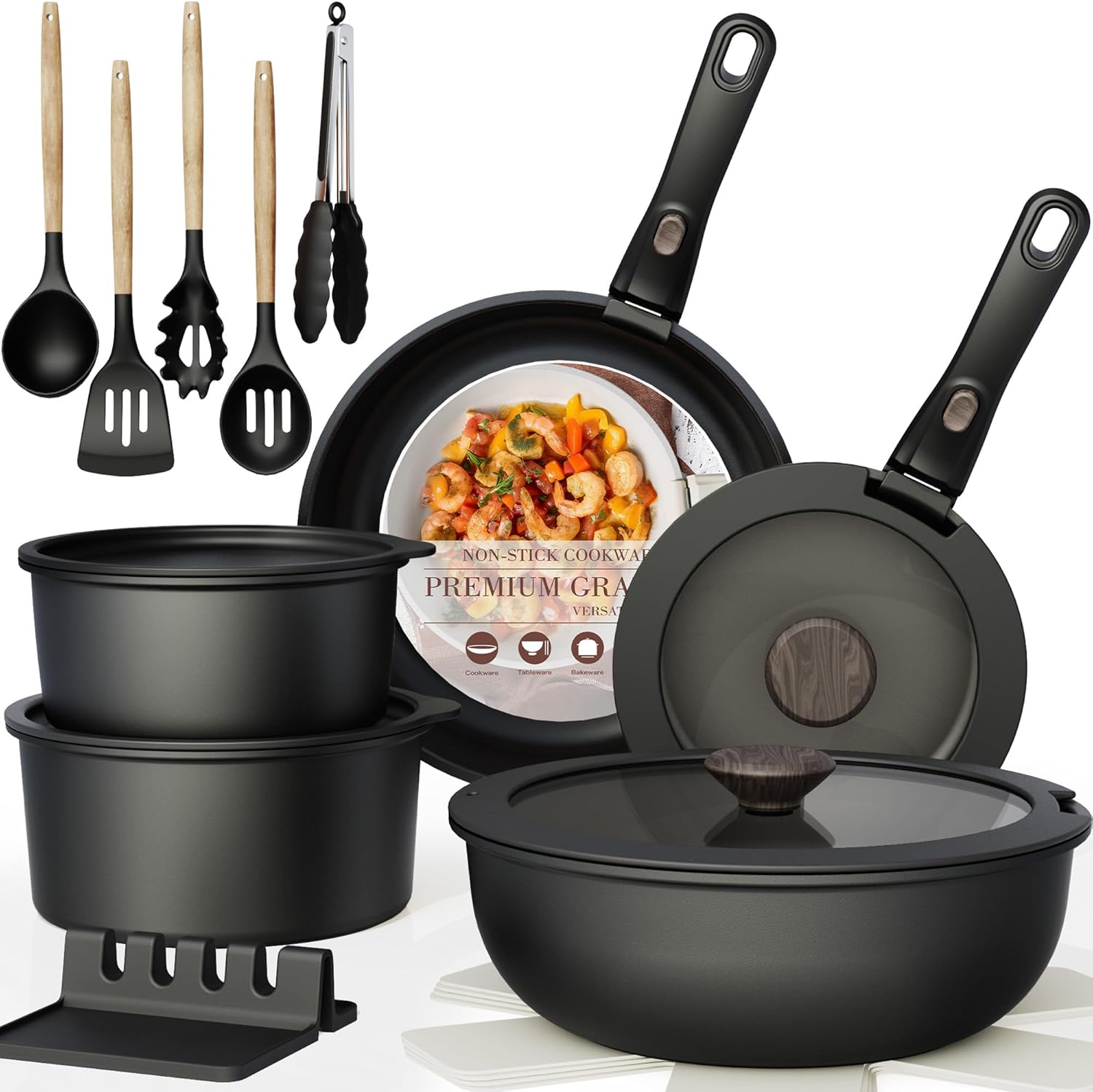
Different sets offer distinct configurations, ranging from innovative removable handles for compact cabinet storage to durable hard-anodized aluminum builds that provide rapid heat distribution. Carefully evaluating your specific stove type, available kitchen storage space, and everyday cooking habits ensures you select a complete collection that matches your home culinary tasks efficiently.
As an Amazon Associate, StacyLaughs earns from qualifying purchases.
Buying guide
Material Composition and Heat Distribution
The foundational material of your pots and pans dictates how efficiently heat travels from the burner to your food. Aluminum remains a popular choice because it heats rapidly and distributes thermal energy evenly across the cooking surface. Hard-anodized aluminum undergoes an electrochemical process that hardens the metal, making it exceptionally durable against everyday wear and tear.
Selecting heavy gauge construction prevents warping over time, ensuring your cookware maintains flat contact with stove burners. Fast thermal transfer reduces hot spots, allowing delicate sauces to simmer without scorching. Matching the material build to your typical cooking style ensures consistent results whether you are searing meats or boiling water.
Nonstick Coatings and Chemical Safety
Nonstick coatings transform daily cooking by allowing food to slide effortlessly across the surface with minimal oil. Modern manufacturing techniques frequently emphasize formulations free from PFOA, lead, and cadmium, providing peace of mind for health-conscious households. Reinforced layers enhance scratch resistance, helping the coating maintain its smooth release properties through months of regular meal preparation.
Protecting your nonstick surface requires using wooden or silicone utensils instead of metal tools that can easily gouge the delicate finish. Even when coatings feature robust durability, gentle handling preserves their operational lifespan. Evaluating chemical safety disclosures and coating descriptions helps you choose cookware that supports reliable culinary tasks.
Handle Styles and Ergonomic Comfort
Handle design plays a crucial role in kitchen safety, influencing how securely you can lift heavy pots filled with liquid or food. Riveted silicone or stainless steel handles provide a sturdy, heat-resistant grip that stays comfortable during long cooking sessions. Ergonomic contours prevent hand fatigue when transferring heavy pans from the burner to nearby countertops.
Detachable handles offer an alternative approach, letting you remove grips entirely to save cabinet space or transition dishes directly into the oven. While removable systems require extra handling steps, they eliminate protruding grips that crowd small kitchens. Weighing permanent riveted comfort against modular storage flexibility helps tailor your choice.
Storage Efficiency and Stackable Designs
Kitchen cabinet space is often at a premium, making storage efficiency a top priority when selecting cookware sets for your home. Stackable designs featuring nesting pans and removable handles significantly reduce the footprint required inside crowded cupboards. Protective felt pads placed between stacked pieces prevent scratching, keeping nonstick surfaces pristine during storage.
Traditional sets with fixed long handles and bulky lids demand dedicated shelf space or specialized hanging racks. Assessing your available kitchen storage before purchasing prevents cluttered cabinets and frustrating daily organization challenges. Choosing a space-saving configuration allows you to own a comprehensive collection without overwhelming your kitchen layout.
Stovetop Compatibility and Heat Sources
Ensuring your new cookware matches your kitchen's cooktop is essential for successful meal preparation. Gas and electric coil cooktops accommodate virtually all aluminum cookware sets without issue. However, induction cooktops require magnetic bases to generate heat, meaning traditional aluminum pans will fail to warm up unless specifically engineered with induction-compatible steel disks embedded in the bottom.
Glass-ceramic smooth tops also demand flat-bottomed pots to ensure efficient thermal transfer and prevent scratching delicate glass surfaces during movement. Checking compatibility specifications before buying guarantees that your selected pots and pans will function properly on your specific stove without unexpected heating delays or performance issues.
Cleaning Methods and Maintenance Practices
Maintaining your nonstick cookware properly extends its functional lifespan and keeps food releasing smoothly during every meal preparation. Many modern sets offer dishwasher-safe construction for effortless cleanup after busy family dinners. Other collections recommend gentle hand washing with mild soap and a soft sponge to preserve specialized exterior finishes and delicate coatings.
Avoiding abrasive scrubbing pads and harsh chemical cleaners protects the nonstick layer from premature degradation over time. Following manufacturer maintenance guidelines ensures your pots and pans remain reliable culinary partners for years of cooking. Balancing the convenience of machine washing against recommended hand-care practices helps you choose a set matching your lifestyle.
Frequently asked questions
Can I put nonstick pots and pans in the dishwasher?
Whether nonstick cookware can go into the dishwasher depends entirely on the specific manufacturer guidelines for each collection. Some sets feature dishwasher-safe materials that allow for convenient machine cleaning, while others explicitly recommend gentle hand washing to preserve exterior textures and nonstick coatings. Always check the product specifications before running pots through a dishwasher cycle. Hand washing with mild soap and a soft sponge is generally the safest way to protect delicate nonstick surfaces from harsh detergents and high heat.
What utensils should I use with nonstick cookware?
Using wooden, silicone, or plastic utensils is strongly recommended when cooking with nonstick pots and pans. Metal spatulas, forks, and spoons can easily scratch, gouge, or peel the delicate nonstick coating, ruining the smooth food release properties of your cookware. Even when manufacturers highlight durable reinforced surfaces, avoiding metal tools prevents accidental damage during active cooking tasks. Equipping your kitchen with heat-resistant silicone turners and wooden spoons ensures your cookware stays in pristine condition for a long time.
How do stackable cookware sets save space?
Stackable cookware sets save space by allowing pots and pans to nest neatly inside one another, drastically reducing the footprint required in crowded kitchen cabinets. Many space-saving systems feature removable handles that detach completely, eliminating protruding grips that normally prevent efficient stacking. Additionally, inclusion of specialized pan protectors prevents stacked pieces from scratching each other. This modular design helps small kitchens accommodate comprehensive twenty-piece collections without cluttering shelves or requiring specialized hanging storage racks.
Are all nonstick cookware sets compatible with induction cooktops?
No, not all nonstick cookware sets work with induction cooktops. Induction cooking relies on a magnetic field to generate heat directly within the pan, meaning standard aluminum cookware will not heat up unless it features a specially bonded magnetic stainless steel base. If your kitchen utilizes an induction stove, you must verify that the product specifications explicitly list induction compatibility before purchasing. Choosing non-compatible sets will result in a burner that fails to warm your pots and pans.
Why do some frying pans include a heat indicator?
Frying pans with built-in heat indicators feature a specialized visual marker on the cooking surface that changes appearance or color once the pan has reached the optimal preheating temperature. This feature takes the guesswork out of cooking by letting you know the exact moment to add ingredients, ensuring even searing and better cooking results. Preheating your pan properly helps prevent food from sticking to the nonstick surface, making both cooking performance and subsequent cleanup much easier.