Appliances · Buying Guide
Best Copper Cookware Set Options for Precision Home Cooking
Finding the right copper cookware set transforms how you tackle everyday kitchen tasks, bringing professional-grade heat responsiveness directly to your home stovetop. Copper is celebrated for its unmatched thermal conductivity, meaning pots and pans heat up rapidly and cool down the moment you adjust the temperature, giving you total control over delicate sauces and searing meats alike.
When shopping for these premium sets, carefully evaluating your daily cooking habits, stovetop compatibility, and maintenance preferences ensures you select a collection that matches your routine. Whether you prefer the convenience of dishwasher-safe layered metals or the traditional appeal of polished surfaces paired with sturdy brass handles, exploring these top options helps clarify your ideal kitchen investment.
As an Amazon Associate, StacyLaughs earns from qualifying purchases.
Buying guide
Understanding Copper Construction
When shopping for copper cookware, understanding how the metal is constructed directly dictates your daily cooking experience. Pure copper provides unmatched heat conductivity, but many modern sets utilize bonded metal layers to combine copper responsiveness with durable stainless steel interiors that resist corrosion and preserve natural food flavors during extended simmering tasks.
Full rim-to-rim bonded cores ensure heat travels evenly up the sides of the pan, whereas base-only copper discs heat primarily from the bottom surface. Carefully consider your typical recipes and evaluate whether you require absolute edge-to-edge thermal control or if a responsive base adequately supports your everyday family meal preparation routines.
Stovetop Compatibility and Induction Needs
Stovetop compatibility remains a critical factor when selecting your cookware set, especially if you cook on modern smooth glass or induction elements. Traditional copper lacks the magnetic properties required for induction burners, meaning many classic collections require specialized magnetic exterior wraps or separate metal interface discs to function properly in modern kitchens without frustrating performance drops.
Always verify your specific cooktop type before purchasing a collection to ensure seamless performance across gas, electric coil, and ceramic surfaces. Choosing correctly matched materials prevents frustrating heating inefficiencies and guarantees your pots and pans heat evenly and reliably during every single meal preparation session, protecting your valuable long-term kitchen equipment investment.
Cleaning and Maintenance Expectations
Maintaining the polished exterior finish of copper cookware requires understanding routine cleaning expectations and specific manufacturer guidelines before you buy. While some layered stainless steel options permit automated dishwasher cycles, traditional copper surfaces and reactive metal exteriors typically demand careful hand washing with mild soaps to prevent discoloration and preserve their brilliant aesthetic shine over time.
Adhering strictly to these maintenance instructions prevents surface scratches and protects your valuable product warranty coverage over decades of reliable culinary service. Establishing a simple post-cooking cleaning routine ensures your kitchen investment stays beautiful and functional without ever requiring harsh abrasive metal scrubbers that degrade delicate exterior finishes.
Handle Design and Ergonomic Control
The design of pot handles significantly impacts your daily comfort and safety when maneuvering heavy, liquid-filled vessels around a busy kitchen workspace. Ergonomic stainless steel or traditional brass handles provide secure, balanced grips, and structural features like central cutouts help dissipate heat to keep handles noticeably cooler during long stovetop boiling tasks.
Carefully evaluate how each handle attaches to the pan body, as flush interior rivets eliminate food traps and make interior cleaning effortless. Choosing well-balanced handles reduces wrist strain and gives you confident control whether you are actively sautéing vegetables or pouring thick sauces into serving bowls for dinner guests.
Assessing Set Piece Composition
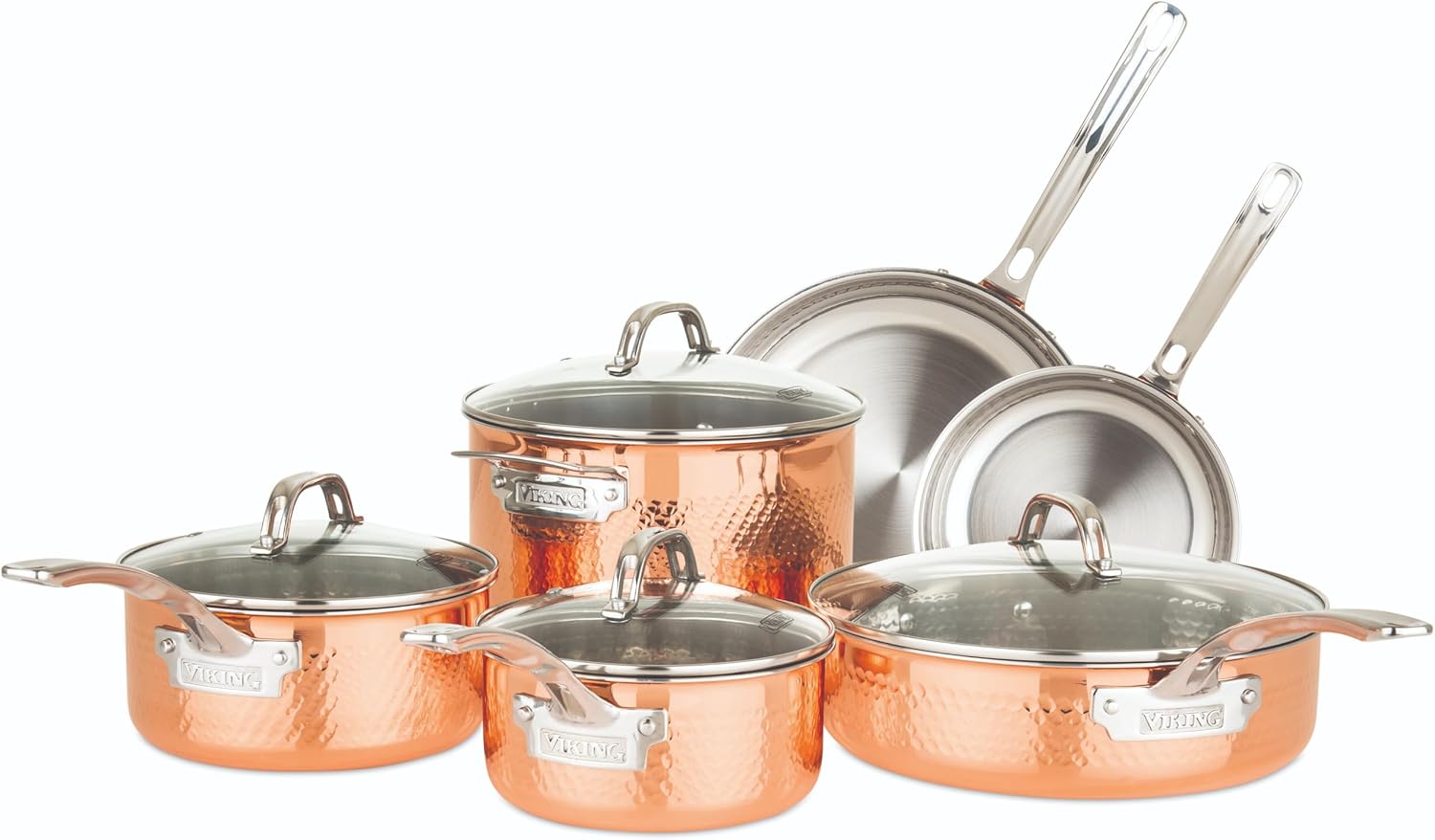
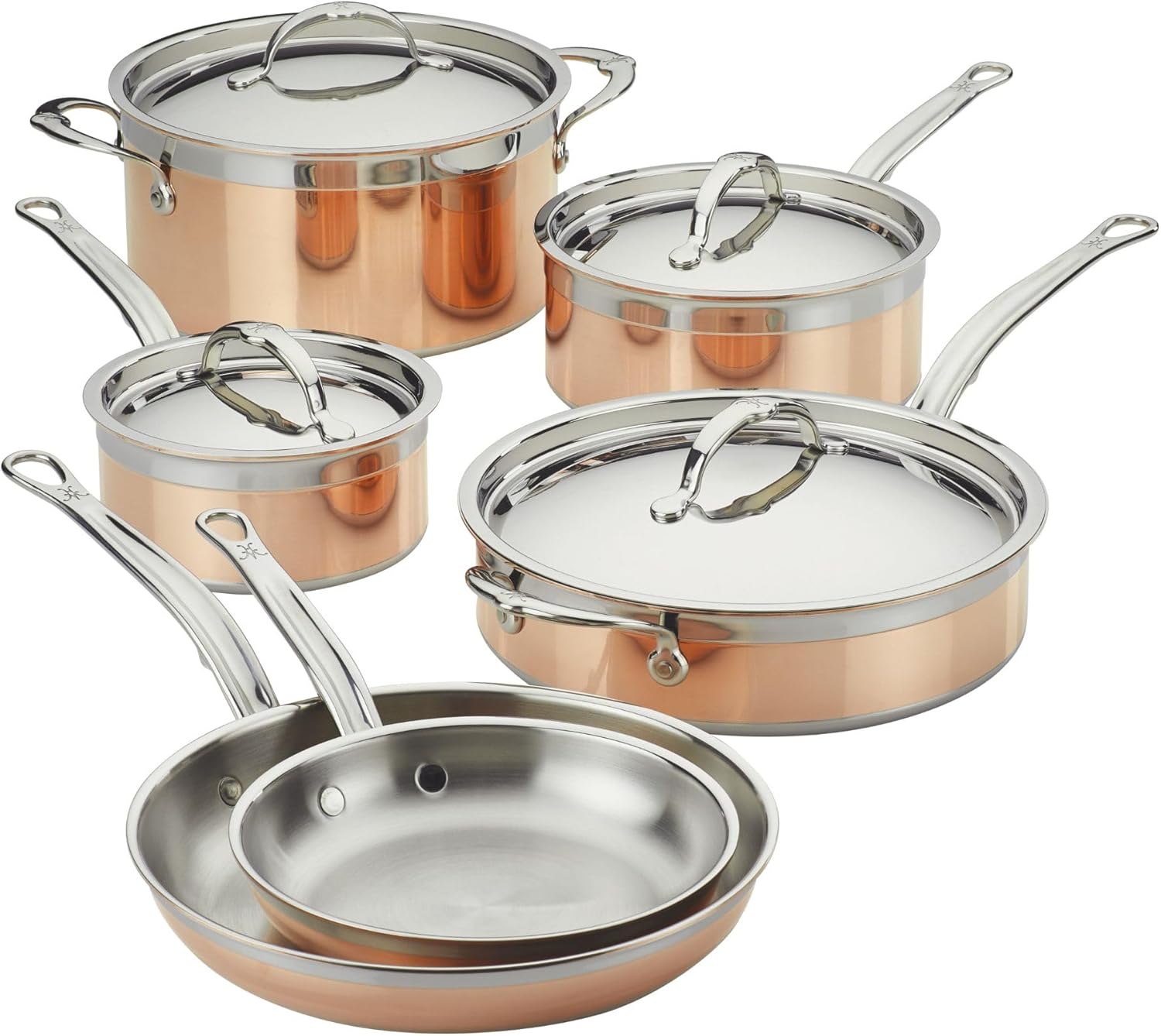
Reviewing the exact piece composition of a cookware set ensures you receive vessels that match your regular cooking style, storage space, and family size. A standard ten-piece collection typically covers frying pans, saucepans, a sauté pan, and a large stockpot, providing essential versatility for everything from morning eggs to evening family soups.
Consider whether specialized vessels like curved splayed pans or multiple saucepan sizes align closely with your daily culinary preferences. Selecting a comprehensive assortment prevents the frustrating need to purchase extra individual pots later on. Furthermore, checking lid inclusions and reinforced pouring rims helps you avoid messy spills and enhances your daily kitchen efficiency.
Storage and Nesting Design
Managing kitchen cabinet space is an important consideration when investing in a comprehensive cookware set, especially when storing bulky pots, large stockpots, and multiple matching glass lids. Many modern copper sets feature thoughtful engineering elements like flush interior rivets and reinforced rims that optimize nesting and stacking capabilities inside crowded kitchen cupboards.
Evaluating how easily the collection fits into your existing kitchen cupboards prevents daily storage frustration and keeps your cooking workspace clean and organized. Choosing space-efficient designs ensures your investment remains accessible, protected from accidental scratching, and extremely convenient to retrieve during rushed family meal preparation times throughout the week.
Frequently asked questions
Can I put copper cookware in the dishwasher?
Whether you can place copper cookware in the dishwasher depends entirely on the specific manufacturing construction of the set you purchase. While certain layered stainless steel collections with protected bases or folded rims are explicitly certified as dishwasher safe, traditional copper cookware sets with exposed copper exteriors or brass handles generally require careful hand washing. Running traditional copper through automated dishwasher cycles can cause severe discoloration, pitting, or surface damage, stripping away the polished aesthetic. Always consult the manufacturer instructions before cleaning.
Are copper cookware sets compatible with induction cooktops?
Traditional pure copper is non-magnetic, meaning standard copper pots and pans will not work directly on induction cooktops without special design modifications. However, many modern copper collections feature engineered magnetic stainless steel bases, wrap-around exterior layers, or fully bonded stainless induction plates specifically designed to work seamlessly on induction surfaces. If a set lacks induction compatibility natively, some manufacturers offer separate metal interface discs that sit between your burner and the pan. Always check the compatibility specifications before buying.
Why do copper pans require lower heat settings?
Copper is an exceptionally efficient thermal conductor, meaning it transfers heat far more rapidly and evenly than traditional stainless steel or cast iron materials. Because of this superior conductivity, pots and pans heat up almost instantly and retain warmth efficiently. Using maximum burner power is unnecessary and can easily cause food to scorch or burn. Furthermore, applying excessive heat over extended periods can damage the cookware materials or warp the metal body. Operating burners at moderate levels preserves your food and protects your investment.
What is the advantage of a rim-to-rim copper core?
A rim-to-rim copper core ensures that the highly conductive copper layer extends continuously from the flat bottom base all the way up the vertical walls of the pot or pan. This complete coverage allows heat to distribute uniformly across the entire cooking vessel rather than concentrating solely on the bottom surface. When simmering thick sauces, braising meats, or reducing liquids, edge-to-edge heating eliminates hot spots that can cause burning, giving you professional-grade temperature control and consistent culinary results across every dish.
How do I prevent discoloration on copper cookware?
Natural copper naturally develops a patina and darkens when exposed to heat, air, and moisture during everyday kitchen use. To minimize unwanted tarnishing and maintain a bright polished appearance, wash your cookware by hand using mild dish soap and soft cloths immediately after cooking. Avoid harsh abrasive scouring pads, steel wool, or bleach, which scratch the metal surface and erode protective linings. Applying specialized copper cleaner periodically can restore the brilliant shine if discoloration develops over time.