Appliances · Buying Guide
Best Copper Electric Frying Pan Options for Versatile Home Cooking
Choosing a reliable electric skillet allows you to expand your daily cooking capabilities without relying solely on a traditional kitchen stovetop. These versatile countertop appliances offer adjustable temperature controls, sturdy handles, and spacious cooking surfaces designed to handle everything from quick morning breakfasts to large family dinners with dependable ease across multiple settings.
Modern electric pans integrate practical features like advanced non-stick ceramic coatings, tempered glass lids, and portable designs that simplify both meal preparation and post-cooking cleanup. Reviewing these distinct manufacturing options helps you carefully identify which heating capacities, physical footprints, and specialty features best match your kitchen space, storage limitations, and everyday cooking routine.
As an Amazon Associate, StacyLaughs earns from qualifying purchases.
Buying guide
Heating Power and Wattage
Selecting the right wattage level determines how quickly your electric frying pan reaches operating temperatures and how well it maintains heat during heavy cooking tasks. Models typically range from 1200 watts to 1500 watts, providing sufficient thermal energy for searing, frying, and simmering various ingredients. Higher wattage systems often recover heat faster after cold food is added to the cooking surface.
When evaluating wattage specifications, consider your kitchen electrical setup and the types of meals you prepare regularly. High-draw appliances require adequate circuit capacity, especially if you operate multiple countertop devices simultaneously. Matching the power rating to your cooking frequency ensures reliable thermal performance without overloading residential wall outlets during family meal preparation.
Temperature Control Precision
Temperature regulation dictates your ability to execute delicate recipes without scorching or undercooking ingredients. Basic models rely on analog dials with a few preset settings, while advanced units offer digital micro-adjustments spanning from one hundred degrees to over four hundred degrees Fahrenheit. Precise digital increments give you exact control over simmering, slow cooking, and high-heat searing tasks.
Assessing your culinary habits helps determine whether you need simple heat tiers or granular digital controls. If you frequently prepare delicate sauces, artisan reductions, or precise slow-cooked dishes, a digital interface with wide temperature ranges provides noticeable advantages. Conversely, straightforward analog dials satisfy casual users who primarily handle basic frying, roasting, and standard family meal tasks.
Surface Coatings and Materials
The interior coating impacts both cooking performance and cleanup convenience across different electric skillet models. Modern designs frequently feature ceramic nonstick surfaces reinforced with titanium or advanced materials that facilitate smooth food release without traditional polytetrafluoroethylene chemicals. These specialized coatings help prevent stubborn food residue accumulation, making post-cooking maintenance much simpler than traditional metal surfaces.
Cast aluminum bases are commonly paired with these nonstick layers to promote even heat distribution from edge to edge across the pan. When maintaining your appliance, follow manufacturer cleaning guidelines carefully to preserve the nonstick properties over time. Rinsing immersible bodies with warm soapy water prevents abrasive damage and extends the functional lifespan of your countertop cookware investment.
Capacity and Physical Dimensions
Choosing the appropriate pan dimensions depends heavily on your household size and available kitchen storage space. Skillets range from standard twelve-inch squares to extra-large fourteen-inch surfaces with varying sidewall depths designed to accommodate family-sized casseroles, stews, and breakfast batches. Larger deep-dish capacities prevent ingredient crowding, ensuring even cooking results when preparing meals for multiple guests or growing households.
Always measure your countertop area and cabinet storage clearance before purchasing a specific electric skillet model. While expansive cooking surfaces offer great versatility for batch cooking, they require substantial storage space. Some modern designs incorporate innovative space-saving features like locking inverted lids that permit vertical side storage to minimize cabinet footprint.
Portability and Storage Features
Transporting hot meals to potlucks, holiday dinners, or family gatherings requires specific design considerations for safety and convenience. Models featuring secure lid clamps and cool-touch handles prevent accidental spills and eliminate the need for cumbersome oven mitts during transit. Additionally, integrated cord wraps help keep power cables tidy while storing the appliance in crowded kitchen pantry spaces.
Space-saving innovations like locking inverted lids allow certain electric skillets to rest securely on their sides inside kitchen cabinets. Evaluating these structural storage features ensures your countertop appliance remains manageable when not in use. Prioritizing transport-friendly clamps and compact storage options transforms a standard skillet into a versatile travel companion for communal dining events and holiday parties.
Lid Design and Visibility
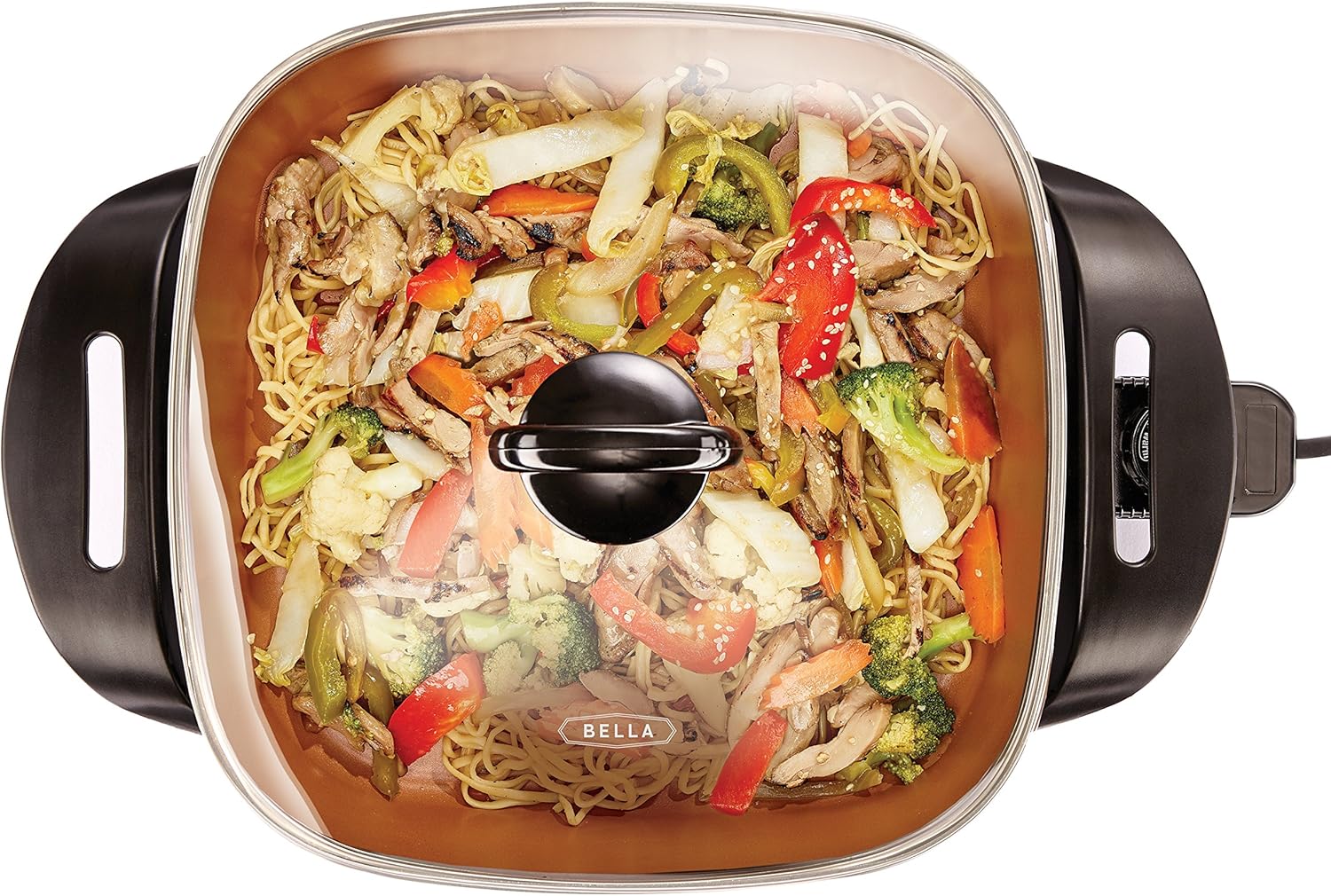
Tempered glass lids play a vital functional role by allowing you to monitor cooking progress without lifting the cover and losing valuable heat. These durable transparent covers help maintain consistent internal temperatures during long simmering or steaming sessions. A well-fitted glass lid ensures moisture remains trapped inside the pan, enhancing flavor development across various recipes.
Inspecting lid construction details helps you understand how well an electric skillet manages heat retention and steam release. Lids designed with secure locking mechanisms or clamps provide added stability during transport, while standard resting lids prioritize easy removal on the countertop. Selecting the appropriate lid style enhances your overall cooking experience and supports efficient meal preparation.
Frequently asked questions
Can I immerse my electric frying pan in water for cleaning?
Many modern electric skillets feature fully immersible cast aluminum bodies once the removable heating probe or digital temperature control module is detached. You should always consult the specific manufacturer instructions provided with your model before submerging any part of the appliance in water. Removable probes must be completely detached and kept dry, while the main skillet body can typically be rinsed with warm soapy water to remove food residue safely without harsh scrubbing.
What are the benefits of a ceramic non-stick coating?
Ceramic non-stick coatings provide a smooth cooking surface that allows food to release easily with minimal added oils or butter. These advanced coatings are generally formulated without harmful chemicals such as PFOA, PFOS, PFAS, lead, or cadmium, offering a thoughtful approach to everyday cookware. Furthermore, a non-stick ceramic surface significantly simplifies post-cooking cleanup by preventing stubborn burned-on food particles from clinging to the base of your electric skillet.
How do I choose between analog dials and digital temperature controls?
Choosing between analog and digital controls depends entirely on your cooking precision needs and recipe complexity. Analog dials typically offer a few broad temperature tiers, making them straightforward and reliable for basic frying, roasting, and general family meals. Digital temperature controls provide granular heat adjustments in precise increments, allowing you to fine-tune temperatures for delicate simmering, slow cooking, and exact searing tasks where consistent thermal accuracy matters most.
Are electric skillets safe to use on kitchen countertops?
Electric skillets are specifically designed for safe countertop use, featuring insulated bases, anti-slip feet, and integrated heat shields to minimize thermal transfer to underlying surfaces. Cool-touch handles further enhance safety by allowing you to maneuver or serve food directly from the pan without burning your hands. However, you should always place the appliance on a stable, heat-resistant surface and ensure adequate clearance around the unit during operation.
How can I store a bulky electric skillet in a small kitchen?
Storing a bulky electric skillet in a small kitchen is much easier when you select models featuring space-saving designs, such as inverted locking lids that let the unit rest safely on its side. Additionally, detachable temperature probes and nested components allow you to minimize the overall cabinet footprint. Always check for integrated cord wraps and sturdy side clamps that keep loose parts organized and secure during storage or transport.