Appliances · Buying Guide
Best Copper Frying Pan Options for Everyday Searing and Sautéing
Choosing the right copper frying pan or copper-tone skillet depends heavily on your daily cooking habits, stovetop compatibility, and preferred maintenance routine. Some modern skillets feature heavy-gauge aluminum cores wrapped in striking hammered copper finishes paired with advanced ceramic nonstick interiors, while others utilize traditional pure copper builds requiring hand washing and careful oil maintenance.
Whether you need a single compact skillet for quick breakfast eggs, a multi-piece set for full family dinners, or a deep square vessel equipped with a steaming rack and frying basket, carefully evaluating each design helps you select the ideal cookware to match your specific kitchen layout and culinary preferences.
As an Amazon Associate, StacyLaughs earns from qualifying purchases.
Buying guide
Material Construction and Heat Distribution
Choosing between heavy-gauge aluminum cores finished in hammered copper tones and solid artisan pure copper builds impacts how your cookware handles heat. Aluminum-based pans distribute thermal energy quickly across the cooking base when paired with spiralized bottoms or forged walls.
Pure copper variations offer exceptional natural thermal conductivity, delivering instantaneous temperature adjustments for precise cooking control. Evaluating your preferred cooking style helps determine whether a lightweight core or a dense metal build suits your kitchen routine best.
Nonstick Surface Types and Maintenance
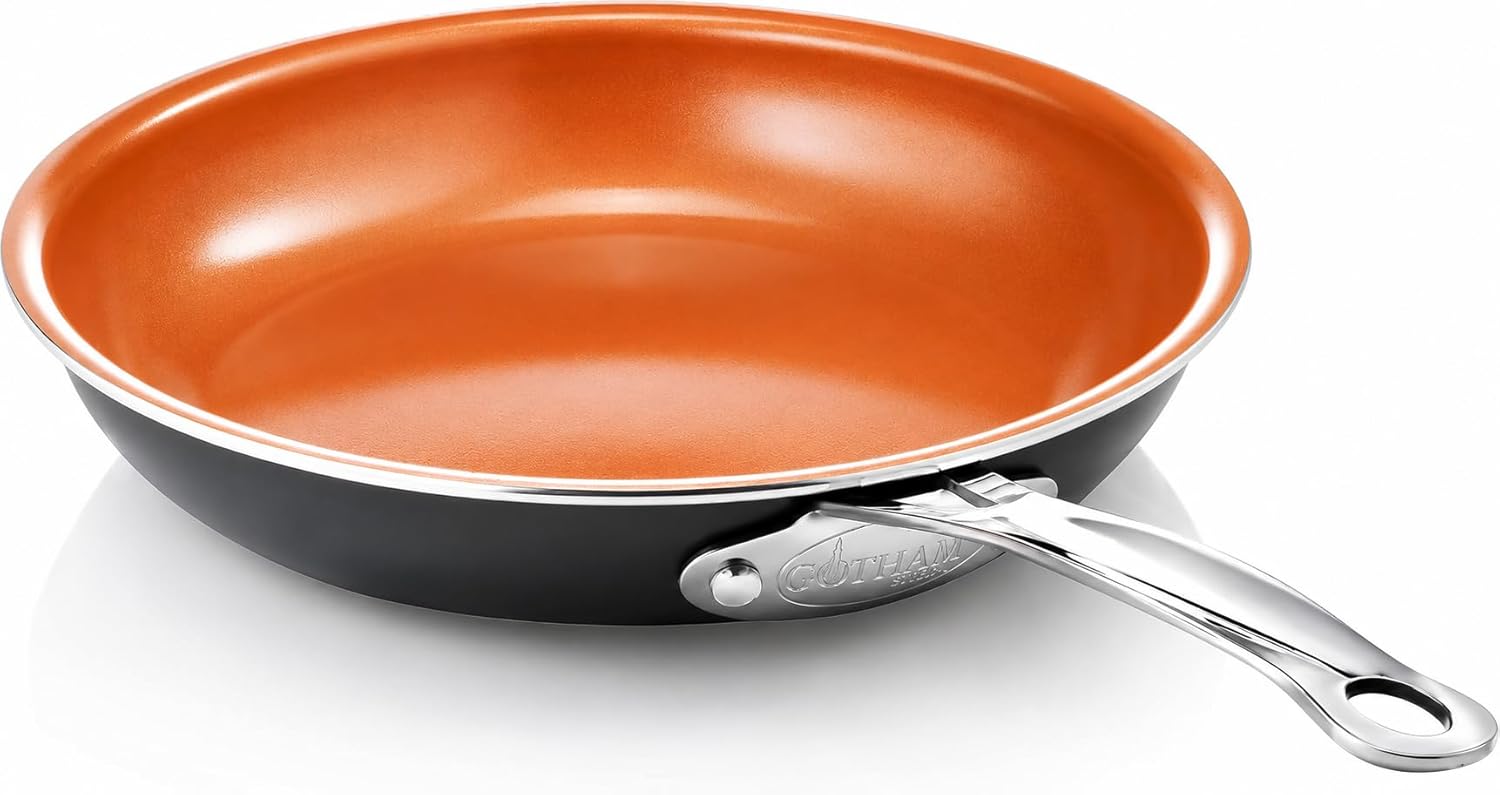
Modern copper-tone cookware frequently utilizes advanced ceramic coatings infused with titanium or synthetic titanium particles to significantly improve scratch resistance and effortless food release. These reinforced nonstick surfaces allow you to cook with minimal oil or butter while ensuring that sticky foods like eggs, pancakes, and delicate fish slide off smoothly without tearing or leaving stubborn residue behind on the cooking surface.
In contrast, traditional uncoated pure copper pans rely entirely on proper seasoning or protective oil applications to prevent surface oxidation. Reviewing whether you prefer a convenient low-maintenance ceramic release layer or an authentic metal cooking surface clarifies your daily cleaning expectations and helps preserve your cookware over years of regular use.
Stovetop Compatibility and Oven Limits
Verifying your kitchen cooktop type is essential before purchasing any frying pan. Many ceramic-coated aluminum skillets function seamlessly across gas, electric, smooth glass surfaces, and induction ranges, giving you versatile placement options across different kitchen environments. However, certain traditional copper pans or specific budget models explicitly omit magnetic induction support, limiting their functional use primarily to gas and electric ceramic cooktops.
Additionally, checking maximum temperature ratings ensures safe transitions from stovetop searing to high-heat oven finishing. Several ceramic frying pans withstand internal heat up to five hundred degrees Fahrenheit, letting you bake casseroles, crisp cornbread, or roast vegetables directly inside the skillet without needing to switch cookware pieces halfway through meal preparation.
Sizing Options and Storage Considerations
Frying pans range from compact 9.5-inch skillets designed for single portions to spacious 12-inch pans and comprehensive multi-piece sets accommodating busy family dinners. Selecting the correct pan size depends heavily on your household head count, available storage capacity, and the types of multi-portion recipes you prepare regularly throughout the week for family and guests.
Larger individual pans and deep square vessels equipped with integrated accessories like fryer baskets and steamer racks require substantial cabinet footprint and vertical clearance. Assessing your available kitchen storage space prevents overcrowding and ensures your cookware remains easily accessible for daily cooking routines without causing frustrating cabinet clutter or risking accidental surface scratches during daily stacking.
Handle Design and Ergonomic Comfort
Handle construction directly influences how comfortably you can lift, tilt, and maneuver a frying pan during active cooking sessions in the kitchen. Many modern ceramic skillets incorporate ergonomic stainless steel handles designed with Y-shapes or integrated steam vents to help disperse heat and keep grips cool to the touch during everyday stovetop cooking tasks.
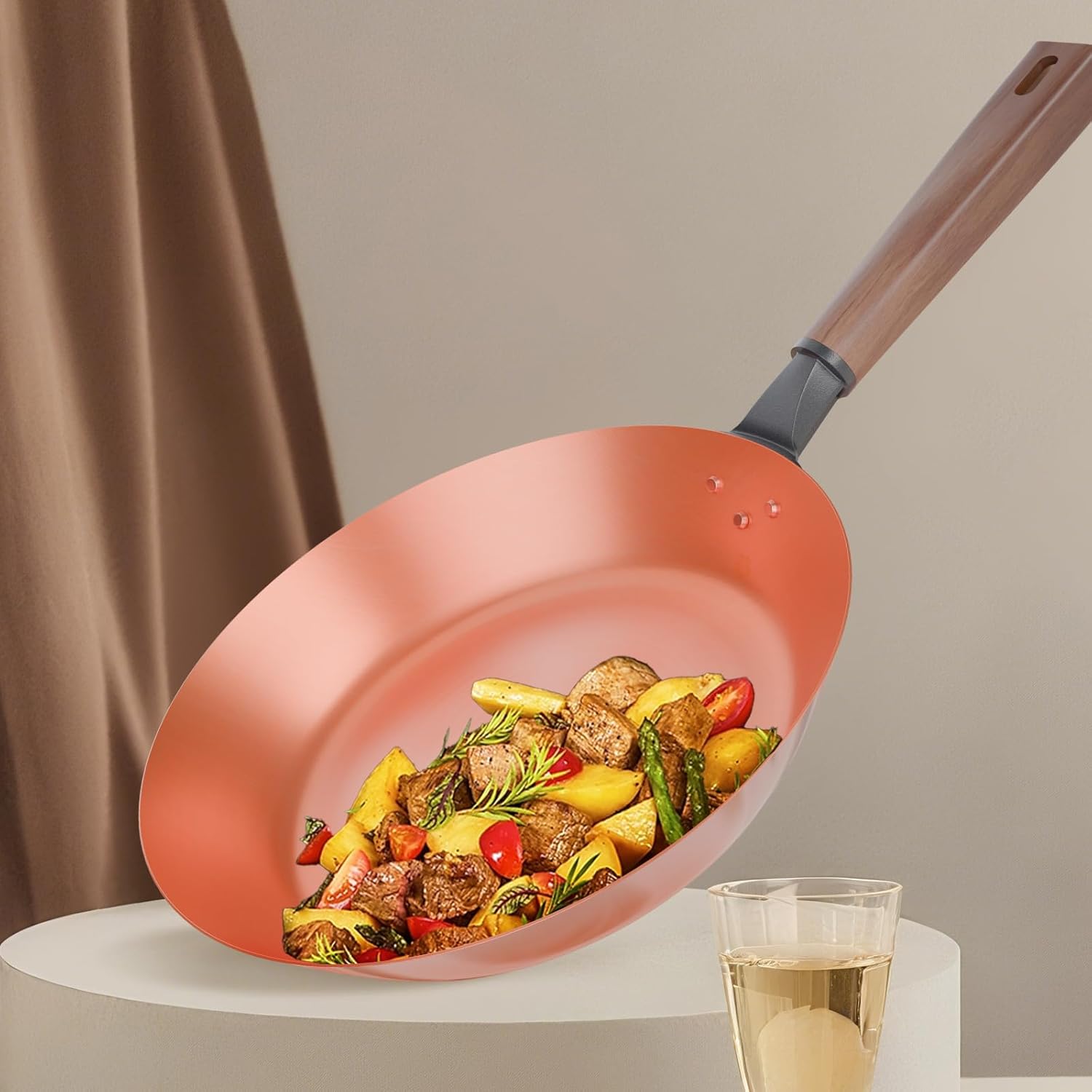
Artisan pure copper cookware frequently utilizes detachable wooden handles that offer a secure, natural grasp while simplifying storage in tight cabinet spaces. Evaluating grip materials and attachment designs ensures you can safely transport filled pans from hot stovetops to serving tables or ovens without physical strain or discomfort during busy family meal preparations.
Cleaning Routines and Long-Term Care
Maintenance requirements vary significantly between modern ceramic nonstick pans and traditional pure copper cookware. Many ceramic-coated models are explicitly rated as dishwasher safe and feature advanced nonstick surfaces that wipe clean effortlessly with warm soapy water, significantly reducing post-meal cleanup effort after preparing family meals and complex dinner recipes every single week.
Conversely, pure copper pans generally require manual hand washing followed by thorough drying and protective vegetable oil applications to prevent natural oxidation over time. Reviewing manufacturer care instructions ensures your chosen cookware maintains its visual appearance, structural integrity, and optimal cooking performance over many years of regular kitchen use without unexpected surface damage or wear.
Frequently asked questions
Can I use metal utensils on ceramic copper nonstick frying pans?
Certain ceramic copper frying pans are reinforced with synthetic titanium or diamond-like particles specifically designed to withstand everyday metal utensils such as spatulas, spoons, and whisks without scratching the cooking surface. However, checking the specific manufacturer guidelines for your exact pan model is always recommended before introducing metal tools. Many traditional or standard nonstick surfaces still perform best when paired with silicone, wooden, or plastic utensils to maximize the longevity of the nonstick coating and prevent accidental surface wear over extended periods of regular cooking.
Are copper-tone frying pans compatible with induction stovetops?
Stovetop compatibility varies across different copper frying pan models. Many aluminum-cored, ceramic-coated copper-tone skillets feature induction-compatible bases that work smoothly on induction ranges alongside gas, electric, and glass cooktops. Conversely, traditional pure copper pans or specific older designs may lack induction support, restricting their use strictly to gas and electric ceramic stoves. Always verify the manufacturer specifications for your chosen pan before purchasing to ensure it matches the specific heating technology installed in your kitchen.
How should I clean and maintain a pure copper frying pan?
Unlike dishwasher-safe ceramic nonstick skillets, pure copper cookware typically requires manual hand washing with warm soapy water to protect its delicate artisan finish. To maintain its appearance and prevent natural oxidation over time, you should dry the pan thoroughly after washing and apply a thin layer of vegetable oil to the copper surface before storing it in a dry place. Following these specific maintenance practices helps preserve the structural integrity and stunning appearance of traditional copper cookware.
Can copper frying pans go safely into the oven?
Many ceramic nonstick frying pans featuring stainless steel handles are rated safe for oven use up to five hundred degrees Fahrenheit, allowing you to seamlessly transition meals from stovetops to ovens for baking, roasting, or finishing casseroles. However, you must always check the individual product specifications, as handles constructed from wood or other specialized materials may have different temperature limitations or may not be suitable for high-heat oven exposure. Verifying these limits prevents accidental damage to your cookware.
Do ceramic copper frying pans require cooking oils or butter?
Advanced ceramic nonstick coatings featured on many copper-tone frying pans provide superior food release properties that allow you to cook successfully with little to no oil or butter. Foods like eggs, pancakes, fish, and cheese slide off the reinforced surface cleanly, supporting healthier everyday meal preparation without heavy grease. While oil is not strictly required for food release, you can still use small amounts of butter or oil according to your personal taste preferences and recipe requirements.