Appliances · Buying Guide
Best Copper Non Stick Frying Pan Options For Everyday Cooking
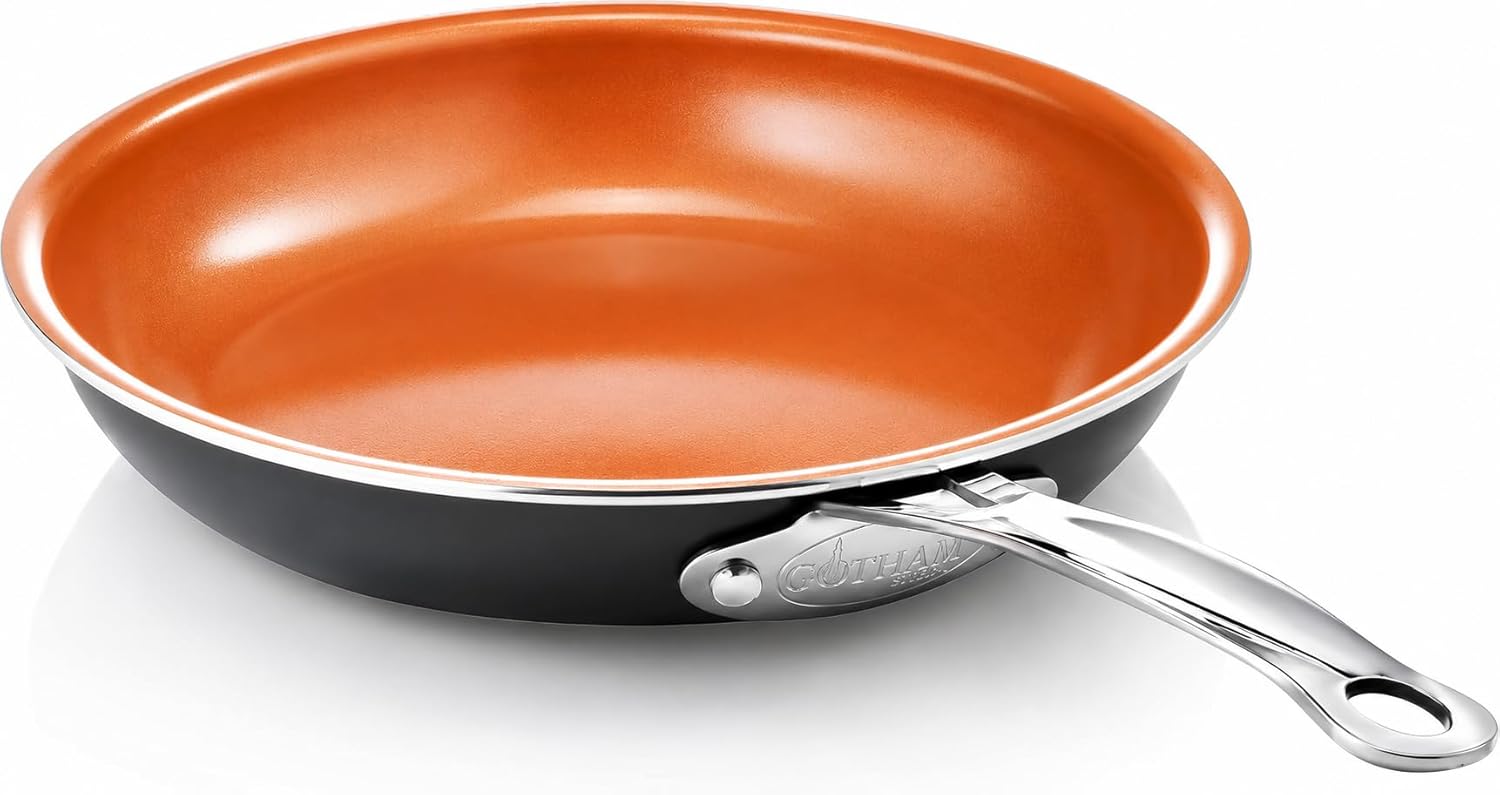
Finding the right cookware for daily meal preparation involves balancing reliable food release, even heat distribution, and proper stovetop compatibility. Copper non stick frying pans combine durable aluminum cores with specialized ceramic or titanium-infused coatings to streamline cooking routines. These designs help minimize sticking while reducing the need for heavy butter or oil during everyday meal preparation tasks.
Whether you need a compact skillet for single-serve eggs or a complete multi-piece set for full family dinners, exploring available options helps match your specific kitchen setup. Reviewing exact sizing, material construction, handle designs, and temperature thresholds ensures you select a pan that aligns directly with your cooking style and appliance requirements without guesswork.
As an Amazon Associate, StacyLaughs earns from qualifying purchases.
Buying guide
Sizing and Portion Requirements
Choosing the correct frying pan size depends heavily on your household size and typical meal preparation habits. Compact 8-inch skillets suit single portions, fried eggs, and small side dishes. Mid-sized 9.5-inch options provide a versatile cooking area for everyday frying without taking up excessive storage space in crowded kitchen cabinets. Reviewing typical recipes clarifies needs.
Larger 12-inch pans accommodate multi-person family meals and generous vegetable sautées in a single batch. Evaluating your daily cooking volume and burner dimensions helps determine whether a single specialized skillet or a multi-piece set containing varying diameters best serves your kitchen requirements over extended periods of daily use.
Material Construction and Heat Distribution
The underlying material of a frying pan dictates how efficiently it absorbs and transfers heat from your burner. Aluminum bodies heat up rapidly, reducing preheating times and allowing responsive temperature adjustments during active cooking. Combining this lightweight metal with forged construction methods prevents warping and ensures long-term structural integrity under high heat conditions.
Look for specific construction attributes like spiralized bottoms or heavy-gauge cores that improve thermal uniformity across the entire cooking surface. Eliminating hot spots prevents food from scorching in isolated areas while other portions remain undercooked, ensuring consistent results for delicate items such as eggs and fish fillets.
Nonstick Coatings and Chemical Safety
Modern copper-look frying pans frequently incorporate advanced ceramic and titanium-infused nonstick coatings designed to facilitate effortless food release. These specialized surfaces allow home cooks to prepare meals using minimal butter or oil, supporting lighter dietary preferences. The reinforced layers also help prevent sticky residues from welding to the pan during high-heat searing tasks.
When reviewing options, verify that the nonstick coating is manufactured without harmful chemicals such as PFOA, PFOS, PTFE, lead, and cadmium. Choosing non-toxic formulations ensures peace of mind during everyday cooking while delivering reliable slide-off performance that significantly simplifies post-meal cleanup routines in your kitchen sink.
Stovetop and Oven Compatibility
Before purchasing any frying pan, confirm that its base compatibility matches your specific kitchen cooktop technology. While many aluminum and ceramic skillets function seamlessly on gas, electric coil, and glass-ceramic surfaces, induction cooktops require specific magnetic metallic bases. Checking these technical specifications prevents compatibility issues upon unboxing.
Additionally, consider thermal thresholds if you enjoy finishing dishes inside the oven. Many modern copper-look skillets withstand temperatures up to 500 degrees Fahrenheit, allowing you to transition seamlessly from stovetop searing to oven roasting, baking cornbreads, or finishing frittatas without switching cookware pieces.
Handle Design and Ergonomic Comfort
The handle of a frying pan plays a critical role in daily safety, maneuverability, and overall cooking comfort. Ergonomic stay-cool handles constructed from stainless steel or insulated materials remain comfortable to grip during extended stovetop sessions. Look for designs shaped to accommodate both right-handed and left-handed home cooks effectively.
Features like Y-shaped handle attachments or built-in steam vents help dissipate conducted heat away from the gripping area. A lightweight pan combined with a balanced, secure handle makes lifting, flipping pancakes, and tossing ingredients significantly easier, reducing wrist strain during repetitive kitchen tasks.
Cleaning and Maintenance Protocols
Maintaining the longevity of a nonstick copper frying pan requires following proper cleaning and care guidelines established by the manufacturer. Although many modern ceramic skillets are labeled as dishwasher safe, routine hand washing with mild soap and a soft sponge helps preserve the delicate nonstick coating over extended periods of daily use.
Avoiding abrasive scouring pads or harsh metal scrubbers prevents premature scratching of the reinforced titanium and ceramic layers. Adhering to recommended temperature limits and allowing pans to cool gradually before washing further protects the structural integrity and food-release performance of your cookware investment.
Frequently asked questions
Can I use metal utensils with copper non stick frying pans?
Many reinforced titanium and ceramic copper frying pans are engineered to withstand everyday use with standard metal utensils such as spatulas, spoons, and whisks without immediate scratching. However, manufacturers frequently recommend using silicone, wooden, or nylon tools to maximize the long-term lifespan of the nonstick coating. While the reinforced surfaces resist casual wear, avoiding aggressive scraping or sharp edges helps maintain smooth food release performance and prevents premature surface degradation over years of regular cooking.
Are these copper frying pans compatible with induction cooktops?
Stovetop compatibility varies depending on the specific model and core construction. While several multi-piece sets and select hammered skillets explicitly support induction cooktops alongside gas, electric, and glass surfaces, many standard aluminum copper pans are explicitly marked as non-compatible with induction. Always review the manufacturer's technical specifications for each individual product before purchasing to ensure the pan's base matches your specific kitchen cooktop technology and prevents heating issues.
Do I need to use oil or butter when cooking in these pans?
The triple-layer ceramic and titanium-infused nonstick surfaces are specifically designed to facilitate effortless food release with little to no oil or butter required. Foods like eggs, pancakes, and stir-fries slide across the surface smoothly without sticking. While cooking without oil supports lower-fat meal preparation, adding a small amount of oil or butter is entirely acceptable depending on personal flavor preferences and recipe instructions without harming the protective nonstick coating.
Can these frying pans be used inside an oven?
Most of these copper non stick frying pans are oven safe up to 500 degrees Fahrenheit, allowing you to transition meals directly from the stovetop into the oven. This capability is ideal for finishing frittatas, baking cornbreads, roasting vegetables, or melting cheese atop casseroles. Always verify that your specific skillet model lacks plastic components or detachable handles that might restrict high-temperature oven exposure before placing the cookware into a preheated oven.
How should I clean my copper non stick frying pan?
Cleaning these nonstick pans is straightforward because food residues typically wipe away effortlessly with a damp paper towel or warm soapy water. While numerous models feature dishwasher-safe construction for ultimate convenience, routine hand washing using mild dish soap and a soft sponge is widely recommended by manufacturers to preserve the nonstick coating's longevity. Avoid harsh metal scouring pads or abrasive cleaners that can scratch or degrade the ceramic and titanium-infused cooking surface over time.