Appliances · Buying Guide
Best Cuisinart 12 Frying Pan Options for Every Kitchen Style

Choosing the right cookware involves matching your daily cooking habits with the materials and design features built into your pans. Cuisinart offers a diverse lineup of twelve-inch skillets and sauté pans tailored to different stovetops, cleanup preferences, and recipe types. Whether you prefer traditional stainless steel, hybrid ceramic surfaces, or hard anodized aluminum, understanding these specific builds helps you select a tool that fits your kitchen routines without guesswork.
This review explores five distinct twelve-inch Cuisinart options using factual evidence regarding their construction, temperature limits, and cleaning requirements. Each model brings unique thermal properties and handle configurations to your stovetop and oven. By examining these specifications side by side, you can identify which skillet aligns with your preferred cooking temperatures, storage constraints, and maintenance habits for reliable everyday performance.
As an Amazon Associate, StacyLaughs earns from qualifying purchases.
Buying guide
Understanding Cookware Materials
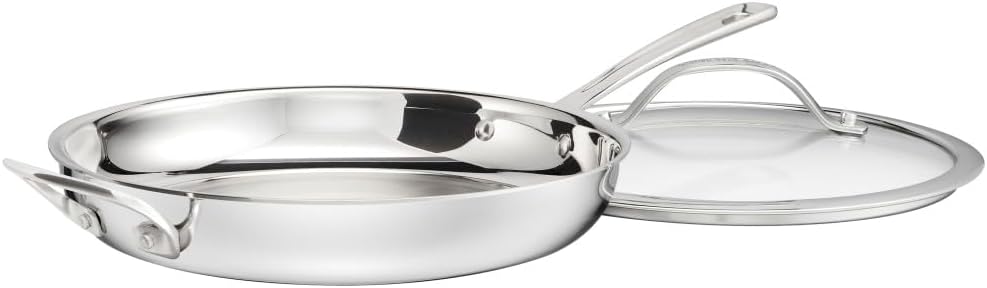
Selecting a twelve-inch skillet starts with understanding the core metal construction. Triple-ply models sandwich an aluminum core between layers of stainless steel to spread heat evenly across the entire base. This design prevents hot spots that can burn food during searing.
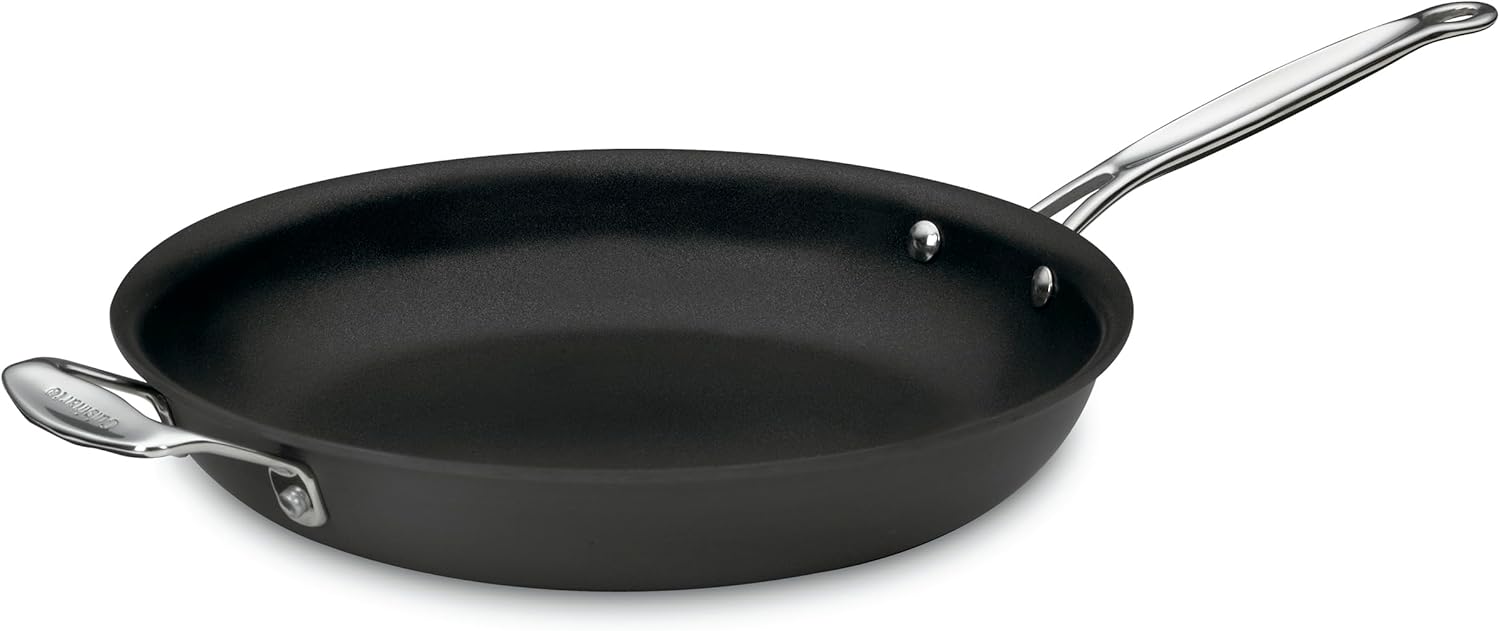
Hard anodized aluminum options offer another approach, delivering rapid heat distribution paired with specialized interior coatings. Review your primary cooking recipes to determine whether you need the raw heat durability of stainless steel or the easy release properties of coated aluminum.
Evaluating Surface Coatings
Surface coatings define how easily food releases from the pan and how much oil you need. Ceramic nonstick interiors and titanium-reinforced Quantanium options provide smooth release surfaces that simplify cleanup after cooking delicate proteins or sticky sauces.
Hybrid surfaces combine stainless steel peaks with ceramic valleys to balance searing power and food release. Uncoated stainless steel surfaces require careful preheating and oil use but withstand much higher oven temperatures and metal utensils without coating wear.
Handle Design and Ergonomics
Handle construction directly affects comfort and safety when lifting a twelve-inch pan loaded with food. Look for cast stainless steel stick handles featuring V-flange designs that help dissipate heat away from your grip during stovetop use.
A riveted helper handle on the opposite side of the main handle provides balanced two-hand support for heavier pans. This structural addition makes transferring a loaded skillet from burner to oven much safer and more manageable.
Oven Compatibility and Heat Limits
Different skillet models support varying maximum oven temperatures depending on their handles, lids, and coatings. Many standard nonstick pans safely transition to ovens up to 450 or 500 degrees Fahrenheit for finishing bakes.
Professional-grade stainless models often extend this limit up to 550 degrees Fahrenheit and include broiler safety. Always verify the maximum temperature rating of your specific skillet before moving it from the stovetop into a hot oven.
Cleanup and Maintenance Requirements
Maintenance routines vary significantly between dishwasher-safe stainless models and cookware that requires hand washing. Skillets with dishwasher-safe construction simplify post-cooking cleanup by tolerating automatic detergent cycles without degrading the exterior finish.
Coated pans with ceramic or specialized nonstick interiors often recommend hand washing to preserve coating longevity. Matching your willingness to hand wash cookware with the manufacturer instructions ensures long-term performance.
Matching Cooktops and Pan Bases
Cooktop compatibility is an essential purchase criterion for any twelve-inch skillet. Most models work seamlessly with traditional gas and electric coil burners, while smooth surface induction cooktops require specific magnetic base materials.
Verify that your chosen skillet supports your specific cooktop type, whether it is standard electric, gas, or smooth surface induction. Choosing a compatible base guarantees efficient heat transfer and prevents uneven cooking results across burners.
Frequently asked questions
Can I use metal utensils on my Cuisinart nonstick frying pan?
Using metal utensils on nonstick or ceramic coated surfaces can scratch or damage the coating over time. It is generally recommended to use wooden, silicone, or plastic utensils on coated skillets to preserve the interior finish. Uncoated stainless steel pans tolerate metal utensils much better, though minor surface marks may still appear with heavy use. Always check the specific care guidelines for your chosen model before cooking with metal tools.
How do I prevent food from sticking to a stainless steel skillet?
Preventing food from sticking on stainless steel requires proper preheating and fat management. Heat your empty skillet on medium heat for a couple of minutes before adding a small amount of oil or butter. Allow the oil to heat up before placing your food into the pan. Dropping cold food into a cold stainless pan almost always results in sticking. Letting proteins release naturally when a crust forms also helps avoid tearing.
Are these twelve-inch Cuisinart skillets safe to put in the dishwasher?
Dishwasher safety depends entirely on the specific model and materials used in its construction. Several stainless steel and hybrid models explicitly state they are dishwasher safe for convenient cleanup. Conversely, certain ceramic nonstick models recommend hand washing to protect the longevity of the interior coating. Always review the product care instructions provided by the manufacturer before placing any frying pan into an automatic dishwasher cycle.
What is the purpose of the helper handle on these larger pans?
The helper handle is a secondary loop handle positioned opposite the main stick handle on twelve-inch skillets. Because a twelve-inch pan holds a substantial amount of food and water weight, a single stick handle can cause wrist strain during transport. The helper handle allows you to use both hands securely when lifting the pan from the stovetop to the oven or sink, improving balance and safety.
What is the difference between a hybrid pan and a standard nonstick pan?
A hybrid pan combines raised stainless steel peaks with ceramic valleys across the cooking surface. The stainless steel peaks provide high-heat searing power for browning meats, while the recessed ceramic valleys support easier food release and cleanup. Standard nonstick pans feature a flat, uniformly coated interior designed entirely for low-fat release. Hybrid models bridge the gap between traditional stainless browning and nonstick convenience.