Appliances · Buying Guide
Best Cuisinart Non Stick Cookware Set Options for Every Kitchen
Finding the right cookware set involves carefully balancing everyday cooking tasks with material preferences, stovetop compatibility, and kitchen storage realities. Cuisinart offers diverse configurations featuring responsive aluminum cores, durable hard-anodized bodies, and specialized ceramic interiors designed to handle daily simmering, boiling, and frying routines across multiple meals.
Exploring these multi-piece options helps home cooks match specific thermal properties, ergonomic handle designs, and cleaning requirements to their distinct household needs. Whether outfitting a spacious family kitchen or managing compact apartment counters, understanding individual set configurations ensures practical, long-term daily kitchen utility without unnecessary guesswork or mismatched cookware pieces cluttering your workspace.
As an Amazon Associate, StacyLaughs earns from qualifying purchases.
Buying guide
Material Composition
Choosing the right material composition influences how quickly your pots and pans heat up and how well they retain thermal energy during cooking. Aluminum cores provide rapid, even heat distribution across the base, eliminating hot spots that can burn food during delicate simmering tasks. Hard-anodized bodies add a dense, wear-resistant exterior layer that stands up remarkably well to the bumps and scrapes of daily kitchen rotations.
Evaluating these structural foundations ensures your cookware matches your preferred cooking techniques. While standard aluminum offers lightweight handling, hard-anodized variations deliver superior scratch resistance and structural integrity. Matching the material to your typical meal prep style prevents premature wear and supports consistent culinary results over years of regular home use.
Nonstick Surface Types
Nonstick coatings simplify food release and reduce the amount of oil required for everyday frying, scrambling, and sautéing tasks. Traditional reinforced nonstick surfaces provide durable daily performance, while modern ceramic interiors offer an alternative manufactured without PFAS, PFOA, or PFOS chemicals. Each coating type affects how food slides across the pan and influences the cleaning effort required afterward.
Selecting a nonstick finish also dictates your utensil choices and cleaning routine. Ceramic options often demand softer sponges and gentler hand-washing practices to preserve their nonporous release properties. Weighing these coating characteristics against your cleanup preferences helps determine which cookware surface best fits your household's daily meal routines and maintenance habits.
Handle Ergonomics and Heat Management
Handle design plays a crucial role in daily kitchen safety, comfort, and maneuverability when lifting heavy pots filled with liquids. Silicone stick handles offer a secure, comfortable grip and are engineered to remain cool during standard stovetop use. Alternatively, stainless steel handles featuring specialized V-flange designs actively dissipate heat away from the gripping area, preventing accidental burns during extended simmering sessions.
Riveted handle attachments provide long-term structural stability compared to screwed alternatives, ensuring handles stay firmly attached under heavy loads. Assessing how a handle feels in your hand and checking its thermal management features helps you select cookware that feels balanced and secure during busy meal preparation routines.
Set Configuration and Piece Count
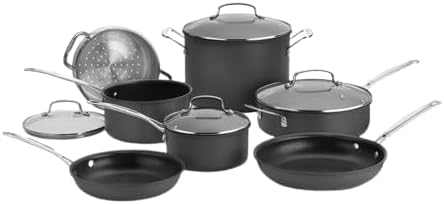
Cookware sets range from compact eleven-piece collections to extensive seventeen-piece assortments designed to outfit an entire kitchen at once. Smaller sets typically include essential saucepans, a skillet, and a sauté pan, which satisfy the core needs of couples or smaller households. Larger assortments add multiple stockpots, specialized Dutch ovens, steamer inserts, and additional skillets for accommodating complex recipes and larger families.
Reviewing your routine cooking habits prevents you from paying for unused specialty pots while ensuring you have the right vessels on hand. Matching the piece count to your available cabinet storage space guarantees that your new cookware set remains accessible rather than creating clutter in crowded kitchen cupboards.
Stovetop and Oven Compatibility
Verifying stove compatibility ensures your chosen cookware set functions properly with your specific kitchen range. Many aluminum and hard-anodized sets work seamlessly on gas, electric, glass-ceramic, and halogen burners, but some specialized collections omit support for modern magnetic induction cooktops. Checking these energy source requirements prevents operational mismatches before your cookware arrives at your door.
Oven-safe thresholds also vary significantly between different cookware lines, ranging from moderate three hundred fifty-degree limits up to five hundred degrees for advanced baking tasks. Understanding these temperature boundaries allows you to transition pans from burners to the oven cavity safely without damaging handles, lids, or nonstick interior coatings.
Storage and Maintenance Needs
Kitchen storage capacity heavily dictates whether a bulky multi-piece cookware set or a compact, stackable alternative is the most practical choice. Space-saving designs allow pots and pans to nest efficiently, reducing required cabinet space by a substantial margin in smaller apartments. Evaluating your available storage layout before purchasing prevents awkward stacking and protects delicate nonstick surfaces from premature scratching.
Maintenance requirements further influence your daily kitchen routine, as many ceramic and nonstick sets perform best with careful hand-washing using mild soap and soft sponges. Following manufacturer cleaning and care guidelines preserves the protective finish and ensures reliable food release over the entire lifespan of your pots and pans.
Frequently asked questions
Can I use metal utensils on these nonstick cookware sets?
Utensil compatibility varies depending on the specific Cuisinart cookware collection you select for your kitchen. While select hard-anodized models state compatibility with metal utensils, ceramic and standard nonstick surfaces generally benefit from softer tools to protect the delicate coating. Using plastic, silicone, or wooden spoons and turners helps prevent accidental scratching and surface wear over years of daily cooking, ultimately extending the functional lifespan of your pots and pans significantly without compromising performance.
Are these Cuisinart cookware sets compatible with induction cooktops?
Induction compatibility depends entirely on the specific product model you choose to purchase. Certain specialized ceramic sets, such as stackable space-saving collections, are engineered with universal base compatibility that supports induction cooktops alongside traditional gas and electric burners. However, many traditional aluminum and hard-anodized collections explicitly state they are not induction compatible. Always review the individual product specifications carefully to verify your specific cooktop requirements before making your final purchasing decision.
How should I clean and maintain my nonstick cookware?
Proper cleaning and maintenance depend on the specific materials used in your cookware set. Many nonstick and ceramic models recommend hand-washing with hot, sudsy water and a soft sponge or cloth to protect the cooking surface and maintain food release performance over time. While some sets list dishwasher-safe construction for added convenience, hand-washing ceramic and specialized coatings helps prevent harsh detergents from dulling the finish. Always follow manufacturer guidelines for best results.
What is the maximum oven-safe temperature for these pots and pans?
Maximum oven-safe temperature thresholds vary considerably across different Cuisinart cookware lines. Several standard aluminum and ceramic sets are safely rated up to three hundred fifty degrees Fahrenheit, making them suitable for warming or light baking tasks. In contrast, heavier hard-anodized collections can withstand oven temperatures up to five hundred degrees Fahrenheit, while their matching glass lids typically support lower thresholds around four hundred fifty degrees. Checking specific product temperature ratings ensures safe usage.
Do these cookware sets come with lids included in the piece count?
Yes, manufacturers typically include matching glass covers within the stated total piece count of each cookware set. For example, an eleven-piece or seventeen-piece collection includes a combination of saucepans, skillets, stockpots, and their corresponding tempered glass lids to make up the final number. These tight-fitting covers help trap moisture and heat during cooking while allowing you to monitor meal progress visually without lifting the lid off the active pan.