Appliances · Buying Guide
Best Cuisinel Cast Iron Skillet Choices for Your Kitchen
Cast iron cookware remains a dependable kitchen favorite for achieving deep sears and steady heat retention across traditional stovetops, modern ovens, outdoor grills, and open campfires. Choosing the right pan involves balancing your cooking style, daily meal sizes, and preferred lid configurations. Cuisinel offers various skillet configurations ranging from single large pans to multi-piece bundles designed to handle everything from morning eggs to weekend family steaks.
Whether you need a heavy braiser lid for trapping moisture or a multi-size set for diverse recipes, evaluating specific capacities, handle features, and included accessories helps narrow down the ideal choice. Understanding these functional differences ensures you select durable cookware that integrates smoothly into your cooking routine without unnecessary complications.
As an Amazon Associate, StacyLaughs earns from qualifying purchases.
Buying guide
Determining the Right Skillet Size
Selecting the correct skillet size depends heavily on your typical household meal portions and everyday recipe types. Smaller pans measuring six to eight inches work wonderfully for single fried eggs, small sauces, or individual side dishes. They heat up quickly and fit easily on smaller burners, making them efficient for quick morning tasks or light midday snacks without wasting energy or workspace on your stove.
Conversely, larger twelve-inch skillets easily accommodate family-sized steaks, whole chickens, and multi-portion baking tasks like cornbread. Assessing your daily cooking volume ensures you choose a pan that meets your needs without unnecessary bulk. Balancing these size tiers helps you build a practical cookware collection that handles both intimate meals and large gatherings efficiently.
Evaluating Lid Options and Materials
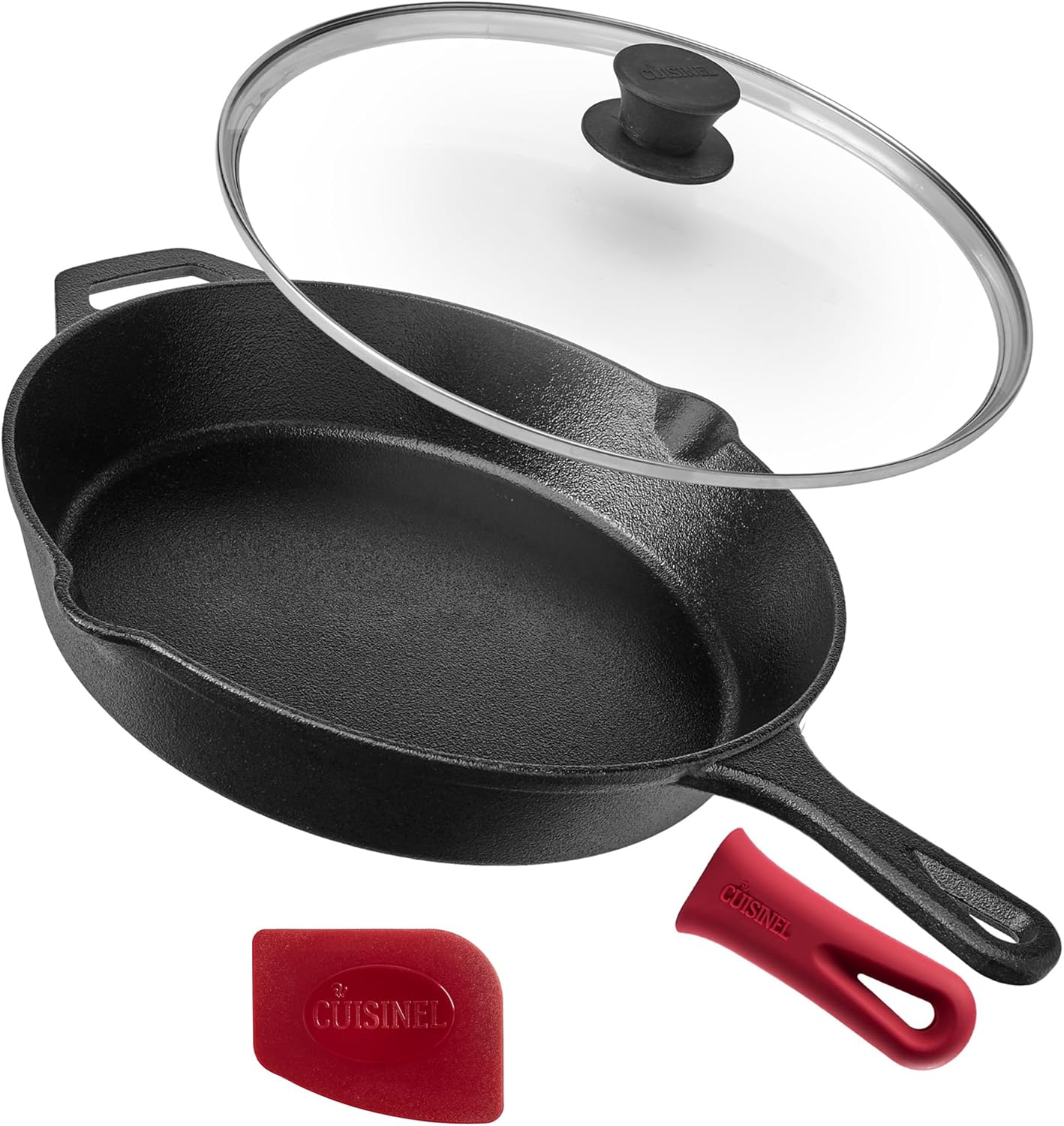
Deciding between a solid cast iron braiser lid and a tempered glass cover changes how you monitor and cook your favorite meals. Glass lids provide clear visual oversight, allowing you to watch simmering stews and steaming dishes without lifting the cover and losing valuable heat. This visibility helps prevent boil-overs and lets you gauge liquid reduction accurately during long simmering sessions.
On the other hand, heavy cast iron lids feature specialized drip points that circulate moisture back down into braising meats for enhanced flavor development. Consider whether you prefer watching cooking progress visually through glass or trapping heavy steam for tenderizing tough cuts of meat in the oven. Each lid style supports distinct cooking methods tailored to specific culinary goals.
Understanding Handle Designs and Helper Grips
Managing heavy cast iron cookware safely requires paying close attention to handle configurations and supplementary grips. Traditional single handles offer standard control for tossing ingredients, but adding a helper handle opposite the main grip transforms how you lift full, heavy pans. This secondary attachment provides crucial stability when transitioning large batches of food between different kitchen stations.
Two-handed lifting distributes weight evenly, significantly reducing physical strain when moving heavy loads from stovetops to hot ovens or dining tables. Additionally, bundled silicone handle covers provide comfortable thermal protection during quick stove maneuvers, though extended high-heat baking still demands traditional oven mitts for complete safety. Evaluating these grip features prevents accidents with heavy cookware.
Cooktop Compatibility and Heat Retention
Cast iron is celebrated for exceptional heat retention and even distribution across various cooking surfaces, including traditional gas burners, electric coils, and modern smooth induction cooktops. The heavy metal mass absorbs heat slowly but holds it exceptionally steadily, creating an ideal environment for achieving deep, even sears on steaks and chops.
Outdoor enthusiasts can also transition these sturdy pans directly to backyard grill grates or open campfires without sacrificing performance. Matching your primary stove type to the pan is essential for ensuring optimal thermal transfer and consistent cooking results whether you are indoors or camping. Always review manufacturer specifications regarding compatible heat sources before cooking.
Seasoning and Routine Maintenance
Proper maintenance preserves the natural non-stick seasoning of cast iron skillets over years of heavy use. Because these pans require careful hand washing, you must completely avoid automated dishwashers and prolonged soaking to protect the delicate seasoned surface from rust formation. Establishing a reliable cleaning habit ensures your cookware remains smooth and responsive over time.
After washing the pan while it is still warm, drying it thoroughly on low stove heat and applying a very thin coat of oil maintains the protective barrier. Storing your seasoned pans in dry kitchen environments keeps them completely ready for your next cooking adventure. Diligent upkeep prevents sticking and extends the functional lifespan of the iron.
Single Pans Versus Multi-Piece Sets
Choosing between buying an individual skillet and investing in a multi-piece set depends heavily on your cooking scope and available cabinet storage. Single pans solve specific culinary needs, such as acquiring a large twelve-inch option exclusively for family meals or weekend baking. This targeted approach minimizes clutter if you only cook specific dishes.
Conversely, multi-piece sets provide immediate size variety, ranging from small six-inch pans up to large formats, accommodating diverse recipes simultaneously. Weighing your kitchen cabinet storage space against your desire for versatile sizing options guides your final purchasing decision effectively. Selecting a complete set ensures you always have the right pan dimension for every meal component.
Frequently asked questions
How do I clean a pre-seasoned cast iron skillet properly?
Cleaning your pre-seasoned cast iron skillet requires washing it by hand using warm water and a pan scraper rather than placing it in an automated dishwasher or using harsh synthetic soaps. Never soak the pan in water for extended periods. After washing, dry the skillet completely on low burner heat to eliminate remaining moisture, then apply a very thin coat of natural oil to maintain the seasoned non-stick surface and prevent rust from forming over time.
Can I use these cast iron skillets on induction cooktops?
Many Cuisinel cast iron skillets are fully compatible with smooth surface induction cooktops, along with traditional gas burners, electric coils, ovens, outdoor grills, and campfires. Because cast iron is inherently magnetic and heavy, it interacts efficiently with induction elements to deliver steady, reliable heat. However, you should always verify the specific compatibility details listed for your chosen model to ensure your particular cooktop type is fully supported before starting to cook.
Are the silicone handle covers heat-resistant enough for the oven?
The included silicone handle covers provide a secure, comfortable grip and protect your hands from warmth during standard stovetop cooking. However, these silicone grips can absorb high temperatures and are primarily designed for stovetop use or quick pan transfers. When placing your cast iron skillet inside a hot oven for baking or roasting, you should always remove the silicone cover and use traditional protective oven mitts to ensure complete safety and prevent material damage.
What is the advantage of a cast iron lid with drip points?
A heavy-duty cast iron lid equipped with integrated drip points offers significant benefits when braising meats or simmering casseroles. As steam rises inside the closed pan, it hits the underside of the heavy lid and collects on these drip points, which then continuously route moisture back down onto your food. This continuous self-basting action locks in natural juices and intensifies flavor profiles without requiring you to manually baste the dish.
Do cast iron skillets require chemical coatings to be non-stick?
Cuisinel cast iron cookware is crafted entirely without synthetic PFAS or PFOA coatings, relying instead on natural oil pre-seasoning. As you cook with the pan over time, cooking oils bake directly into the porous iron surface, creating a natural, chemical-free non-stick layer that continuously improves with every meal you prepare. Proper hand washing and periodic light oiling maintain this seasoning naturally without ever relying on artificial non-stick chemicals.