Appliances · Buying Guide
Best dash mini electric skillet choices for fast countertop meals
Finding reliable cooking appliances for compact living spaces requires balancing a minimal countertop footprint against sufficient heating power. Small electric skillets offer dedicated surfaces for single portions, letting users prepare meals without occupying a full stove burner or requiring an entire kitchen setup. These portable devices suit environments where traditional ranges are unavailable or impractical.
Personal cooking devices seamlessly accommodate dorm rooms, studio apartments, office breakrooms, and recreational vehicles. Reviewing available features helps match specific capacity dimensions, wattage levels, and temperature controls to everyday meal preparation routines. Understanding these physical and electrical attributes ensures the chosen appliance aligns properly with spatial limitations and specific cooking habits.
As an Amazon Associate, StacyLaughs earns from qualifying purchases.
Buying guide
Evaluating Countertop Footprint and Storage Dimensions
Choosing a compact electric skillet requires examining physical dimensions to ensure proper placement on restricted counters. Miniature models range from four-inch presses to eight-inch square pans, demanding careful measurement of available space. Smaller footprints suit travel bags and tight dorm desks.
Cabinet clearance and vertical height also dictate where an appliance rests when idle. Units featuring removable handles or detachable cords streamline storage inside cramped kitchen shelves, preventing awkward protrusions during organization.
Understanding Wattage Ratings and Heating Speed
Wattage ratings dictate how quickly an electric skillet reaches cooking temperatures and how it sustains heat under load. Lower wattage levels around 350 watts provide gentle heat for basic paninis and light snacks. Higher ratings near 900 watts accelerate preheating.
Matching electrical specifications to your intended ingredients prevents undercooking dense proteins. Devices with higher power draws demand stable electrical supply lines, making verification of outlet capacity important for older recreational vehicles.
Surface Materials and Nonstick Coating Varieties
Cooking surfaces feature various nonstick treatments, including traditional multi-layer coatings and ultra-smooth ceramic options. These materials facilitate effortless food release and reduce the need for excessive oils during everyday meal preparation. Selecting durable coatings prevents premature wear.
Maintenance requirements often dictate utensil choice, as metallic tools can scratch specialized nonstick layers. Reviewing manufacturer guidelines regarding wooden or silicone implements ensures long-term preservation of the interior cooking surface across multiple years of regular use.
Temperature Control Mechanisms and Precision
Temperature regulation varies from single fixed settings to adjustable dials spanning specific heat ranges. Simple plug-in models operate automatically, while units with detachable thermostat probes let users dial in precise temperatures between low simmers and high sears.
Adjustable controls offer greater versatility when transitioning between delicate egg dishes and high-heat meat searing. Fixed-temperature appliances reduce setup complexity, appealing to users who prefer straightforward, turn-key countertop cooking operations.
Lid Designs and Moisture Management Features
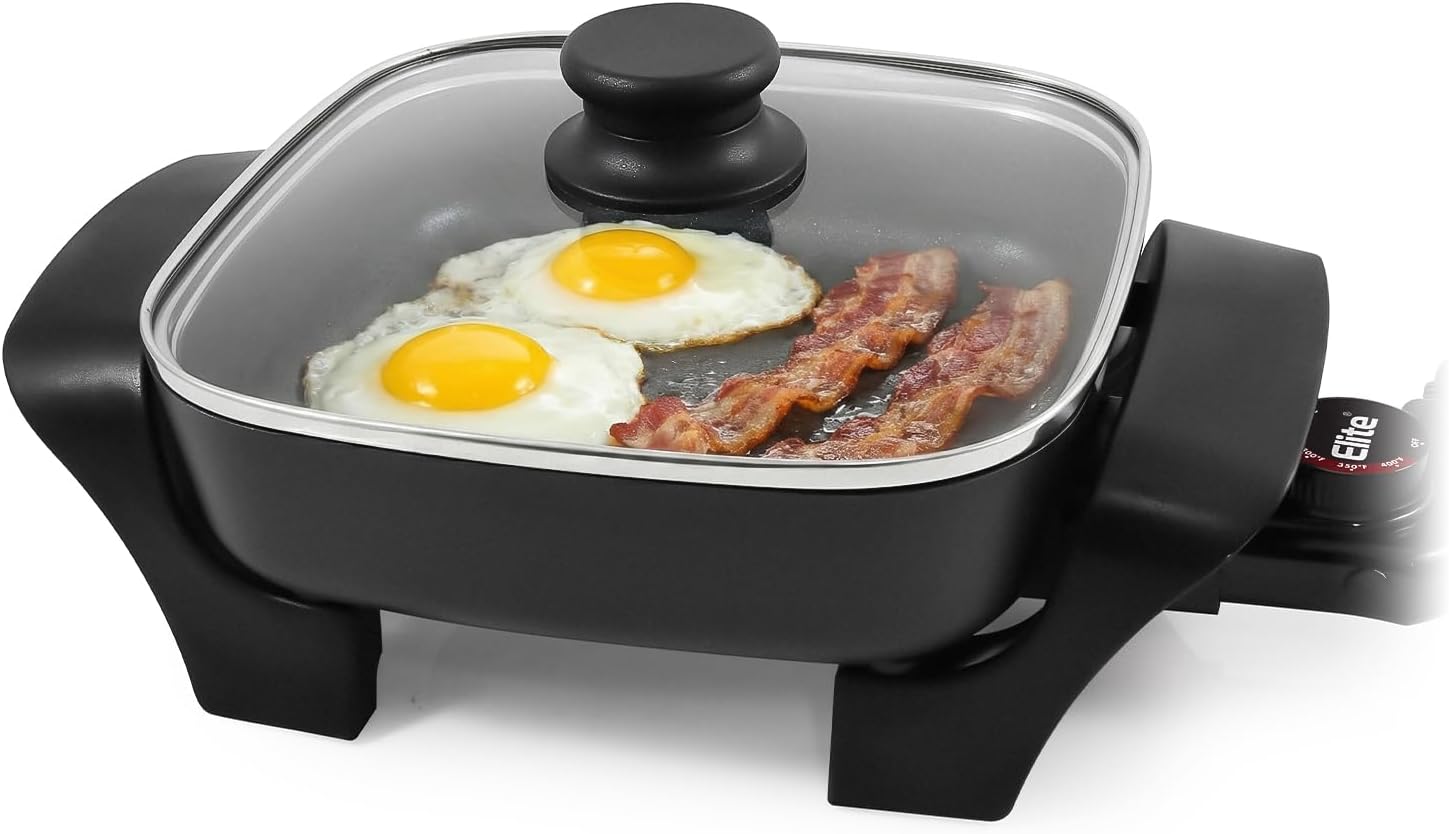
Tempered glass lids provide clear visibility into cooking chambers, allowing users to monitor food progress without releasing accumulated heat. Enclosed barriers help trap steam and moisture during simmering, frying, or braising tasks.
Cool-touch knobs on glass covers protect fingers from accidental burns during operation. Selecting models with vented lids prevents excessive pressure buildup, ensuring safer vapor release while preparing soups, sauces, or one-pot pasta recipes.
Portability and Travel Friendliness Factors
Portability depends on lightweight construction, compact frames, and easily detachable power cords or handles. Campers, RV owners, and frequent travelers benefit from appliances designed to pack down securely into minimal storage volumes.
Evaluating the physical weight alongside overall dimensions helps determine whether a skillet suits mobile lifestyles. Portable cookers transform temporary living spaces into functional kitchens without requiring permanent stove installations.
Frequently asked questions
Can these mini electric skillets fit inside a standard kitchen cabinet?
Most personal electric skillets feature compact dimensions and low profiles that slide easily onto standard kitchen shelves. Models equipped with removable handles or detachable thermostat probes offer enhanced storage flexibility, allowing the main body to rest neatly in tight cabinet spaces without cord entanglement.
What types of utensils should be used on nonstick cooking surfaces?
Manufacturers typically recommend using wooden, silicone, or heat-resistant plastic utensils on nonstick and ceramic cooking surfaces. Avoiding metal forks, spatulas, and knives protects the delicate internal coating from scratches, ensuring the nonstick release properties remain intact over extended periods of regular use.
Are detachable handles or cords helpful for storage and cleaning?
Detachable components significantly simplify both storage and washing routines. Removing power cords or locking handles allows you to submerge or load the skillet base into a dishwasher safely, while also reducing the overall physical profile when tucking the appliance away into crowded cupboards.
How do adjustable temperature dials affect everyday cooking versatility?
Adjustable temperature dials let you fine-tune heat levels for specific tasks, ranging from a gentle warm setting to high-heat searing. This control prevents delicate foods from burning while providing enough thermal output to properly cook raw meats, stir-fries, and simmered sauces.
Can these compact appliances cook complete meals for multiple people?
Mini electric skillets are engineered primarily for single-serving portions, personal snacks, and quick dorm meals. While deeper square pans accommodate small batch one-pot recipes, cooking simultaneous multi-person meals generally exceeds the physical capacity of these restricted 4-inch to 8-inch cooking surfaces.