Appliances · Buying Guide
Best Durable Non Stick Cookware Sets for Everyday Kitchen Cooking
Finding the right cookware involves matching structural materials, piece counts, and heat sources to your daily meal preparation routines across various recipes. Whether you are boiling large batches of soup, frying delicate proteins, or simmering delicate sauces, selecting reliable pots and pans ensures even heat distribution and simpler food release after every meal without requiring excessive scrubbing.
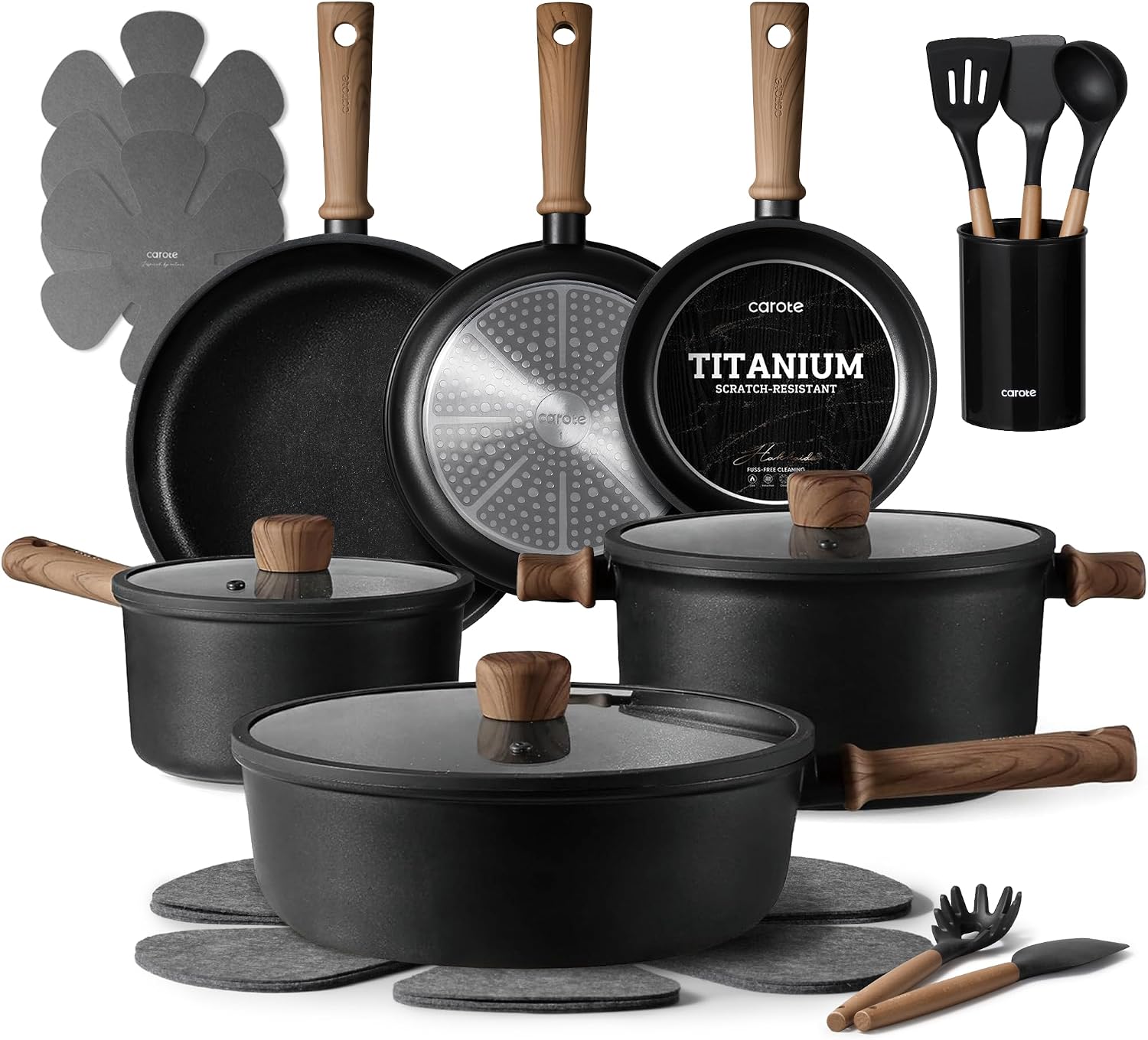
The market features heavy-duty construction types, including hard-anodized aluminum and tri-ply stainless steel, paired with advanced ceramic or titanium-reinforced nonstick coatings. Examining these specific configurations helps identify which comprehensive collection aligns perfectly with your stovetop compatibility, utensil preferences, and cabinet storage constraints without introducing unnecessary kitchen complications during daily cooking tasks.
As an Amazon Associate, StacyLaughs earns from qualifying purchases.
Buying guide
Material Construction and Durability
Selecting durable nonstick cookware starts with examining the base material. Hard-anodized aluminum and tri-ply stainless steel provide exceptional structural strength against warping and everyday kitchen wear. Hard-anodized options undergo an electrochemical process making them significantly harder than standard aluminum, while tri-ply models layer stainless steel around an aluminum core for rapid, uniform heat distribution across burners.
Evaluating these core materials helps determine how well your pots and pans will withstand daily heating and cooling cycles. Heavy-gauge constructions resist dents and maintain flat bottoms on your stovetop burners over years of consistent family meal preparation, ensuring reliable performance without unexpected structural failures or performance degradation.
Stovetop Compatibility
Stovetop compatibility represents a vital purchasing factor that determines whether your chosen cookware will function on your specific kitchen range. While traditional aluminum pots and pans work efficiently on gas, electric, and ceramic glass cooktops, induction ranges require a magnetic stainless steel base or fully bonded induction-compatible plates to generate heat effectively.
Verifying these stove requirements beforehand prevents frustrating compatibility issues after purchase. If you plan to transition to an induction cooktop in the future, selecting versatile tri-ply stainless steel or specially adapted hard-anodized sets ensures your investment remains fully usable across different kitchen environments without requiring sudden replacements.
Nonstick Coating Technologies
Modern nonstick cookware incorporates advanced coating technologies designed to improve food release and reduce the need for excessive oils during cooking. Options range from titanium-reinforced surfaces and diamond-textured ceramic layers to specialized high-low circle designs that minimize surface abrasion. These coatings ensure that delicate proteins and sticky sauces slide off effortlessly during plating.
Understanding the specific coating type also guides your daily maintenance and utensil selection. While some advanced ceramic surfaces permit metal utensil use, others require silicone or nylon tools to preserve the nonstick layer, helping you maintain optimal food release performance and extending the overall lifespan of your kitchen collection.
Piece Count and Variety
Assessing your cooking habits helps determine the ideal piece count and assortment for your household needs. Smaller twelve-piece sets typically cover core essentials like frying pans, saucepans, and a stockpot, making them suitable for everyday meal prep. Larger seventeen to twenty-one piece collections add specialty items like griddles, steamer inserts, and extra sauté pans.
Choosing a larger assortment provides greater versatility for cooking complex multi-course meals, but it also demands significantly more cabinet and counter storage space. Balancing your available kitchen storage capacity against your desire for specialized auxiliary vessels ensures you select a practical set you can comfortably house.
Cleanup and Maintenance Routines
Maintaining your cookware properly preserves its nonstick performance and exterior finish over years of regular use. Many manufacturers label their pots and pans as dishwasher safe for convenient cleanup, while others specifically recommend gentle hand washing with neutral dish soap to prevent base residue or surface discoloration, particularly on exposed aluminum bases.
Reviewing manufacturer cleaning instructions ensures you adopt the correct maintenance habits for your specific set. Committing to recommended washing practices helps protect specialized nonstick coatings, prevents accidental staining, and keeps your kitchen collection looking pristine and functioning reliably meal after meal.
Handle and Lid Design
Ergonomic handle construction and secure lid designs significantly impact your comfort and safety while cooking. Riveted stainless steel handles wrapped in silicone provide a secure, heat-resistant grip when moving heavy pots filled with liquid. Meanwhile, shatter-resistant glass lids equipped with venting holes allow you to monitor food progress without losing heat.
Examining these hardware details also reveals important oven temperature limits for your cookware. While pot bodies often withstand high heat, attached lids featuring glass or silicone components frequently carry lower maximum temperature thresholds, requiring you to check specifications before transferring dishes directly from stovetop to oven.
Frequently asked questions
Can I use metal utensils on nonstick cookware?
Utensil compatibility depends entirely on the specific manufacturing technology used for your cookware set. Traditional nonstick surfaces generally require wooden, nylon, or silicone tools to prevent scratching and preserve food release properties over time. However, certain advanced hybrid sets incorporate diamond-reinforced ceramic coatings explicitly rated to withstand metal utensils without compromising nonstick performance. Always check the manufacturer guidelines provided with your specific pots and pans before introducing metal spatulas or whisks to avoid accidental surface damage.
Are all nonstick cookware sets compatible with induction cooktops?
No, not all nonstick cookware sets work on induction cooktops. Induction ranges rely on magnetic fields to generate heat directly within compatible pans, meaning standard aluminum cookware without a magnetic stainless steel base will not heat up. If you use an induction cooktop, you must select sets specifically engineered with a stainless steel base or bonded induction plates. Always verify stovetop compatibility details in the product specifications to ensure your chosen pots and pans will function properly on your kitchen range.
Is it safe to put nonstick pots and pans in the dishwasher?
Many nonstick cookware sets are labeled as dishwasher safe for convenient cleanup, but manufacturer recommendations often suggest hand washing with neutral dish soap. Automated dishwasher detergents and high heat cycles can sometimes dull exterior finishes or cause residue buildup on exposed aluminum bases over prolonged periods. Hand washing helps protect specialized nonstick coatings and preserves the visual appearance of your collection. Reviewing the care instructions for your exact set ensures you maintain long-term durability without voiding performance expectations.
What is the difference between hard-anodized aluminum and regular aluminum?
Hard-anodized aluminum undergoes an electrochemical treatment that transforms the soft metal into a dense, durable material significantly harder than stainless steel. This specialized process prevents the metal from reacting with acidic foods, eliminates chipping and peeling, and provides exceptional resistance to scratching and warping under high heat. While regular aluminum offers rapid heat distribution, hard-anodized versions provide superior structural longevity, making them a preferred choice for heavy-duty daily cooking environments where durability is paramount for long-term kitchen use.
Can nonstick cookware be used inside the oven?
Many nonstick cookware sets offer oven safety, but maximum temperature limits vary significantly depending on the materials used. Cookware bodies commonly withstand oven heat up to four hundred degrees Fahrenheit or higher, but attached components like glass lids or silicone handle grips frequently feature lower temperature thresholds, often capped around three hundred fifty to four hundred twenty-five degrees. Always inspect the manufacturer specifications for both the pots and the lids before transferring your cookware from the stovetop into a hot oven.