Appliances · Buying Guide
Best Electric Skillet for Cooking: Top Countertop Pans Reviewed
Finding the right electric skillet for cooking transforms how you handle everyday meals, from quick weeknight sautés to large weekend gatherings. These countertop appliances offer dedicated heating elements and adjustable temperature controls, giving you a reliable surface to fry, simmer, and sear without tying up your main kitchen stove. They provide a versatile cooking zone right on your countertop.
Reviewing these options helps you match pan dimensions, wattage ratings, and cleaning designs to your actual kitchen space and cooking habits. Whether you need a compact model for basic side dishes or an extra-large capacity for feeding a crowd, understanding these core specifications guides a practical purchasing decision. Exploring specific features ensures you select the most suitable appliance for your home.
As an Amazon Associate, StacyLaughs earns from qualifying purchases.
Buying guide
Evaluating Cooking Surface Dimensions
Selecting the right cooking surface dimensions dictates how much food you can prepare in a single batch. Models ranging from twelve inches square to sixteen inches wide accommodate different household sizes. A compact twelve-inch pan suits smaller meal portions or side dishes, while larger fourteen to sixteen-inch surfaces easily handle multi-ingredient stir-fries, pancakes, and family dinners without crowding ingredients.
You must also consider the depth of the pan alongside its surface width. A deeper rim, such as a three-inch wall, prevents liquids from spilling over when you prepare stews, chilis, or saucy casseroles. Matching physical dimensions to your typical recipes ensures you never overcrowd ingredients or struggle with inadequate cooking space on your countertop.
Understanding Wattage and Heating Performance
Wattage ratings directly influence how quickly your electric skillet heats up and how well it maintains steady cooking temperatures. Most standard skillets operate around twelve hundred watts, providing reliable thermal energy for routine frying, simmering, and sautéing tasks. Higher-wattage models reaching fifteen hundred watts deliver faster preheating times and rapid thermal recovery when you add cold ingredients to the hot pan.
Embedded heating elements within the base promote uniform heat distribution across the entire cooking zone. This design helps eliminate cold corners and hot spots that can cause unevenly cooked food or burnt spots. Evaluating power ratings against your typical cooking style ensures you select an appliance capable of handling your preferred recipes efficiently every single time.
Nonstick Coating Materials and Maintenance
The interior coating determines how easily food releases from the surface and dictates your daily cleanup routine. Modern electric skillets frequently utilize ceramic nonstick surfaces, which offer smooth release properties without traditional chemical additives like PFAS. These coatings allow you to cook with minimal oils and simplify the initial wipe-down process after family meals conclude.
Maintenance requirements vary depending on whether the skillet is dishwasher-safe or requires careful hand washing. Some models feature fully immersible bodies or dishwasher-safe plates that make post-cooking clean-up straightforward. Reviewing manufacturer cleaning instructions ensures you preserve the longevity of the nonstick coating and keep your appliance functioning properly over years of regular home use.
Temperature Control Options and Ranges
Precise temperature regulation is essential for mastering different cooking techniques, ranging from delicate simmering to high-heat searing. Most electric skillets use a removable temperature control probe equipped with an adjustable dial. These probes typically offer specific temperature increments spanning from two hundred up to four hundred fifty degrees Fahrenheit, letting you dial in exact heat levels for every meal.
A detachable probe also simplifies storage and cleaning by letting you disconnect the electrical components before washing the pan body. When shopping, check whether the dial provides broad low-to-high markings or explicit numerical degrees, as this affects your ability to replicate exact cooking conditions for specialized recipes.
Lid Designs and Visibility Features
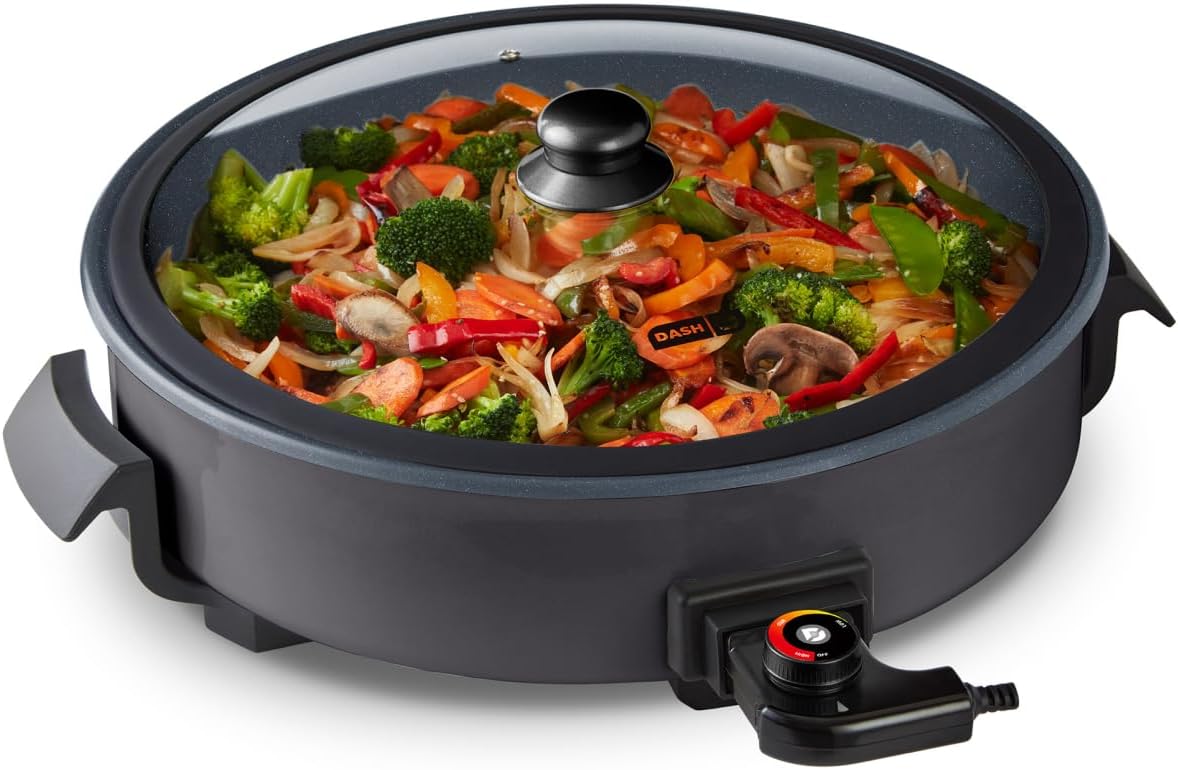
The lid plays a crucial role in trapping heat, moisture, and flavor while you cook various dishes. Tempered glass lids are standard across many models, allowing you to monitor your food's progress without lifting the cover and losing thermal energy. This visibility helps prevent overcooking and keeps cooking splatters contained securely inside the pan.
Specialized lid designs offer additional practical benefits, such as inverted storage profiles or locking clamps for secure transport. Evaluating how the lid fastens or rests on the skillet helps you determine how easily the appliance fits into your daily routine, whether you are cooking at home or traveling to a community potluck gathering.
Storage and Portability Considerations
Countertop appliances require careful thought regarding where they live when not actively in use in your kitchen. Bulky extra-large skillets demand significant cabinet clearance or dedicated pantry space, whereas compact models fit easily into tighter storage areas. If you plan to store your skillet vertically to save shelf space, look for specialized lid locking mechanisms or slim profiles.
Portability features such as cool-touch side handles and secure lid clamps make it much easier to transport prepared dishes to tailgates, potlucks, or family holiday gatherings. Assessing the overall weight and ergonomic design of the handles ensures you can lift and carry the appliance safely from your kitchen counter to a serving table without difficulty.
Frequently asked questions
Can I submerge my electric skillet in water for cleaning?
Submerging capability depends entirely on the specific manufacturer design guidelines for your model. Many modern electric skillets feature fully immersible pan bodies once you detach the removable temperature control probe, allowing you to wash the basin directly in your kitchen sink. However, other models require careful hand washing with a damp cloth or sponge to protect internal electrical connections. Always review the product manual instructions before placing any skillet into water or a dishwasher to prevent permanent damage to the heating elements.
What is the advantage of a ceramic nonstick coating?
Ceramic nonstick coatings provide a smooth cooking surface that allows food to release easily with minimal butter or cooking oils. This makes flipping pancakes, searing meats, and stirring vegetables much simpler while also speeding up the post-cooking cleanup process. Many ceramic surfaces are formulated without traditional chemicals like PFAS, offering a robust alternative to older nonstick treatments. While they require gentle cleaning utensils to avoid scratching, ceramic coatings deliver consistent food release and help maintain reliable everyday performance on your countertop.
How do I choose the right skillet size for my household?
Choosing the right size depends directly on how many people you routinely cook for and the types of meals you prepare. A compact twelve-inch skillet works well for couples, small families, or preparing side dishes alongside your main stove. If you frequently cook multi-ingredient family meals, stir-fries, or large batches for gatherings, a fourteen-inch or sixteen-inch skillet with a higher quart capacity provides the necessary surface area to prevent overcrowding. Match your typical portion sizes to the pan dimensions before buying.
Why is a removable temperature control probe important?
A removable temperature control probe serves multiple vital functions in an electric skillet. First, it allows you to adjust the heat precisely across specific temperature ranges or general low-to-high settings, ensuring your food cooks at the correct intensity. Second, detaching the probe is a mandatory step before washing most immersible skillets, protecting the electrical components from water damage. Finally, removing the probe makes the pan much easier to store compactly in cabinets or transport to off-site events without dangling cords.
Can I use metal utensils on a ceramic nonstick electric skillet?
Using metal utensils on ceramic nonstick surfaces is generally discouraged because sharp edges or excessive scraping can scratch and ruin the protective coating. To preserve the longevity of your skillet, it is best to use wooden, silicone, or heat-resistant plastic utensils when flipping, stirring, or serving food. Protecting the nonstick layer ensures food continues to release smoothly over time without sticking to exposed aluminum or forged iron beneath the coating, keeping your countertop appliance performing properly.