Appliances · Buying Guide
Best Electric Skillets for Versatile Countertop Cooking
Finding the right cooking appliance can completely transform how you manage daily meal preparation, especially when stovetop space is at a premium. Electric skillets offer a dedicated, temperature-controlled environment for frying, simmering, and sautéing without tying up your main burners. These versatile countertop cookers bring consistent heat directly to your meals, whether you are preparing a quick breakfast or a large family dinner.
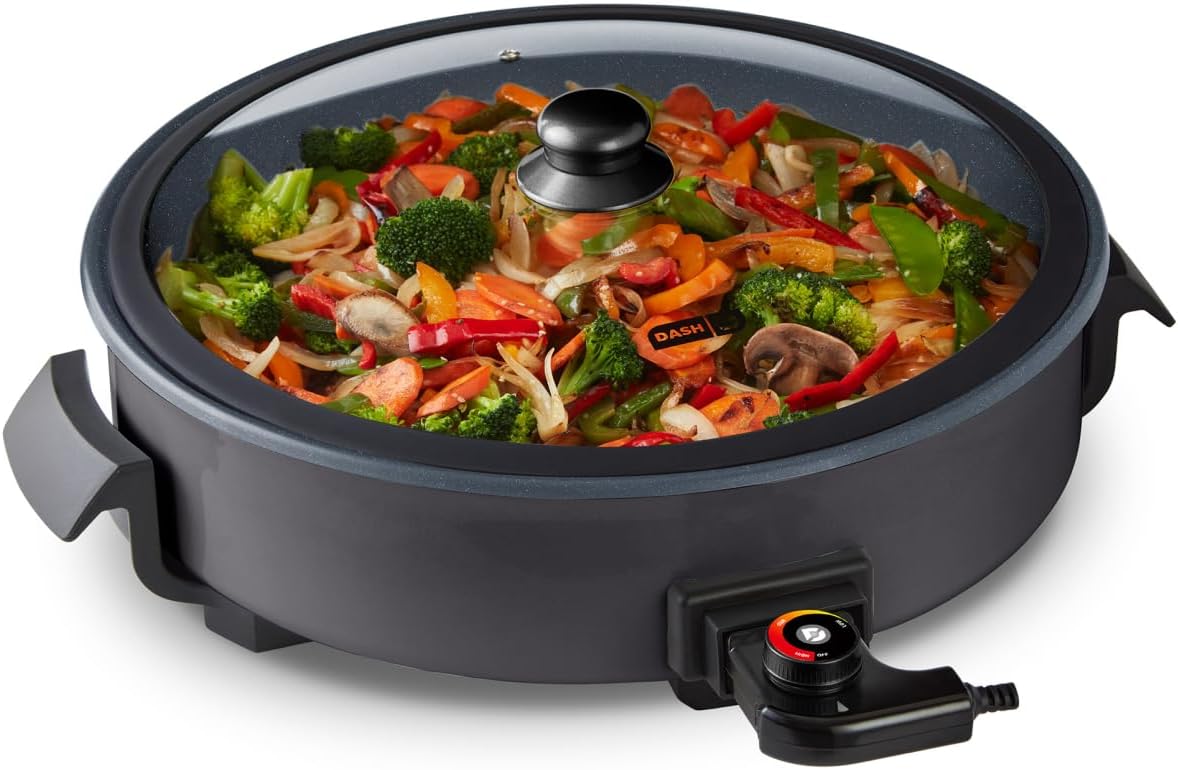
Modern designs incorporate nonstick surfaces, removable temperature probes, and tempered glass lids to streamline both cooking and cleanup processes. By understanding the distinct dimensions, capacities, and heating capabilities available across current options, you can select a model that fits your household cooking routine and storage layout seamlessly. Exploring these countertop appliances reveals practical solutions for everyday cooking demands.
As an Amazon Associate, StacyLaughs earns from qualifying purchases.
Buying guide
Evaluating Cooking Surface Dimensions and Capacity
Choosing the correct electric skillet size depends heavily on your typical household meal volume and available counter space. Compact twelve-inch models provide efficient heating for smaller households, while fourteen to sixteen-inch surfaces easily handle multi-portion family dinners. Consider whether you need extra-deep sidewalls for voluminous casseroles, soups, and roasting tasks or standard shallow depths for everyday frying and sautéing activities.
Matching your spatial requirements ensures the appliance remains practical for daily use without overcrowding your kitchen workspace. Larger volumetric capacities naturally demand more storage clearance, so evaluating your cabinet availability beforehand prevents countertop clutter and streamlines your cooking routine. Always verify physical dimensions against your storage areas before making a final purchasing decision.
Understanding Nonstick Coating Materials
Modern electric skillets feature various nonstick coatings, including ceramic options and marbleized stone-finish surfaces designed for effortless food release. Ceramic nonstick surfaces allow food to slide off smoothly with minimal oil, supporting quick hand-wash routines after meals. Stone-finish and marbleized coatings offer long-lasting durability against everyday wear, resisting scratches when used alongside wooden or silicone kitchen utensils.
Selecting the appropriate coating material directly influences your cleaning habits and utensil preferences. While nonstick interiors simplify post-cooking cleanup significantly, maintaining them requires adhering to manufacturer guidelines regarding approved cleaning tools and temperature limits. Prioritizing a durable surface ensures your skillet maintains its release properties over countless meal preparations.
Temperature Control Features and Precision
Precise temperature management separates basic frying pans from advanced electric skillets equipped with adjustable probes and removable dials. Models featuring numerical temperature markings allow you to dial in exact heat levels ranging from low simmering zones up to high searing thresholds. Fully embedded heating elements distribute thermal energy evenly across the entire pan floor, eliminating cold spots.
Evaluating how a skillet regulates its heat helps ensure consistent cooking results across delicate sauces, pancakes, and seared meats. Removable temperature control probes also simplify the cleaning process by allowing the main cooking vessel to be fully immersed or washed safely without electrical exposure. Reviewing these control mechanisms guarantees reliable performance during every culinary session.
Cleaning and Maintenance Convenience
Post-cooking cleanup is a vital consideration when selecting a countertop electric skillet for your kitchen. Many modern designs offer dishwasher-safe bodies and glass lids once you detach the electrical temperature control probe, saving considerable time at the sink. Other ceramic models recommend gentle hand-washing to preserve the integrity of the specialized nonstick coating over extended periods of frequent use.
Assessing your willingness to perform manual scrubbing versus relying on automated dishwasher cycles will guide you toward the ideal appliance build. Choosing a fully immersible cast aluminum or ceramic-coated skillet ensures that grease and food residue wash away efficiently. Always follow manufacturer maintenance advice to protect your investment.
Storage and Portability Solutions
Kitchen storage constraints require careful thought regarding appliance footprint, handle design, and cord management accessories. Certain innovative models incorporate specialized space-saving features like inverted locking lids and secure side clamps that allow the skillet to rest vertically on its side inside crowded cabinets. Integrated cord wraps further prevent tangled wires during storage intervals.
If you plan to transport your skillet to potlucks, holiday parties, or tailgates, locking lid mechanisms provide crucial spill prevention during travel. Evaluating how easily a skillet stores away or packs for transport ensures it accommodates your lifestyle without causing storage friction in your home kitchen environment. Measuring your cabinet clearances beforehand guarantees a seamless fit.
Safety Mechanisms and Handle Design
Safe handling during active cooking and serving is paramount when working with heated countertop electric appliances. Ergonomic cool-touch side handles remain comfortable to grip, allowing you to lift, carry, and serve meals directly from the countertop to the dining table without risking burns. Stable bases and secure rubberized feet prevent accidental sliding during vigorous stirring.
Tempered glass lids enhance safety by containing hot liquid splatters while letting you monitor food progress without lifting the cover. Reviewing these protective design elements ensures that your chosen skillet supports a secure, worry-free cooking experience for you and your family members during every meal preparation session. Prioritizing ergonomic grip features makes daily serving tasks significantly more comfortable.
Frequently asked questions
Can I immerse my electric skillet in water for cleaning?
Many electric skillets with removable temperature control probes allow the main cooking body and glass lid to be fully immersed in water or washed in a dishwasher. However, you must always detach the electrical temperature control probe before washing to prevent internal moisture damage. It is vital to consult the specific manufacturer instructions for your model, as ceramic nonstick or specialized coatings may recommend gentle hand-washing instead of automated dishwasher cycles to maintain surface performance over time.
How do I prevent food from sticking to my electric skillet?
To maintain the nonstick performance of your electric skillet, always use compatible utensils made from wood, silicone, nylon, or plastic rather than metal objects that can scratch the surface. Some models require an initial heating and cycling period before adding ingredients to ensure even thermal distribution across the heating element. Applying a small amount of oil or butter, depending on recipe requirements, also assists food release on ceramic or marbleized stone-finish nonstick cooking surfaces.
What temperature settings are typically available on electric skillets?
Most electric skillets feature adjustable temperature control dials ranging from 200 degrees Fahrenheit up to 400 degrees Fahrenheit, governed by a removable precision probe. This versatile heat range accommodates diverse culinary tasks, allowing you to maintain a low, gentle simmer for stews and sauces or ramp up high heat for searing meats, frying chicken, and making pancakes. The automatic cycling mechanism maintains your selected target temperature consistently throughout the entire cooking process without manual intervention.
Can I use an electric skillet to serve food directly at the table?
Yes, electric skillets are exceptionally well-suited for table service because their insulated cool-touch side handles allow for safe, comfortable lifting and carrying right from the countertop. Once you detach the temperature control cord, you can place the skillet on a protective pad on your dining table. This keeps meals warm during gatherings and family dinners, eliminating the need to transfer food into separate serving dishes and simplifying cleanup afterward.
How can I store an electric skillet efficiently in a small kitchen?
Storing an electric skillet efficiently depends on the model design and your cabinet layout. Some specialized space-saving skillets feature inverted locking lids and secure side clamps that allow the unit to rest safely on its side, freeing up valuable vertical shelf room. For standard models, detaching the temperature probe and storing the power cord neatly prevents tangling, while placing the glass lid upside down inside the pan minimizes the overall storage height.