Appliances · Buying Guide
Best Elite Gourmet Electric Skillets for Every Kitchen Size
Finding the right cookware for daily meal preparation involves balancing counter space, cooking capacity, and temperature control. Electric skillets offer a versatile alternative to traditional stovetops, allowing users to fry, braise, roast, and simmer meals in a single appliance. Selecting the proper model depends largely on household size and available kitchen storage.
Elite Gourmet produces a diverse line of electric skillets featuring adjustable temperature probes, non-stick interior surfaces, and durable cast aluminum bodies. From compact models built for small apartments to large extra-deep pans designed for family gatherings, these appliances provide reliable heating options. Understanding the distinct dimensions and wattage ratings helps match a skillet to specific cooking habits.
As an Amazon Associate, StacyLaughs earns from qualifying purchases.
Buying guide
Capacity and Dimensions
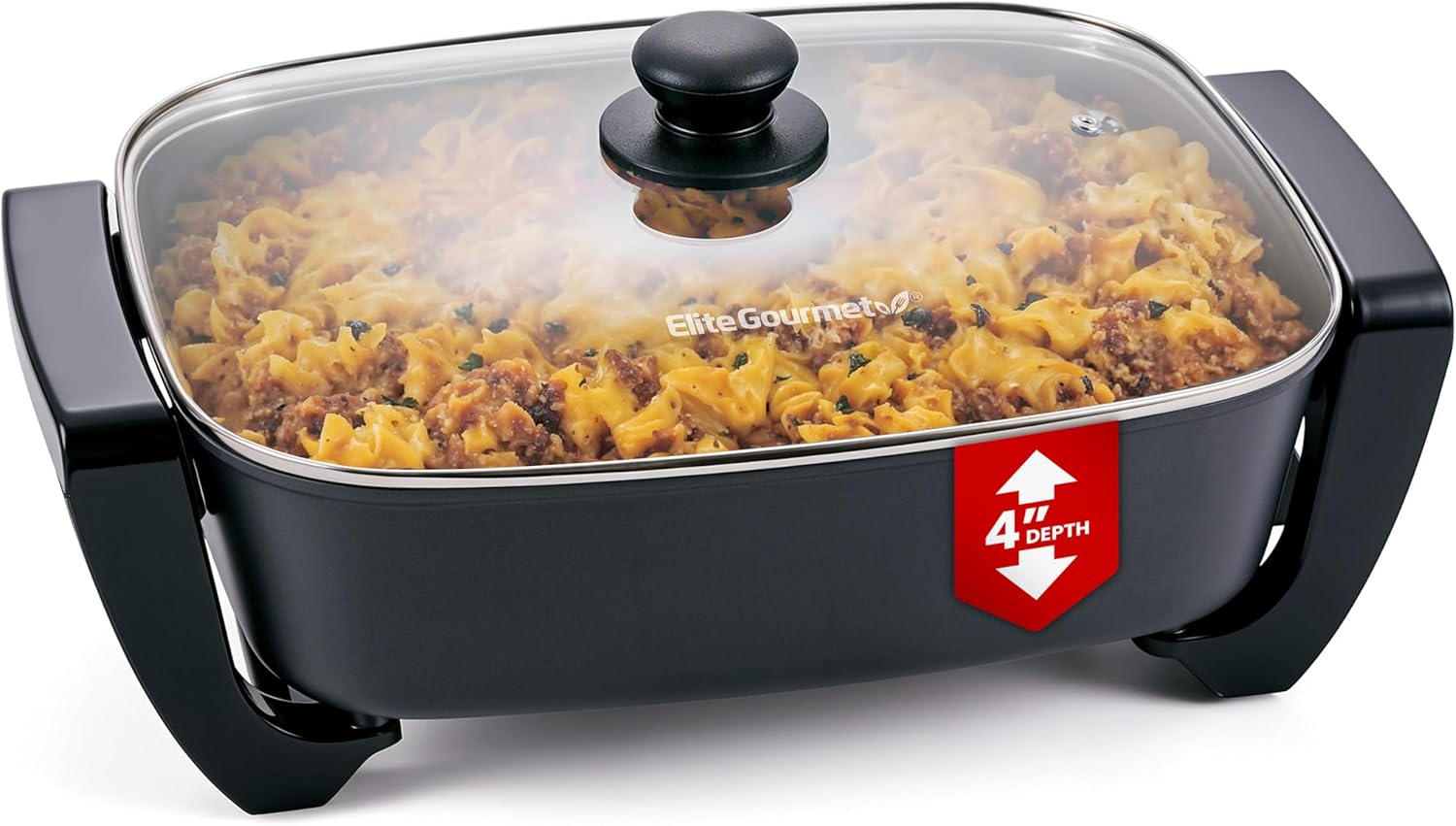
Choosing the correct electric skillet capacity depends directly on your household size and typical meal portions. Smaller households or single occupants often find compact models holding around two to three quarts sufficient for daily breakfasts or quick dinners. Conversely, families of four to eight people benefit significantly from extra-deep options offering seven to twelve quarts of volume.
Physical dimensions also dictate where you can store the appliance when it is not in use. Wide pans measuring twelve to sixteen inches require ample counter space during operation and substantial cabinet room for storage. Always measure your available kitchen storage before selecting a larger model to ensure it fits comfortably within your living space.
Wattage and Heating Performance
Electrical wattage determines how quickly an electric skillet heats up and how well it maintains high cooking temperatures. Models operating at 600 watts work well for light simmering and basic frying in compact settings, though they heat up more slowly. Higher-powered units running at 1200 to 1500 watts deliver rapid thermal recovery when cold ingredients are added.
Embedded heating elements play a crucial role in eliminating hot spots across the cooking floor. Look for designs where the heating element covers the entire pan bottom uniformly. This ensures that pancakes, meats, and vegetables cook evenly without requiring constant repositioning during preparation, resulting in more reliable cooking outcomes every single time.
Surface Coatings and Materials
Interior cooking surfaces typically feature either traditional non-stick, marbleized stone-finish, or PFAS-free ceramic coatings. These modern materials allow food to release effortlessly with minimal added oil, which simplifies the overall cooking process and daily meal preparation. Ceramic surfaces offer distinct material alternatives, while marbleized and multi-layer non-stick options provide enhanced scratch resistance against daily wear and tear.
Maintaining these specialized coatings requires careful utensil selection to prevent accidental scratching during meal preparation. Manufacturers generally recommend using wooden, silicone, nylon, or plastic tools instead of metal spatulas or forks. Adhering to these practical guidelines preserves the non-stick properties over years of regular use, ensuring your skillet continues to release food smoothly meal after meal.
Temperature Control and Probes
Precise temperature regulation is a defining advantage of modern electric skillets over standard stovetop pans. Removable temperature control probes let you dial in exact heat settings ranging from 200°F up to 400°F or 450°F. Indicator lights typically confirm when the selected temperature has been reached, cycling automatically to maintain consistent thermal levels.
The ability to detach the control probe also transforms the skillet into a serving vessel. You can disconnect the power cord and bring the entire pan directly to the dining table for family-style meals. This feature reduces extra dishwashing and keeps food warm longer during gatherings, combining cooking and serving into one streamlined step.
Cleaning and Maintenance
Cleanup convenience is a major factor when selecting kitchen appliances for daily use. Most modern electric skillets feature fully immersible cast aluminum bases and dishwasher-safe glass lids once the electrical temperature probe is detached. This design allows you to wash the main cooking vessel directly in your kitchen sink without damaging internal electrical components.
Cast aluminum bodies also resist rusting and warping over time, supporting long-term durability in active household kitchens. To protect the exterior finish and internal heating elements, always allow the skillet to cool down completely before washing. Following these straightforward manufacturer maintenance steps helps keep your electric skillet functioning reliably through countless meal preparations.
Lid Design and Special Features
Tempered glass lids are standard accessories that help lock in moisture, flavor, and heat during cooking. They allow you to monitor food progress visually without lifting the cover and losing accumulated thermal energy. Vented designs release excess steam safely, preventing pressure buildup while you braise meats, simmer stews, or steam vegetables.
Additional features like integrated pouring spouts enhance daily practicality by allowing you to drain excess oils or cooking liquids cleanly from the pan. Deep sidewalls also prevent messy splatters when frying chicken or stirring large ingredient batches. Evaluating these extra design elements ensures you choose a model tailored to your specific cooking preferences and recipes.
Frequently asked questions
Can I put my electric skillet in the dishwasher?
Yes, most Elite Gourmet electric skillet bases and tempered glass lids are dishwasher-safe, provided you completely remove the temperature control probe beforehand. The thick cast aluminum bodies are designed to be fully immersible in water or loaded onto the top rack of a dishwasher depending on the specific model. Always detach the electrical components and let the pan cool fully before submerging it in water or placing it into a dishwasher.
What utensils should I use on a non-stick electric skillet?
You should use wooden, silicone, nylon, or plastic utensils when cooking with non-stick, marbleized, or ceramic electric skillets. Avoid metal spatulas, forks, or knives entirely because sharp metal edges can scratch, chip, or peel the protective non-stick coating. Preserving the integrity of the specialized surface ensures food releases effortlessly and makes cleanup much faster after every meal, extending the overall lifespan of your kitchen cookware investment significantly.
How do I clean my electric skillet safely?
To clean your electric skillet safely, first unplug the appliance and detach the temperature control probe from the unit. Allow the cast aluminum body and tempered glass lid to cool down completely to prevent thermal shock. Once cooled, you can wash the skillet base in your sink using warm soapy water and a non-abrasive sponge, or place compatible parts in the dishwasher according to the manufacturer instructions.
What temperature settings should I use for different foods?
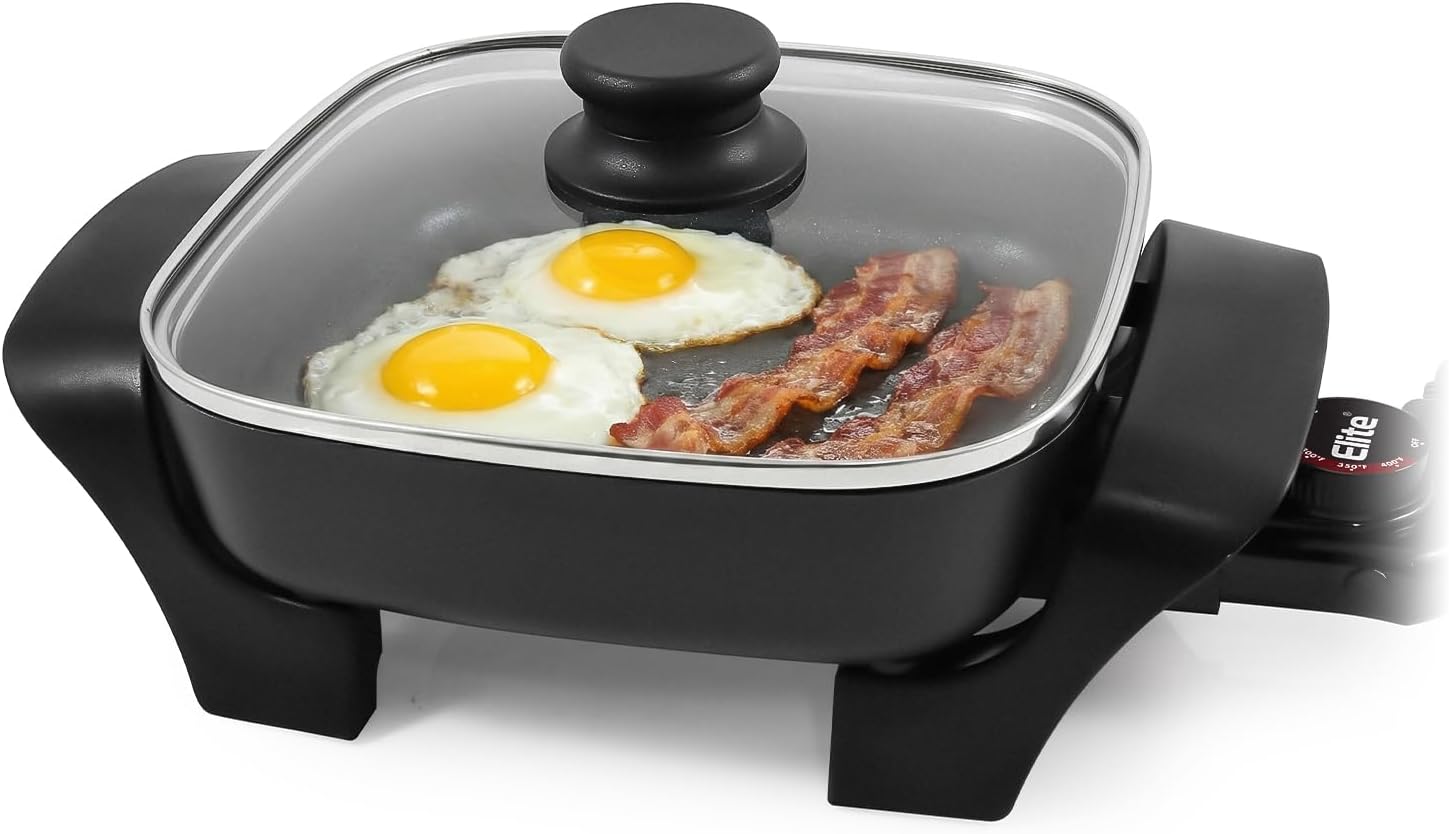
Elite Gourmet electric skillets feature adjustable temperature probes that typically range from 200°F to 400°F or up to 450°F. Lower temperature settings between 200°F and 250°F work best for simmering stews, keeping cooked foods warm, or gently melting ingredients. Medium to high settings ranging from 300°F to 400°F are ideal for frying bacon, scrambling eggs, searing meats, or cooking pancakes quickly and evenly without scorching.
Can I bring my electric skillet to the dining table?
Yes, you can easily bring your electric skillet straight to the dining table for serving meals to family and guests. Because the adjustable temperature control probe detaches completely from the skillet base, the power cord stays behind safely on the counter. This allows you to serve warm family-style dishes directly from the pan, keeping food hot and reducing the number of serving dishes you need to wash afterward.