Appliances · Buying Guide
Best Extra Large Cast Iron Skillets for Big Batch Cooking
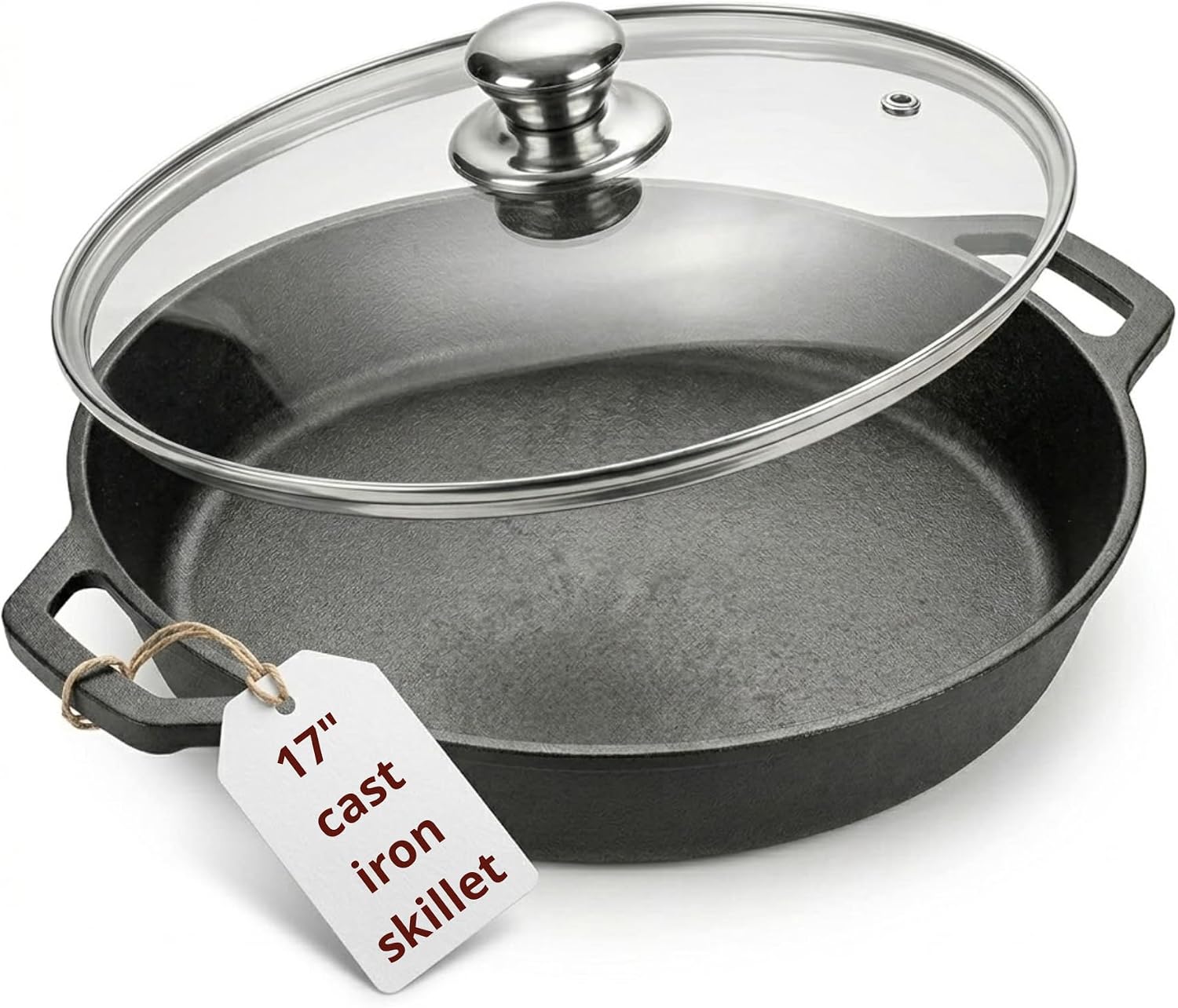
Cooking for a crowd requires cookware that holds heat evenly and provides ample space for large meals. Extra large cast iron skillets offer the expansive surface area necessary for batch cooking, searing meats, and baking family-sized portions across stovetops, ovens, grills, and campfires. These heavy-duty kitchen essentials provide the durable construction needed for frequent, demanding cooking routines.
Choosing the right heavy-duty pan depends on your specific stove type, storage capacity, and preferred cooking methods. Whether you need dual assist handles for stability or a smooth polished surface for easy food release, evaluating these distinct design details helps match the right iron skillet to your kitchen setup and everyday culinary needs.
As an Amazon Associate, StacyLaughs earns from qualifying purchases.
Buying guide
Matching Skillet Diameter to Your Cooktop Surface
Selecting an extra-large cast iron skillet starts with measuring your primary cooking burners and oven interior. Skillets spanning 15 to 20 inches require substantial clearance to heat evenly without cold spots. If your stovetop features smaller heating elements, an oversized pan will experience uneven temperature distribution along its outer perimeter, reducing cooking efficiency.
Always verify your appliance dimensions before committing to a pan labeled extra-large. Gas burners often accommodate wide bases better than standard electric coils or smooth glass tops. Ensuring proper physical fit prevents stability hazards and guarantees that your heavy iron cookware rests securely during high-heat searing, roasting, and frying tasks.
Evaluating Capacity and Portion Requirements
Capacity determines how much food you can prepare in a single batch, ranging from five quarts up to over seven quarts in oversized models. Consider your typical household size and whether you regularly entertain groups. A higher capacity allows you to cook deep-dish pizzas, whole roasts, and large portions of vegetables without overcrowding the cooking surface.
Matching volume to your meal prep style prevents spills and ensures proper food development. While large capacities handle family feasts easily, they also add significant weight to the cookware. Balance your need for expansive batch cooking space against your ability to safely maneuver heavy volumes of food from stove to oven.
Handle Configurations and Lifting Safety
Extra-large cast iron cookware generates substantial weight, making handle design a critical safety factor. Dual assist handles or double-loop configurations provide balanced leverage for transferring heavy pans across kitchen stations. Single integrated handles require extra caution and always necessitate hot pads or heavy mitts due to thermal transfer.
Assess how you intend to move the skillet between the stovetop, oven, and dining table. Dual handles distribute the heavy load more evenly between both hands, reducing strain during lifting. If you frequently transfer steaming hot meals to outdoor grills or campfire setups, secure dual gripping points offer superior stability and control.
Surface Finish and Pre-Seasoning Quality
The interior texture of cast iron influences food release and initial cooking performance. Factory pre-seasoned skillets arrive ready for immediate use with vegetable or grapeseed oil coatings. Some modern manufacturing methods polish the iron surface smooth to mimic vintage cookware, while other pans retain a textured matte finish that builds non-stick properties over time.
Understanding your skillet surface helps manage expectations regarding food sticking during early meals. Natural non-stick qualities improve gradually as you cook fatty foods and maintain proper seasoning. Review whether a factory vegetable coating or an organic grapeseed oil finish aligns with your maintenance preferences and cooking routine.
Cooktop and Oven Compatibility
Cast iron is renowned for high heat tolerance, frequently supporting temperatures up to 500 degrees Fahrenheit for oven finishing. However, stove compatibility varies across models. Some oversized skillets restrict usage strictly to gas burners, while others feature smooth bottom designs compatible with electric, ceramic, and induction cooktops.
Check your kitchen appliance specifications before purchasing to ensure your cooktop supports heavy iron pans. Induction users must verify magnetic flat-bottom compatibility, while oven bakers need to confirm temperature maximums. Selecting a universally compatible model ensures you can transition seamlessly from stovetop searing to oven roasting.
Storage Space and Weight Management
Heavy iron pans demand dedicated storage planning due to their expansive dimensions and substantial empty weight. An extra-large skillet can weigh eight pounds or more before adding food, requiring sturdy pantry shelves or specialized cabinet space. Measure your storage clearance to accommodate wide rims and protruding handles comfortably.
Factoring in the physical weight and bulk prevents storage frustration after purchase. If cabinet space is limited, hanging the skillet or storing it within the oven can be practical alternatives. Prioritizing storage convenience alongside cooking capacity ensures your heavy-duty pan remains accessible for daily meal preparation routines.
Frequently asked questions
How do I clean an extra large cast iron skillet properly?
Cleaning cast iron requires hand washing with warm water rather than placing the pan in an automated dishwasher. Avoid harsh metallic scrubbing pads that can strip away the seasoned surface. After washing your skillet thoroughly, dry it completely with a towel or place it on a warm burner to evaporate lingering moisture. Apply a very thin layer of cooking oil while the iron is still warm to protect the finish against rust, ensuring your heavy-duty pan remains ready for future cooking sessions.
Can I use metal utensils on pre-seasoned cast iron?
Metal utensils can generally be used on cast iron because the durable metal material resists scratching from spatulas or spoons. However, excessive scraping can disturb the accumulating layers of seasoning, especially on newer pans that have not yet built up a thick natural non-stick coating. Many cooks prefer wooden or silicone tools during early use to protect the factory seasoning. As your skillet matures and the oil polymerization strengthens, using metal turners becomes entirely acceptable for flipping heavy steaks, burgers, and roasted vegetables.
Why does my food stick to a pre-seasoned cast iron skillet?
Food sticking typically occurs when a cast iron pan lacks sufficient preheating time or adequate cooking oil. Unlike synthetic non-stick coatings, cast iron requires a specific sequence: preheating the dry skillet gradually on low to medium heat for several minutes before adding cooking fat. Allowing the oil to heat up properly before introducing food creates a natural barrier. Additionally, newer skillets naturally build better non-stick properties over time with regular use, so patience and consistent seasoning maintenance will improve food release progressively.
How do I prevent rust on my heavy iron skillet?
Preventing rust centers on eliminating moisture contact after washing. Never let your cast iron skillet air-dry or soak in water, as standing liquid rapidly promotes oxidation on bare iron. Always dry the pan completely using a cloth towel and warm it briefly on a stovetop burner to drive off hidden water vapor. Rubbing a tiny amount of vegetable or grapeseed oil across the entire interior and exterior surface while warm creates a protective seal that blocks humidity and preserves your cookware.
Are extra large cast iron skillets compatible with induction cooktops?
Compatibility with induction cooktops depends entirely on the specific manufacturing design of the skillet base. While traditional cast iron is inherently magnetic and generally works well with induction burners, oversized pans require a completely flat bottom surface to make proper contact with the glass induction element. Always check the manufacturer specifications to verify smooth surface induction support. Furthermore, ensure the heavy weight of an extra-large skillet is lowered gently onto your glass cooktop to avoid scratching or cracking the delicate ceramic surface.