Appliances · Buying Guide
Best Food Network Cast Iron Skillet Options for Home Cooks
Finding reliable cookware can completely transform how you prepare daily meals, especially when you need reliable heat distribution and long-lasting durability. Heavy cast iron pans have remained kitchen staples for generations because they handle high temperatures effortlessly and build a natural non-stick surface over years of regular use.
Whether you are searing thick steaks on a stovetop, baking cornbread in an oven, or cooking over an open campfire, selecting the right iron skillet ensures consistent results. This overview examines several popular pre-seasoned cast iron pans, highlighting their specific dimensions, handle designs, and temperature tolerances to help you choose wisely.
As an Amazon Associate, StacyLaughs earns from qualifying purchases.
Buying guide
Choosing the Right Skillet Diameter
Selecting the appropriate skillet diameter depends heavily on your household size and typical meal portions. Smaller pans around eight inches work well for single-serving eggs or camping trips, while ten-inch models handle daily family cooking.
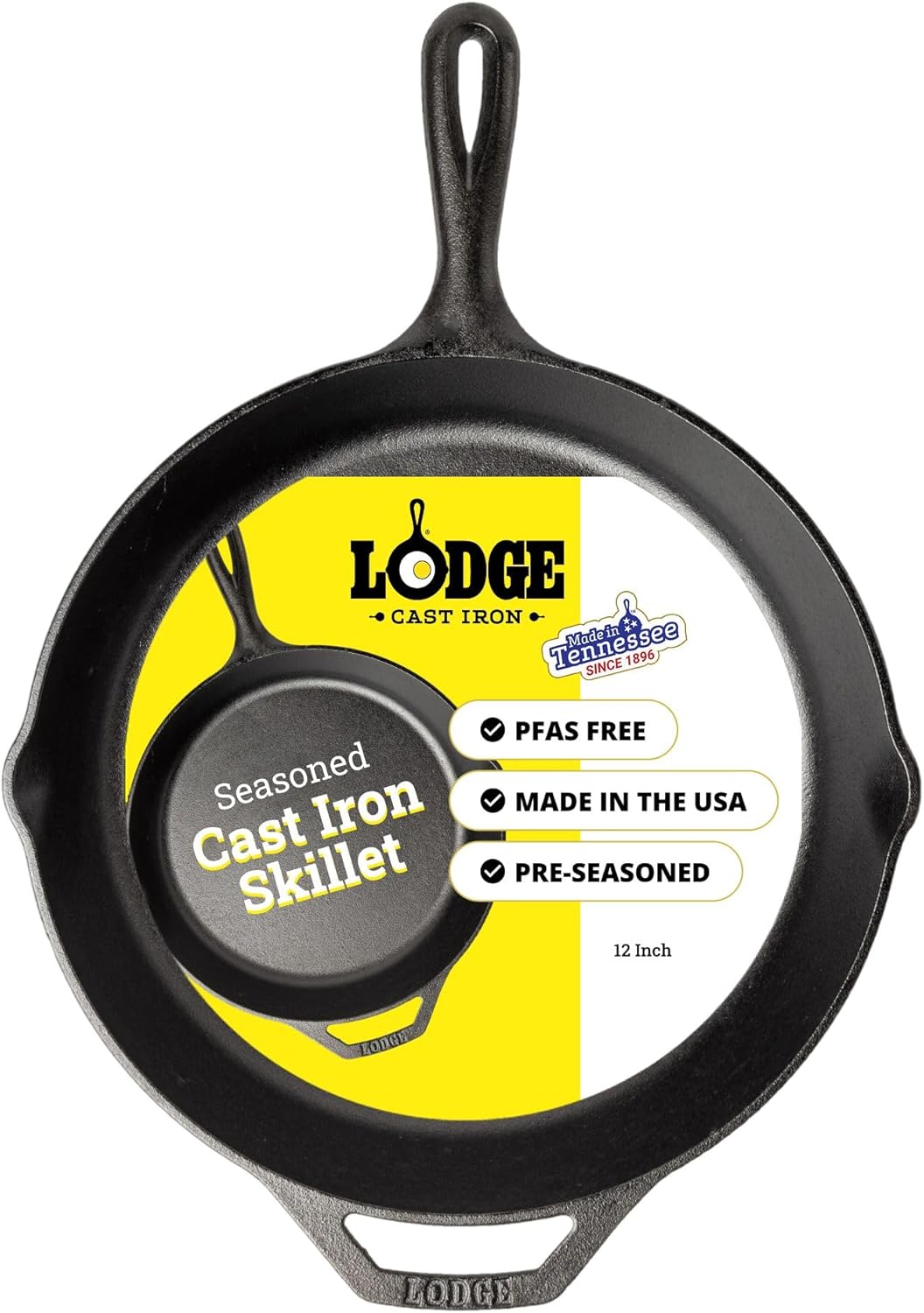
Larger twelve-inch options provide expansive cooking surfaces for whole chickens or multi-portion searing. Ensure you measure your storage space and burner sizes before purchasing to guarantee a comfortable fit.
Understanding Temperature Tolerances
Cast iron cookware is renowned for handling intense heat, but specific models feature distinct maximum temperature limits. Most traditional pre-seasoned skillets safely endure temperatures up to five hundred degrees Fahrenheit or slightly higher in domestic ovens.
Exceeding these manufacturer limits can damage the seasoned surface or auxiliary components. Always verify the maximum heat threshold if you plan to use your pan under aggressive broiler settings or open campfires.
Evaluating Handle and Grip Designs
Handling heavy iron cookware safely requires ergonomic handle designs and supportive grip accessories. Look for pans featuring integrated assist handles opposite the main grip to help distribute heavy weight evenly during transport.
Some models include removable silicone handle holders or specialized ceramic grips that protect hands from extreme heat. Assessing these handle features prevents accidents when moving hot pans between stovetops and ovens.
Cooktop and Heat Source Compatibility
Modern cast iron skillets work across a wide array of cooking surfaces, including gas burners, electric coils, and induction cooktops. Certain pans also transition smoothly onto outdoor grills and open campfires.
Checking your specific kitchen range compatibility ensures the pan base sits flat and heats evenly. Smooth induction cooktops require compatible iron bases to activate magnetic heating effectively during meal preparation.
Seasoning and Maintenance Requirements
Maintaining a durable, non-stick cast iron surface requires consistent cleaning habits and regular oil conditioning. Most quality pans arrive pre-seasoned with vegetable oil, allowing immediate use right out of the box.
Owners must commit to hand-washing routines, thorough drying, and light oil rubbing after every use. Avoiding dishwashers and harsh detergents preserves the protective seasoning layer for generations of cooking.
Lids and Accessories Considerations
Some cast iron skillet packages include matching heavy-duty lids equipped with interior drip points for moisture retention. These covered configurations effectively transform standard frying pans into versatile braisers or casserole dishes.
Evaluating whether you need a lid depends on your favorite recipes, such as slow-simmering stews or braised meats. Deciding on included accessories upfront helps you select a comprehensive kitchen set.
Frequently asked questions
Can I use metal utensils on pre-seasoned cast iron skillets?
Yes, metal utensils are generally safe to use on durable cast iron cookware surfaces because the hardened iron resists scratching. However, some cooks prefer wooden or silicone tools to protect the accumulated seasoning layer over long periods of frequent daily use.
How do I clean my cast iron skillet after cooking sticky foods?
To clean stubborn food residue, wash the pan by hand using warm water and a stiff brush or pan scraper without harsh dish soaps. Dry the skillet completely on a warm burner and apply a thin layer of cooking oil to prevent rust.
Are these cast iron skillets compatible with induction cooktops?
Many modern cast iron skillets feature smooth, flat ferrous bases that work exceptionally well on smooth surface induction cooktops, gas burners, and electric coils. Always review the specific compatibility details for each model to ensure proper cooktop pairing.
What causes a cast iron skillet to develop rust spots?
Rust typically forms when moisture remains on the iron surface after washing, or if the pan is stored in a humid environment without a protective oil coating. Applying a thin coat of oil after every drying session prevents rust formation.
Do pre-seasoned cast iron pans require additional seasoning before first use?
Pre-seasoned pans arrive ready to cook immediately with vegetable oil finishes applied at the factory. While you can cook right away, continuing to use the pan and applying periodic oil layers enhances its non-stick qualities over time.