Appliances · Buying Guide
Best Frying Pan for Induction Stove Choices for Every Kitchen Space
Finding the right cookware for an electromagnetic cooktop requires understanding how materials interact with magnetic surfaces. Induction cooktops rely on rapid magnetic fields to generate heat directly within compatible pans, making base construction vital for performance. Whether you are searing proteins, flipping delicate pancakes, or simmering sauces, selecting the appropriate skillet ensures consistent heat distribution and efficient cooking routines.
The market offers numerous options ranging from tri-ply stainless steel to hard-anodized aluminum and advanced scratch-resistant coatings. Each option brings specific physical dimensions, handle designs, and cleaning requirements to your kitchen. Examining these core attributes helps you match a frying pan's design to your everyday culinary preferences, storage limitations, and household meal size demands without relying on guesswork.
As an Amazon Associate, StacyLaughs earns from qualifying purchases.
Buying guide
Material Construction and Heat Distribution
Material choice dictates how efficiently a frying pan interacts with an induction cooktop and retains thermal energy during cooking sessions. Cast aluminum bodies paired with high magnetic conductive stainless steel bases offer rapid heating across the flat cooking surface. These combinations help manage energy transfer effectively while preventing hot spots that can scorch delicate ingredients like eggs or fish.
Alternatively, tri-ply stainless steel models use an internal aluminum core layered directly between protective steel sheets to prevent warping and deliver professional-grade heat consistency. Evaluating your preferred cooking style helps determine whether lightweight cast aluminum or heavy-duty clad stainless steel best fits your daily kitchen routine. Understanding these structural differences ensures you select cookware capable of handling high temperatures without losing its flat shape over years of regular use.
Nonstick Coating Durability and Safety
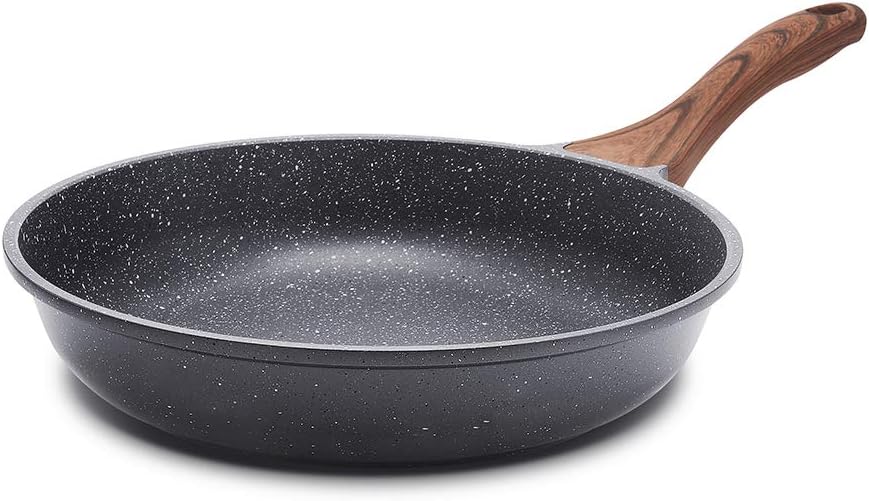
Nonstick coatings significantly reduce the amount of oil needed for daily frying tasks while simplifying post-meal cleanup routines. Many modern skillets utilize advanced reinforced layers, Swiss granite finishes, or aerospace-grade technology to prevent food from sticking to the interior surface. These coatings make flipping pancakes and releasing delicate proteins much easier for home cooks of all experience levels.
When selecting a pan, checking for toxin-free formulations such as PFOA and PFOS free materials ensures peace of mind regarding food contact safety. Reviewing manufacturer care instructions regarding metal utensil compatibility and hand washing recommendations will also help preserve the nonstick performance over an extended period. Proper maintenance prevents premature coating degradation and keeps your frying pan working efficiently.
Size, Capacity, and Kitchen Storage
Frying pan dimensions vary from compact eight-inch models up to spacious twelve-inch deep skillets with substantial five-quart capacities. Smaller pans work well for single-portion eggs or quick side dishes, whereas larger vessels accommodate family-sized meals and multi-ingredient stir-fries. Matching the pan diameter and capacity to your household size prevents overcrowding the cooking surface and ensures uniform results.
Storage requirements also deserve careful thought, particularly if you have limited cabinet space or store cookware inside RV compartments. Some specialized designs feature detachable handles that allow the skillet to nest compactly into tight spaces without taking up unnecessary room. Considering both your cooking volume needs and available storage areas prevents purchasing a pan that proves inconvenient to stow away.
Handle Design and Ergonomic Comfort
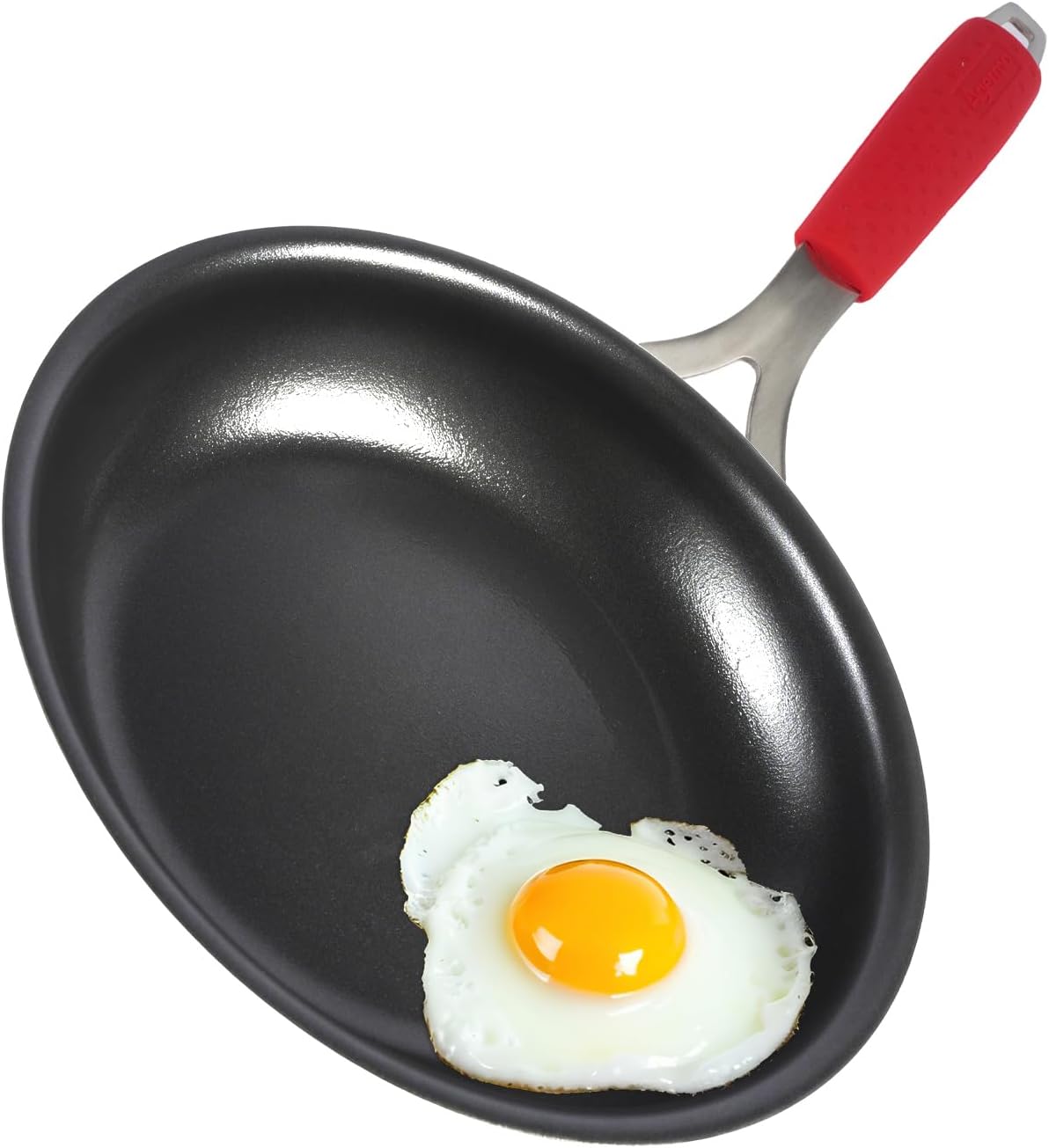
A secure and comfortable handle transforms how you maneuver a frying pan during active cooking sessions and transport tasks. Many induction skillets incorporate cool-touch bakelite handles featuring ergonomic shapes or textured woodgrain designs to improve grip stability. Stainless steel handles paired with silicone sleeves offer additional heat resistance while maintaining a firm hold during high-temperature searing tasks.
For larger deep pans, auxiliary helper handles provide essential balance when lifting heavy loads filled with food and liquid. Evaluating handle attachment methods, such as rivet-free interiors or smooth welded joints, also impacts cleaning ease by eliminating food buildup zones. Prioritizing ergonomic features ensures you can lift, tilt, and transfer your cookware safely and comfortably every day.
Maintenance and Cleaning Convenience
Keeping your induction frying pan clean depends heavily on its interior surface design and overall material construction. Rivet-free interiors eliminate hidden crevices where grease and food particles typically accumulate, allowing for quick sponge wiping or hassle-free dishwasher loading. Hard-anodized aluminum and clad stainless steel exteriors further resist staining and discoloration from regular exposure to high stovetop heat.
Although many modern nonstick pans carry dishwasher-safe ratings, hand washing with mild soap and warm water is frequently recommended to extend the lifespan of delicate nonstick coatings. Following manufacturer maintenance guidelines prevents accidental damage from harsh detergents or abrasive cleaning tools. Balancing your desire for effortless cleanup convenience with recommended care practices keeps your cookware in optimal working condition.
Versatility Across Multiple Cooktop Types
While electromagnetic compatibility is essential for induction stoves, many frying pans are engineered to function seamlessly across gas, electric coil, and smooth ceramic cooktops. This universal compatibility provides valuable flexibility if you move or use multiple heating sources in different environments. Checking that the flat magnetic base makes proper contact with the burner surface ensures optimal energy transfer regardless of the stove type.
Oven safety represents another key dimension of cookware versatility, allowing you to start searing a steak on the stovetop and finish cooking it inside the oven. Frying pans with high-temperature resistance ratings or removable silicone handle sleeves expand your recipe possibilities considerably. Reviewing maximum temperature limits before baking ensures safe operation without warping the metal body or damaging handle components.
Frequently asked questions
Will any frying pan work on an induction stove?
An induction cooktop requires cookware featuring a magnetic base to generate heat through electromagnetic fields. Traditional copper or standard non-magnetic aluminum pans will not heat up on an induction burner unless they incorporate a bonded magnetic stainless steel plate on the bottom. When shopping for an induction-compatible frying pan, always check the manufacturer specifications to confirm that the base material supports magnetic conductivity. Selecting appropriately labeled cookware ensures efficient energy transfer and prevents disappointing heating performance during meal preparation.
How do I clean a nonstick frying pan without damaging the coating?
Preserving a nonstick frying pan involves using gentle cleaning methods such as wiping the interior surface with a soft sponge, warm water, and mild dish soap. Although many modern skillets carry dishwasher-safe ratings, hand washing generally helps extend the lifespan of the nonstick layer by avoiding harsh automatic dishwasher detergents. You should also avoid using metal scouring pads or abrasive scrubbers that can scratch the delicate coating. Following these straightforward maintenance steps keeps your pan functioning smoothly for years.
Are frying pans with detachable handles good for small kitchens?
Frying pans equipped with detachable handles offer exceptional space-saving advantages for small kitchens, apartments, or RV cabinets. Removing the handle allows the skillet to fit easily into tight storage spaces where long handles would normally cause obstruction. Additionally, removing the handle often enables the main pan body to transition safely into an oven or under a broiler without spatial interference. This versatile design makes compact frying pans a practical choice for cooks with limited storage room.
Why is pan diameter important when cooking on induction burners?
The diameter of a frying pan dictates its overall cooking surface area and determines how much food you can prepare at one time. A smaller pan around eight or nine inches works efficiently for single portions or quick breakfast items, but larger twelve-inch skillets are necessary for family-sized meals. Furthermore, induction burners often have specific sizing guidelines; matching your pan base diameter closely to the burner ring ensures optimal electromagnetic contact and prevents uneven heating results across the meal.
Can I use metal utensils on nonstick induction frying pans?
Using metal utensils on standard nonstick frying pans can easily scratch and flake the delicate coating, reducing its food-release performance over time. Most manufacturers recommend utilizing wooden, silicone, or plastic cooking tools to protect the interior surface. However, certain advanced cookware series feature specialized scratch-resistant technology or aerospace-grade surfaces specifically engineered to be metal-utensil safe. Always verify the specific manufacturer guidelines for your chosen frying pan before introducing metal spatulas or whisks to the cooking surface.