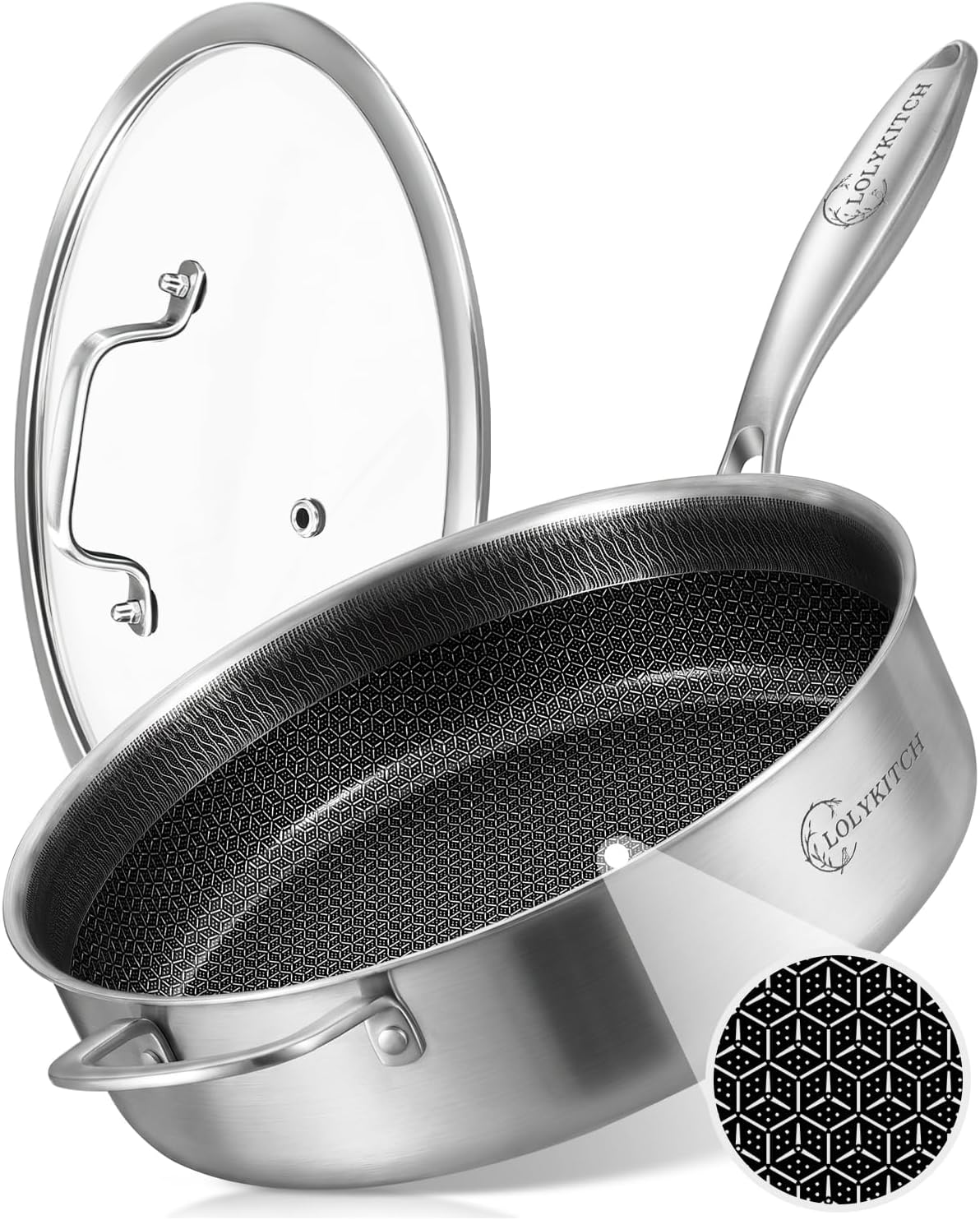
Appliances · Buying Guide
Best Frying Pan with Straight Sides for Large Family Meals
Choosing a frying pan with straight sides changes how you handle family-sized batches, deep braises, and thick sauces on a daily basis. Straight walls prevent messy spills when stirring heavy ingredients, giving you the extra depth needed for multi-step recipes on busy weeknights.
Whether you prefer multi-clad stainless steel for high-heat searing or a coated nonstick surface for effortless food release, these straight-sided skillets offer incredible versatility in any kitchen setting. They effectively bridge the gap between shallow frying pans and deep stockpots, helping you tackle everything from quick vegetable sautés to slow-simmered stews with reliable heat distribution across various standard stovetop types.
As an Amazon Associate, StacyLaughs earns from qualifying purchases.
Buying guide
Material Selection
Choosing the right material for your straight-sided frying pan impacts heat distribution, durability, and daily maintenance routines. Stainless steel models offer exceptional longevity, high-heat searing capabilities, and safe oven transitions up to five hundred degrees. They resist warping and tolerate metal utensils without scratching the cooking surface. However, they require careful temperature control and oil preheating to prevent food from sticking during delicate tasks.
Cast aluminum and hybrid options introduce nonstick coatings that simplify food release and reduce oil requirements. While these coated pans excel at low-fat cooking and quick cleanup, they often feature lower maximum temperature limits in the oven. Evaluating your typical recipes and cleaning preferences helps determine whether durable metal or coated surfaces suit your kitchen.
Capacity and Depth
Straight-sided pans are specifically valued for their extra vertical depth, which sets them apart from traditional sloped skillets. Capacities ranging from five to seven quarts give you ample room to prepare family-sized batches of chili, braised meats, or layered pasta dishes without overflowing the rim. High vertical walls contain splatters effectively when stirring thick sauces or deep frying foods.
Consider your household size and typical meal portions before selecting a specific volume. While larger seven-quart pans accommodate big gatherings effortlessly, they also demand more cabinet storage space and add significant weight when filled with liquid. Matching the pan capacity to your regular cooking volume ensures efficient meal preparation without managing unnecessary cookware bulk.
Stovetop Compatibility
Before purchasing any frying pan with straight sides, verify that its base matches your kitchen stove type. Induction cooktops require flat magnetic metal bases, which are typically found in multi-clad stainless steel or specially fitted cast aluminum cookware designs. Standard gas, electric coil, and ceramic glass-top ranges accommodate a broader range of materials, but verifying compatibility prevents inefficient heating issues.
A flat, stable base ensures efficient heat transfer and stops the pan from spinning or rocking during active ingredient stirring. Cookware engineered with heavy-duty metal cores maintains uniform contact across the burner surface, delivering reliable cooking results across every meal. Confirming these stove requirements protects your investment and guarantees optimal thermal performance on your range.
Handle Design and Safety
Handles play a critical role in safety and maneuverability, especially when dealing with heavy straight-sided pans filled with hot liquids. Stainless steel handles offer durability and high oven tolerance, though some designs incorporate stay-cool technology or silicone grips to protect hands. Cast aluminum pans often feature ergonomic bakelite handles that remain cool during stovetop cooking tasks.
Detachable handles provide an extra layer of convenience for compact cabinet storage and seamless oven transitions. However, you should review maximum temperature ratings for attached materials like silicone or bakelite before placing cookware into a hot oven. Choosing the right handle configuration balances comfort, storage needs, and thermal limits.
Cleanup and Maintenance
Maintenance requirements vary significantly depending on the interior surface finish and manufacturer guidelines for your cookware. Stainless steel pans usually tolerate automated dishwasher cycles and high-heat broilers, making cleanup straightforward after preparing messy meals. Rivet-free interior constructions eliminate hidden food traps, further simplifying the process of washing away stubborn cooking residues from the walls.
Nonstick coatings often require gentle hand washing with mild soap and warm water to protect their food release properties over extended periods of daily use. Avoiding abrasive metal scouring pads and harsh chemical detergents preserves the lifespan of coated surfaces. Following proper cleaning and heat management recommendations ensures your straight-sided pan remains a reliable kitchen companion.
Lid and Accessory Inclusion
Matching lids transform a straight-sided frying pan into a versatile braiser and stew pot by trapping heat and moisture effectively during cooking. Tempered glass covers allow you to monitor food progress without lifting the lid and losing valuable thermal energy. Vented designs release excess steam to prevent boiling over during long simmering sessions on the stove.
Assessing included accessories helps you determine the overall value and readiness of your cookware setup right out of the box. A well-fitted glass cover enhances the pan's capability to handle complex braising, steaming, and simmering tasks effortlessly. Ensure the lid materials meet your specific oven temperature requirements if you plan to finish baking dishes covered.
Frequently asked questions
What are the main benefits of choosing a frying pan with straight sides?
A frying pan with straight sides offers significantly more vertical depth than traditional sloped skillets, making it ideal for cooking larger portions without messy spills. The vertical walls help contain splatters when you stir thick sauces, chili, or stews, while providing the volume needed for one-pan family meals. Additionally, these straight-sided pans bridge the gap between shallow frying pans and deep stockpots, allowing you to braise, sauté, and simmer comfortably in a single piece of cookware.
Can I use a straight-sided stainless steel pan on an induction cooktop?
Induction cooktop compatibility depends entirely on the specific construction of the cookware base. Many tri-ply and multi-clad stainless steel straight-sided pans feature magnetic metal bases designed specifically to work seamlessly on modern induction ranges. However, you should always check the individual product specifications before purchasing, as certain aluminum or specialty pans may lack magnetic induction support and require traditional gas, electric coil, or ceramic heating surfaces to operate correctly.
How do I prevent food from sticking to a stainless steel straight-sided pan?
Preventing food from sticking on stainless steel surfaces requires proper heat management and oil preparation. You should preheat the empty pan over medium-low heat for a brief moment before adding a small amount of cooking oil or butter. Allow the oil to heat thoroughly until it shimmers before introducing your ingredients. Letting proteins sear undisturbed until they release naturally from the metal surface also prevents tearing and residue buildup during cooking.
Are straight-sided frying pans safe to use inside an oven?
Oven safety varies depending on the materials used in the pan body, handles, and any attached lids. Many stainless steel straight-sided skillets tolerate high oven temperatures up to five hundred degrees Fahrenheit, making them excellent for roasting and broiling. Conversely, pans featuring bakelite handles or silicone grips often carry lower temperature limits, sometimes capped around three hundred or four hundred degrees. Always verify the maximum temperature ratings for both the pan and its lid.
Should I hand wash my coated straight-sided skillet or put it in the dishwasher?
Cleaning recommendations depend on the specific surface coating and manufacturer guidelines provided with your cookware. While many stainless steel and hard-anodized models easily tolerate automated dishwasher cycles, pans featuring delicate nonstick or hybrid ceramic coatings strongly recommend gentle hand washing with mild soap and warm water. Hand washing helps protect the sensitive nonstick release properties and extends the overall lifespan of the coating by avoiding harsh dishwasher detergents and intense abrasive heat drying cycles.