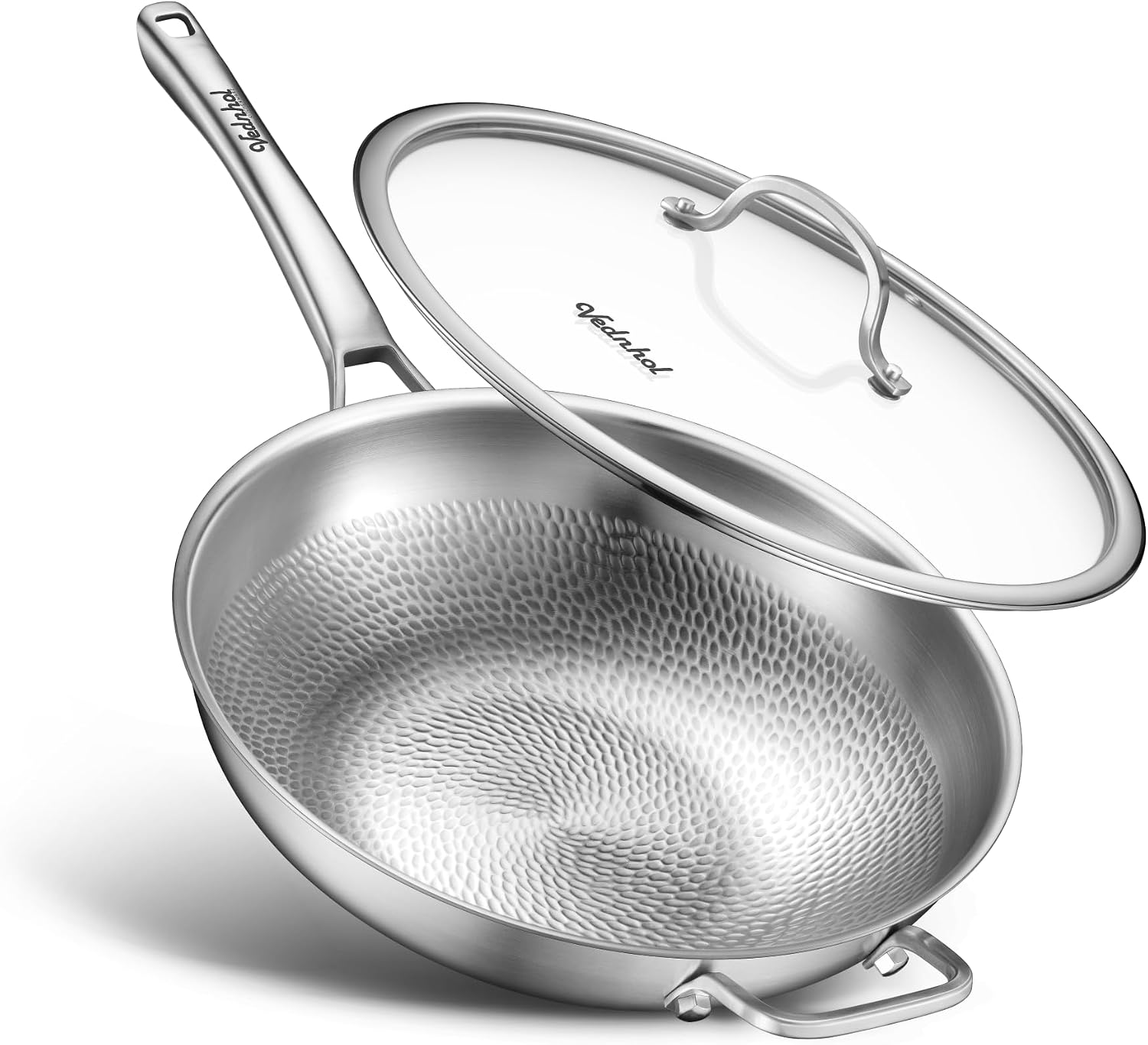
Appliances · Buying Guide
Best Wok to Buy: Carbon Steel and Titanium Pans for Home Kitchens
Finding the right pan for high-heat stir-frying, searing, and everyday cooking depends heavily on material choice, handle design, and thermal responsiveness. Carbon steel and titanium models offer durable cooking surfaces that adapt quickly to temperature adjustments across induction, gas, electric, and other standard cooktops.
Selecting a suitable cookware option requires balancing daily maintenance routines with your preferred cooking techniques and storage space. Whether you need a pre-seasoned carbon steel surface for traditional Asian recipes or an alternative metal option for daily family meals, examining specific design attributes helps match a pan directly to your kitchen setup and cooking style.
As an Amazon Associate, StacyLaughs earns from qualifying purchases.
Buying guide
Material Composition and Heat Conduction
Choosing the correct metal for your wok determines how efficiently the pan handles high-temperature cooking tasks like searing, boiling, and rapid stir-frying. Carbon steel provides rapid thermal responsiveness, adapting instantly to burner adjustments while building a natural nonstick patina over time with regular oil seasoning. It delivers durability for heavy daily use across various stoves.
Alternative materials like titanium provide lightweight, non-toxic surfaces that resist scratches but often require supporting composite layers to ensure even heat distribution across burners. Evaluating your preferred cooking style helps determine whether traditional carbon steel or modern metal composites best suit your routine, storage constraints, and meal preparation habits.
Stovetop Compatibility and Base Design
Ensuring your selected wok matches your kitchen stove is essential for achieving stable heat transfer and efficient cooking performance. Flat-bottom woks provide secure contact on electric coils, smooth glass surfaces, and induction burners without requiring special ring attachments. This stability prevents wobbling when stirring ingredients or tossing food items during high-heat preparation.
Gas ranges and open fires accommodate both flat and rounded bases, though flat designs offer versatility across modern kitchen appliances. When selecting cookware, verify that the base material interacts correctly with induction magnetic fields if you cook on a glass-ceramic cooktop. Proper base design guarantees uniform heating and reliable daily operation.
Maintenance and Cleaning Requirements
Cookware maintenance routines vary significantly depending on the manufacturing materials and surface treatments applied to the pan. Carbon steel models typically require hand washing with warm water and prompt drying to prevent rust formation. Applying a thin layer of cooking oil after cleaning preserves the protective seasoning and enhances nonstick performance.
Titanium or specially treated metal pans often allow for dishwasher-safe cleanup, reducing daily upkeep effort for busy households. However, avoiding harsh abrasive sponges helps protect exterior finishes and specialized coatings over years of regular use. Balancing your willingness to perform manual seasoning against automated cleaning preferences guides your final decision.
Handles and Storage Considerations
Handle design impacts both cooking comfort and the ease of storing bulky cookware inside standard kitchen cabinets. Ergonomic wooden handles stay comfortable during extended cooking sessions on the stove. Some models feature detachable handles, which simplify oven use and reduce the vertical storage space required in compact apartment kitchens.
Extra-large woks exceeding thirteen inches require careful measurement of cabinet shelves and pantry depth before purchase. Metal handles offer sleek profiles and scratch-resistant durability but may require careful handling near hot burners. Evaluating physical dimensions alongside handle configurations ensures your new cookware fits your storage layout.
Lids and Included Accessories
Many wok packages include matching tempered glass lids that allow you to monitor food without releasing steam or heat. Lids prove valuable when braising, steaming, or simmering dishes that require covered cooking times. Some product bundles also supply silicone spatulas or cleaning brushes for immediate use.
Purchasing a wok without an included cover means you may need to source a separate lid if your recipes involve steaming. Reviewing accessory bundles helps determine if extra utensils or lids provide added value for your specific cooking style. Matching accessories enhance convenience right out of the box.
Temperature Limits and Usage Precautions
High-heat cooking requires adherence to manufacturer temperature limits and usage precautions to prevent permanent cookware damage. Carbon steel woks generally prohibit dry heating on empty burners, especially on induction cooktops lacking overheat protection. Exceeding specified maximum temperature thresholds can warp metal and ruin specialized nonstick treatments.
Following user manual guidelines regarding preheating and oil application ensures long-term durability and safe kitchen operation. Understanding these operational boundaries helps prevent accidental damage during intense searing or rapid stir-frying sessions. Proper care protects your investment and maintains consistent cooking performance over years of service.
Frequently asked questions
Do carbon steel woks require seasoning before first use?
Many carbon steel woks arrive factory pre-seasoned at high temperatures using advanced techniques to provide a protective foundation. However, they still require ongoing oil seasoning over time to maintain and improve their natural nonstick surface performance. After cleaning the pan by hand and drying it completely, applying a thin layer of cooking oil helps build this patina. Skipping this routine maintenance can lead to sticking and rust formation, so regular upkeep remains essential for traditional carbon steel cookware enthusiasts.
Can I use a carbon steel wok on an induction cooktop?
Yes, carbon steel woks designed with flat bottoms work effectively on induction cooktops, along with gas, electric, ceramic, and halogen stoves. The flat base ensures stable contact with the glass surface for efficient heat transfer. However, users must take care not to heat an empty carbon steel wok on induction burners, as rapid temperature spikes can exceed maximum thresholds and damage both the cookware and the appliance if overheat protection is absent. Always follow manufacturer guidelines regarding heating precautions.
Are titanium woks dishwasher safe?
Titanium construction often supports dishwasher-safe maintenance, providing a convenient cleanup option compared to traditional carbon steel pans that require strict hand washing. Pure titanium and composite metal models resist scratches and fingerprints while maintaining clean exterior finishes over repeated cycles. Despite dishwasher compatibility, using soft sponges and mild detergents helps preserve the integrity of the cooking surface. Reviewing specific product care instructions ensures you select the cleaning method best suited for your cookware materials.
Why is dry heating prohibited for carbon steel woks?
Heating an empty carbon steel wok on any stove can permanently damage the metal and ruin specialized nonstick treatments or factory seasoning layers. Without food or oil to absorb thermal energy, the temperature can rapidly exceed maximum safe limits, especially on powerful induction cooktops. Manufacturers explicitly forbid dry heating because it causes warping and degrades the natural nonstick patina. Always add oil or ingredients to the pan before turning on the burner to protect your cookware investment.
What accessories should I look for when buying a wok?
When purchasing a wok, look for useful accessories such as matching tempered glass lids, which allow you to monitor food without losing heat or moisture. Some cookware packages also include silicone spatulas designed to prevent scratching the cooking surface, along with specialized dish brushes for cleaning. Detachable handles represent another practical feature, offering easy oven compatibility and compact storage in crowded kitchen cabinets. Choosing a set with these extras provides convenient functionality right out of the box.