Appliances · Buying Guide
Best Granite Stone Frying Pan Options for Every Kitchen

Choosing the right cookware transforms daily meal preparation, especially when upgrading to reliable nonstick surfaces designed for modern kitchens. Granite stone frying pans combine durable aluminum or ceramic cores with advanced coatings to help food release smoothly with minimal oil. Whether you are searing proteins, scrambling delicate eggs, or simmering large family-sized batches, finding a suitable skillet depends on matching its thermal capabilities, handle comfort, and cooktop compatibility to your routine.
The market features diverse configurations, ranging from compact multi-piece sets to deep sauté pans equipped with tempered glass lids and convenient pour spouts. Understanding how these features interact with your specific heat sources ensures you select a balanced cooking tool that withstands regular use. Reviewing distinct sizing options, maximum temperature thresholds, and cleaning preferences helps streamline your search for a dependable everyday pan.
As an Amazon Associate, StacyLaughs earns from qualifying purchases.
Buying guide
Choosing the Right Diameter
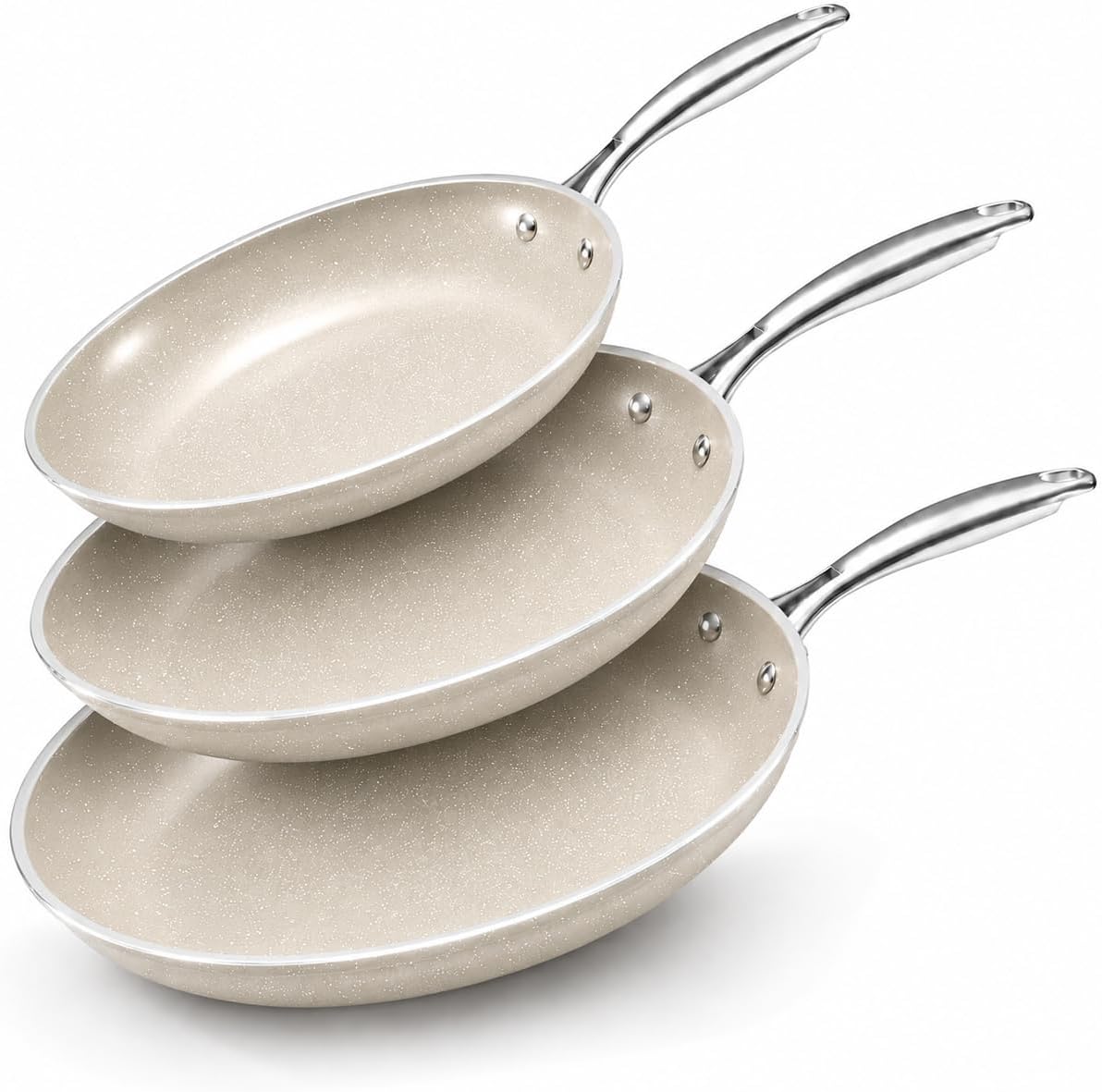
Selecting the appropriate pan diameter depends heavily on your household size and typical meal types. Smaller eight-inch skillets excel at single servings of eggs or toasted sandwiches, while medium nine to ten-inch pans handle standard daily tasks for couples. Larger twelve to fourteen-inch options accommodate family-sized portions, whole proteins, and batch cooking effortlessly.
Evaluating your burner layout alongside skillet dimensions prevents overcrowding on the stovetop. Ensuring your pan base matches the heating element diameter promotes even thermal transfer and prevents wasted energy. Choosing versatile multi-piece sets allows you to switch sizes dynamically as your daily cooking requirements shift between quick snacks and large evening dinners.
Evaluating Coating Materials
Nonstick coating materials dictate how easily foods release and how much oil you need during cooking. Ceramic surfaces offer smooth release properties for delicate items like eggs while remaining free of traditional chemical additives. Granite-infused and diamond-reinforced coatings provide enhanced durability against scratching, making them suitable for frequent use with various types of stirring utensils.
Understanding the specific formulation of your pan surface helps you set realistic expectations for long-term wear and maintenance. While advanced reinforcement layers improve scratch resistance, adhering to manufacturer care instructions preserves the nonstick lifespan. Matching the coating type to your preferred cooking style ensures reliable food release without frustrating sticking issues.
Cooktop Compatibility and Bases
Modern frying pans frequently feature high magnetic conductive bases designed to work seamlessly across gas, electric coil, and smooth surface induction cooktops. Ensuring your chosen skillet includes an induction-ready plate guarantees versatility if you upgrade your kitchen appliances later. A thick, flat base also prevents warping under high heat exposure over extended periods.
Evaluating the thickness of the pan base helps determine how evenly heat spreads across the entire cooking surface. Balanced thermal distribution eliminates annoying hot spots that cause uneven browning in meats and vegetables. Checking compatibility specifications carefully before purchasing completely avoids frustrating performance gaps on specialized glass or induction cooking surfaces.
Handle Design and Ergonomics
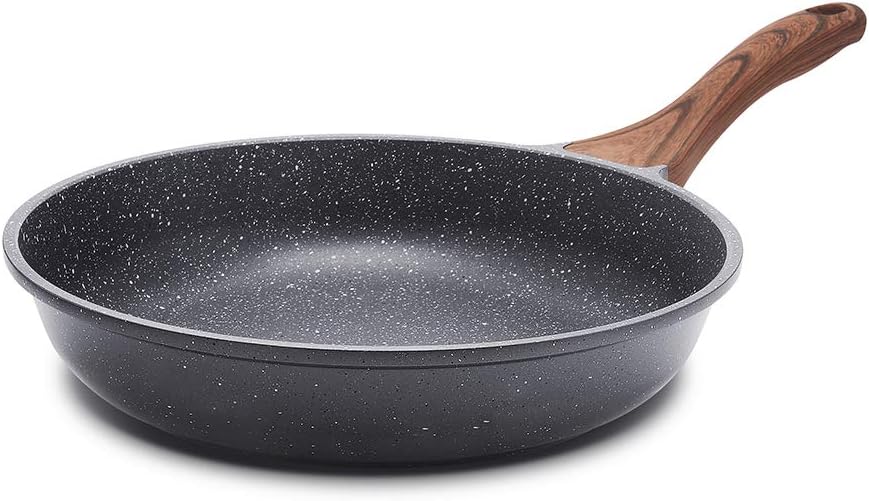
Handle construction directly impacts comfort and safety during active stovetop cooking sessions, flipping tasks, and quick tossing movements. Stay-cool stainless steel handles provide a secure, balanced grip while resisting thermal transfer from the burner below. Alternatively, woodgrain bakelite handles offer a comfortable tactile feel and remain cool to the touch during standard cooking procedures.
Assessing how securely a handle is attached to the pan body ensures long-term structural stability during heavy lifting tasks. Rivetless interior designs or well-anchored fasteners prevent food particle buildup and simplify cleaning routines around connection points. Choosing an ergonomic handle profile significantly reduces wrist strain when maneuvering heavy or fully loaded frying pans around the kitchen.
Temperature Limits and Oven Safety
Different frying pans feature distinct maximum temperature thresholds that dictate whether they can transition from stovetop burners into the oven. Models rated up to five hundred degrees Fahrenheit accommodate broiling, frittatas, and high-heat baking tasks with ease. Skillets with lower maximum thresholds require careful attention to avoid damaging the handle materials or surface coatings during baking.
Checking temperature ratings ensures you select cookware that supports your specific baking and finishing preferences. Pans featuring oven-safe construction streamline meal preparation by letting you sear on the burner and finish cooking in the oven. Always verify the maximum heat limits of both the pan body and any attached lids or handles before use.
Cleaning and Maintenance Practices
Maintaining your frying pan properly preserves its nonstick performance and extends its overall operational lifespan in the kitchen. Many modern granite and ceramic skillets offer dishwasher-safe construction for convenient cleanup after busy weeknight dinners. However, following manufacturer guidance regarding hand washing or mild dish detergents can further protect delicate surface coatings from premature wear over time.
Preventing harsh abrasive pads and metal scouring tools from contacting the nonstick coating avoids unnecessary scratching and surface degradation. Storing pans with protective felt dividers or careful nesting prevents chipping when multiple pieces share tight cabinet space. Simple preventive care routines ensure your cookware continues releasing food effortlessly meal after meal without sticking.
Frequently asked questions
Can I use metal utensils on granite stone frying pans?
Some diamond-infused granite stone frying pans feature highly reinforced surfaces specifically designed to withstand metal utensils like spatulas, spoons, and whisks without sustaining scratches. However, many ceramic and standard nonstick models perform best when paired with wooden, silicone, or plastic tools to protect the delicate coating over years of daily use. Always check the specific manufacturer guidelines for your exact pan model before introducing metal implements to prevent accidental surface damage and preserve coating longevity.
Are granite stone frying pans compatible with induction cooktops?
Many modern granite stone and ceramic frying pans include high magnetic conductive stainless steel bases or thick induction plates that allow them to function smoothly on induction cooktops. They also typically work well on traditional gas and electric coil stoves. To ensure a secure fit, verify that the pan specifications explicitly list smooth surface induction compatibility before purchasing for an induction range, as base construction varies significantly across different cookware collections and individual models.
How should I clean my nonstick granite frying pan?
Cleaning nonstick granite and ceramic frying pans is generally straightforward because food lifts cleanly from the treated surface. Many models offer dishwasher-safe construction for convenient cleanup, while others recommend hand washing with warm soapy water and a soft sponge. Avoid using harsh abrasive pads, steel wool, or aggressive chemical cleaners, as these materials can wear down the nonstick coating and diminish food release performance over extended periods of regular cooking.
Can these frying pans be used safely inside the oven?
Oven safety varies depending on the specific materials and handle construction of each frying pan. Some ceramic and aluminum models feature heat-resistant stainless steel handles and durable coatings rated safely up to five hundred degrees Fahrenheit, making them ideal for baking frittatas or finishing dishes in the oven. Other skillets with bakelite handles have lower temperature thresholds around three hundred or four hundred degrees, so checking manufacturer ratings is essential before baking.
Do granite stone frying pans require cooking oil or butter?
Granite stone and ceramic frying pans utilize advanced nonstick coatings that allow food to release smoothly with little to no oil or butter. This characteristic supports lower-fat cooking routines for items like eggs, vegetables, and pancakes. While you can cook without added fats, using a small amount of oil or butter is still completely acceptable depending on your flavor preferences and the specific recipe requirements you are preparing for your household.