Appliances · Buying Guide
Best Green Egg Paella Pan Options for Outdoor Grilling and Cooktops
Cooking traditional Spanish rice dishes outdoors or on standard kitchen ranges requires specialized cookware capable of handling direct heat. A quality green egg paella pan needs to distribute thermal energy efficiently while offering enough surface area to build a proper crispy bottom layer. Selecting the right model depends on your specific heat source, whether you cook over open flames, gas burners, or modern induction cooktops.
The market offers various material options ranging from traditional carbon steel requiring seasoning to modern multi-clad stainless steel and ceramic nonstick surfaces. Understanding how each construction handles temperature fluctuations helps you match the cookware to your favorite recipes. Reviewing the physical specifications and compatibility details ensures your chosen pan fits your cooking setup without unexpected limitations.
As an Amazon Associate, StacyLaughs earns from qualifying purchases.
Buying guide
Material Selection and Surface Maintenance
Choosing the correct material for your green egg paella pan dictates your daily cleaning routine, maintenance schedule, and overall cooking style. Traditional carbon steel options require regular seasoning and manual hand washing to build a natural nonstick patina that improves over time with continuous use. This upkeep ensures dependable high-heat performance across varied outdoor and indoor heat sources.
Modern stainless steel and ceramic nonstick alternatives skip the initial seasoning step entirely to simplify your cooking preparation. They offer dishwasher-safe convenience and resist oxidation naturally, though they manage high-temperature exposure differently than raw carbon steel vessels during intense outdoor grilling tasks or open campfires. Evaluating your cleaning preferences helps determine the ideal alloy.
Sizing and Portion Capacity
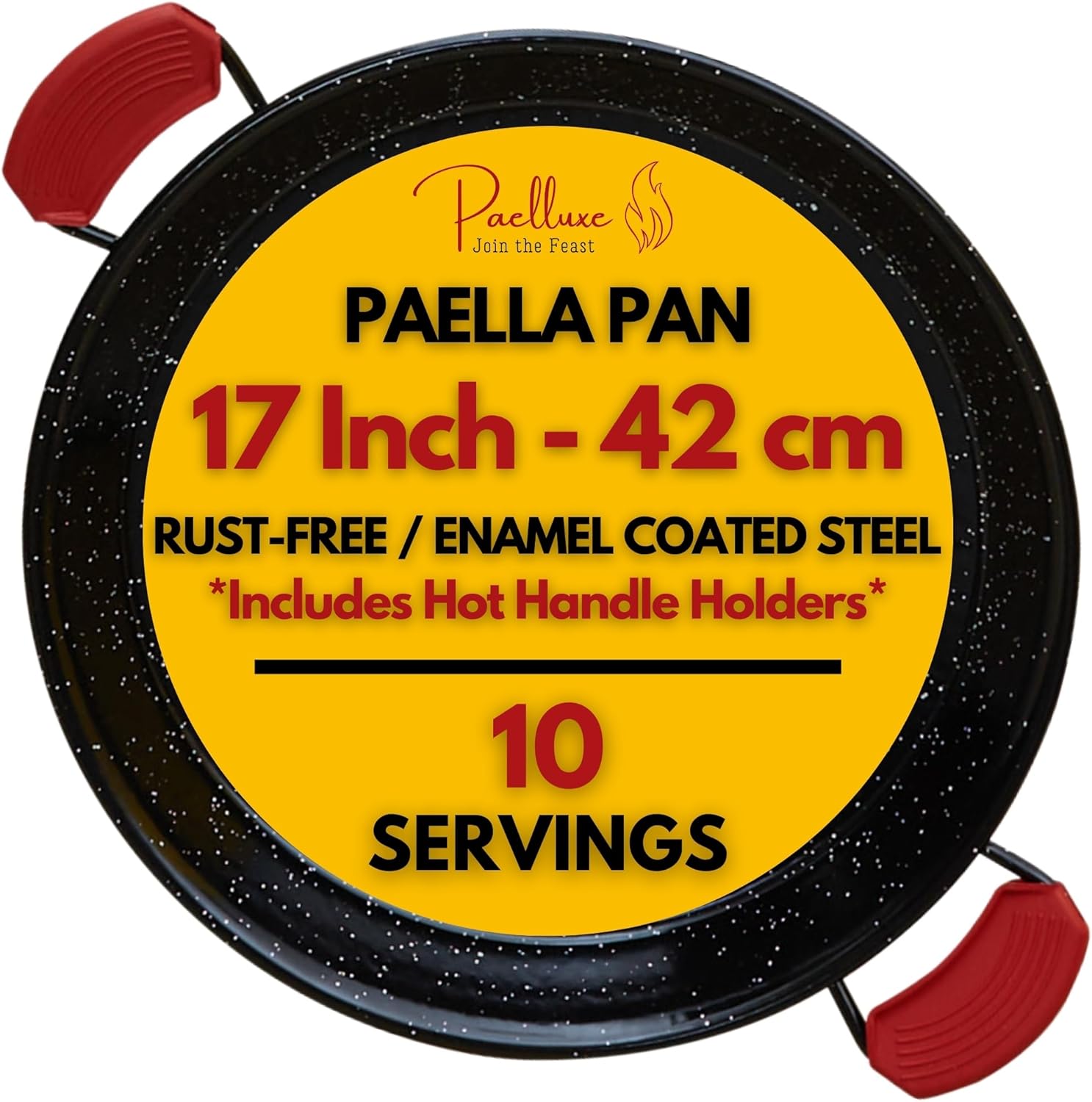
Matching pan dimensions to your typical gathering size ensures you prepare enough food without overcrowding your heat source. Four-quart models easily handle modest family meals, while fifteen to seventeen-inch variants comfortably serve larger groups of guests during weekend celebrations. Evaluating your typical guest count helps determine the ideal diameter required for your specific cooking style.
Remember that larger footprints demand wider burners or spacious grill grates to operate correctly. Verifying your stove or outdoor setup dimensions prevents uneven heating across the outer edges of oversized cookware. Selecting an appropriately sized pan avoids messy spills and guarantees optimal thermal distribution across the entire metal base during meal preparation.
Heat Source Compatibility
Cookware compatibility varies significantly across different stovetops, traditional ovens, and open fire setups. Some specialty pans support smooth surface induction ranges, while others are engineered strictly for gas burners or open outdoor campfire environments. Understanding your primary cooking medium prevents mismatched equipment and guarantees reliable performance during intense meal preparation sessions.
Checking manufacturer specifications before purchase guarantees your chosen cookware functions seamlessly with your existing kitchen appliances. Selecting the right pairing prevents warped metal bases and guarantees safe, efficient thermal transfer during every cooking endeavor. Always verify maximum temperature thresholds if you plan to transfer the vessel directly into a hot home oven for baking.
Storage and Handle Design
Large cookware pieces often present significant storage challenges inside standard kitchen cabinets or crowded apartment pantries. Models featuring detachable handles or flexible silicone handle covers offer practical solutions for compact living spaces and daily dishwasher loading tasks. Assessing your storage constraints before buying prevents frustrating space issues in your kitchen environment.
Evaluating how handles attach and whether they remove easily helps you determine how well the pan fits your specific storage layout. Thoughtful handle engineering also impacts safe transport from hot heat sources directly to dining tables for family style serving. Sturdy dual side handles provide necessary balance when carrying heavy meal loads across busy rooms.
Lid Inclusion and Moisture Control
Certain paella pans include matching glass lids designed to trap heat and moisture effectively during long simmering tasks. A shatter-resistant cover allows home cooks to monitor rice texture and liquid reduction levels without lifting the barrier and losing valuable thermal energy. This feature enhances cooking precision for complex multi-step recipes and slow-simmered dishes.
If your favorite recipe involves simmering hearty stews or steaming ingredients, choosing a model with a compatible lid adds valuable versatility to your kitchen equipment. Pans lacking lids focus strictly on open evaporation and dry-heat searing techniques rather than covered moisture retention. Consider your specific recipe preferences when evaluating lid inclusion options carefully.
Cleaning and Maintenance Requirements
Maintenance requirements vary widely based on the specific metal alloys and surface coatings used in modern construction projects. Modern enameled and stainless steel options typically offer dishwasher-safe convenience and resist oxidation without requiring special chemical treatments or protective layers. This makes post-cooking cleanup straightforward after large family gatherings and casual weeknight dinners alike.
Conversely, raw carbon steel alternatives demand careful manual hand washing and regular oil seasoning sessions to protect against surface rust formation over time. Understanding these upkeep duties ensures you select cookware that matches your preferred daily cleaning routine and personal maintenance habits. Evaluating upkeep responsibilities prevents unexpected equipment wear during long-term storage periods.
Frequently asked questions
What is the main advantage of a carbon steel paella pan?
Carbon steel paella pans heat up extremely quickly and adapt rapidly to temperature changes, providing precise thermal control during cooking. This responsiveness helps home chefs manage high-heat searing and browning tasks efficiently. Furthermore, carbon steel surfaces naturally develop a nonstick patina over time with regular use and proper seasoning maintenance. While they require manual cleaning rather than dishwasher cycles, their durability makes them popular for open flames and outdoor grilling setups.
Can I use a stainless steel paella pan on an induction cooktop?
Many stainless steel paella pans feature magnetic outer bases designed specifically for smooth surface induction cooktops alongside traditional gas, electric, and halogen ranges. The tri-ply construction typically bonds an aluminum core between durable stainless steel layers to ensure fast, even heat distribution across the entire base. Users should consult specific manufacturer compatibility guides before purchasing to confirm that the chosen pan size matches their specific stovetop burner dimensions and heating capacity.
Do enameled paella pans require seasoning before the first use?
Enameled paella pans do not require any seasoning before their initial use because the smooth enamel coated finish protects the underlying carbon steel from oxidation. This protective layer helps food release easily during cooking and simplifies post-meal cleanup routines since the cookware is often dishwasher safe. Skipping the traditional seasoning process saves time and makes enameled pans an approachable option for beginners who want rust-resistant cookware without maintenance hassles.
How do I achieve the traditional crispy rice crust in a paella pan?
Achieving the signature crispy rice crust known as socarrat requires precise heat control and adequate surface area for evaporation. Wide, shallow paella pans made from responsive materials like carbon steel or tri-ply stainless steel facilitate proper liquid reduction and caramelization at the base. Cooking over a consistent heat source without stirring during the final stages allows the bottom layer of rice to brown and crisp perfectly while maintaining tender grains above.
Why would I choose a paella pan with a detachable handle?
Choosing a paella pan with a detachable handle offers significant storage advantages for kitchens with limited cabinet space or compact ovens. Large pans can be difficult to store due to their wide side handles, but removing the handle allows the vessel to slip easily into narrow storage slots or standard dishwashers. Additionally, this design flexibility transforms the cookware into a versatile serving dish that fits comfortably on crowded dining tables during family gatherings.