Appliances · Buying Guide
Best Green Pan Saute Pan Options for Home Cooks

Selecting the right green pan saute pan involves evaluating core materials, maximum temperature limits, and stovetop compatibility to match your daily cooking habits. Modern kitchens demand versatile cookware that handles searing, simmering, and everyday meal preparation without complicated maintenance requirements or harsh cleaning traditions. Choosing a suitable pan ensures consistent heat distribution and effortless food release whether you are preparing quick weeknight dinners or elaborate weekend recipes.
Manufacturers like GreenPan offer diverse design configurations featuring diamond-infused ceramic nonstick surfaces, hard anodized aluminum bodies, and multi-clad stainless steel constructions. Understanding how these specific structural elements align with your cooking style helps you select a reliable piece that performs consistently across various stovetops, including induction burners. Exploring the available options clarifies which capacities, handle designs, and lid types best suit your household requirements.
As an Amazon Associate, StacyLaughs earns from qualifying purchases.
Buying guide
Material Construction and Durability
When choosing a green pan saute pan, evaluating the underlying body material is essential for long-term kitchen performance. Hard anodized aluminum provides exceptional scratch resistance and rapid heat distribution, making it a reliable choice for everyday meal preparation. Alternatively, multi-clad stainless steel options offer robust thermal retention and a polished aesthetic that stands up to intensive cooking tasks without warping under high heat.
Understanding how these construction types interact with your cooking style ensures you select a pan capable of handling frequent use. Hard anodized models typically offer lightweight maneuverability, whereas stainless steel clad variants provide heavy-duty stability during extended searing sessions. Assessing your kitchen habits helps determine which material composition delivers the ideal balance of durability, weight, and thermal efficiency for your household.
Nonstick Coating Technology
Ceramic nonstick coatings reinforced with diamonds represent a modern approach to healthy cooking without traditional toxic chemicals. These advanced surfaces deliver effortless food release, allowing you to cook with minimal oils while simplifying post-meal cleanup routines. Many diamond-infused layers are engineered to resist scratching from everyday utensils, maintaining their smooth release properties over extended periods of active kitchen use.
Reviewing the specific coating generation helps buyers understand scratch resistance and release longevity. Premium ceramic formulations prevent the release of harmful fumes even if the pan is accidentally overheated during intense culinary sessions. Prioritizing a robust nonstick layer ensures your cookware remains functional and easy to maintain, reducing the effort required to keep cooking surfaces spotless after preparing sticky or sugary meals.
Stovetop Compatibility
Verifying stovetop compatibility ensures your chosen cookware integrates seamlessly into your existing kitchen setup without heating issues. While many aluminum and stainless steel pans work well on gas and electric coil surfaces, induction cooktops require specialized magnetic bases to conduct heat properly. Models equipped with optimized induction disks deliver efficient energy transfer and stable performance across magnetic cooktop zones.
Checking burner requirements before purchasing prevents frustrating operational mismatches and guarantees even temperature distribution across the pan base. If your kitchen features an induction range, selecting a specifically engineered base design is crucial for successful meal preparation. Traditional cooktop users have broader flexibility, but confirming compatibility safeguards your investment and optimizes thermal efficiency regardless of your cooking appliance type.
Temperature Limits and Oven Safety
Thermal ratings dictate whether a saute pan can transition safely from stovetop searing to high-heat oven finishing. Many ceramic nonstick pans handle stovetop heat exceptionally well, but their maximum temperature limits vary depending on handles, lids, and body materials. Pans rated up to 600 degrees Fahrenheit accommodate demanding oven-roasting techniques, whereas lower-rated options require closer monitoring during baking tasks.
Paying close attention to glass lid ratings is equally important, as tempered lids often feature lower thermal ceilings than the metal pans themselves. Knowing these thresholds prevents accidental warping or glass cracking when moving cookware between different heat zones. Matching the temperature specifications to your favorite recipes ensures you can finish dishes in the oven without worrying about equipment damage or safety limits.
Handle Design and Ergonomics
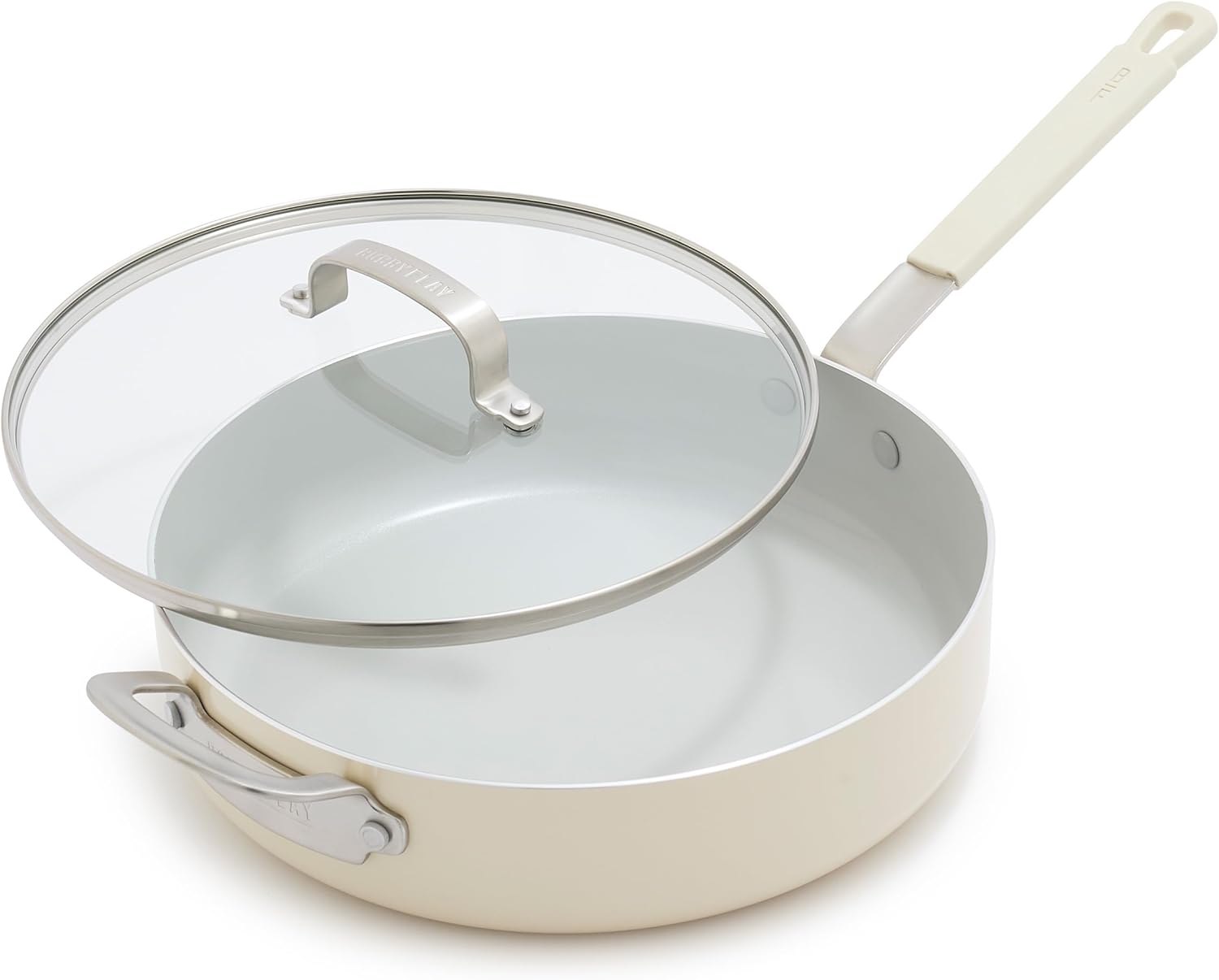
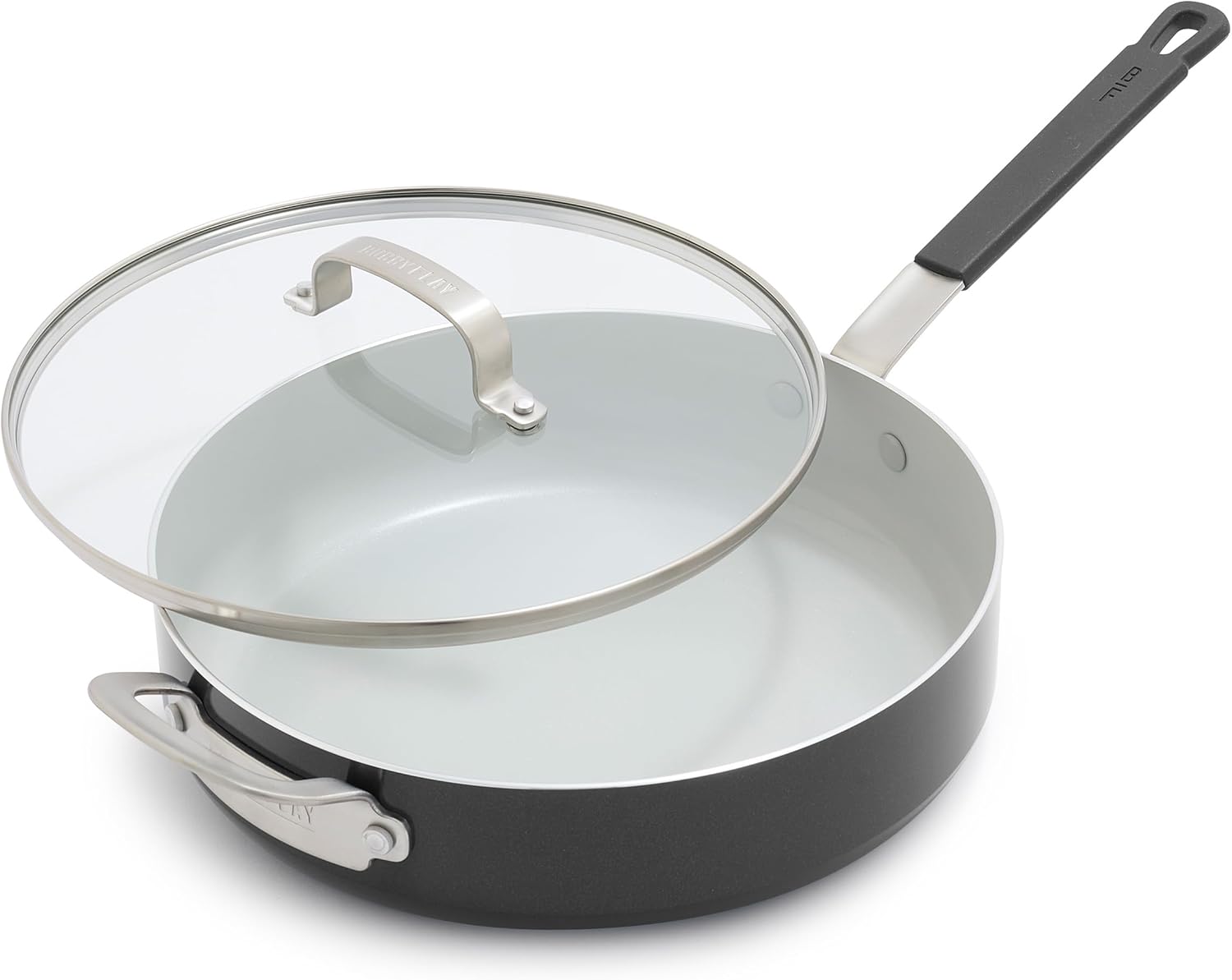
Comfortable handle design significantly impacts safety and maneuverability when lifting heavy, food-filled saute pans. Long stainless steel handles featuring V-shaped cutouts help dissipate heat effectively, keeping grips cooler during extended stovetop simmering sessions. Alternatively, ergonomic silicone grips offer enhanced comfort and secure traction, reducing hand fatigue when transferring pans between the counter, stove, and oven.
Dual-handle configurations provide extra stability for larger pans, making it easier to manage heavy loads during roasting and serving. Evaluating how a handle feels in your hand ensures confident control and minimizes the risk of spills. Prioritizing supportive ergonomics transforms routine cooking tasks into comfortable, manageable experiences, especially when preparing large family meals that require frequent pan adjustments.
Maintenance and Care Guidelines
Proper maintenance preserves the longevity and nonstick performance of ceramic cookware over years of regular use. Although many modern pans are designated as dishwasher safe, washing them by hand with mild soap often helps protect the exterior finish and ceramic coating from harsh detergents. Avoiding metal scouring pads prevents unnecessary micro-scratching on delicate nonstick surfaces, maintaining smooth food release properties.
Following manufacturer guidelines regarding recommended heat levels and cooling procedures further protects your investment against thermal shock. Allowing pans to cool naturally before submerging them in water prevents warping and structural damage. Adopting gentle cleaning habits ensures your cookware continues to look pristine and function reliably, delivering consistent culinary results for every meal you prepare at home.
Frequently asked questions
Can I use metal utensils on a green pan saute pan?
Many diamond-reinforced ceramic nonstick models are explicitly rated as metal utensil safe, offering strong scratch resistance under normal cooking conditions. However, manufacturers often recommend using wooden, silicone, or plastic tools to maximize the lifespan of the nonstick coating. While occasional use of metal tools may not cause immediate damage, avoiding sharp edges and aggressive scraping preserves the smooth release surface over years of regular meal preparation in your kitchen.
Are these saute pans safe to use in the oven?
Most of these saute pans are oven safe, with many hard anodized and stainless steel bodies withstanding temperatures up to 600 degrees Fahrenheit. However, you must always check the specific rating for your model, as some variants with silicone grips have lower limits around 392 degrees Fahrenheit. Additionally, glass lids typically feature lower maximum thresholds, often capped at 425 degrees Fahrenheit, meaning you may need to remove the lid before placing the pan into a very hot oven.
Do these pans work on induction cooktops?
Induction cooktop compatibility depends entirely on the specific model and base construction of the saute pan. Versions equipped with specialized magnetic bases, such as Magneto induction technology or tri-ply stainless steel clad bodies, perform efficiently across all stovetops, including magnetic induction burners. Conversely, standard hard anodized models designed exclusively for gas, electric coil, and smooth surface non-induction cooktops will not function on induction ranges. Always verify the specifications before purchasing.
How should I clean my ceramic nonstick pan?
While many listed pans are labeled as dishwasher safe, washing them by hand using warm water, mild dish soap, and a non-abrasive sponge is generally recommended to preserve the ceramic coating. Avoid harsh scouring pads or abrasive chemical cleaners that can degrade the nonstick surface over time. Allowing the pan to cool completely before cleaning also prevents thermal shock, which can warp the metal body and compromise structural integrity.
What is the benefit of a diamond-infused ceramic coating?
Diamond-infused ceramic coatings enhance both the durability and heat transfer capabilities of the cooking surface. Diamonds are extremely hard materials that improve scratch resistance compared to traditional nonstick formulas, allowing the pan to withstand daily kitchen demands. Furthermore, this advanced coating facilitates effortless food release, enabling home cooks to prepare meals with less oil while ensuring that sticky or delicate ingredients slide off the surface easily during cleanup.