Appliances · Buying Guide
Best greenpan cookware oven safe sets for high-heat cooking
Finding reliable cookware that seamlessly transitions from stovetop searing to high-temperature baking is essential for modern home cooking. GreenPan offers various hard-anodized, diamond-reinforced ceramic nonstick collections engineered explicitly to withstand intense thermal demands. These pots and pans provide dependable heat distribution and effortless food release, making them popular for bakers and everyday cooks alike who rely on oven-finished meals.
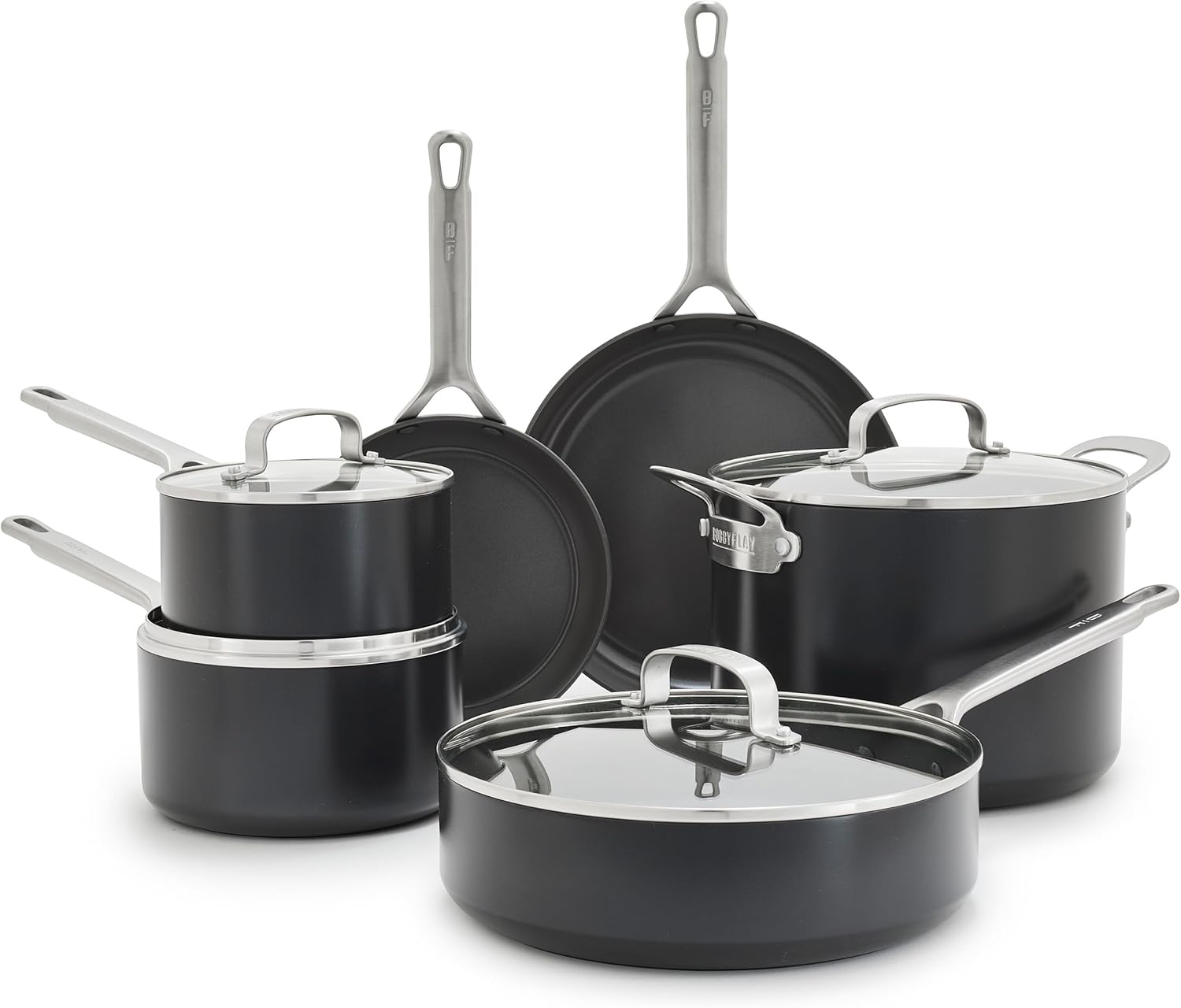
Shoppers evaluating greenpan cookware oven safe choices will encounter diverse configurations, from compact ten-piece bundles to expansive twenty-two-piece sets. Reviewing stovetop compatibility, handle design, and specific oven limits ensures you select an ideal configuration that matches your culinary workflow, kitchen space, and preferred cooking techniques without unnecessary compromises.
As an Amazon Associate, StacyLaughs earns from qualifying purchases.
Buying guide
Stovetop Compatibility and Induction Support
Selecting the right greenpan cookware oven safe set requires verifying whether your kitchen uses gas, electric coils, smooth glass, or magnetic induction cooktops. While many hard-anodized collections deliver exceptional performance on conventional gas and electric ranges, induction cooktops demand specialized magnetic bases embedded within the pan structure. Reviewing your specific stove type prevents compatibility issues before purchasing a multi-piece cookware suite for your home.
Matching your cooktop to the correct cookware specification ensures optimal heat transfer and prevents uneven cooking results during daily meal preparation. Induction-ready options feature modified base construction that interacts efficiently with magnetic burners while remaining fully functional on traditional gas and electric heating elements. Always cross-reference stove requirements to guarantee seamless thermal performance across every burner in your kitchen space.
Understanding Oven and Broiler Temperature Limits
A primary advantage of hard-anodized ceramic cookware is the ability to transition meals directly from stovetop searing to oven baking. GreenPan collections typically support extreme oven temperatures reaching up to six hundred degrees Fahrenheit for the metallic bodies. However, accompanying tempered glass lids usually feature a lower maximum thermal threshold restricted to four hundred twenty-five degrees Fahrenheit, requiring careful attention during high-heat roasting tasks.
Knowing these precise temperature boundaries ensures you avoid damaging glass lids or cookware handles when utilizing the oven or broiler. If a recipe demands high-temperature broiling exceeding four hundred twenty-five degrees, simply remove the glass lid beforehand. Understanding these thermal thresholds allows home cooks to execute complex roasting and baking techniques safely without compromising the structural integrity of their pots and pans.
Evaluating Piece Counts and Kitchen Storage Needs
Cookware sets range dramatically in size, spanning from compact ten-piece configurations up to expansive twenty-two-piece assortments with specialized pans and storage protectors. Assessing your available cabinet and drawer space is crucial before investing in a large collection. Bulky stockpots, wide sauté pans, and multiple frypans require dedicated storage areas to prevent clutter and potential scratching of delicate nonstick interior coatings during stacking.
Choosing a smaller ten or eleven-piece set often provides essential frying pans and saucepans without overwhelming limited kitchen real estate. Conversely, larger twenty-piece bundles accommodate complex multi-course cooking styles by offering specialized vessels like grill grates and extra stockpots. Balancing your typical meal volume against available storage capacity guarantees a more satisfying long-term ownership experience in your home kitchen.
Coating Technology and Utensil Considerations
Modern GreenPan lines utilize advanced diamond-infused ceramic nonstick surfaces, such as Thermolon iterations, designed to offer enhanced scratch resistance and effortless food release. While these reinforced ceramic coatings stand up to metal utensils in specific advanced lines, many manufacturers still recommend utilizing silicone or wooden tools to maximize long-term surface longevity. Treating the nonstick coating with care preserves its smooth release properties over years of daily cooking.
Understanding how diamond reinforcement affects durability helps you select appropriate kitchen tools for stirring, flipping, and serving. Although certain hard-anodized sets resist scratching from metal implements, adopting silicone turners and spoons minimizes unnecessary wear on the ceramic finish. Reviewing utensil guidelines ensures your cookware maintains optimal performance through countless stovetop meals and high-heat oven baking sessions.
Handle Ergonomics and Stovetop Control
The physical design of cookware handles directly influences comfort, balance, and safety when lifting heavy pots filled with liquids or moving hot pans into the oven. Riveted stainless steel handles provide robust structural attachment, ensuring the vessels remain secure under heavy loads. Ergonomic shapes and matte or mirror-polished finishes offer a confident grip, reducing hand fatigue during extended cooking sessions or when transferring heavy pans.
Because oven-safe cookware travels between high-heat environments and stovetop burners, handle materials must withstand elevated temperatures without degrading. Stainless steel construction ensures these gripping points remain sturdy inside hot ovens up to six hundred degrees Fahrenheit. Evaluating handle comfort and secure riveting helps maintain total control over your cookware during demanding culinary tasks.
Maintenance and Cleaning Practicalities
Keeping ceramic nonstick cookware clean involves understanding manufacturer care recommendations, which frequently balance dishwasher convenience with hand-washing preservation. While many hard-anodized sets are advertised as dishwasher safe, hand washing with mild soap often helps extend the lifespan of the ceramic nonstick coating. Establishing a regular cleaning routine prevents baked-on grease accumulation and maintains the exterior hard-anodized finish over time.
The easy-release nature of diamond-infused ceramic surfaces typically allows food residue to wipe away effortlessly with warm water and a soft sponge. Avoiding harsh abrasive pads protects the exterior and interior coatings from premature cosmetic wear. Following proper cleaning guidelines ensures your pots and pans remain attractive and fully functional for everyday meal preparation.
Frequently asked questions
Can I put GreenPan hard-anodized cookware directly into a hot oven?
Yes, GreenPan hard-anodized collections featuring diamond-reinforced ceramic nonstick coatings are engineered to be oven safe up to six hundred degrees Fahrenheit. This high thermal threshold allows you to sear meats on the stovetop and immediately transfer the pan into the oven for roasting or baking. However, you must always check the temperature limit of any accompanying glass lids, which are typically restricted to four hundred twenty-five degrees Fahrenheit and should be removed or swapped if higher heat is required.
Are all GreenPan oven-safe cookware sets compatible with induction cooktops?
No, stovetop compatibility varies significantly across different GreenPan collections. While many upgraded series like the Valencia Pro, Bobby Flay collaboration, and Chatham Pro feature magnetic bases optimized for induction cooktops alongside gas and electric ranges, older or standard series like the original Chatham ten-piece set are explicitly designed for electric coil, gas, and smooth surface non-induction cooktops. Reviewing individual product specifications is essential to ensure the cookware matches your specific kitchen stove type before purchasing.
What temperature can the glass lids handle in the oven?
The tempered glass lids included with these GreenPan cookware sets are generally safe for oven use up to four hundred twenty-five degrees Fahrenheit. While the hard-anodized pots and pans can withstand much higher temperatures reaching six hundred degrees, the glass lids have a lower thermal threshold. If your recipe requires baking or broiling above four hundred twenty-five degrees, you must remove the glass lid or use a suitable oven-safe alternative to prevent thermal cracking or damage.
Can I use metal utensils on these diamond-reinforced ceramic pans?
Many advanced GreenPan collections featuring diamond-reinforced ceramic nonstick coatings are built to withstand metal utensils without immediately compromising their nonstick release performance. Despite this durability, manufacturers frequently recommend utilizing silicone, wood, or plastic tools to minimize cosmetic scratching and maximize the long-term lifespan of the ceramic coating. If you prefer using metal spatulas or whisks, checking the specific product guidelines ensures your chosen cookware collection is officially rated to handle metal implements safely during daily cooking.
Is it safe to clean GreenPan ceramic cookware in the dishwasher?
Most GreenPan hard-anodized cookware sets are designed with dishwasher-safe construction for convenient cleanup after meals. However, many manufacturers recommend hand washing the pots and pans with mild soap and a soft sponge to preserve the ceramic nonstick coating over years of frequent use. Because harsh dishwasher detergents and intense wash cycles can gradually dull exterior finishes or dry out nonstick surfaces, occasional hand washing helps maintain optimal cooking performance and appearance.