Appliances · Buying Guide
Best Griddles And Grill Pans For Stovetops And Campfires
Choosing the right cookware for your kitchen involves balancing weight, material properties, and cooking surface configurations. Griddles and grill pans transform standard stovetops into versatile cooking stations suitable for breakfast favorites, seared meats, and toasted sandwiches. Understanding how different materials perform helps match your cooking style with the right tool.
Cast iron and aluminum options offer distinct benefits depending on your lifting comfort and maintenance preferences. Whether you need a massive double-burner surface for family meals or a compact single skillet for quick weeknight dinners, evaluating dimensions and heat sources ensures dependable results across gas, electric, induction, and outdoor cooking setups.
As an Amazon Associate, StacyLaughs earns from qualifying purchases.
Buying guide
Evaluating Material Composition And Weight
The choice between cast iron and aluminum heavily influences your daily cooking experience. Cast iron options offer incredible heat retention and natural non-stick properties when seasoned properly, but they come with significant weight. A heavy pan weighing over nine or thirteen pounds demands two-handed lifting and careful maneuvering.
Aluminum models provide a lightweight alternative that reduces arm strain during flipping and cleaning. When selecting your cookware, consider your physical comfort level with heavy lifting versus your desire for traditional heavy metal performance across various high-heat cooking applications.
Matching Cooktop Dimensions And Burners
Rectangular double-burner griddles span across two heating elements to maximize your cooking space for pancakes, bacon, and sandwiches. However, matching the length of the pan to your specific stovetop burner configuration is essential for preventing uneven edge heating. Measuring your stove dimensions beforehand avoids compatibility issues.
Single-burner square pans fit easily on standard burners while still offering raised ribs and pour spouts. If you frequently cook large family meals, a wider double-burner plate fits your workflow better than a compact single-burner alternative.
Understanding Surface Coatings And Maintenance
Cookware surfaces vary between traditional pre-seasoned bare iron and modern stone non-stick coatings. Pre-seasoned cast iron requires hand washing, immediate towel drying, and a light oil coating to prevent rust formation over time. These pans reward proper maintenance by building a better cooking surface with use.
Non-stick aluminum options often feature dishwasher-safe designs and ILAG stone coatings that release food easily with minimal oil. Consider whether you prefer the traditional ritual of seasoning cast iron or the low-maintenance convenience of modern non-stick coatings.
Assessing Heat Source Versatility
Many griddles and grill pans support multiple heat sources, including gas, electric, induction cooktops, ovens, and outdoor campfires. Cast iron options handle exceptionally high oven and campfire temperatures safely, making them adaptable for outdoor enthusiasts who enjoy cooking over open flames during camping trips.
Aluminum models work wonderfully on indoor electric and induction surfaces due to magnetic stainless steel bases, but you should always verify maximum temperature ratings before transferring any pan into a hot oven or onto an open campfire grill grate.
Utilizing Grease Management And Pour Spouts
Cooking fatty meats like bacon, burgers, or ribeyes produces significant drippings that require active management. Griddles equipped with built-in grease traps help channel scrapings and liquids away from your food during the cooking process, keeping your cooking surface tidy and manageable.
Square grill pans often feature dual pour spouts on either side, allowing you to tilt the skillet and drain accumulated fats safely into a container. Evaluate your typical recipes to determine whether edge grease traps or corner pour spouts better suit your routine.
Storage Practicalities And Handle Design
The physical footprint of your cookware impacts how easily it fits into your kitchen cabinets or hanging storage racks. Extra-large rectangular plates require wide cabinet clearance or dedicated vertical storage space, whereas options featuring integrated hanging holes offer convenient wall storage alternatives.
Handle construction also matters for comfort and safety. Cool-touch bakelite handles prevent burns during stovetop use, while integrated low-profile iron handles maximize oven clearance. Choose a handle style that matches your storage layout and baking habits.
Frequently asked questions
Can I use a cast iron griddle on an induction cooktop?
Yes, cast iron is inherently magnetic and works exceptionally well on induction cooktops. When placing a heavy double-burner cast iron griddle onto your glass cooktop, lower it gently and avoid sliding it across the surface to prevent scratching. Ensuring flat contact between the pan bottom and the burner maximizes heat transfer for consistent cooking results across both sides of the plate.
Are aluminum non-stick griddles safe for the dishwasher?
Certain aluminum griddle models feature dishwasher-safe construction, allowing you to place them in the machine for easy cleanup. However, many manufacturers recommend simple hand washing with mild soap and water to preserve the lifespan of the non-stick coating. Always check the specific product instructions provided by the manufacturer before loading any griddle into an automatic dishwasher.
How do I prevent rust on a pre-seasoned cast iron griddle?
Preventing rust on cast iron requires immediate drying with a towel or cloth immediately after washing. Once dry, apply a very thin layer of cooking oil across the entire surface of the pan before storing it in a dry location. If minor rust spots ever appear, you can scrub the affected area with steel wool, wash it clean, dry thoroughly, and reapply cooking oil.
What is the benefit of a reversible grill and griddle pan?
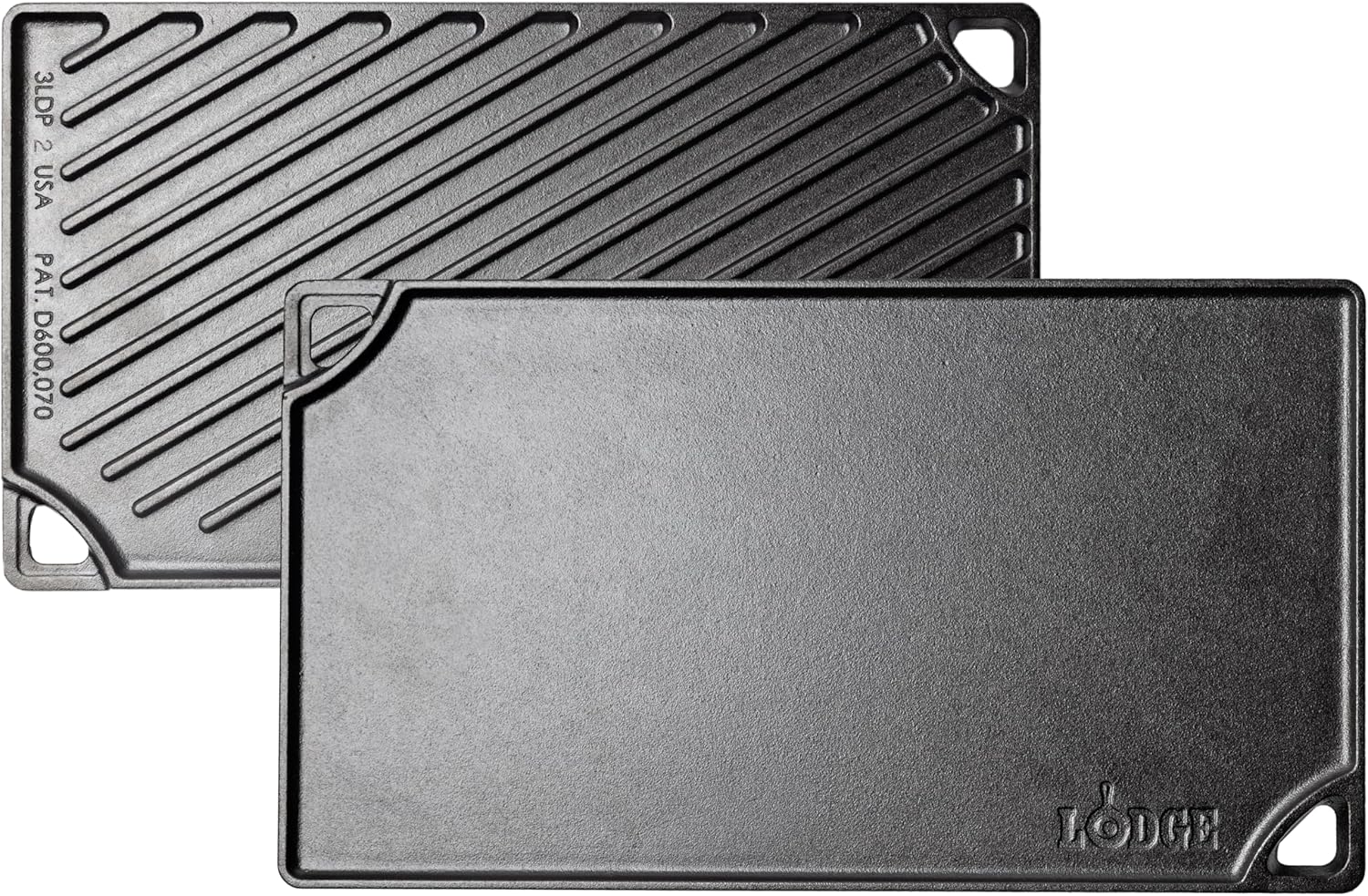
A reversible grill and griddle pan provides two distinct cooking surfaces within a single piece of cookware. One side features a flat plate ideal for pancakes, eggs, and grilled sandwiches, while the reverse side features raised ribs that sear meats and vegetables while letting fats drain into the grooves. This dual design expands your cooking versatility without requiring separate pans.
How do I manage excess grease when using a stovetop grill pan?
Stovetop grill pans manage excess grease through different design features depending on the model. Some rectangular griddles incorporate perimeter grease traps to collect drippings away from your food, while square grill pans often include dual pour spouts on the sides for tilting and draining liquids safely. Choosing a model with effective grease management simplifies cleanup after cooking high-fat meats.