Appliances · Buying Guide
Best Healthy Ceramic Nonstick Cookware for Every Kitchen Stovetop
Upgrading your kitchen setup often starts with finding reliable pots and pans that handle daily meals without frustrating food sticking. Modern ceramic coatings offer a practical alternative to traditional nonstick surfaces, relying on mineral-derived materials rather than polytetrafluoroethylene. When preparing family dinners or quick weekday breakfasts, having the right pans ensures smooth cooking and easy cleanup.
Choosing the right set involves looking closely at how pieces fit your storage space, stovetop compatibility, and everyday cooking habits. Whether you need induction-ready bases, detachable handles for tight RV storage, or extensive multi-piece collections, understanding these physical attributes helps you select cookware that seamlessly integrates into your daily routine.
As an Amazon Associate, StacyLaughs earns from qualifying purchases.
Buying guide
Stovetop Compatibility and Base Construction
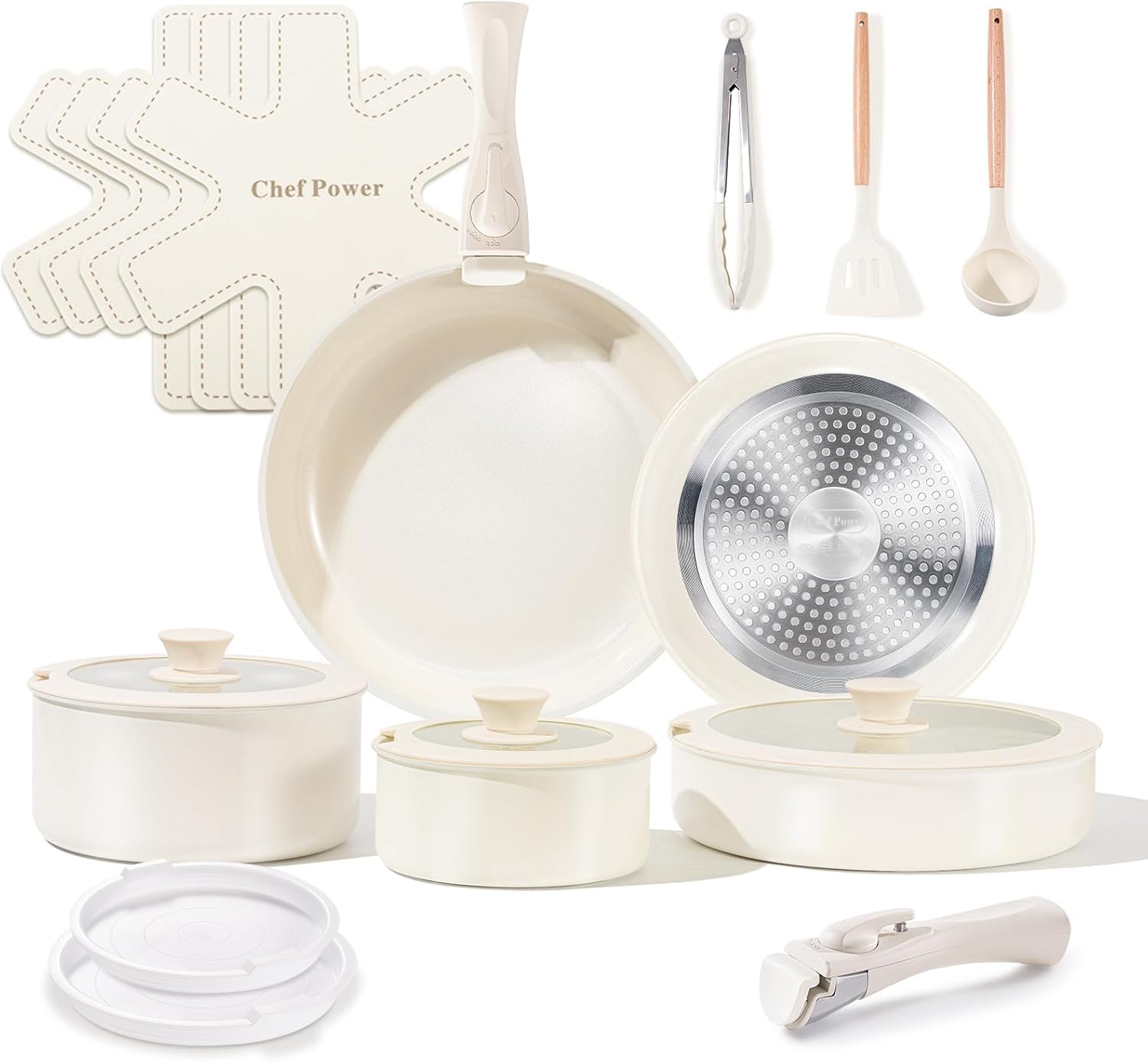
Selecting the right ceramic cookware begins with verifying your specific kitchen stovetop type. Induction cooktops require magnetic stainless steel bases embedded into the bottom of aluminum pans to generate heat effectively. Gas and electric coil ranges offer more flexibility, but thick, forged metal bases still help prevent warping over time. Matching the cookware base construction to your heat source ensures rapid and even temperature distribution during daily meal preparation.
Pay attention to thickness specifications when evaluating how well a pan holds heat. Thicker aluminum bodies retain warmth efficiently for simmering sauces or searing meats without sudden temperature drops. Ensuring your chosen set works harmoniously with your current burners prevents frustrating hot spots and unevenly cooked food. Reviewing manufacturer compatibility guidelines guarantees that your investment performs reliably across all your weekly cooking routines without unexpected performance limitations.
Coating Composition and Surface Durability
Ceramic nonstick surfaces rely on mineral-derived materials rather than traditional polytetrafluoroethylene compounds. This composition offers a smooth release layer that lets you cook with minimal oil or butter. Evaluating surface hardness ratings, such as high-grade mineral layers, helps determine how well the pan resists everyday abrasion from stirring tools. A resilient coating maintains its nonstick properties longer, reducing food residue attachment and keeping cleanup simple after messy family dinners.
While modern ceramic options provide excellent food release, protecting the finish requires mindful utensil selection. Many sets accommodate silicone, wooden, or nylon tools to prevent surface scratches. Checking whether a particular coating tolerates metal utensils or demands softer accessories influences your daily cooking habits. Balancing surface durability with proper utensil maintenance preserves the cooking performance and visual appearance of your pots and pans over years of regular home use.
Storage Efficiency and Handle Design
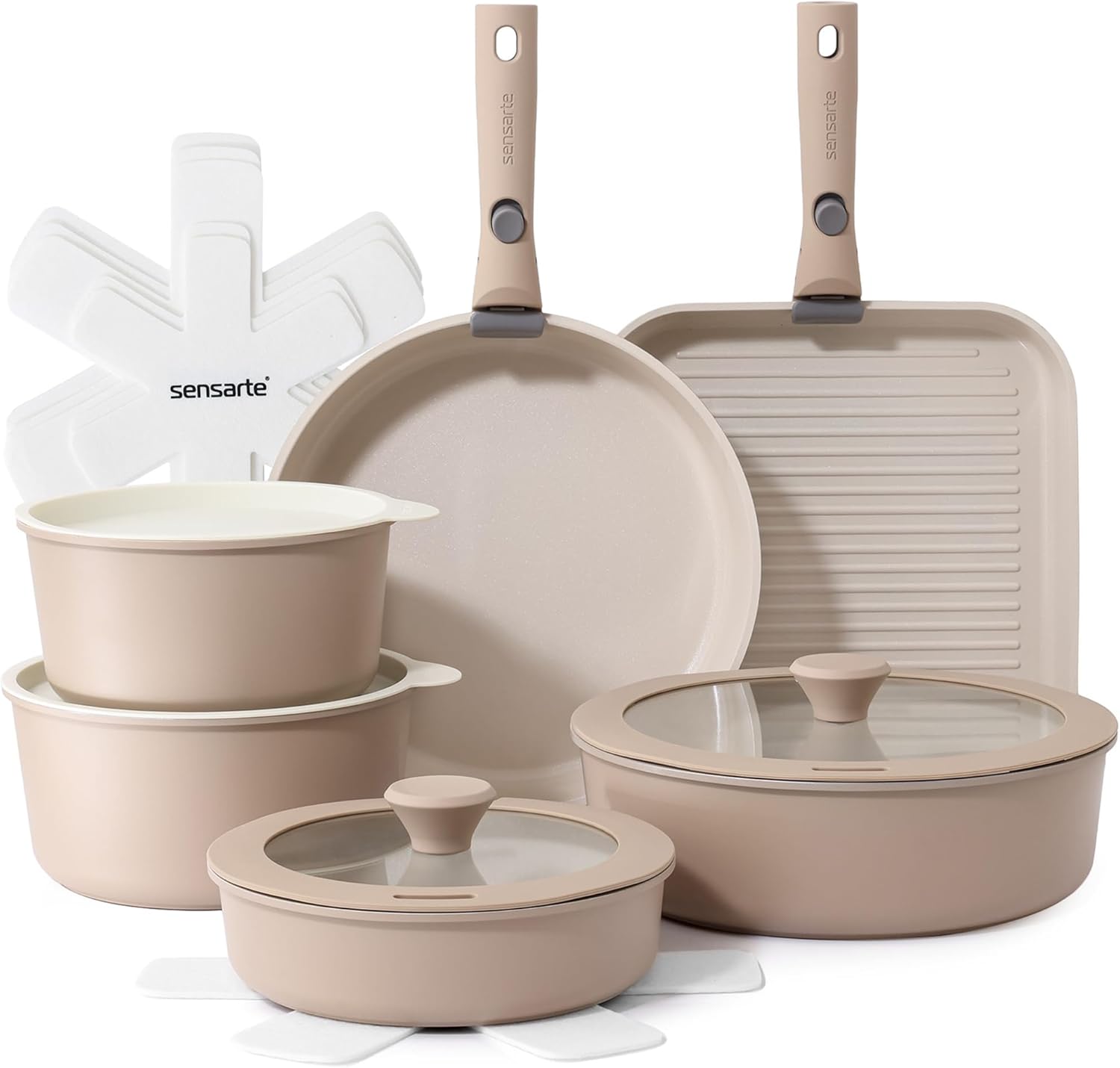
Kitchen cabinet space often dictates how many pots and pans you can comfortably own. Stackable collections featuring removable handles reduce storage footprints significantly, making them ideal for apartment kitchens and RVs. Fixed handles provide a traditional, sturdy grip but require more lateral shelf room. Consider how your available storage space aligns with handle styles before committing to a large multi-piece set that might otherwise crowd your shelves.
Detachable handle mechanisms offer remarkable organizational freedom by letting pans nest neatly inside one another. However, clipping and unclipping handles during meal preparation adds an extra step to your cooking workflow. Traditional riveted Bakelite or stainless steel handles eliminate this requirement but permanently extend the physical dimensions of each pan. Weighing storage constraints against your handling preferences ensures your cookware fits both your cabinets and your cooking style seamlessly.
Piece Count and Assortment Utility
Cookware sets range from compact twelve-piece bundles to expansive twenty-one-piece collections. Assessing your typical menu helps determine whether you need specialized items like grill pans, multiple stockpots, or extra saucepans. Large households often benefit from diverse sizing options that accommodate simultaneous boiling, frying, and simmering tasks. Conversely, smaller households may find massive sets redundant, leaving several pieces permanently tucked away in storage.
Look closely at the exact items included in a bundle rather than focusing solely on the total piece count. Lids, utensils, and protective pads often inflate the advertised number of pieces. Ensure the core pans—such as fry pans and saucepans—match your daily cooking habits. Selecting a collection tailored to your actual recipes prevents clutter and ensures every included item earns its place in your regular kitchen rotation.
Oven Safety and Versatility Limits
The ability to move cookware directly from stovetop burners into a hot oven expands your recipe possibilities significantly. Many ceramic pans withstand high baking temperatures, but handles and lids often have lower thermal thresholds. Checking specific temperature ratings for both the pan body and its attachments prevents accidental damage during baking or broiling tasks. Understanding these limits lets you transition casseroles and seared meats effortlessly without risking warped materials.
Silicone or plastic components, including certain detachable handles or sealing lids, typically feature strict maximum heat tolerances. Detaching plastic handles before placing a pan into a scorching oven is a common requirement for multi-functional sets. Reviewing these operational boundaries ensures safe handling when baking or storing leftovers. Aligning your cooking techniques with manufacturer specifications keeps your cookware functioning reliably across diverse culinary tasks from stovetop to oven.
Cleaning and Maintenance Requirements
Maintaining ceramic nonstick cookware involves simple daily routines that preserve its smooth cooking surface. While many modern sets claim dishwasher safety, hand washing with mild soap and a soft sponge often extends the lifespan of the ceramic coating. Avoiding abrasive scrubbing pads prevents premature wear on the nonstick layer. Adopting gentle cleaning habits after every meal keeps food release properties intact and minimizes stubborn residue buildup over time.
Storing your pots and pans properly is just as important as washing them correctly. Using included pot protectors or felt pads between stacked pans prevents surface scratching and chipping. Following manufacturer guidance regarding temperature changes—such as letting hot pans cool before rinsing—prevents thermal shock and potential warping. Consistent, careful maintenance ensures your ceramic cookware remains a reliable, pleasant tool for daily meal preparation.
Frequently asked questions
Can I use metal utensils on ceramic nonstick cookware?
Using metal utensils on ceramic nonstick cookware generally depends on the specific coating composition and manufacturer guidelines. While some advanced ceramic formulations feature high surface hardness ratings that resist scratching from metal tools, many traditional ceramic pans perform best with silicone, wooden, or nylon accessories. Scratches from sharp metal edges can gradually compromise the smooth nonstick release layer over time. To protect your investment and maintain effortless food sliding, checking the manufacturer recommendations for your specific cookware set before using metal spatulas or whisks is always the wisest approach.
Are ceramic nonstick pans safe for induction cooktops?
Ceramic nonstick pans are compatible with induction cooktops only if their bottom construction includes a magnetic metal layer, such as thick stainless steel. Because induction burners rely on magnetic fields to generate direct heat in the cookware base, pure aluminum or standard ceramic pans without a compatible magnetic plate will not heat up on an induction stove. Always check the specifications of a cookware set to verify induction readiness before purchasing, ensuring the base contains the necessary ferrous materials to function smoothly on your specific kitchen stovetop burners.
How should I clean and maintain ceramic cookware to preserve the nonstick coating?
Cleaning and maintaining ceramic cookware involves gentle everyday habits that protect the mineral-derived nonstick coating from premature degradation. Although many modern sets are labeled as dishwasher safe, hand washing with warm water, mild dish soap, and a soft sponge is widely recommended to maximize the lifespan of the nonstick surface. Avoid using harsh abrasive scouring pads, steel wool, or harsh chemical cleaners that can scratch or wear down the coating. Additionally, always let hot pans cool down naturally before rinsing them to prevent warping from sudden thermal shock.
What are the benefits of pots and pans with detachable handles?
Pots and pans featuring detachable handles offer exceptional storage efficiency, reducing the required cabinet or RV shelf space by up to seventy percent compared to fixed-handle designs. By removing the handles, you can stack multiple pans neatly inside one another without awkward protrusions getting in the way. Detachable designs also simplify oven baking and refrigerator storage by turning bulky cookware into compact baking dishes or leftover containers. The primary trade-off requires you to clip and unclip the handle mechanism during active meal preparation sessions.
Can ceramic nonstick cookware go inside a hot oven?
Ceramic nonstick cookware can usually go inside an oven, but the maximum safe temperature varies significantly depending on the specific materials used for the pan body, handles, and lids. While many aluminum and ceramic pan bases withstand high oven temperatures up to five hundred degrees Fahrenheit, attached handles or silicone components often feature lower thermal limits around four hundred degrees. Always review the manufacturer specifications before baking to determine whether you need to detach plastic handles or remove glass lids before placing the cookware into a heated oven.