Appliances · Buying Guide

Best Non Stick Frying Pan Choices for Daily Kitchen Tasks

Selecting a proper non-stick pan involves evaluating core materials, heat distribution properties, and everyday cooking needs. Home cooks frequently look for reliable food release surfaces that handle daily meals like eggs, sautéed vegetables, and seared meats without unnecessary complications or sticking issues. Understanding how these factors influence daily cooking performance is essential before making any final purchasing decisions for your kitchen.

Different skillets offer distinct physical designs, including cast aluminum bodies, stainless steel hybrid layers, and durable hard-anodized structures. Reviewing individual manufacturer specifications helps match a specific cookware piece directly to your stovetop type, cleaning habits, temperature limits, and preferred meal preparation routines. Comparing these attributes side by side ensures you find a practical cookware addition tailored to your household.

As an Amazon Associate, StacyLaughs earns from qualifying purchases.

Sensarte Nonstick Frying Pan Skillet, 9.5-Inch
#1 Best Overall

Sensarte Nonstick Frying Pan Skillet, 9.5-Inch

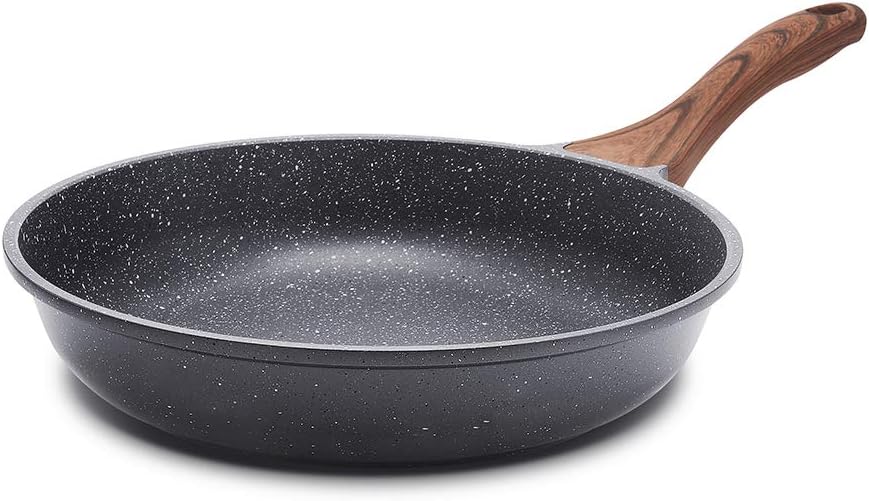
This 9.5-inch skillet features an ILAG nonstick coating over a cast aluminum body. It includes a woodgrain bakelite handle and a high magnetic conductive stainless steel base suitable for all stovetops, including induction cooktops. The surface is designed to wipe clean easily or go into the dishwasher.

Best for 9.5-inch induction-compatible daily skillet

Swiss nonstick coatingWoodgrain bakelite handleHigh magnetic conductive baseSturdy cast aluminumEasy to clean
View on Amazon →

What stands out

  • Features an ILAG non-stick coating over a sturdy cast aluminum body for everyday cooking tasks.
  • Includes a flat, thick stainless steel base that helps distribute heat evenly and quickly across all stovetops.
  • Fitted with a woodgrain bakelite handle designed to stay cool while cooking and provide a comfortable grip.

What to consider

  • The maximum temperature limit of 302 degrees Fahrenheit restricts high-heat searing techniques compared to options rated for higher temperatures.
  • Offers a single 9.5-inch size format without an included lid, which may require separate covers for trapping moisture.
Key specifications
Material Type
Bakelite, Stainless Steel
Product Care Instructions
Dishwasher Safe, Hand Wash Only
Compatible Devices
Electric Coil, Gas, Smooth Surface Induction
Maximum Temperature
302 °F
Capacity
9.5 inches
Recommended Uses For Product
Frying, Sautéing, Searing, Stir Frying

The practical verdict

Best for everyday frying and sautéing tasks on induction or gas cooktops using a compact 9.5-inch cooking surface. Avoid if you require high-temperature searing above 302 degrees Fahrenheit or need an included glass lid for simmering liquids. The main practical trade-off involves combining a comfortable woodgrain handle and universal induction compatibility with a relatively low maximum temperature threshold.

#2
Sensarte Nonstick Ceramic Frying Pan with Lid, 8-Inch
Ceramic Pan with Lid

Sensarte Nonstick Ceramic Frying Pan with Lid, 8-Inch

Best for 8-inch ceramic everyday skillet

Built with a natural ceramic coating and a heavy-duty cast aluminum body, this 8-inch pan resists warping and wobbling. It includes a tempered glass lid to prevent oil splashes and a woodgrain bakelite handle that stays cool. The smooth surface releases food easily with minimal oil.

What stands out

  • Utilizes a natural ceramic coating designed to release foods smoothly with minimal oil usage during daily cooking.
  • Includes a matching tempered glass lid that helps prevent oil splashes onto the surrounding stovetop surface.
  • Features a heavy-duty cast aluminum body engineered to prevent warping and wobbling across all stovetops.

What to consider

  • The 8-inch capacity provides a relatively small cooking area that may not accommodate larger family-sized meals or multiple portions simultaneously.
  • Hand washing is recommended by the manufacturer to extend the lifespan of the ceramic coating despite dishwasher safety claims.
Key specifications
Material Type
Aluminium
Product Care Instructions
Hand Wash Only
Compatible Devices
Smooth Surface Induction
Capacity
8 inches
Coating Description
Ceramic
Additional Features
Electric Stovetop Compatible, Ergonomic Handle, Includes Lid, Induction Stovetop Compatible, Non Stick

The practical verdict

Best for preparing small portions and individual single servings while utilizing an included splash-guard tempered glass lid. Avoid if you need to cook larger multi-person family meals simultaneously in a single cooking vessel. The primary practical trade-off centers on a compact 8-inch ceramic surface paired with a convenient glass lid, which naturally limits your total cooking capacity for large groups.

#3
Kordisen Nonstick Frying Pan Skillet Set with Lid
Versatile Multi-Size Skillet

Kordisen Nonstick Frying Pan Skillet Set with Lid

Best for Multi-size pouring skillet set

This aluminum skillet features a nonstick coating and dual pour spouts for transferring liquids cleanly. It works on all stovetops, including induction, gas, and electric. The cool-touch Bakelite handle includes a hanging hole for convenient storage, while the smooth surface simplifies cleanup after cooking various meals.

What stands out

  • Incorporates dual pour spouts designed to transfer sauces, soups, and juices cleanly from either side.
  • Compatible across induction, gas, electric, and ceramic cooking surfaces, providing reliable performance for various kitchen setups.
  • Equipped with a heat-resistant Bakelite handle that offers a comfortable, cool grip and features a hanging storage hole.

What to consider

  • Hand wash only product care requirements mean you cannot place this pan into the dishwasher for automated cleanup routines.
  • Requires manual cleaning to protect the nonstick surface, which adds time to post-cooking cleanup compared to dishwasher-safe alternatives.
Key specifications
Material Type
Aluminum
Product Care Instructions
Hand Wash Only
Compatible Devices
Smooth Surface Induction
Maximum Temperature
400 °F
Capacity
3 quarts
Coating Description
Non-stick

The practical verdict

Best for home cooks who frequently pour sauces or hot soups cleanly using built-in dual spouts across various household stovetops. Avoid if you strictly require dishwasher-safe cookware for completely automated cleanup routines. The main practical trade-off balances the everyday cooking convenience of dual pour spouts against the mandatory requirement for manual hand washing to maintain the pan properly.

#4
T-Fal Ultimate Hard Anodized Nonstick Fry Pan Set
Three-Piece Hard Anodized Set

T-Fal Ultimate Hard Anodized Nonstick Fry Pan Set

Best for Multi-size hard anodized set

This three-piece set includes 8-inch, 10.25-inch, and 12-inch hard-anodized aluminum pans designed for durability. Features include titanium non-stick coatings, Thermo-Spot heat indicators, riveted silicone handles, and vented tempered glass lids. The collection withstands oven temperatures up to 400 degrees Fahrenheit and works on multiple stovetops except induction.

What stands out

  • Constructed with a durable hard-anodized exterior and forged aluminum designed to stand up to long-term kitchen use.
  • Incorporates a unique Thermo-Spot heat indicator that turns solid red when the pan is properly preheated.
  • Includes riveted silicone handles and vented tempered glass lids to trap moisture while maintaining cooking visibility.

What to consider

  • The inclusion of three distinct pan sizes requires substantial cabinet storage space compared to owning a single standalone skillet option.
  • This cookware collection is not compatible with induction cooktops, restricting use for kitchens equipped with magnetic induction surfaces.
Key specifications
Material Type
Aluminum
Product Care Instructions
Dishwasher Safe
Compatible Devices
Gas
Maximum Temperature
400 °F
Capacity
5 quarts
Coating Description
Non-stick

The practical verdict

Best for fully outfitting a kitchen with multiple skillet sizes designed for searing, frying, and browning everyday meals. Avoid if your kitchen uses an induction cooktop system or features very limited cabinet storage space for multiple pans. The main practical trade-off provides a versatile three-piece size range that completely omits induction compatibility while requiring substantial extra storage room.

#5
Imarku 10 Inch Non Stick Frying Pan
Hybrid Ceramic Stainless Skillet

Imarku 10 Inch Non Stick Frying Pan

Best for 10-inch hybrid stainless skillet

Combining a ceramic nonstick layer with a honeycomb-etched stainless steel pattern, this 10-inch hybrid pan uses a 3-ply structure for fast heating. It is oven safe up to 500 degrees Fahrenheit, works on all stovetops including induction, and features an ergonomic stainless steel handle for controlled handling.

What stands out

  • Combines a ceramic nonstick surface with a honeycomb-etched stainless steel pattern to provide extra protection during cooking.
  • Utilizes a 3-ply stainless steel and aluminum structure that helps the pan heat quickly and distribute warmth evenly.
  • Supports high-heat oven use up to 500 degrees Fahrenheit across gas, electric, ceramic, halogen, and induction cooktops.

What to consider

  • The stainless steel ergonomic handle lacks the cool-touch insulation properties found on Bakelite or silicone handles during extended stovetop use.
  • Features a specialized hybrid texture that requires careful attention during cleaning to maintain the dual stainless and ceramic layers.
Key specifications
Material Type
Stainless Steel
Product Care Instructions
Dishwasher Safe, Oven Safe
Compatible Devices
Ceramic, Electric, Gas, Induction cooktops
Maximum Temperature
500 °F
Capacity
3.1 quarts
Coating Description
Hybrid Ceramic Nonstick

The practical verdict

Best for high-heat stovetop-to-oven cooking applications using a durable 3-ply hybrid stainless steel and ceramic construction. Avoid if you prefer insulated handles that stay cool without requiring a potholder during long cooking sessions. The main practical trade-off pairs high-temperature oven safety up to five hundred degrees with a conductive metal handle requiring careful handling during use.

Buying guide

Core Material Construction

Choosing a frying pan begins with examining the primary material used in its body construction. Aluminum models offer quick and even heating properties, making them exceptionally popular for everyday cooking tasks like frying eggs and sautéing vegetables. Hard-anodized aluminum provides extra exterior durability against daily wear, while multi-ply stainless steel hybrid constructions combine metal strength with smooth food release layers.

Understanding how these core materials interact with different heat sources helps buyers select cookware matching their specific culinary style. Cast aluminum options distribute warmth rapidly across the flat base, whereas multi-ply stainless structures maintain consistent temperatures from the center outward during longer searing or browning sessions. Evaluating material composition ensures long-term reliability on your specific kitchen stovetop.

Nonstick Coating Types

Non-stick surfaces simplify meal preparation and cleanup by allowing food to slide off effortlessly with minimal oil usage. Traditional non-stick coatings and advanced natural ceramic layers provide smooth cooking planes for delicate items like fish, vegetables, and pancakes. Each coating type handles heat differently and requires specific maintenance routines to preserve its functional lifespan over months of daily use.

Ceramic coatings offer an alternative cooking surface made without certain synthetic chemicals, appealing to shoppers seeking specific material builds. Meanwhile, titanium-infused or granite-style reinforced non-stick surfaces resist scratching from everyday utensils better than standard options. Reviewing coating specifications helps determine proper oil usage, maximum temperature thresholds, and cleaning protocols for your daily kitchen routines.

Stovetop Compatibility

Ensuring your chosen frying pan matches your kitchen cooktop is a vital purchasing step before making a final decision. Many aluminum and stainless steel pans feature specialized magnetic conductive bases designed to work seamlessly on modern induction cooktops, traditional gas ranges, and standard electric coils. Verifying stove compatibility prevents uneven heating issues during meal preparation and ensures efficient thermal transfer across burners.

Some hard-anodized cookware sets explicitly exclude induction support, focusing entirely on gas and electric stovetops instead. Checking the listed compatible devices ensures the pan heats correctly without wobbling or losing thermal contact on your specific burner type. Selecting universally compatible cookware provides helpful flexibility if you ever plan to upgrade or change your kitchen cooking appliances in the future.

Handle Design and Ergonomics

The handle of a frying pan dictates daily comfort, safety, and physical control during active cooking sessions. Bakelite handles featuring textured woodgrain designs remain cool to the touch on active stovetops, preventing accidental burns when lifting heavy meals. Riveted silicone or solid stainless steel handles offer sturdy structural attachment for heavier pans designed to withstand frequent lifting and moving.

Ergonomic shapes support wrist comfort when transferring food from the burner to a serving dish, plate, or cutting board. Some handles also include convenient hanging holes for vertical storage in tight cabinet spaces or crowded kitchens. Evaluating handle materials helps determine whether a specific skillet provides comfortable maneuvering during your frequent everyday cooking tasks.

Temperature Limits and Oven Safety

Temperature thresholds dictate how a frying pan performs under high heat conditions or directly inside a hot oven. Many standard non-stick skillets feature lower maximum temperature limits around three hundred degrees due to handle or coating sensitivities during prolonged cooking. Other advanced models safely withstand high oven temperatures up to four or five hundred degrees Fahrenheit without degradation.

Matching the pan's specific temperature rating to your favorite recipes prevents accidental damage to insulated handles, non-stick coatings, and structural seals. Stovetop-to-oven models allow you to start searing meat on a burner and finish cooking it evenly inside a heated oven cavity. Reviewing these thermal limits ensures safe, reliable operation across diverse everyday cooking techniques.

Cleaning and Maintenance Needs

Proper cleaning routines extend the functional lifespan of non-stick cookware and preserve everyday surface smoothness. While many modern skillets claim dishwasher safety, manufacturers frequently recommend gentle hand washing with warm soapy water to protect delicate non-stick coatings from harsh detergents. Adhering to these specific care guidelines keeps food releasing smoothly over months of consistent use.

Choosing between hand-wash-only pans and dishwasher-safe models depends heavily on your personal cleaning preferences and busy daily schedule. Smooth, rivet-less interior surfaces wipe clean easily with a damp paper towel or soft sponge, significantly reducing post-meal cleanup effort. Selecting cookware that fits your realistic maintenance habits ensures lasting satisfaction with your kitchen tool investments.

Frequently asked questions

Can metal utensils be used on these non-stick frying pans?

Using metal utensils on standard non-stick surfaces can easily scratch or damage the delicate coating over time, reducing its overall food release effectiveness. Most cookware manufacturers strongly recommend opting for wooden, silicone, or heat-resistant plastic utensils when cooking with traditional or ceramic non-stick pans. Hybrid pans featuring raised stainless steel patterns offer more structural resistance to everyday utensil wear, but exercising caution with all non-stick cookware helps preserve the cooking surface for as long as possible.

Are all non-stick frying pans compatible with induction cooktops?

Not all non-stick frying pans work on induction cooktops, as induction requires a magnetic base material to generate heat properly. While many aluminum pans include bonded stainless steel plates in their bottoms to enable induction use, other cookware collections explicitly exclude induction compatibility and function only on gas or electric stoves. Always check the manufacturer specifications for compatible heating devices before purchasing a pan to ensure it works correctly on your specific stovetop setup.

What is the best way to clean a non-stick frying pan?

The best way to clean a non-stick frying pan involves allowing it to cool completely before washing it with warm water, mild dish soap, and a soft sponge. Even when a skillet is labeled as dishwasher safe, frequent machine washing can expose the coating to harsh detergents and high heat, potentially shortening its lifespan. Wiping the smooth interior surface clean with a paper towel immediately after cooking also helps remove excess oil without scrubbing.

Do ceramic non-stick pans require less oil than traditional pans?

Ceramic non-stick pans feature exceptionally smooth cooking surfaces that allow foods like eggs and pancakes to slide off effortlessly, which naturally supports cooking with less oil or butter. This slippery surface property makes it easier to prepare lighter meals without ingredients sticking to the bottom. However, using a small amount of oil or butter can still enhance flavor and prevent localized hot spots depending on the specific food being prepared in the pan.

Why do some frying pans have maximum temperature limits?

Frying pans often feature maximum temperature limits because excessive heat can degrade non-stick coatings, damage Bakelite or silicone handles, or warp aluminum bodies. For instance, pans rated up to three hundred degrees Fahrenheit should not be placed under high-broil settings or inside very hot ovens. Following the manufacturer temperature guidelines prevents structural warping, protects handle integrity, and ensures the pan maintains its non-stick release performance safely over extended periods of regular kitchen use.

Final thoughts

Choosing the right frying pan depends on matching core materials, stovetop compatibility, and cleaning preferences to your daily cooking habits. Whether you prefer a compact ceramic skillet with a glass lid or a multi-piece hard-anodized set, reviewing individual specifications ensures you select a reliable kitchen tool.

Evaluating handle designs, temperature limits, and special features like pour spouts or hybrid stainless patterns helps narrow down the best option for your household. Taking time to compare these physical attributes guarantees a practical addition to your everyday meal preparation routine.