Appliances · Buying Guide
Best Heavy Bottom Stainless Steel Cookware Sets for Everyday Kitchen Cooking
Heavy bottom stainless steel cookware offers home cooks reliable heat distribution and durable construction for daily meal preparation tasks. These multi-piece collections combine encapsulated or multi-clad metal bases with sturdy bodies, allowing for consistent simmering, boiling, and high-heat searing across multiple common stove types without relying on chemical non-stick coatings.
Choosing the right set depends heavily on your household size, preferred cooking style, and available kitchen storage capacity. Whether you need an expansive multi-piece collection with specialized utensils or a streamlined bundle for standard recipes, reviewing specific material designs and component lists helps you select an ideal cookware configuration for your home kitchen routines.
As an Amazon Associate, StacyLaughs earns from qualifying purchases.
Buying guide
Material Construction and Ply Count
Understanding material construction helps you choose cookware matching your daily cooking demands. Multi-ply stainless steel sets feature alternating layers of stainless steel and conductive aluminum running through bases and sides. This full-clad design eliminates hot spots and ensures even thermal transfer. Encapsulated base models bond an aluminum disc to the bottom of a stainless steel body. Both styles offer durable surfaces, but full-clad options provide superior sidewall heating for complex recipes.
Check whether metal layers extend up the walls or remain confined to the bottom disc. Full-body construction delivers better overall heat retention for simmering soups and searing meats evenly. However, multi-layer sets weigh more than single-layer alternatives. Consider your physical comfort when lifting heavy pots filled with water. Balancing weight with thermal performance ensures your new cookware remains pleasant to use over years of regular meal preparation.
Stovetop and Oven Compatibility
Modern kitchens feature diverse cooktop technologies, including gas, electric coil, smooth glass, and induction surfaces. Stainless steel cookware naturally pairs well with gas and electric ranges, but induction compatibility requires a magnetic exterior layer such as forty-thirty stainless steel. Always verify stovetop symbols before purchasing to ensure optimal energy transfer and prevent heating issues. Magnetic bases enable induction cooktops to generate heat directly within the pan bottom efficiently.
Beyond the stovetop, check maximum temperature limits if you plan to finish dishes in the oven. Metal handles and stainless steel lids usually tolerate higher oven temperatures, whereas tempered glass lids have strict thermal ceilings often ranging from four hundred to four hundred fifty degrees. Exceeding these limits can crack glass components. Matching your baking habits with correct temperature ratings ensures safe transitions from burner to oven.
Handle Design and Ergonomics
Handle design plays a critical role in cooking safety and daily comfort. Look for securely riveted stainless steel handles that provide a solid, wobble-free grip when lifting heavy pots. Many quality sets incorporate hollow cores or special thermal breaks to slow heat transfer from the hot pan body. This engineering helps handles remain comfortable during standard stovetop simmering tasks, reducing accidental burns during busy cooking sessions.
Remember that metal handles still absorb heat during prolonged cooking or when placed inside hot ovens. Always keep oven mitts nearby for high-temperature baking tasks. Additionally, helper handles on larger stockpots and sauté pans make transferring heavy, food-filled vessels much safer, especially when moving them between burners and sinks. Evaluating handle placement and grip geometry helps prevent hand fatigue during extensive meal preparation routines.
Lids and Moisture Control
Lids significantly influence how well your cookware locks in moisture, heat, and flavor during simmering and braising. Tempered glass lids allow you to monitor cooking progress visually without lifting the cover and releasing valuable heat. However, verify whether the glass and its surrounding metal rim have adequate oven-safe ratings. Some sets include stainless steel lids offering superior durability and higher temperature limits for aggressive oven broiling.
Check for steam vents or tight-fitting rims preventing excessive rattling while boiling liquids. Well-sealed lids help retain natural food juices, making them essential for slow-cooked stews and tender braises. Consider whether you prefer transparent glass for easy viewing or solid metal for maximum thermal resilience. Choosing the right lid style complements your preferred cooking techniques and enhances overall kitchen efficiency.
Set Composition and Component Variety
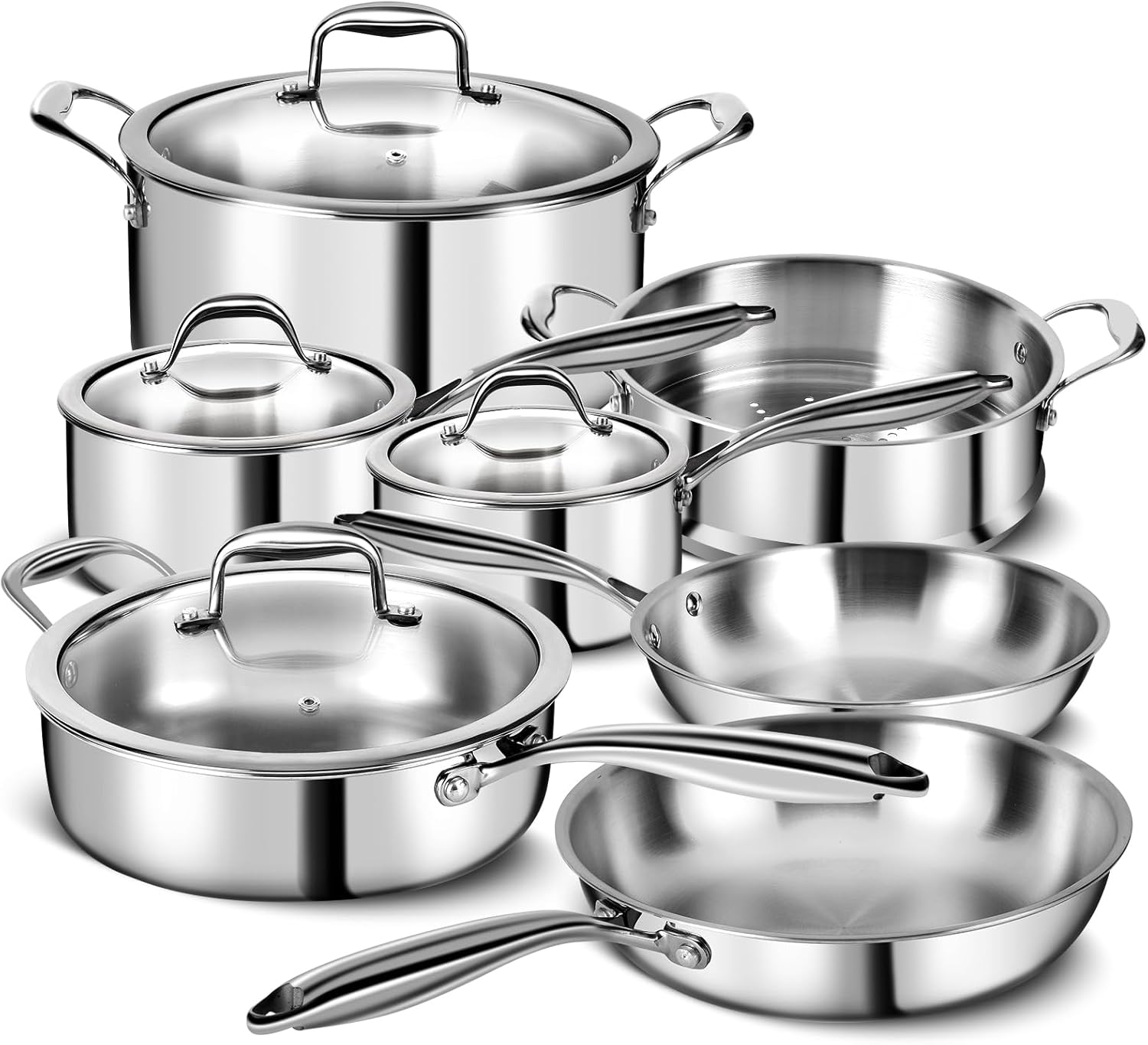
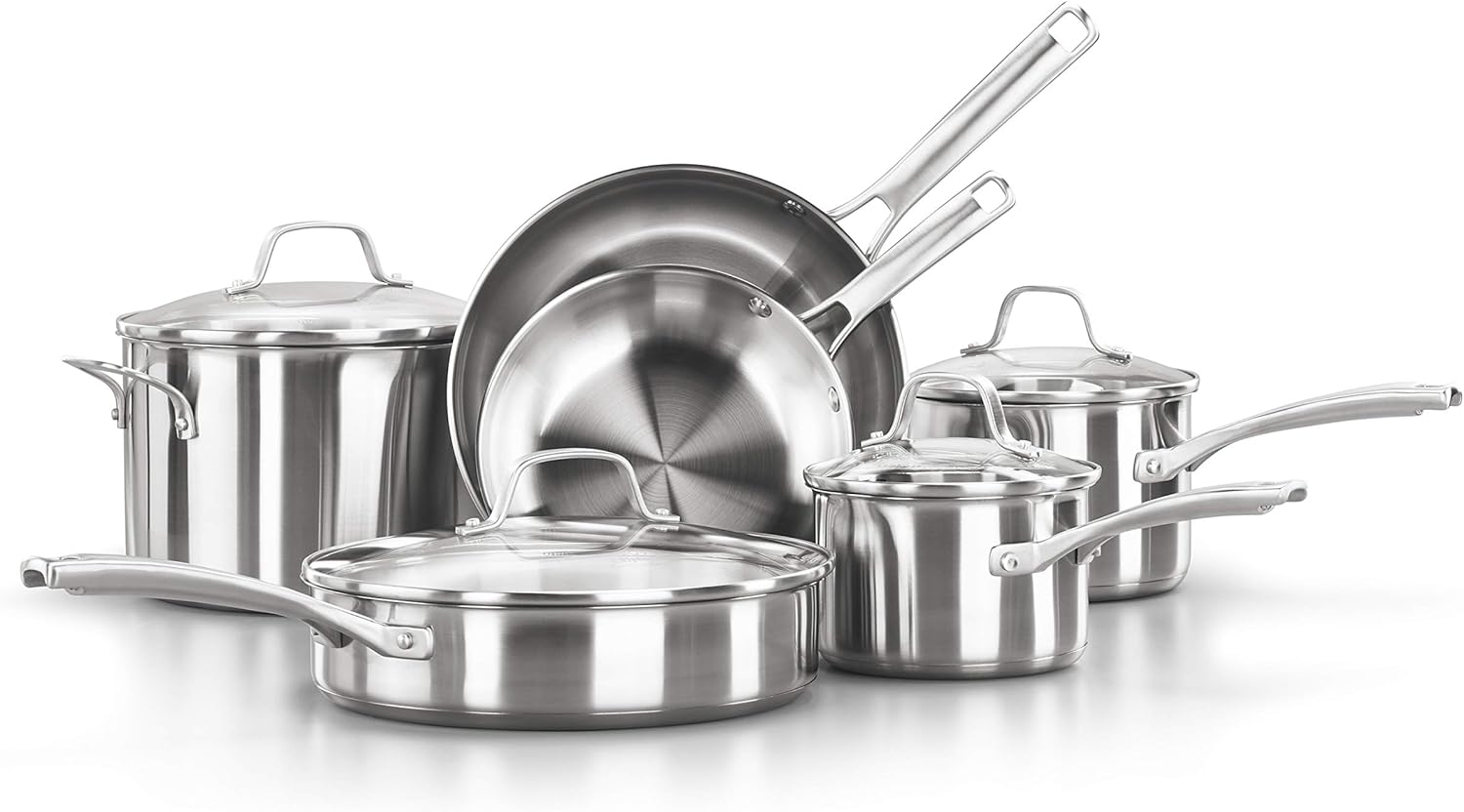
Cookware sets vary widely in piece count and component selection, ranging from compact ten-piece bundles to expansive nineteen-piece collections. Assess your typical cooking habits to determine which pots and pans you actually use. A standard assortment usually includes multiple saucepans, fry pans, a sauté pan, and a large stockpot. Larger sets may add specialty items like steamer inserts, casserole dishes, pasta baskets, and matching serving utensils.
Buying a comprehensive set provides instant versatility for multi-course meal preparation, but it also demands substantial cabinet storage. If your kitchen space is limited, a smaller, highly versatile collection prevents clutter. Ensure every piece serves a distinct purpose in your daily routine rather than gathering dust in deep storage. Matching set composition to your household size guarantees maximum value and cooking convenience.
Maintenance and Long-Term Care
Proper maintenance preserves the polished mirror finish and functional integrity of stainless steel cookware. While many sets advertise dishwasher-safe construction, hand washing with mild soap and warm water helps prevent water spots and minor surface dullness. Allow hot pans to cool gradually before washing to prevent warping caused by sudden thermal shock. Storing pans with protective padding also prevents scratches on polished exteriors.
For stubborn burnt-on food or rainbow discoloration caused by high heat, specialized stainless steel cleaners restore original shine effectively. Preheating stainless steel pans properly before adding cooking oil creates a natural non-stick barrier without chemical coatings. Following manufacturer care guidelines ensures your investment delivers reliable, beautiful performance for years of daily home cooking and meal preparation.
Frequently asked questions
Why does food stick to stainless steel pans, and how can I prevent it?
Food sticks to stainless steel when the pan is not properly preheated before adding cooking oils. Unlike non-stick coated pans, stainless steel requires a hot pan and cold oil method to create a temporary release barrier. To prevent sticking, preheat your empty stainless steel pan over medium heat for a couple of minutes, add a small amount of oil, and let it shimmer before introducing your food. Allowing meat to sear naturally will also cause it to release easily once a crust forms.
Are heavy bottom stainless steel cookware sets compatible with induction cooktops?
Most modern heavy bottom stainless steel cookware sets are fully compatible with induction cooktops, provided they feature a magnetic exterior layer like forty-thirty stainless steel or an induction-ready encapsulated bottom plate. Induction cooktops rely on a magnetic circuit to generate heat directly within the pan base. Always check manufacturer specifications for induction compatibility symbols before purchasing, especially if you plan to use smooth glass induction ranges in your kitchen.
What is the difference between encapsulated base and fully clad stainless steel?
Encapsulated base cookware features a thick aluminum or copper disc bonded exclusively to the bottom of a stainless steel body, providing quick heat distribution where the pan directly meets the burner. Fully clad cookware, by contrast, sandwiches conductive aluminum layers between stainless steel sheets throughout the entire base and sidewalls. While encapsulated bases offer efficient thermal performance on the bottom, fully clad designs deliver superior sidewall heating and consistent heat retention for complex cooking tasks across your entire stovetop.
Can I put my stainless steel pots and pans in the dishwasher?
Many stainless steel cookware sets feature dishwasher-safe construction for convenient cleanup after meals. However, harsh dishwasher detergents and high-pressure water jets can gradually dull the polished mirror exterior and cause water spotting over time. To maintain original shine and prevent cosmetic wear, many manufacturers recommend hand washing your pots and pans with warm soapy water and a soft sponge. If you do use a dishwasher, dry the cookware immediately afterward to minimize mineral spots.
How do I remove stubborn stains or rainbow discoloration from stainless steel?
Rainbow discoloration and stubborn heat stains frequently occur on stainless steel surfaces when cooking oils or minerals burn onto the metal at high temperatures. These cosmetic blemishes do not affect cooking performance and can be easily removed. Applying a specialized stainless steel cleaner or making a paste of baking soda and water allows you to gently buff away discoloration with a soft cloth. Rinsing and drying the pan immediately restores its brilliant reflective shine.