Appliances · Buying Guide
Best Heavy Duty Stainless Steel Cookware for Reliable Kitchen Performance
Upgrading your kitchen with heavy duty stainless steel cookware introduces a reliable way to handle daily meals, high-heat searing, and simmering sauces. These collections rely on robust metal layers rather than chemical nonstick surfaces, offering a durable cooking environment that withstands regular use without peeling or wearing down over time across various recipes.
Whether you are outfitting a new home or replacing mismatched pots, choosing the right set depends heavily on your cooking style, storage space, and preferred stovetop compatibility. From fully clad multi-layer bodies to impact-bonded bases, understanding these structural differences helps you select cookware that delivers steady heat distribution and dependable everyday performance.
As an Amazon Associate, StacyLaughs earns from qualifying purchases.
Buying guide
Understanding Construction Layers
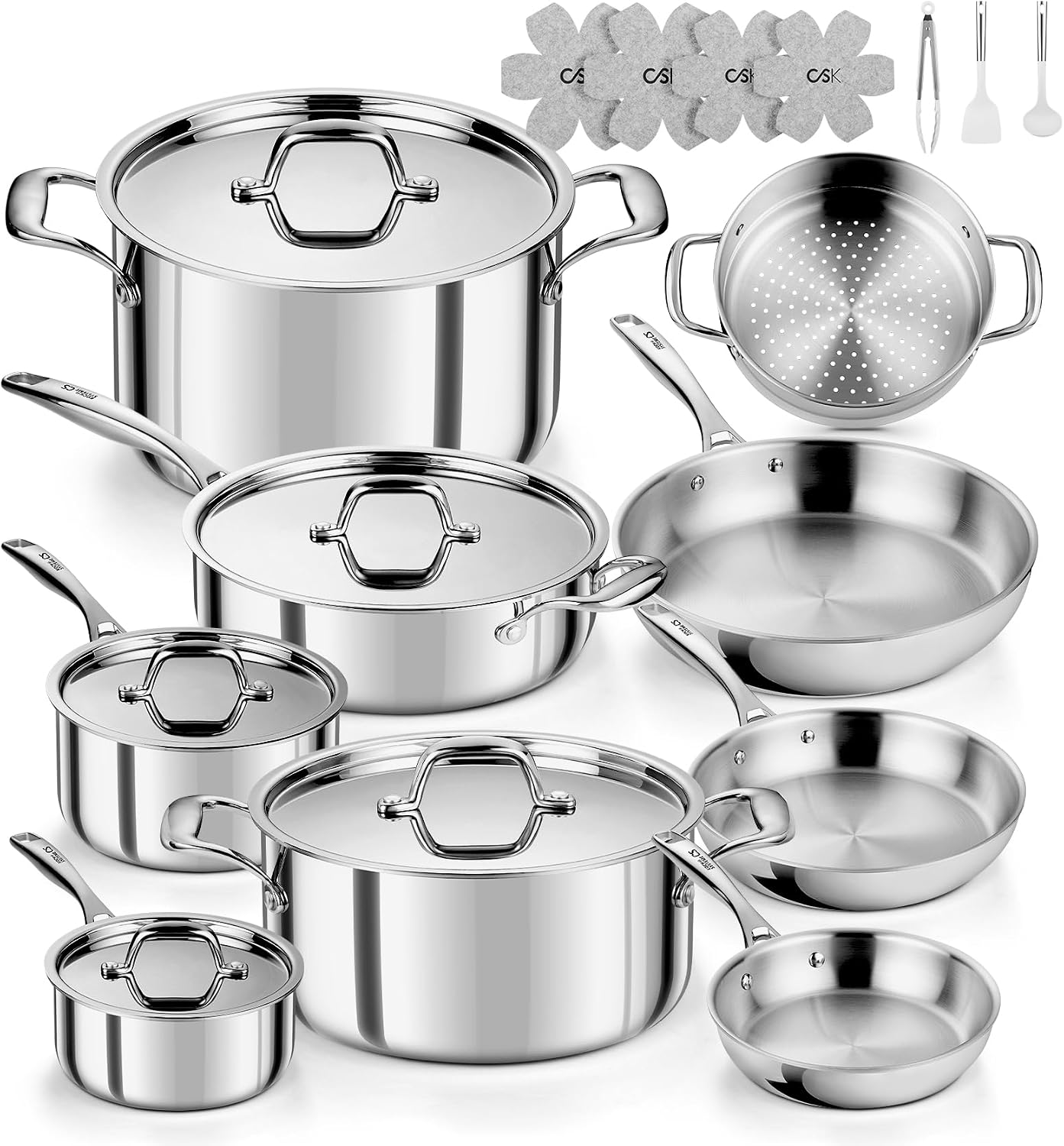
Evaluating construction methods is essential when choosing heavy duty stainless steel cookware for your kitchen. Fully clad models bond multiple layers of metal, including aluminum and stainless steel, from the base all the way up the rim. This design promotes uniform heat distribution across the entire cooking surface, preventing hot spots that can burn delicate foods during searing or simmering.
Alternatively, impact-bonded base cookware applies an aluminum disc solely to the bottom of the pan. While this method still offers effective heat conduction for flat burners, fully clad options provide superior temperature control along the sidewalls. Reviewing your typical recipes helps determine whether a fully clad body or an impact-bonded base best matches your cooking routine.
Evaluating Set Composition and Piece Count
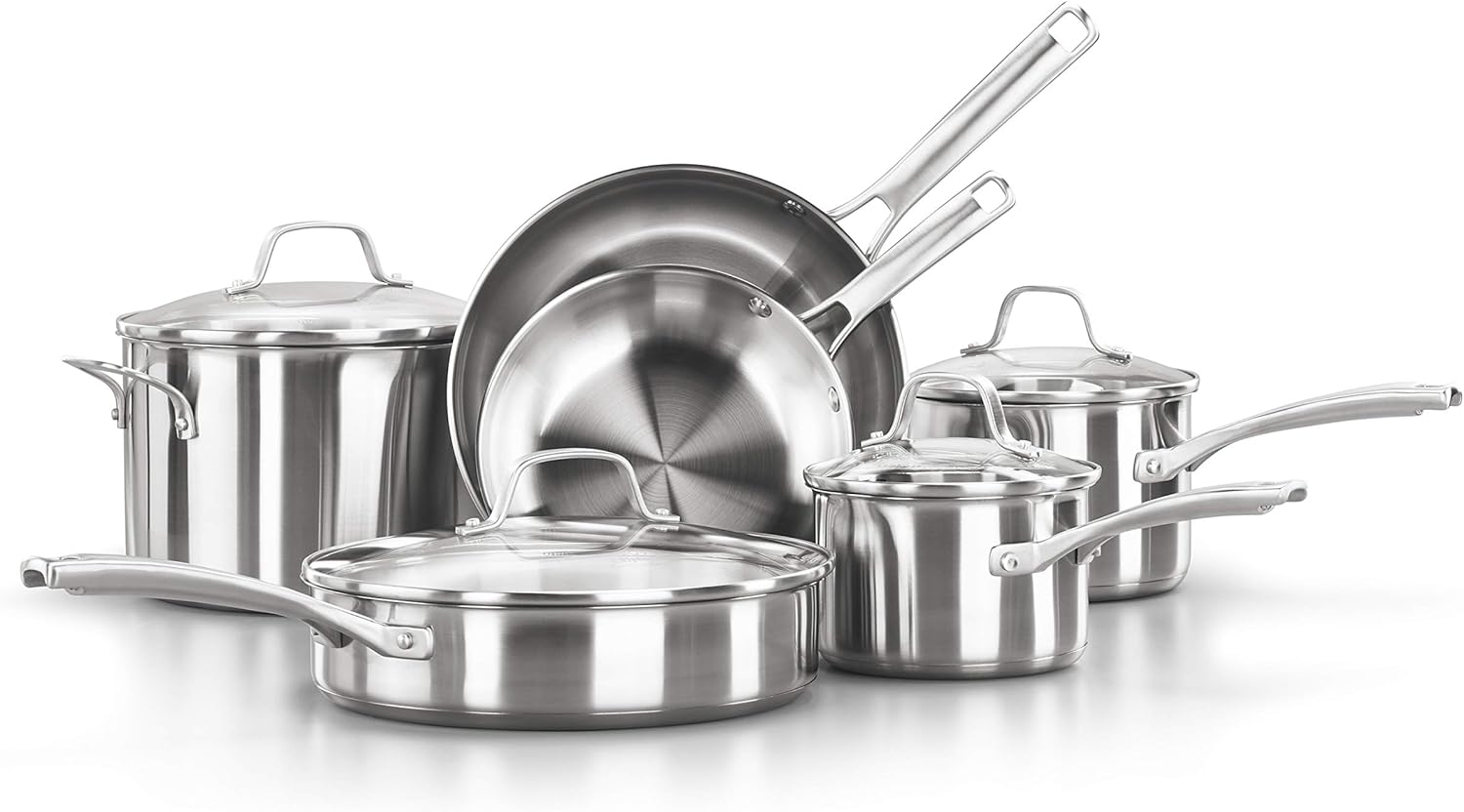
Assessing the number and variety of items in a cookware set ensures you receive practical value without paying for pieces you will never use. Smaller ten to twelve-piece collections typically focus on essential skillets, saucepans, and a single stockpot, fitting neatly into standard cabinets. Larger twenty-one to twenty-three-piece bundles expand your options with extra fry pans, steamer inserts, and serving trivets.
Matching the set composition to your household size prevents storage clutter. If you regularly cook for large families or engage in frequent batch meal preparation, larger collections provide the necessary vessel capacity. Conversely, smaller households benefit from streamlined sets that prioritize everyday frying and sauce-making tasks without overwhelming available kitchen storage space.
Stovetop and Oven Compatibility
Checking compatibility ensures your new pots and pans integrate smoothly with your existing kitchen appliances. Most modern stainless steel cookware works across gas, electric, and glass-ceramic cooktops. Induction cooktops require a magnetic outer layer, which is a standard feature on most multi-ply and bonded stainless steel collections designed for modern kitchens.
Temperature limits also vary when moving cookware from the stovetop into the oven. Many heavy-duty stainless steel pieces tolerate oven heat up to five hundred or eight hundred degrees Fahrenheit. However, glass lids and auxiliary components often feature lower heat thresholds. Confirming these specific temperature ratings prevents accidental damage to lids or handles during high-heat baking.
Handle Design and Ergonomics
Handle construction heavily influences comfort and safety while lifting heavy pots filled with liquids or dense ingredients. Stainless steel handles fastened with sturdy rivets provide long-term durability and structural stability under heavy loads. Many designs incorporate hollow cores or specialized shaping to slow thermal transfer, helping handles stay comfortable during standard stovetop use safely without strain.
Despite heat-resistant engineering, extended cooking times or high-burner settings can still cause metal handles to warm up. Having oven mitts or potholders nearby remains a necessary precaution when handling hot cookware. Evaluating the grip angle and handle length ensures you can maneuver large stockpots securely from burner to countertop without strain.
Lid Styles and Functional Features
Lids significantly impact how you monitor and control moisture levels while simmering soups, braising meats, or boiling starches. Stainless steel covers offer exceptional durability and high oven safety limits, letting you transition covered dishes straight into hot ovens during the cooking process without losing structural integrity.
Glass lids introduce visual transparency, allowing you to observe your food without releasing accumulated heat and steam while simmering your favorite recipes. Some glass covers also include steam vents to reduce rattling and pressure buildup. Selecting between metal and glass lids depends on whether you prioritize maximum oven heat tolerance or direct visibility while simmering.
Maintenance and Cleaning Practicalities
Maintaining stainless steel cookware involves understanding proper cleaning routines to preserve its polished or brushed exterior finish. Many collections are dishwasher safe, offering convenient cleanup after preparing everyday meals. However, hand washing with warm, soapy water is frequently recommended by manufacturers to prevent water spots and maintain the luster of the metal surfaces over time.
Dealing with stubborn food residue or heat discoloration requires gentle abrasives or specialized stainless steel cleaners rather than harsh scouring pads. Preheating pans correctly and using adequate cooking oil also minimizes sticking, making post-cooking cleanup much easier. Proper cooling routines prevent thermal shock and warping, ensuring your pots and pans remain flat and functional.
Frequently asked questions
Can I use metal utensils on stainless steel cookware?
Yes, uncoated stainless steel cooking surfaces are durable enough to withstand metal utensils such as spatulas, whisks, and spoons without scratching or peeling a nonstick layer. Because these pans lack chemical coatings, you do not need to worry about damaging the cooking surface during normal stirring and turning. However, some users still prefer wooden, silicone, or plastic utensils to minimize surface scuffing and maintain a polished aesthetic over years of daily kitchen use.
How do I prevent food from sticking to stainless steel pans?
Preventing food from sticking largely depends on proper preheating techniques before adding cooking fats. You should heat your stainless steel pan over medium heat for a short period before introducing oil or butter, allowing the metal pores to expand. Once the oil shimmers, add your ingredients. Maintaining moderate cooking temperatures rather than using excessively high heat also prevents proteins from binding aggressively to the unlined steel surface.
Are stainless steel cookware sets safe for induction cooktops?
Most heavy-duty stainless steel cookware collections are fully compatible with induction cooktops because they feature magnetic outer layers or iron-based alloy construction. Induction cooktops rely on magnetic fields to generate heat directly within the pan, meaning non-magnetic metals will not trigger the burner. Checking the manufacturer specifications ensures your chosen set includes the necessary magnetic properties required for efficient induction heating performance across all included pots.
What causes rainbow stains on stainless steel, and how do I clean them?
Rainbow stains on stainless steel cookware are caused by mineral deposits or heat tinting, which occurs when minerals in water or food react with the chromium oxide layer at high temperatures. These iridescent discoloration marks are entirely harmless and do not affect cooking performance. You can easily remove them by washing the pan with a mild acidic solution like vinegar or lemon juice, or by using a dedicated stainless steel cleaner.
Can I put stainless steel pots and pans in the oven?
Many stainless steel pots and pans are oven safe, allowing you to transition dishes directly from stovetop searing to oven roasting or baking. However, maximum temperature limits vary significantly depending on the specific model and the materials used for handles or lids. While some all-metal sets withstand temperatures up to 800 degrees Fahrenheit, others featuring glass lids or specific composite elements have lower thresholds. Always verify the manufacturer limits.