Appliances · Buying Guide
Best HexClad 6 Piece Saucepan Set Alternatives for Versatile Cooking
Finding the right hybrid cookware set involves carefully evaluating construction materials, surface textures, and stove compatibility for daily meal preparation tasks. Many home cooks look for versatile options that combine the high-heat searing capabilities of traditional stainless steel with the effortless food release properties of modern nonstick coatings to simplify cleanup after preparing complex family dinners and weeknight meals.
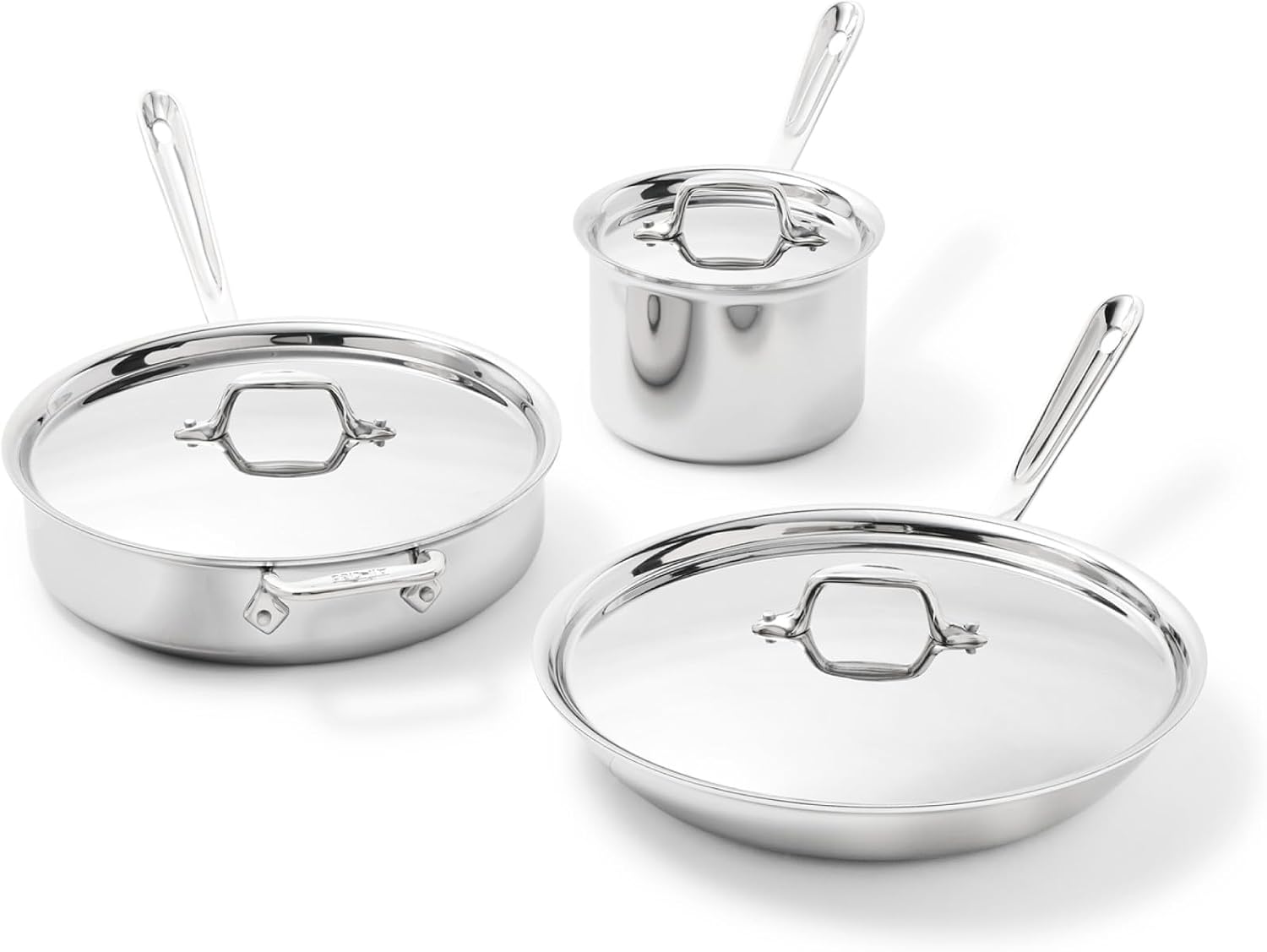
This detailed overview examines five distinct six-piece cookware collections featuring hybrid designs, tri-ply stainless steel cores, and durable included lids. By carefully reviewing their core specifications, material combinations, and practical design traits, you can determine precisely which set matches your specific kitchen setup, stovetop type, and everyday cooking style without unnecessary guesswork while navigating your daily cooking choices.
As an Amazon Associate, StacyLaughs earns from qualifying purchases.
Buying guide
Evaluating Material Construction And Core Layers
When selecting a cookware set, examining the underlying material construction is essential for long-term kitchen performance. Many modern collections employ tri-ply or multi-layer bonding processes that combine responsive metals like aluminum with durable outer layers of stainless steel. This combination ensures heat travels quickly and evenly across the entire base and walls of the cooking vessel.
Understanding how these metal layers interact helps you choose a set capable of handling high-heat searing as well as gentle simmering. Aluminum cores promote rapid thermal response, while stainless steel exteriors provide structural integrity and compatibility with induction cooktops. Reviewing these structural specifications ensures your cookware performs reliably under diverse daily cooking demands.
Understanding Nonstick Coatings And Surface Textures
Surface textures and nonstick coatings significantly influence how easily food releases from pans during daily meal preparation. Hybrid designs often feature laser-etched patterns or raised stainless steel grids that protect the underlying nonstick material from abrasive contact. This structural approach allows users to cook with less oil while maintaining the ability to use standard kitchen utensils without causing surface damage.
Ceramic and hybrid coatings also impact routine cleanup procedures after preparing sticky sauces or high-protein meals. Evaluating whether a surface accommodates metal tools or requires specialized care helps you align your purchase with your preferred cooking habits. Prioritizing durable surface textures prevents premature wear and maintains consistent cooking performance over years of frequent kitchen use.
Assessing Stovetop Compatibility And Heat Sources
Stovetop compatibility determines whether a prospective cookware set will function correctly across your existing kitchen appliances. Most contemporary pots and pans are engineered to perform reliably on gas, electric, ceramic, and induction cooktops. Induction readiness relies on magnetic stainless steel outer layers that complete the electrical circuit required for rapid and efficient heating on modern glass cooksurfaces.
Checking these compatibility details prevents functional mismatches when upgrading kitchen equipment or moving between different home cooking environments. While induction and gas ranges offer distinct temperature control dynamics, quality cookware should distribute heat uniformly regardless of the active heat source used. Verifying stove compatibility ensures seamless integration into your daily routine.
Analyzing Oven Safety And Temperature Limits
Oven safety ratings dictate the versatility of cookware when transitioning from stovetop searing to finishing dishes under high heat. Many tri-ply and stainless steel sets withstand temperatures up to six hundred degrees Fahrenheit or higher, making them suitable for broiling and baking. However, accompanying glass lids frequently feature lower maximum temperature thresholds that must be respected to prevent material degradation.
Reviewing these specified thermal limits helps you avoid damaging handles, lids, or internal nonstick coatings during aggressive baking routines. If your favorite recipes require moving heavy pots directly into blazing hot ovens, selecting high-temperature stainless steel components is crucial. Matching temperature thresholds to your cooking style preserves equipment longevity and expands your recipe possibilities.
Comparing Piece Counts And Capacity Variations
Piece counts and individual vessel capacities define the overall versatility of a six-piece cookware collection for daily meal preparation. Smaller one to three-quart saucepans excel at boiling grains, warming liquids, and creating small-batch sauces, while larger fry pans and stockpots handle searing and family-sized stews. Assessing your typical portion sizes ensures the included vessels match your cooking needs.
Selecting a balanced configuration prevents clutter while ensuring you have the right pot or pan for every meal occasion. Sets focused exclusively on frying pans offer great surface area for browning, whereas mixed pot sets provide deep walls for simmering liquids. Analyzing capacity variations helps you build an efficient kitchen setup without redundant pieces.
Reviewing Maintenance And Cleaning Requirements
Maintenance requirements vary significantly between fully bonded stainless steel and coated hybrid cookware collections. While many hybrid and ceramic sets feature dishwasher-safe construction for quick cleanup after busy meals, traditional stainless steel sets often specify hand washing to preserve their polished exterior finish. Understanding these care guidelines helps you select cookware that fits your lifestyle.
Evaluating cleaning effort also involves considering how easily food debris releases from textured or smooth interior surfaces. Sets that support abrasive cleaning tools or mild soap and sponge routines simplify post-cooking cleanup tasks. Choosing maintenance routines that align with your daily habits ensures your cookware remains in top condition over years of frequent use.
Frequently asked questions
Can hybrid cookware sets be used on induction stovetops?
Yes, most modern hybrid cookware sets feature magnetic stainless steel outer layers and tri-ply construction that make them fully compatible with induction cooktops, gas ranges, and electric stoves. This magnetic property allows the cookware to interact efficiently with induction burners for rapid heating. However, it is always wise to check individual product specifications to confirm compatibility before purchase, ensuring the cookware base makes proper contact with your specific stovetop glass or coil surface during everyday cooking tasks.
Are metal utensils safe to use on hybrid nonstick surfaces?
Many hybrid cookware collections feature raised stainless steel patterns or specialized textured surfaces designed to accommodate metal utensils without scratching or removing the nonstick coating. This structural design lets you stir, flip, and scrape food confidently using standard kitchen tools. Even so, checking manufacturer guidelines for each specific set is recommended to confirm whether metal utensils are fully supported, as traditional nonstick coatings without protective steel grids may still require silicone or wooden tools to prevent surface damage.
What is the difference between stainless steel and ceramic nonstick pans?
Traditional stainless steel pans rely on exposed metal surfaces to achieve high-heat searing and caramelization, requiring proper preheating and oil use to prevent sticking. In contrast, ceramic nonstick pans incorporate smooth or hybrid coatings that facilitate effortless food release with minimal oil usage. While stainless steel offers superior durability under extreme heat and allows aggressive cleaning, ceramic nonstick options simplify daily cleanup tasks for delicate foods like eggs, though they may have stricter temperature limits.
How do I properly clean burnt food from hybrid pots and pans?
Cleaning burnt food from hybrid pots and pans typically involves adding water or stock while the pan is still warm to help release stuck bits, followed by washing with mild soap and a soft sponge. Many hybrid sets feature durable dishwasher-safe construction that withstands abrasive cleaning tools, but allowing pans to cool slightly before washing prevents warping. For stubborn residue, following manufacturer maintenance guidance ensures you remove stuck food without compromising the integrity of the nonstick coating.
Why do oven-safe limits differ between pots and glass lids?
Oven safety limits differ because pots are constructed entirely from heat-resistant metals like stainless steel and aluminum that can withstand extreme temperatures, whereas glass lids utilize tempered glass and silicone components with lower thermal thresholds. While metal pots frequently endure temperatures up to nine hundred degrees Fahrenheit, matching glass lids are usually rated for significantly lower maximum heat levels, such as four hundred degrees Fahrenheit. Exceeding lid limits can cause structural damage or shattering during baking.