Appliances · Buying Guide
Best Induction Cookware Frying Pan Choices for Everyday Kitchens
Finding the right induction cookware frying pan involves evaluating base materials, interior coatings, and stovetop compatibility. Selecting a skillet that distributes heat rapidly across a flat magnetic surface ensures consistent cooking results without frustrating hot spots. Modern options range from multi-ply stainless steel to reinforced aluminum and ceramic nonstick builds.
Home cooks frequently weigh factors like daily maintenance, handle ergonomics, and overall size when outfitting their kitchen. Whether preparing single portions or family meals, matching the pan construction to your cooking style streamlines stovetop routines. Exploring diverse skillet configurations helps identify a reliable tool suited to your specific culinary tasks and stovetop requirements.
As an Amazon Associate, StacyLaughs earns from qualifying purchases.
Buying guide
Core Material Construction
Selecting the right core material determines how efficiently your frying pan manages heat on an induction cooktop. Cast aluminum provides rapid thermal conductivity, warming up quickly for fast morning meal preparation without creating frustrating hot spots. Hard-anodized variants add extra surface strength and durability to resist everyday kitchen wear, maintaining structural integrity over years of regular cooking sessions across various stovetop types.
Tri-ply stainless steel combines external metal durability with internal aluminum layers for balanced heat distribution. Uncoated stainless options excel at high-heat searing, browning, and creating flavorful pan sauces. Matching the material build to your typical cooking style ensures optimal thermal performance, structural reliability, and long-term satisfaction in your home kitchen.
Nonstick Coating Options
Nonstick coatings significantly influence how easily foods release from the cooking surface and how much oil you need during meal prep. Ceramic coatings offer natural nonstick properties free of certain chemical additives, allowing delicate items like eggs to slide smoothly. Swiss-engineered nonstick finishes provide similar slippery performance for effortless cleanup with minimal effort.
Hybrid models incorporate textured stainless steel and ceramic etching to resist metal utensil damage while maintaining food release. Evaluating your preference for traditional coatings versus metal-safe hybrid designs helps determine the best daily maintenance routine. Proper care, such as avoiding harsh scouring pads, extends the functional lifespan of coated cooking surfaces significantly.
Stovetop and Induction Compatibility
Induction cooktops require cookware with dedicated magnetic base properties to generate heat effectively through electromagnetic induction fields. Skillets featuring high magnetic conductive stainless steel bases or thick encapsulated metal plates ensure rapid, energy-efficient heating across flat glass cooktop surfaces. Checking bottom flatness prevents annoying wobbling and maintains maximum thermal contact with the active burner zone for reliable results.
While induction is the primary focus, many versatile frying pans also accommodate traditional gas, electric coil, and smooth glass cooktops seamlessly. This cross-compatibility makes it easy to transition cookware between different kitchen setups or moving environments without buying extra gear. Prioritizing a stable, magnetic base guarantees consistent cooking performance regardless of your specific kitchen stovetop configuration.
Handle Design and Ergonomics
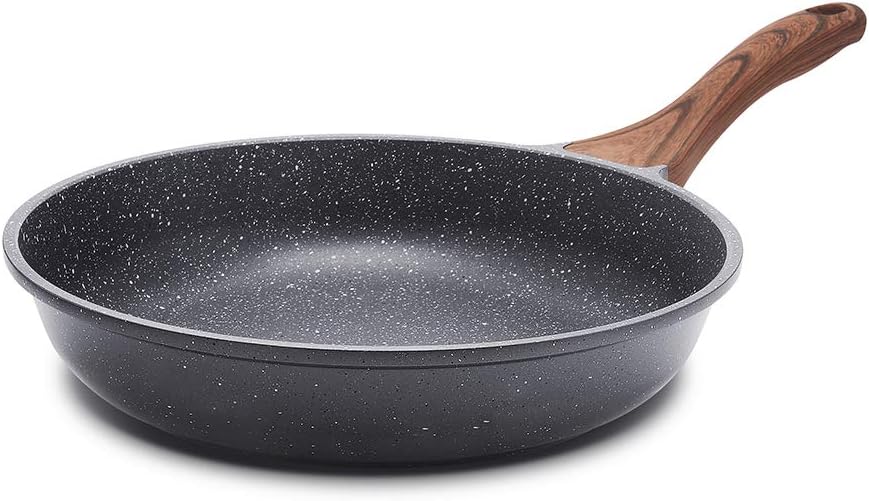
Handle construction directly impacts daily safety, comfort, and maneuverability when lifting a heavy frying pan from the burner. Ergonomic designs molded from heat-resistant bakelite stay cool during extended cooking sessions on the stovetop, preventing accidental burns. Woodgrain finishes add pleasant visual appeal while maintaining a secure, comfortable grip for daily meal preparation tasks.
Alternatively, riveted stainless steel handles offer robust, permanent attachment suitable for high-temperature oven environments up to 500 degrees Fahrenheit or higher limits. Assessing whether you require oven-safe metal handles or prefer cool-touch synthetic grips helps narrow down suitable cookware choices. A well-balanced handle reduces wrist strain when tossing ingredients or transferring hot pans safely across the kitchen.
Size and Capacity Considerations
Choosing the correct pan diameter depends heavily on your household size and typical meal types. Compact 8-inch to 9.5-inch skillets excel at preparing single portions, fried eggs, grilled cheese sandwiches, or quick side dishes without crowding. They also save valuable storage space in smaller kitchen cabinets and warm up rapidly on induction burners.
Larger pans accommodate multi-serving family meals but require more storage footprint and heavier lifting strength during daily kitchen cleanup tasks. Evaluating your typical recipe volume prevents buying a skillet that is either too restrictive or unnecessarily bulky for your routine. Matching the physical footprint to your cooking habits ensures efficient stovetop utilization every day.
Maintenance and Cleaning Ease
Maintenance routines vary significantly depending on whether your induction frying pan features a delicate coated nonstick surface or rugged bare stainless steel. Modern nonstick ceramic and granite pans generally clean easily with mild soap and warm water, though many manufacturers explicitly recommend gentle hand washing to maximize coating lifespan over extended periods of frequent daily use.
Conversely, dishwasher-safe stainless steel and hard-anodized options tolerate rigorous cleaning agents and routine scrubbing without degrading specialized protective layers. Understanding specific manufacturer care guidelines helps protect your kitchen investment and keeps cookware performing reliably across countless meal preparations over the coming years without unexpected surface wear, staining, or premature degradation.
Frequently asked questions
Do all frying pans work on induction cooktops?
No, frying pans require a magnetic base to function on induction cooktops because induction technology relies on magnetic fields to generate heat directly in the cookware. Pans made entirely of non-magnetic materials like standard copper or certain aluminum builds will not heat up unless they feature an integrated stainless steel or magnetic conductive plate embedded in the bottom. Before purchasing any skillet for an induction setup, it is essential to verify that the manufacturer specifies induction compatibility or test the base using a small refrigerator magnet to ensure a strong magnetic pull.
How do I clean a ceramic nonstick induction pan safely?
Cleaning a ceramic nonstick induction pan safely involves using warm water, mild dish soap, and a soft sponge or cloth after allowing the cookware to cool completely. Avoid abrasive scouring pads, steel wool, or harsh chemical oven cleaners, as these abrasive tools can scratch or erode the smooth ceramic coating. While many ceramic pans are listed as dishwasher safe, frequent machine washing can dull the exterior finish and shorten the lifespan of the nonstick surface. Hand washing remains the best method to preserve optimal food release performance and maintain the appearance of your skillet.
Can stainless steel frying pans be used on induction burners?
Yes, stainless steel frying pans work exceptionally well on induction burners provided the cookware features a magnetic stainless steel exterior or an encapsulated aluminum core base. Pure stainless steel grades like 18/10 are inherently magnetic and transfer thermal energy efficiently across flat glass cooktops. Uncoated stainless steel skillets are particularly popular for induction cooking because they handle high heat, metal utensils, and aggressive deglazing without damaging the cooking surface. Always check that the pan bottom sits completely flat against the glass cooktop to ensure optimal magnetic contact and even heat distribution.
Why is my food sticking to my induction frying pan?
Food sticking to an induction frying pan usually happens when cooking at excessively high temperatures or failing to use enough oil or butter during preheating. Uncoated stainless steel pans require proper preheating followed by fat addition to create a natural release barrier before adding ingredients. For nonstick ceramic or granite pans, cooking on low to medium heat prevents proteins from binding to the slick surface. Additionally, residue buildup from previous meals can cause sticking, meaning thorough cleaning with mild soap and warm water is essential to restore the smooth finish.
Are hard-anodized aluminum frying pans safe for induction?
Hard-anodized aluminum frying pans are only compatible with induction cooktops if the manufacturer explicitly embeds a magnetic stainless steel base plate into the bottom of the skillet. Standard hard-anodized aluminum on its own is non-magnetic and will not activate an induction burner zone. When shopping for hard-anodized induction cookware, look for specifications confirming induction cooktop compatibility and inspect the base to ensure a bonded magnetic steel disc is present. This specialized construction combines the durability and even heating of hard-anodized aluminum with the necessary magnetic properties required for induction cooking.