Appliances · Buying Guide
Best Induction Oven Frying Pans for Versatile Daily Cooking
Finding the right induction oven frying pan transforms how you handle everyday stovetop searing and oven baking tasks. Modern kitchen routines demand cookware that adapts smoothly from magnetic cooktops to high-heat ovens without losing structural integrity or performance quality across meals.
Selecting appropriate cookware requires evaluating core materials, surface coatings, and thermal distribution capabilities. Whether you need a compact skillet for quick breakfast eggs or a deep sauté vessel for family meals, matching construction specifications to your cooking habits ensures lasting utility and reliable results.
As an Amazon Associate, StacyLaughs earns from qualifying purchases.
Buying guide
Material Composition and Construction
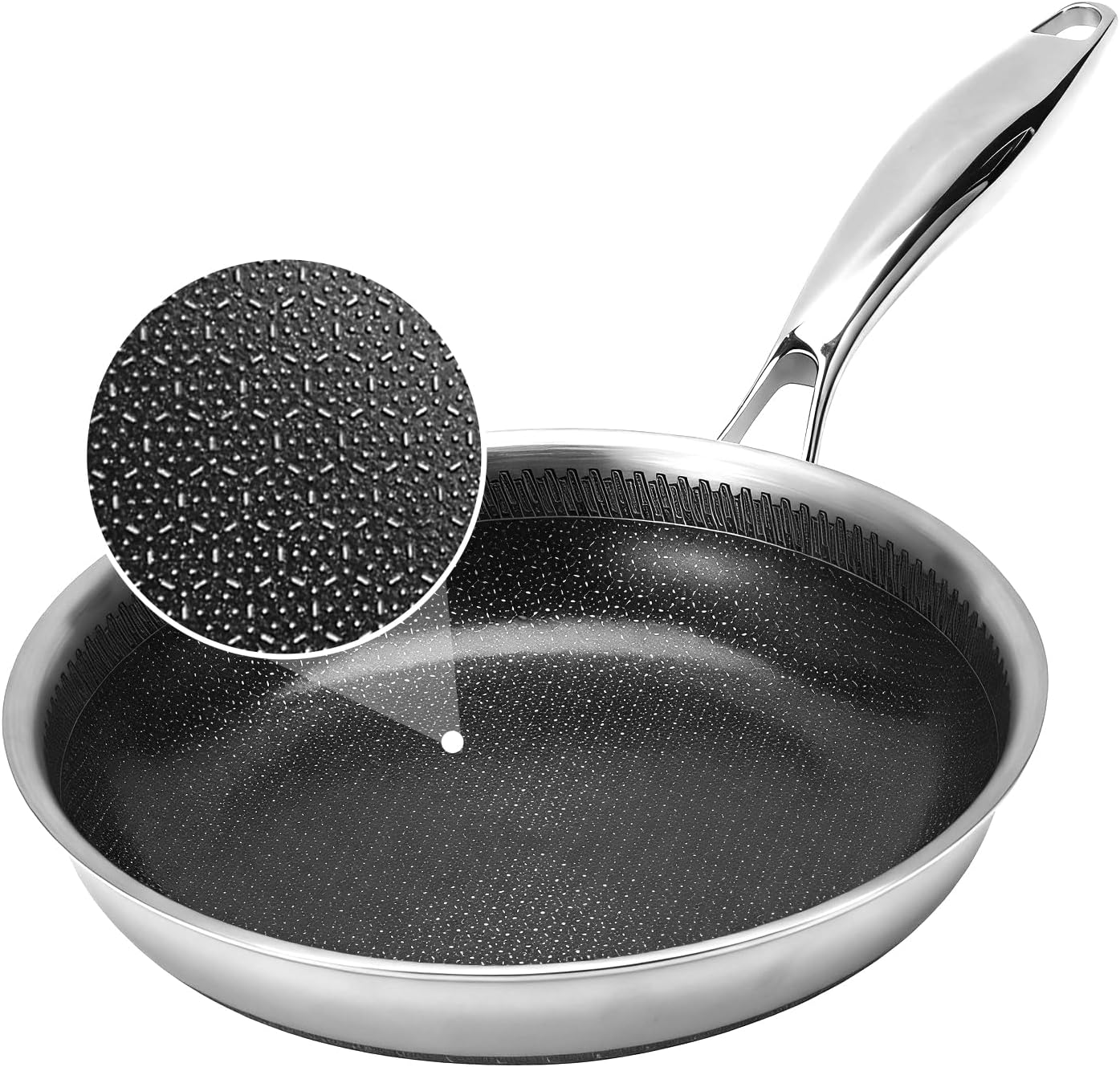
Understanding material construction helps determine how efficiently your induction oven frying pan distributes heat. Aluminum cores offer rapid thermal response, while stainless steel exteriors provide sturdy durability and corrosion resistance. Multi-ply clad designs combine these metals to ensure heat travels up the sidewalls, preventing localized hot spots.
Hard-anodized aluminum offers another robust option, delivering a rigid body that resists everyday wear without heavy multi-layer steel weights. Matching the material makeup to your typical cooking style ensures consistent results whether you are gently simmering sauces or searing thick steaks.
Surface Coatings and Nonstick Performance
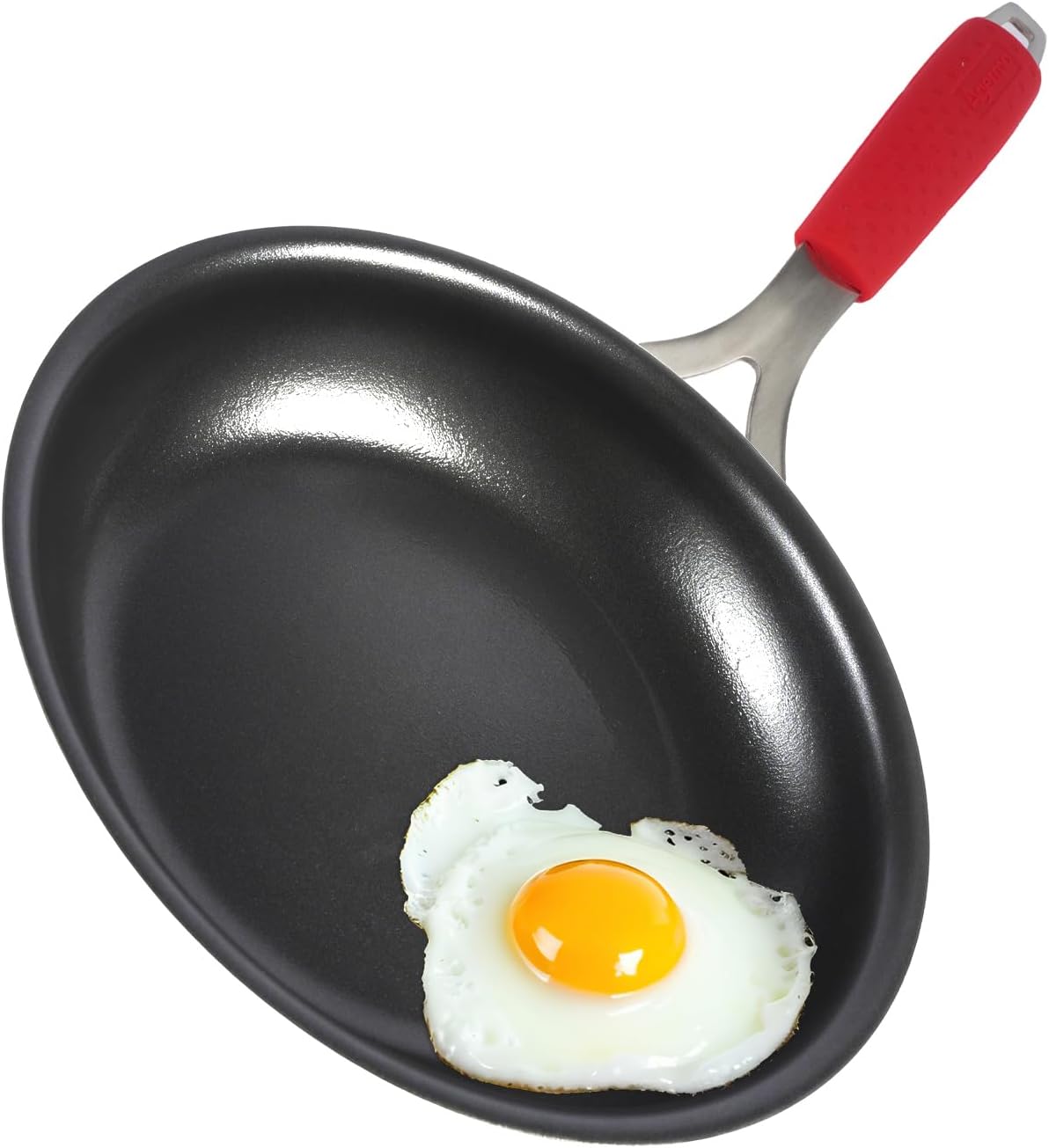
Choosing between coated and uncoated frying pans depends entirely on your preferred recipes and maintenance habits. Reinforced nonstick surfaces allow effortless food release with minimal oil, making them ideal for delicate items like eggs and fish fillets. Advanced ceramic options provide toxin-free cooking alternatives without traditional chemical treatments.
Uncoated stainless steel alternatives trade easy food release for superior durability under metal utensils and high-heat broiling. Assessing your willingness to manage heat and oils helps clarify which surface coating best serves your kitchen routine.
Thermal Compatibility and Oven Safety
Induction cooktops require magnetic base materials to generate heat efficiently through electromagnetic fields. Always verify that a flat, magnetic base is integrated into the pan construction before purchasing cookware for an induction range. Additionally, check maximum temperature ratings if you plan to transfer your skillet directly into the oven.
While some specialty pans handle gentle warming up to 302 degrees Fahrenheit, professional clad models frequently withstand extreme heat up to 600 degrees. Matching thermal limits to your baking habits prevents accidental damage.
Handle Design and Storage Practicality
Ergonomic handles significantly influence comfort and safety during active stovetop cooking sessions. Stay-cool metal handles or silicone grips prevent accidental burns while providing steady leverage when lifting heavy pans. Detachable handles offer a smart solution for cramped kitchens, RVs, and compact cabinets by reducing overall storage footprints.
Evaluating how a handle attaches also impacts cleaning ease, as rivetless interiors eliminate hidden food traps. Selecting appropriate handle features ensures comfortable maneuverability and convenient storage options tailored to your living space.
Capacity and Size Selection
Frying pan dimensions dictate how much food you can comfortably prepare in a single batch. Compact 8-inch to 10-inch models work well for single-portion meals, quick breakfasts, and side dishes. Larger 12-inch skillets and deep sauté pans accommodate family-sized portions, stir-fries, and multi-ingredient braising tasks.
Consider both cooking volume and stovetop burner dimensions when selecting pan sizes. Choosing a diameter that matches your heating element ensures optimal energy transfer and uniform thermal distribution across the base.
Maintenance and Cleaning Guidelines
Proper cleaning routines extend the functional lifespan of your induction frying pan. While many modern skillets feature dishwasher-safe construction for maximum convenience, hand washing is frequently recommended to preserve delicate nonstick or ceramic coatings over years of use.
Following manufacturer guidelines regarding abrasive sponges and recommended temperatures prevents premature coating degradation. Establishing a simple maintenance habit keeps your cookware performing reliably across countless daily meal preparations.
Frequently asked questions
Can I use any frying pan on an induction cooktop?
Induction cooktops require cookware featuring a magnetic metal base to generate heat through magnetic fields. Aluminum or copper pans without a bonded magnetic stainless steel base will not heat up on an induction range. Always check the manufacturer specifications to confirm induction compatibility before purchasing. If a magnet firmly sticks to the bottom of the pan, it will work successfully on your induction cooktop surface, ensuring efficient energy transfer and rapid thermal response during cooking.
What is the benefit of a multi-ply clad frying pan?
Multi-ply clad frying pans feature layers of responsive metals, typically an aluminum core fused between inner and outer layers of stainless steel. This rim-to-rim construction allows heat to travel rapidly from the base up through the sidewalls of the pan. By eliminating localized hot spots, multi-ply cookware ensures uniform browning and steady temperature control across the entire cooking surface. This design offers professional-grade durability and prevents warping during high-heat searing tasks.
How should I clean a nonstick induction frying pan?
Cleaning a nonstick induction frying pan usually requires only warm water, mild dish soap, and a soft sponge to remove food residue. Although many modern pans list dishwasher-safe construction, hand washing is frequently recommended by manufacturers to preserve the longevity of nonstick or ceramic coatings. Avoid using abrasive scouring pads or metal utensils that can scratch the protective surface. Prompt cleaning prevents grease buildup and keeps your pan performing efficiently for everyday meal preparation routines.
Can these frying pans go directly into the oven?
Many induction frying pans are engineered for seamless transition from stovetop to oven, allowing you to sear meats on the burner and finish baking them inside. However, maximum temperature limits vary significantly depending on the materials used. Some models accommodate heat up to 600 degrees Fahrenheit, while others with specialized coatings or silicone handle sleeves have lower thresholds around 300 to 400 degrees. Always check specific temperature ratings and remove any detachable silicone sleeves before baking.
Why choose a deep sauté pan over a standard skillet?
Deep sauté pans feature taller, straight sidewalls and a larger capacity compared to traditional shallow frying pans. This design makes them exceptionally versatile for multi-step recipes involving searing, braising, simmering, and deep-frying. The extra depth helps contain liquids and prevents food splatters during active boiling or stirring tasks. If you frequently prepare one-pot meals, stews, or large family batches, a deep sauté pan provides the necessary volume and functional flexibility on your induction cooktop.