Appliances · Buying Guide
Best Induction Ready Cookware Sets for Everyday Kitchens
Finding the right cookware for an induction cooktop involves looking closely at base materials, construction layers, and heat distribution properties. Many modern kitchens rely on magnetic metal bases to transfer heat efficiently without creating stubborn hot spots across the cooking surface during daily meal preparation tasks like boiling, simmering, and searing meats.
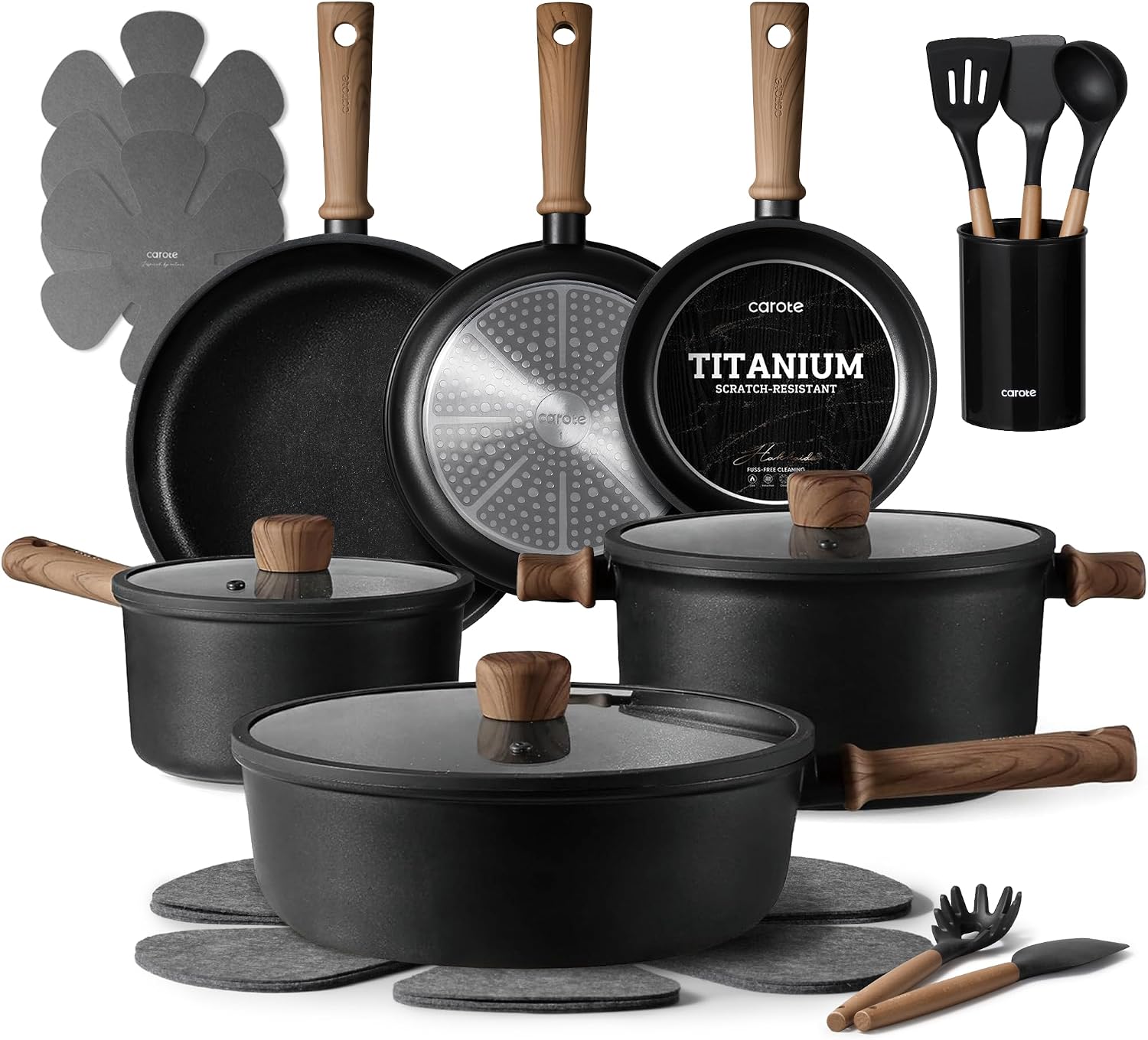
This comprehensive overview examines five distinct cookware sets designed to function smoothly on induction surfaces alongside traditional gas and electric ranges. Reviewing their included components, handle designs, lid materials, and structural builds helps match specific cooking styles, household sizes, and everyday meal preparation routines to the right kitchen hardware options available for home cooks everywhere.
As an Amazon Associate, StacyLaughs earns from qualifying purchases.
Buying guide
Base Materials and Induction Compatibility
Choosing cookware for an induction cooktop requires understanding how magnetic fields interact with specific pan materials. Induction cooktops rely entirely on magnetic conduction to generate thermal energy directly inside the cookware base rather than warming the glass cooktop surface itself. This direct energy transfer demands pots and pans featuring compatible magnetic properties in their bottom layers to activate the burners successfully and maintain consistent cooking temperatures.
Materials like stainless steel, specially bonded aluminum cores with magnetic outer plates, and cast iron work effectively because they contain the necessary ferrous metals. Reviewing these construction specifications beforehand ensures your chosen kitchenware will trigger the induction elements properly without experiencing heating delays, erratic power cycling, or compatibility issues during daily meal preparation tasks.
Construction Layers and Heat Distribution
The structural build of a pot or pan directly dictates how evenly food cooks across the bottom and up the sidewalls. Multi-ply construction, which sandwiches aluminum cores between layers of stainless steel, provides superior thermal conductivity compared to single-layer alternatives. This bonded approach eliminates frustrating hot spots that can scorch sauces or brown meats unevenly on standard induction burners.
Selecting fully clad options ensures heat travels uniformly from the base all the way up the edges. Such responsive construction allows home cooks to manage delicate simmering tasks and rapid boiling with confidence, knowing the cookware will react instantly to temperature adjustments made on the control panel.
Interior Coatings and Food Release
Interior surface coatings dictate how easily foods release from the pan and how much oil is required during cooking. Ceramic and titanium-reinforced nonstick surfaces prevent delicate items like eggs, fish, and cheese from adhering to the metal, simplifying both flipping tasks and post-meal cleanup routines. These coatings are especially useful for everyday meals requiring quick food turnover.
Conversely, traditional polished stainless steel interiors offer high-heat durability and allow cooks to develop rich fond for pan sauces through deglazing. Weighing the convenience of effortless food release against the longevity and high-temperature tolerance of uncoated metal helps determine the ideal surface for your culinary preferences.
Handle Ergonomics and Stovetop Safety
Handle design plays a vital role in everyday kitchen safety, comfort, and maneuverability when transporting heavy pots filled with liquids. Riveted stainless steel handles provide a secure, permanent attachment that outlasts welded alternatives, ensuring long-term durability under heavy loads. Many handles incorporate ergonomic contours to reduce wrist strain during extended stirring or pouring tasks.
Heat management is another crucial factor regarding handle construction and overall kitchen safety. While many metal handles are engineered to stay cool during standard stovetop use, they readily absorb thermal energy when placed inside a hot oven. Checking whether handles require protective mitts during baking prevents accidental burns during meal transitions.
Lids, Vents, and Moisture Retention
The type of lids included with a cookware set influences how effectively moisture, heat, and flavors are locked into soups, stews, and braised dishes. Tempered glass covers allow home cooks to monitor cooking progress visually without lifting the lid and releasing valuable steam. Many glass lids feature protective rims made of silicone or stainless steel to guard against chipping.
Stainless steel lids offer unmatched durability and higher oven temperature thresholds compared to glass variants, making them ideal for rigorous broiling tasks. Evaluating whether you prefer visibility or maximum heat tolerance helps narrow down the best lid style for your specific household recipes and baking routines.
Maintenance and Cleaning Requirements
Proper upkeep ensures your induction-ready cookware maintains its structural performance and visual appearance over years of daily use. Many modern sets boast dishwasher-safe construction, allowing for quick cleanup in busy households after heavy meal preparation. However, manufacturers frequently recommend hand washing with mild dish soap to preserve specialized nonstick coatings and prevent cosmetic discoloration on exterior metal bases.
Adhering to cleaning guidelines prevents the accumulation of stubborn residues that can interfere with induction burner contact and heating efficiency. Understanding whether a set requires delicate hand care or fully tolerates aggressive machine washing helps align your purchase decision with your daily kitchen cleaning habits, lifestyle, and time constraints.
Frequently asked questions
How do I know if my existing pots and pans will work on an induction cooktop?
You can easily determine induction compatibility by placing a common household refrigerator magnet directly against the bottom of your pots and pans. If the magnet pulls firmly and holds fast against the metal base, the cookware contains enough ferrous metal content to function efficiently on an induction burner. If the magnet slides off or fails to stick, the vessel lacks the necessary magnetic properties and will not generate thermal energy on an induction cooktop surface.
Can I put stainless steel cookware sets into the oven and broiler?
Most quality stainless steel cookware sets are designed to withstand high oven temperatures safely, often up to five hundred degrees Fahrenheit. However, you must always check the specific manufacturer guidelines for your particular collection because attached components like tempered glass lids or specialized nonstick coatings frequently feature lower maximum temperature thresholds. When moving metal pans from a hot oven, always use protective mitts since exposed handles absorb thermal energy during baking.
Are dishwasher-safe pots and pans truly safe for regular machine washing?
Cookware labeled as dishwasher safe can withstand automated cleaning cycles, but many manufacturers recommend hand washing to maximize long-term surface durability. Harsh dishwashing detergents and high-pressure water jets can gradually dull polished stainless steel finishes or degrade delicate nonstick coatings over time. If you prefer the convenience of the dishwasher, verify whether the specific set requires hand care for its exterior base or interior lining to maintain its appearance and performance.
What is the main difference between encapsulated bases and fully clad cookware?
Encapsulated base cookware features a thick disc of conductive metal, such as aluminum, bonded specifically to the bottom of the pot or pan. This design heats the base efficiently while keeping overall manufacturing costs lower. Fully clad cookware extends the multi-ply metal layers up the entire sidewall of the vessel, providing edge-to-edge thermal consistency that eliminates hot spots and ensures rapid temperature responsiveness across both the bottom and the sides.
Do nonstick cookware sets require special utensils to prevent scratching?
Yes, most nonstick cookware sets require careful utensil selection to protect the delicate interior coatings from physical damage over time. While advanced titanium or diamond-reinforced ceramic surfaces offer increased durability against general wear, manufacturers generally recommend using wooden, silicone, or plastic tools rather than sharp metal utensils. Avoiding abrasive scrapers and metal forks prevents premature scratching, preserving the smooth food release performance of your pots and pans over years of regular kitchen use.