Appliances · Buying Guide
Best Stainless Steel Cookware Sets for Everyday Kitchen Cooking
Choosing the right stainless steel cookware transforms how you handle daily kitchen tasks, from simple morning eggs to large weekend dinner preparations for family and guests. Stainless steel provides a durable, highly reliable, and non-reactive cooking surface that lets natural food flavors shine without absorbing food odors, making it a staple for versatile cooking.
Whether you are outfitting a brand-new home kitchen or replacing worn-out pans, understanding how different core constructions affect heat distribution will guide your purchasing decision effectively. These selected sets offer reliable performance across various modern stovetops, helping you achieve consistent, professional cooking results at home without relying on delicate chemical nonstick coatings that peel or wear down.
As an Amazon Associate, StacyLaughs earns from qualifying purchases.
Buying guide
Evaluating Core Construction and Ply Layers
When selecting stainless steel cookware, understanding how metal layers are bonded together is essential for predicting heat distribution. Encapsulated disc bases use a core of aluminum sealed inside a stainless steel disk at the bottom of the pan. This method provides rapid heat transfer directly over the burner element.
Fully clad or multi-ply cookware extends those heat-conducting aluminum or steel layers right up through the sidewalls of the vessel. Choosing fully clad options prevents hot spots and ensures that food cooks evenly even when liquids splash up the sides during simmering.
Understanding Handle Design and Ergonomics
Handles dictate how safely and comfortably you can maneuver pots and pans around a busy kitchen. Look for securely riveted stainless steel handles that provide a confident, sturdy grip when lifting heavy stockpots filled with water.
Many modern stainless collections incorporate hollow-core designs or ergonomic shapes intended to slow heat transfer from the hot stovetop. Always check whether handles stay cool during surface cooking or require mitts due to high thermal conductivity.
Stovetop Compatibility and Heat Sources
Modern kitchen setups feature diverse cooktop technologies, including gas burners, traditional electric coils, smooth glass-ceramic surfaces, and magnetic induction cooktops. Stainless steel naturally works well on gas and electric ranges.
To use cookware on an induction cooktop, the outermost layer of the pan must contain magnetic stainless steel. Checking manufacturer specifications ensures your chosen pots and pans will heat properly on your specific cooking surface without compatibility issues.
Lid Materials and Oven Safety Limits
The materials used for pot lids affect both your cooking visibility and maximum temperature thresholds. Tempered glass lids let you monitor food without lifting the cover, trapping moisture while offering moderate oven safety up to specified limits.
Solid stainless steel lids generally withstand much higher oven temperatures, making them ideal for broiling and roasting tasks. Matching lid temperature ratings to your preferred cooking methods prevents warping or cracking under intense heat.
Maintenance Requirements and Cleanup Options
Stainless steel provides a durable cooking surface that resists scratching from metal utensils, but cleaning requirements vary across different product lines. Dishwasher-safe sets offer convenient cleanup after busy weeknight meals, saving valuable time.
Some premium multi-ply collections recommend hand washing to preserve the exterior finish and prevent discoloration. Understanding these maintenance guidelines helps you select a cookware set that matches your willingness to perform manual upkeep.
Set Composition and Piece Selection
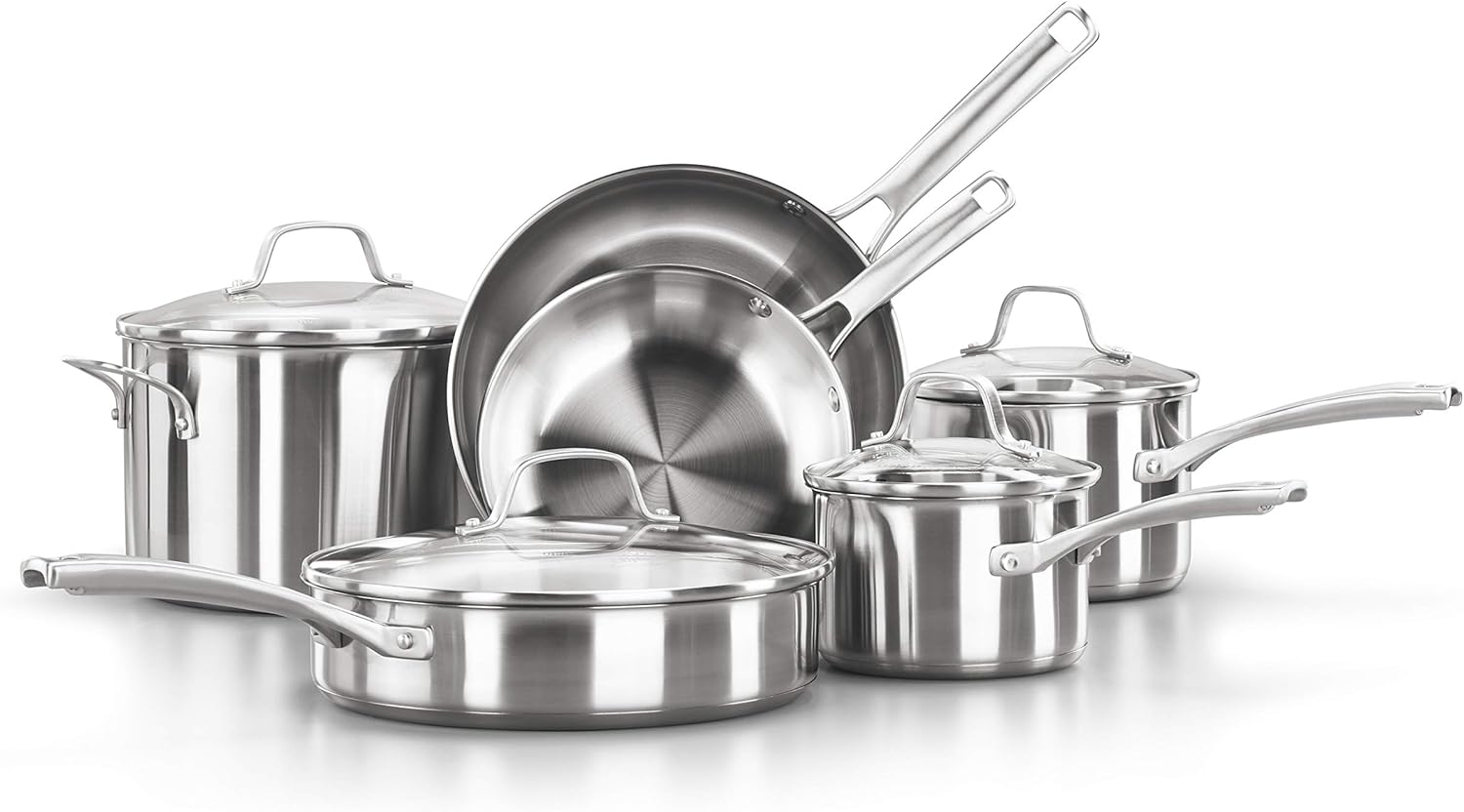
Cookware sets range from compact ten-piece collections to larger fourteen-piece bundles that include specialized vessels like Dutch ovens and extra skillets. Reviewing the included sizes helps ensure you get practical saucepans and stockpots that match your household cooking volume.
Buying a comprehensive set provides matching aesthetic pieces and covers all daily cooking needs at once. Assessing your typical meal preparation style prevents paying for oversized pots you rarely use.
Frequently asked questions
Can I use metal utensils on stainless steel cookware?
Yes, stainless steel cooking surfaces are exceptionally hard and durable, meaning they will not scratch or degrade when you use metal whisks, spatulas, or spoons during cooking. Unlike traditional nonstick pans that require wooden or silicone tools to protect delicate chemical coatings, bare stainless steel handles metal utensils easily. This makes flipping steaks, scraping up browned fond, and stirring thick sauces straightforward without worrying about damaging the cooking surface.
Why do food and pan residue sometimes stick to stainless steel?
Food sticks to stainless steel when the microscopic pores of the metal expand under heat and grip proteins before a natural release barrier forms. To prevent this, you should properly preheat your empty pan over medium heat before adding cooking oil, letting the oil shimmer before introducing food. Allowing meat or vegetables to sear undisturbed will also allow a natural release to occur once the food develops a proper crust.
Are stainless steel pots and pans safe for dishwasher cleaning?
Many stainless steel cookware sets are labeled as dishwasher safe for easy everyday cleanup. However, harsh dishwasher detergents and high water temperatures can cause the exterior finish to dull or discolor over time. Many manufacturers recommend washing stainless steel cookware by hand using warm, soapy water and a soft sponge to preserve its polished shine and extend the long-term lifespan of the bonded metal layers.
What is the difference between disc-bottom and fully clad cookware?
Disc-bottom cookware features an aluminum or copper heat-conducting disk bonded only to the flat bottom of the pan, which heats the base quickly. Fully clad cookware extends those inner conductive layers up through the entire body and sidewalls of the vessel. Fully clad construction prevents hot spots across the entire cooking zone and provides superior temperature control when simmering sauces or braising meals in the oven.
Can stainless steel cookware go directly from the stovetop to the oven?
Most stainless steel cookware is designed to transition safely from stovetop burners into the oven, provided the handles and lids meet specific temperature thresholds. Pans featuring all-metal handles often withstand high oven heat up to 500 or 800 degrees Fahrenheit. If your cookware includes tempered glass lids or specialized silicone grips, check the manufacturer guidelines because those components usually have lower maximum temperature limits than the bare metal bodies.