Appliances · Buying Guide
Best Large Frying Pan with Lid Options for Home Kitchens
Finding the right large frying pan with a lid involves balancing internal capacity, stovetop compatibility, and everyday cleanup preferences for family meals. Whether searing meats or simmering large batches of soup, having a dependable covered skillet simplifies multitasking across various recipes. Manufacturers offer diverse designs featuring specialized nonstick surfaces, supportive helper handles, and heat-resistant construction built to handle multiple cooking techniques comfortably.
This overview examines five distinct large pans equipped with matching lids, detailing their core materials, temperature tolerances, and practical design traits. Reviewing these specifications helps match a specific cooker profile to your kitchen setup, ensuring reliable performance without guesswork or unexpected compatibility issues. Choosing the correct model depends heavily on your specific stovetop type and desired maintenance routine.
As an Amazon Associate, StacyLaughs earns from qualifying purchases.
Buying guide
Material Construction and Heat Distribution
Material construction directly influences how quickly and evenly a large frying pan heats during meal preparation. Aluminum cores provide rapid thermal conductivity, allowing cookware to respond swiftly to temperature adjustments on the stovetop. Hard-anodized and tri-ply configurations add structural durability, resisting warping over extended periods of frequent use and heavy family meal preparation.
Selecting the appropriate material depends on whether you prioritize lightweight handling or robust thermal mass for searing meats. Heavier multi-layered builds retain heat exceptionally well, making them ideal for long simmering sessions, while lighter aluminum models offer effortless maneuverability for everyday stir-frying and sautéing tasks.
Cooktop Compatibility and Base Design
Cooktop compatibility dictates which frying pans function effectively in your specific kitchen environment. Standard aluminum models operate smoothly on gas and electric coils, whereas induction cooktops require specialized magnetic stainless steel bases. Examining the underside of the pan ensures the flat surface establishes solid contact with the burner element for efficient heat transfer.
Edge-to-edge bonded bases further enhance performance by distributing thermal energy uniformly across the entire cooking surface. Ensuring your chosen skillet matches your primary heat source prevents heating delays and ensures consistent culinary results across various stovetop styles.
Nonstick Coatings and Surface Durability
Nonstick coatings simplify food release and reduce the amount of oil needed for daily cooking routines. Modern manufacturing employs advanced ceramic, titanium, or aerospace-grade nonstick layers designed to resist scratching and flaking over time. Smooth interior surfaces without protruding rivets also accelerate manual cleanup, preventing food particles from trapping in tight crevices.
Evaluating surface durability involves checking manufacturer care guidelines, as some advanced coatings tolerate metal utensils while others require silicone or wooden tools. Choosing a resilient interior coating protects your investment against premature wear during high-volume family cooking.
Handle Ergonomics and Helper Features
Handle ergonomics play a vital role in comfort and safety when maneuvering a heavy, filled frying pan. Double-riveted handles constructed from silicone, cast stainless steel, or insulated bakelite provide a secure, balanced grip during transport. Helper handles attached opposite the main grip offer essential leverage when lifting extra-large capacities safely from counter to stovetop.
Heat-resistant handle designs prevent burns during long cooking sessions on the burner. Prioritizing secure attachment methods ensures long-term stability, reducing the risk of loosening or wobbling when moving heavy loads of food.
Lid Design and Moisture Management
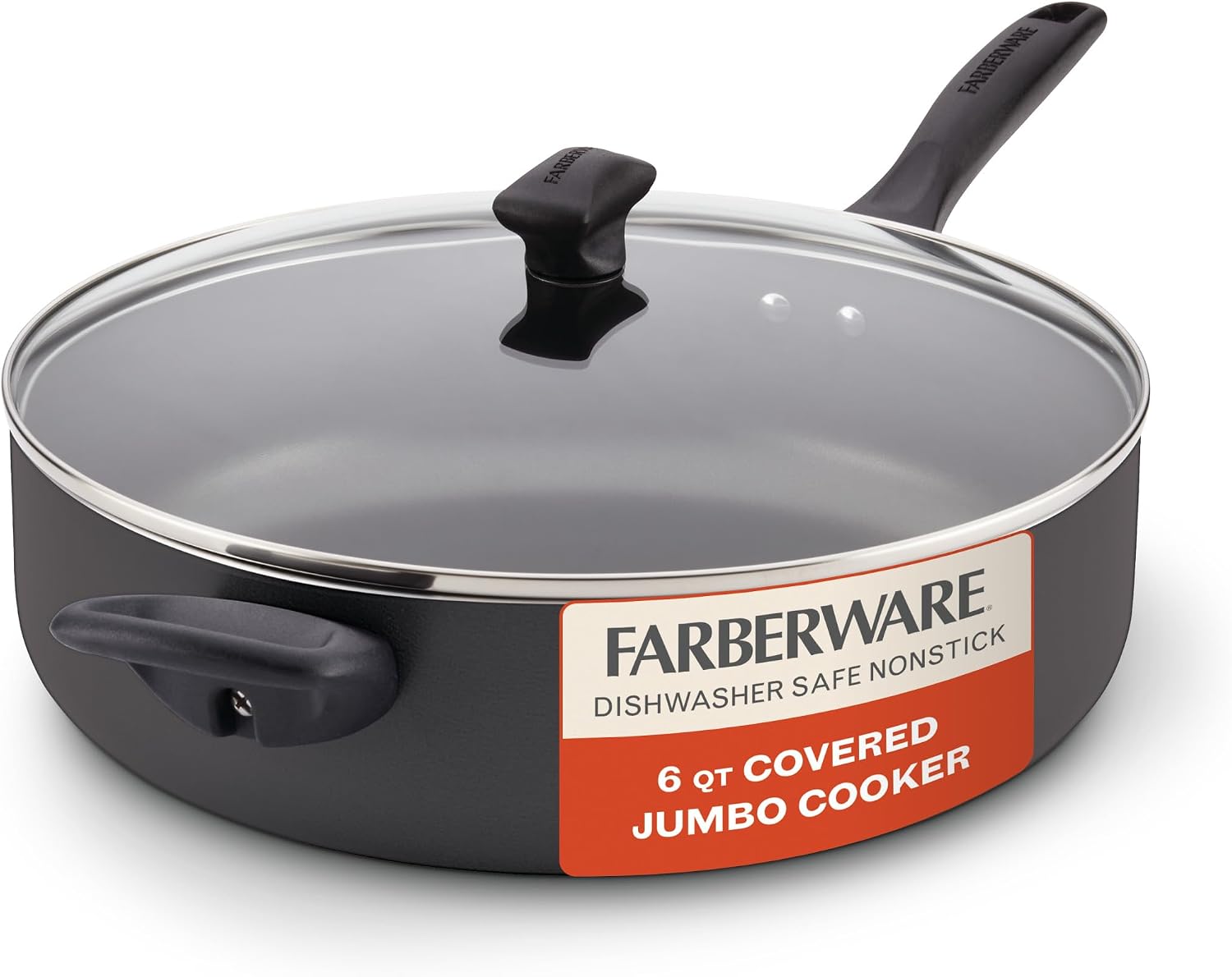
Lid design is essential for trapping heat, moisture, and flavor inside the frying pan during braising or simmering. Tempered glass lids allow cooks to monitor recipe progress visually without lifting the cover and releasing accumulated steam. Integrated vent holes relieve internal pressure gently, minimizing messy liquid splatters across the stovetop.
Shatter-resistant glass construction adds an extra layer of durability against accidental knocks in busy kitchens. Matching the lid properly to the pan rim ensures a snug seal that optimizes thermal efficiency and cooking control.
Temperature Tolerances and Oven Safety
Temperature tolerances dictate whether your frying pan can transition seamlessly from stovetop searing to oven baking. Many standard nonstick cookers support moderate oven temperatures up to 350°F, while specialized hard-anodized or hybrid models accommodate higher ranges up to 400°F or beyond. Checking specific threshold limits for both the pan body and the lid prevents material damage.
Knowing these thermal boundaries allows you to execute complex recipes requiring finishing steps inside a hot oven. Verifying temperature ratings ensures safe handling and preserves the integrity of handles and glass lids.
Frequently asked questions
How do I choose between aluminum and hard-anodized pans?
Choosing between standard aluminum and hard-anodized pans depends on your desired durability and cooking habits. Standard aluminum cookware heats fast and evenly, offering a lightweight profile that is easy to maneuver during everyday meal preparation. Hard-anodized aluminum undergoes an electrochemical process that hardens the metal, making it significantly more resistant to scratching, corrosion, and wear over time. If you require long-lasting structural rigidity for frequent high-volume cooking, hard-anodized options provide superior resilience compared to standard aluminum builds.
Can I use metal utensils on nonstick frying pans?
Using metal utensils on standard nonstick frying pans is generally discouraged because metal edges can scratch, gouge, or flake the delicate coating. Most traditional nonstick surfaces require wooden, silicone, or plastic tools to preserve their smooth release properties. However, specialized hybrid pans featuring textured stainless steel and ceramic matrices are engineered to withstand metal utensils safely without compromising performance. Always verify the manufacturer guidelines for your specific pan model before introducing metal spatulas or whisks to the cooking surface.
Are all large frying pans compatible with induction cooktops?
Not all large frying pans are compatible with induction cooktops, as induction technology requires a magnetic metal base to generate heat. Standard aluminum or copper pans lacking a bonded magnetic steel plate will not function on induction burners. When shopping for an induction-ready skillet, examine the product specifications to confirm the presence of a compatible encapsulated steel base. Ensuring proper cooktop matching prevents heating failures and guarantees efficient thermal performance across your specific kitchen stove setup.
What is the benefit of a helper handle on a large pan?
A helper handle provides crucial structural support and balance when lifting or moving an extra-large frying pan filled with heavy food. Large capacity cookers hold substantial weight, making a single primary handle difficult to control securely during transport from burner to sink. The additional grip opposite the main handle allows you to distribute the load evenly between both hands, significantly reducing strain and minimizing accidental spills during kitchen workflows or cleanup routines.
How should I clean a nonstick pan with a glass lid?
Cleaning a nonstick pan and its glass lid typically involves washing by hand with warm soapy water and a soft sponge to protect the coating. While certain models advertise dishwasher safety, hand washing generally extends the lifespan of nonstick surfaces by preventing harsh detergents from degrading the finish. Avoid abrasive scouring pads or metal wool, which can permanently scratch both the nonstick interior and the tempered glass lid. Allow the pan to cool completely before washing to prevent thermal shock warping.