Appliances · Buying Guide
Best Large Round Electric Skillet Options for Family Meals
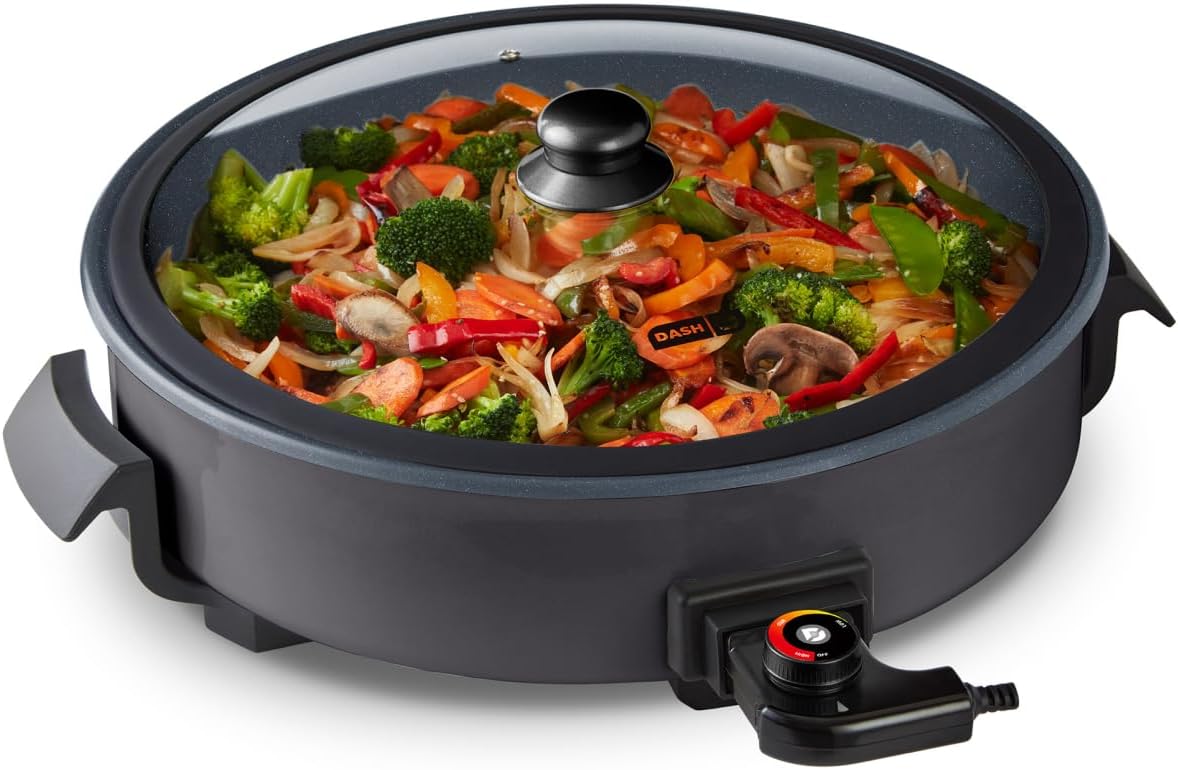
Finding the right large round electric skillet can completely transform how you prepare weeknight dinners and weekend breakfasts. These versatile appliances offer expansive cooking surfaces that handle everything from one-pan pastas to family-sized batches of pancakes without crowding your main stove burners.
Modern electric skillets combine precise temperature controls with nonstick surfaces to simplify cooking and cleanup. Whether you need a compact secondary burner or a dedicated vessel for large gatherings, exploring the specific dimensions, power ratings, and coating types helps match a model to your daily routine.
As an Amazon Associate, StacyLaughs earns from qualifying purchases.
Buying guide
Surface Area and Capacity Considerations
Choosing the right large round electric skillet starts with evaluating your typical meal sizes and household headcounts. Models ranging from six to nearly seven quarts provide ample room for one-pan dinners, stir-fries, and weekend breakfast spreads. A spacious 14-inch or 16-inch cooking surface prevents ingredient overcrowding, ensuring that foods brown evenly rather than steam in tightly packed batches.
Larger capacities easily accommodate multi-step recipes like fajitas and pastas from start to finish without requiring secondary pots. However, matching capacity to your actual storage space is vital. Excessively large vessels can overwhelm standard kitchen cabinets. Assessing your regular cooking volume helps determine whether a standard six-quart pan or an extra-large alternative best suits your kitchen lifestyle.
Heating Power and Temperature Control
Heating performance depends heavily on the wattage rating and the precision of the temperature control mechanism. Units equipped with 1500-watt heating systems deliver rapid thermal response and uniform distribution across the entire cooking floor. This high power level supports rigorous tasks like searing meats and boiling liquids quickly, reducing overall meal preparation time on busy weeknights.
Temperature adjustments vary between models, offering either simple three-level dials or granular five-setting probes. Simple dials work well for basic frying and warming, while multi-level controls offer finer adjustments for delicate simmering and low-temperature caramelization. Matching the control style to your favorite cooking techniques ensures you achieve consistent culinary results every single time.
Nonstick Coating Materials and Maintenance
The interior cooking surface dictates how easily food releases and how simple cleanup will be after a heavy meal. Modern electric skillets typically feature either traditional nonstick formulations or ceramic coatings. Both options allow eggs, cheeses, and sticky sauces to slide off smoothly, minimizing the need for heavy scrubbing or prolonged soaking in the kitchen sink.
Maintaining these coatings requires following manufacturer guidelines, such as using nonmetal utensils to prevent scratching and relying on gentle hand-wash routines. While dishwasher-safe removable probes make cleaning easier, the main pan body usually requires careful manual washing. Selecting a durable coating material preserves the nonstick performance over years of frequent daily use.
Lid Design and Moisture Retention
A well-designed lid is essential for locking in heat, steam, and flavor during extended simmering or braising tasks. Tempered glass lids provide durable performance under high heat while allowing you to monitor cooking progress visually without lifting the cover. This transparency prevents sudden temperature drops inside the skillet, ensuring steady and predictable cooking cycles.
Some advanced models incorporate thoughtful accessories like built-in lid rests that double as spoon holders. These features capture condensation and dripping sauces, keeping your countertops clean during active cooking sessions. Evaluating these extra design elements helps streamline your workspace management, keeping utensils organized and mess contained within a single compact area.
Handle Ergonomics and Safe Transport
Safely moving an electric skillet from the kitchen counter to the dining table requires ergonomic, cool-touch side handles. These insulated grips remain comfortable to hold even when the interior is operating at high temperatures, preventing accidental burns during serving. Secure side handles also provide stable leverage when lifting or repositioning the appliance.
Heavier models, particularly ceramic pans weighing around seven and a half pounds empty, benefit significantly from robust handle design. A secure grip ensures confident transport when the skillet is filled with heavy portions of food. Checking handle construction guarantees that you can manage the appliance safely throughout cooking, serving, and cleanup routines.
Storage Footprint and Counter Clearance
Large round electric skillets have wide dimensions that require careful consideration of your available kitchen storage and counter space. Overall widths often exceed eighteen inches, meaning these appliances demand dedicated cabinet clearance or pantry room. Measuring your storage areas before purchasing prevents unexpected placement challenges in smaller kitchens.
Detachable temperature probes significantly improve storage convenience by removing protruding cords and dials from the equation. This feature allows the pan body to stack or fit more easily into tight spaces. Balancing your desire for an expansive cooking surface with practical storage limitations ensures the appliance remains accessible rather than tucked away out of sight.
Frequently asked questions
Can I submerge my electric skillet in water to clean it?
You must always detach the temperature control probe before cleaning the skillet body. According to manufacturer guidelines, the pan itself can typically be washed by hand using warm soapy water and a nonabrasive sponge. Never submerge the electrical plug receptacle or the detached temperature probe in water, as moisture can damage internal electrical components. Always ensure the appliance is completely dry before reattaching the temperature probe for your next cooking session.
What is the benefit of a ceramic nonstick coating over traditional nonstick?
Ceramic nonstick coatings provide an alternative cooking surface that helps food release smoothly without relying on traditional chemical nonstick compounds. These ceramic interiors often feature robust durability for everyday family cooking and clean up easily with a quick hand wash. They offer reliable heat distribution while supporting low-fat cooking methods since foods slide freely across the pan. However, users must follow care instructions carefully, such as avoiding metal utensils, to protect the specialized ceramic finish from premature scratching.
How do I choose between a 3-setting dial and a 5-setting temperature control?
Choosing between a three-setting dial and a five-setting temperature control depends on your preferred cooking versatility. A three-setting control provides straightforward options for basic tasks like low simmering, medium frying, and high searing. In contrast, a five-setting control offers finer temperature increments, giving you greater precision for complex recipes that require delicate heat management. If you primarily cook straightforward one-pan meals, three settings are sufficient. For varied culinary experiments, five settings offer superior control.
Can I use metal utensils on the nonstick surface of these electric skillets?
You should avoid using metal utensils on both traditional nonstick and ceramic cooking surfaces. Metal forks, spatulas, and spoons can easily scratch, gouge, or wear away the protective nonstick coating over time. Instead, use wooden, silicone, or heat-resistant plastic utensils to protect the interior finish. Preserving the integrity of the nonstick coating ensures that eggs, cheeses, and sticky sauces continue to release effortlessly, extending the overall lifespan of your electric skillet.
Why is my electric skillet taking up so much counter and storage space?
Large round electric skillets feature wide surface areas, often spanning fourteen to sixteen inches, designed to accommodate family-sized meal portions. This expansive cooking capacity inherently results in a bulky overall footprint with widths reaching up to nineteen inches. To manage storage, look for models with detachable temperature control probes that minimize protruding parts. Measuring your kitchen cabinets and counter clearance beforehand helps you select a model that fits comfortably within your available storage limits.