Appliances · Buying Guide
Best Large Saucepan With Lid Options for Every Kitchen Task
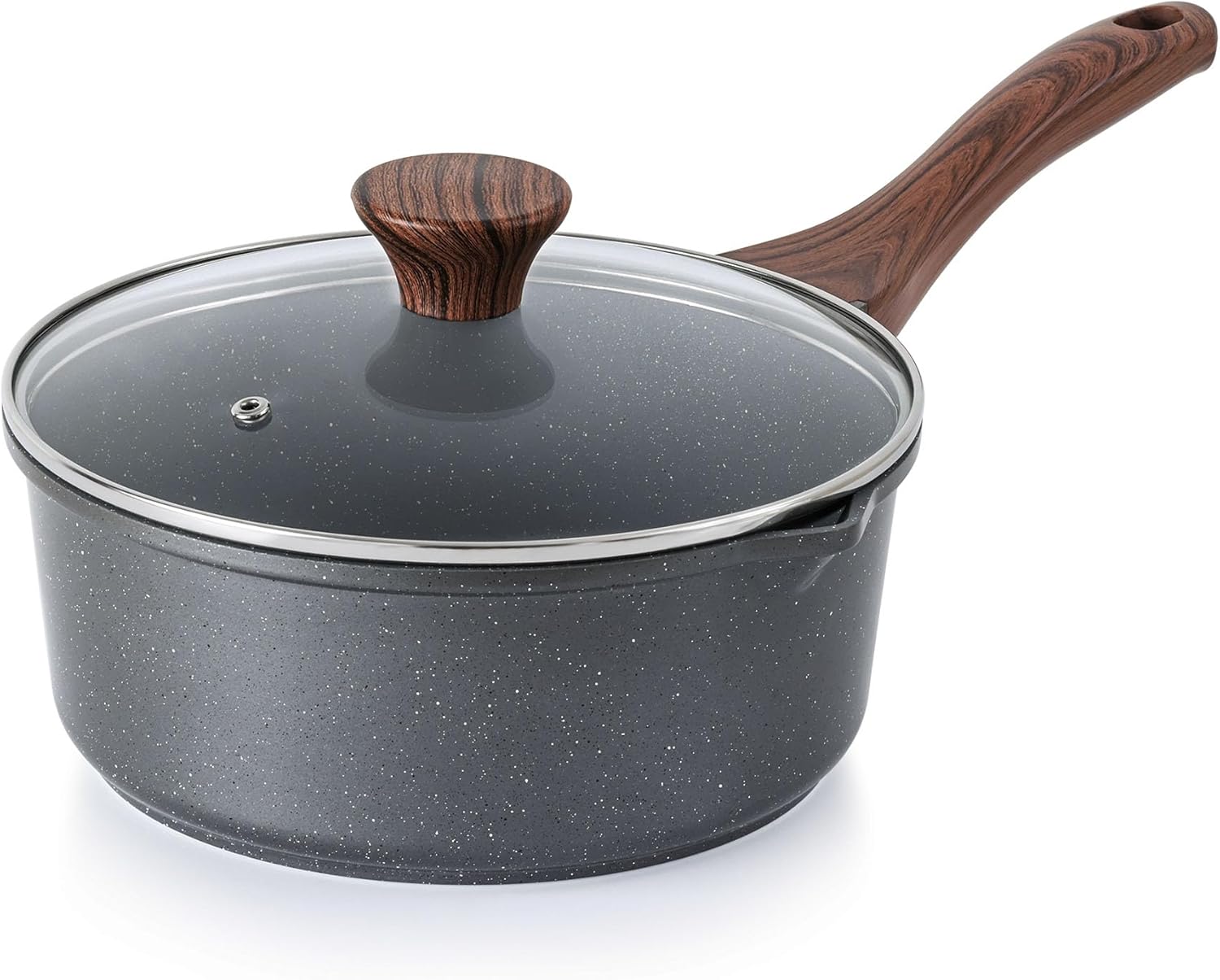
Finding the right cookware for daily family meals requires looking closely at materials, capacities, and heat distribution. A reliable large saucepan with a lid helps handle boiling pasta, simmering soups, and reducing flavorful sauces without constant monitoring or messy spills on your stovetop. Choosing the correct vessel transforms everyday kitchen routines into seamless cooking experiences.
Different cooking surfaces and handle designs offer distinct advantages depending on your stovetop and preferred cooking style. Whether you need fast-heating aluminum cores, versatile stainless steel construction, or easy-cleaning nonstick coatings, reviewing the exact specifications ensures you select a pot that matches your daily cooking habits, burner types, and available storage space while delivering dependable performance across countless recipes.
As an Amazon Associate, StacyLaughs earns from qualifying purchases.
Buying guide
Capacity and Size Selection
Selecting the correct capacity for your large saucepan ensures you can comfortably prepare family-sized portions without overcrowding or boiling over. Options typically range from three to five quarts, accommodating tasks like boiling pasta, simmering soups, or making grains for small households. Evaluating your usual batch sizes helps determine whether a compact three-quart model or a larger five-quart stock pot fits your kitchen requirements best.
Beyond raw volume, consider how the physical dimensions interact with your burner layout and storage space. Taller pots with narrow bases take up less burner grid room but may require deeper cabinet shelving. Conversely, wider stock pots offer more surface area for reduction tasks but demand broader storage footprints. Balancing capacity with physical dimensions prevents storage frustrations and ensures smooth daily cooking workflows in your kitchen.
Material and Heat Distribution
The underlying material of a saucepan dictates how efficiently it absorbs and spreads thermal energy across the cooking surface. Aluminum cores and die-cast aluminum bodies provide rapid heat conduction, preventing hot spots that can scorch delicate sauces. Stainless steel layers add exceptional structural durability and corrosion resistance, ensuring the cookware withstands years of heavy stovetop use without warping or degrading under normal cooking temperatures.
Tri-ply clad construction combines the responsiveness of aluminum with the sturdy exterior of stainless steel for precise culinary control. When evaluating pots, look closely at how the metal layers are configured from the base up the sidewalls. Thicker construction generally holds heat more steadily for simmering tasks, while lighter aluminum bodies offer quick temperature adjustments when shifting between boiling and reducing liquids during meal preparation.
Stovetop and Induction Compatibility
Cooktop compatibility is a critical purchasing factor that directly determines whether a saucepan will function on your specific kitchen range. While traditional aluminum and stainless steel pots perform seamlessly on gas, electric, and ceramic glass burners, induction cooktops require specific magnetic metallic bases to generate heat. Checking manufacturer specifications ensures the pot you choose contains the necessary magnetic conductive stainless steel layers for induction cooktops.
Matching your cookware to your heat source also prevents inefficient heating and potential damage to the appliance surface. Induction-ready pans feature embedded magnetic discs or bonded stainless steel bottoms that interact with electromagnetic fields. If you plan to upgrade your kitchen range in the future, purchasing an induction-compatible saucepan now provides valuable flexibility, allowing your cookware collection to transition smoothly to new appliances without requiring immediate replacements.
Interior Coating Types
Interior surface coatings significantly influence how foods release from the pan and how much oil you need during cooking. Nonstick coatings, including granite and titanium-reinforced ceramic finishes, allow sticky ingredients like rice, oatmeal, and reduced sauces to slide off effortlessly with minimal oil. These surfaces support healthier diets and reduce scrubbing time, making cleanup remarkably simple after preparing messy or starchy family meals.
Uncoated stainless steel interiors offer a different set of advantages, emphasizing high-heat endurance and durability against metal utensils or abrasive cleaning pads. While stainless steel lacks natural nonstick properties, it develops a reliable cooking surface when properly preheated with oil or butter. Consider your cooking style and food preferences to decide whether the effortless release of ceramic nonstick or the rugged longevity of stainless steel better suits your routine.
Lid and Handle Engineering
Thoughtful lid and handle design enhances safety and convenience during active cooking sessions on busy stovetops. Tempered glass lids let you monitor boiling liquids and simmering soups without lifting the cover and losing valuable heat or moisture. Some specialized lids feature built-in straining holes and locking mechanisms, allowing you to drain boiling water directly into the sink without retrieving a separate colander or risking accidental spills.
Handle construction dictates how comfortably and securely you can lift a heavy, filled saucepan. Riveted stainless steel handles provide permanent structural strength for heavy-duty pots, while stay-cool materials like bakelite protect your hands from burner heat during extended cooking cycles. Check the maximum oven-safe temperature ratings of handles and lids, as synthetic components often limit how seamlessly cookware can transition from stovetop burners into hot ovens.
Maintenance and Cleaning Needs
Understanding the cleaning and maintenance requirements of your saucepan helps preserve its performance and appearance over years of regular use. Many stainless steel and clad pots are fully dishwasher safe, simplifying cleanup after preparing complex family dinners. However, pots featuring specialized ceramic nonstick coatings or wooden-grain bakelite components often recommend gentle hand washing with mild soap and sponges to protect their delicate finishes and prevent surface degradation.
Reviewing manufacturer care instructions prevents accidental damage caused by abrasive scrubbers, harsh chemical detergents, or extreme dishwasher cycles. Taking a few extra moments to hand wash delicate nonstick surfaces or polish exterior stainless steel finishes extends the usable life of your cookware. Aligning your cleaning preferences with the pot's maintenance guidelines ensures your saucepan remains a dependable, attractive tool in your kitchen arsenal for a long time.
Frequently asked questions
What size saucepan is considered large for everyday family cooking?
A large saucepan typically ranges from three to five quarts in capacity, providing ample room for boiling pasta, heating large batches of soup, steaming vegetables, or simmering family-sized sauce recipes. Choosing between a three-quart or five-quart model depends entirely on your household size and the typical batch volumes you prepare. While smaller pots suit quick side dishes, a four or five-quart vessel offers the extra headroom needed to prevent messy boil-overs when cooking for three to four people.
Can I use a stainless steel saucepan on an induction cooktop?
Compatibility depends entirely on the specific metallic construction of the saucepan base. Stainless steel pots featuring an aluminum core and a high magnetic conductive stainless steel outer base work efficiently on induction cooktops, along with gas, electric, and ceramic glass ranges. However, pots built solely from non-magnetic materials or aluminum without a magnetic base will not generate heat on induction burners. Always review the manufacturer specifications to confirm induction compatibility before purchasing cookware for your kitchen range.
What are the benefits of choosing a ceramic nonstick saucepan?
Ceramic nonstick saucepans provide exceptional food release, allowing sticky ingredients like rice, oatmeal, and cheese sauces to slide off the cooking surface with little to no oil or butter. This supports healthier low-fat cooking and significantly simplifies cleanup, as food residues typically wipe away effortlessly with warm soapy water and a soft sponge. Additionally, many ceramic nonstick coatings are manufactured without toxic chemicals like PFOA and PFOS, making them a popular choice for health-conscious home cooks.
How do built-in strainer lids work on large saucepots?
Built-in strainer lids feature integrated drainage holes around the rim and secure twist-and-lock handle mechanisms that firmly fasten the lid to the pot body. This design allows you to tip the vessel and pour boiling water directly from the pot into the kitchen sink without needing a separate colander. Locking handles prevent the lid from slipping during the pouring process, eliminating messy spills, lost noodles down the drain, and reducing the overall number of dishes to wash.
Can I transfer my saucepan from the stovetop directly into the oven?
Many saucepans allow seamless transition from stovetop burners to the oven, but your ability to do so depends strictly on the materials used for the pot body, handles, and lid. Cookware featuring all-metal construction and stainless steel handles frequently withstands oven temperatures up to 450 or 500 degrees Fahrenheit. Conversely, pots equipped with bakelite handles or glass lids usually feature much lower maximum temperature limits, often around 300 to 350 degrees Fahrenheit, to prevent melting or thermal cracking.