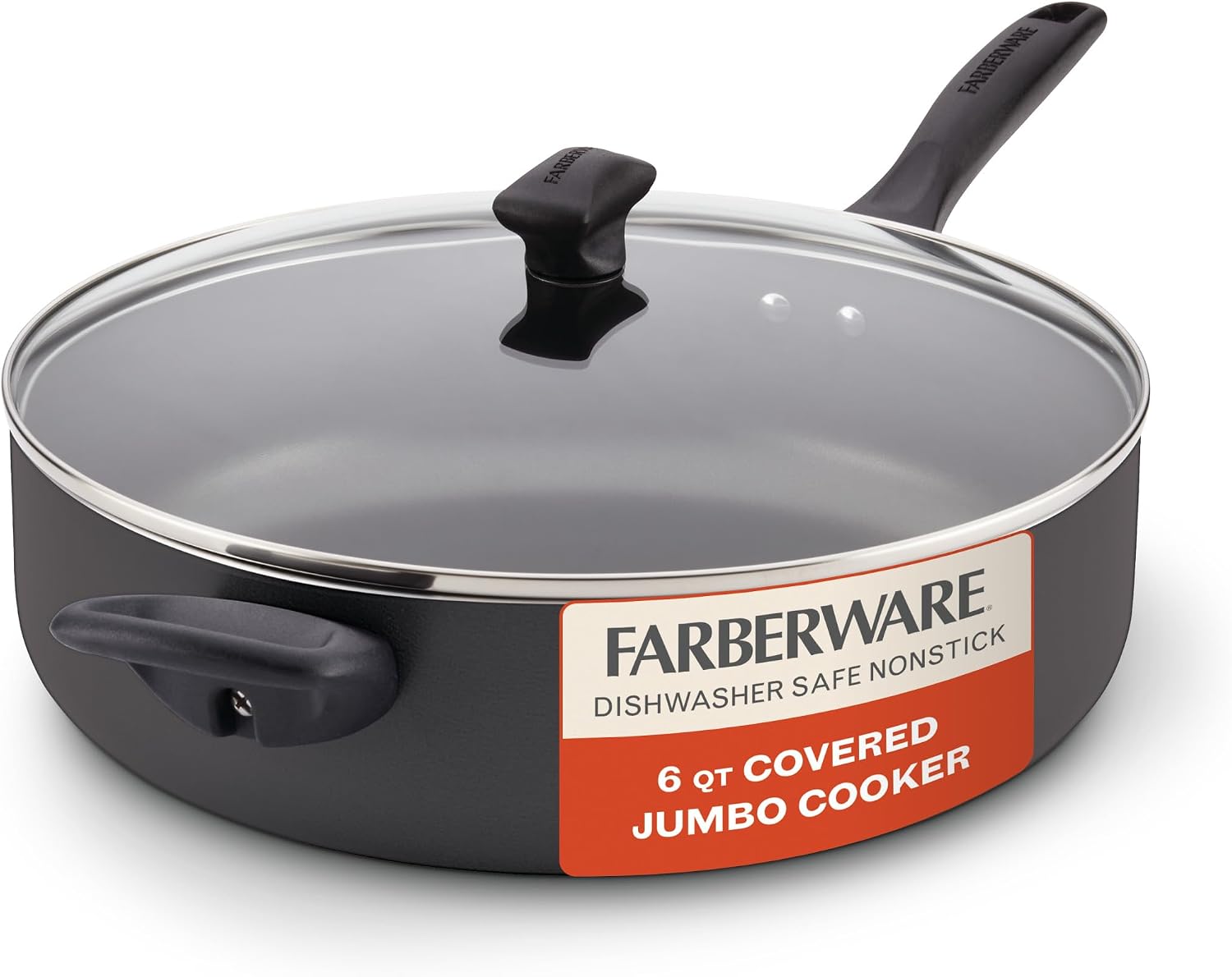
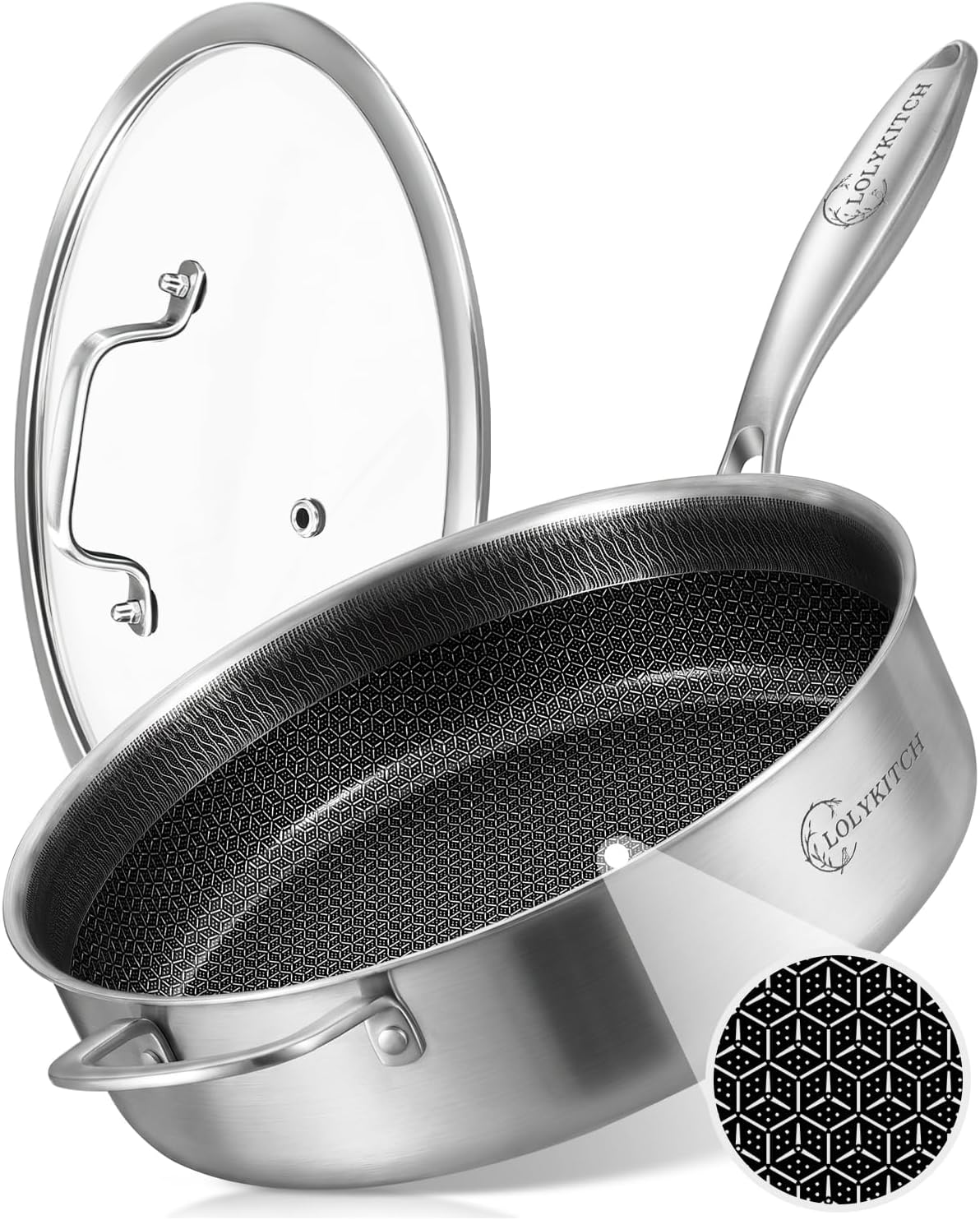
Appliances · Buying Guide
Best Large Skillet With Lid Options for Family Meals and Everyday Cooking
Finding the right cookware for family-sized meals requires balancing generous capacity, even heat distribution, and reliable nonstick surfaces. A large skillet with a lid serves as an essential workhorse in any home kitchen, easily handling deep frying, braising, simmering, and large-batch searing without crowding ingredients or causing messy stovetop splatters during busy meal preparations.
Modern deep skillets come equipped with supportive helper handles, tempered glass covers, and various durable material compositions ranging from hard-anodized aluminum to multi-clad stainless steel. Evaluating these options based on your specific stovetop compatibility, oven safety limits, and cleanup preferences helps you select a dependable pan that meets daily cooking demands effortlessly.
As an Amazon Associate, StacyLaughs earns from qualifying purchases.
Buying guide
Capacity and Dimensions for Family Cooking
Choosing the right capacity ensures your large skillet easily handles family meals without crowding ingredients or spilling over the edges during active stirring. Models range from four-and-a-half to six quarts, providing ample room for stews, deep frying, and large batches of meat. Consider your typical household meal size and available burner space before purchasing a wider pan.
External dimensions also dictate how well the skillet fits inside your kitchen cabinets and on your stovetop grates. Helper handles add extra length to the total footprint, so measure your storage areas and dishwasher space carefully. Ensuring proper clearance prevents storage frustrations and guarantees comfortable daily handling during your regular cooking routines.
Material Composition and Heat Distribution
Material choice directly impacts how fast and evenly your deep skillet heats across the cooking surface. Aluminum and hard-anodized aluminum constructions provide rapid thermal transfer to eliminate troublesome hot spots during meal preparation. Multi-clad stainless steel cores add robust durability and support high-heat culinary techniques like searing multiple thick chops and browning large amounts of ground meat.
Heavy-gauge metals also resist warping over time, ensuring your pan sits completely flat on the burner surface without spinning or sliding. Selecting the right metal composition balances your preference for lightweight daily handling versus structural sturdiness. Match the material benefits to your standard cooking habits for long-lasting kitchen performance.
Stovetop Compatibility and Heat Sources
Before selecting a large skillet, carefully verify that its base construction matches your specific kitchen stove type. Modern induction cooktops require dedicated magnetic metal bases, such as specially bonded cast aluminum plates or multi-clad stainless steel layers. Traditional gas, electric coil, and smooth glass-top stoves accommodate standard aluminum cookware without requiring specialized magnetic base engineering.
Checking compatibility beforehand prevents purchasing a pan that fails to heat properly on your particular stove setup. Reviewing manufacturer specifications ensures seamless daily operation across your kitchen appliances. Matching your cooktop to the correct cookware base guarantees efficient energy transfer and reliable cooking results every time you prepare a family recipe.
Nonstick Coatings and Maintenance Requirements
Nonstick surfaces simplify food release and reduce the need for excessive cooking oils during your daily meal preparation routines. Options range from traditional nonstick coatings and titanium finishes to ceramic-coated honeycomb textures designed for enhanced browning power. Each coating type provides distinct practical advantages for sliding delicate foods or releasing sticky sauces cleanly without heavy scrubbing.
Maintenance requirements dictate whether a pan is fully dishwasher safe or strictly demands gentle hand washing with mild soap. Following manufacturer care instructions extends the operational lifespan of the nonstick layer and preserves daily cooking performance. Using non-metal utensils and avoiding extreme temperature shocks further protects the interior coating surface from premature wear.
Handle Design and Oven Safety Limits
Comfortable handles and secure helper grips make transporting a heavy, filled skillet much safer around the kitchen. Dual-riveted stainless steel, silicone-wrapped, and bakelite handles offer different tactile experiences and heat-resistance levels during active stovetop use. A sturdy helper handle provides essential balance when lifting extra-large pans filled with dense stews or heavy family meals.
Oven safety limits determine whether your skillet can transition smoothly from stovetop searing to oven roasting. Temperature ratings vary widely, ranging from three hundred degrees up to five hundred degrees Fahrenheit depending on specific handle materials and glass lid tolerances. Always check these maximum thresholds before placing your cookware into a preheated oven.
Lids and Steam Control Features
Glass lids allow you to monitor simmering sauces and braising meats without lifting the cover and losing valuable heat and moisture. Shatter-resistant tempered glass construction adds everyday durability, while integrated steam vents help manage moisture levels during prolonged simmering sessions. A well-fitting lid traps heat effectively to accelerate overall cooking times for large family dinners.
Inspecting lid handle construction and specific oven temperature limits ensures the entire cookware set performs reliably across various recipes. Some glass lids feature lower maximum heat thresholds than their corresponding pan bodies, requiring careful removal during high-temperature roasting tasks. Matching lid features to your cooking style enhances overall kitchen convenience.
Frequently asked questions
What size family can a six-quart large skillet feed?
A six-quart large skillet is specifically designed to accommodate meals for larger households, typically serving up to six people comfortably. The generous capacity and extra-deep sides provide ample room for preparing big batches of chili, thick stews, or large family-sized stir-fries without crowding the ingredients or causing messy stovetop spills. This sizing makes it an ideal everyday workhorse for busy kitchens where cooking in volume is necessary, eliminating the frustration of cramped cookware when preparing dinner for a hungry household.
Can I use metal utensils on a nonstick skillet with a lid?
Using metal utensils on nonstick skillets is generally discouraged unless the manufacturer explicitly specifies that the coating is metal-utensil safe, such as certain hardened titanium or textured hybrid surfaces. Standard nonstick coatings can easily scratch, peel, or degrade when scraped with metal spatulas or whisks, which compromises food release performance over time. To extend the lifespan of your pan, opt for wooden, silicone, or heat-resistant plastic utensils that protect the delicate interior coating from unnecessary wear and surface damage during daily cooking.
Are all large skillets compatible with induction cooktops?
Not all large skillets are compatible with induction cooktops, because induction heating requires magnetic base materials like stainless steel or specially bonded cast aluminum plates. Cookware made entirely of standard aluminum or certain non-magnetic alloys will not heat on an induction burner. Always review the manufacturer specifications before purchasing if you cook on an induction stove, ensuring the pan features an induction-compatible base that sits flat and distributes heat evenly across the magnetic surface.
What is the difference between hand washing and dishwasher-safe pans?
The primary difference lies in convenience versus the long-term preservation of the nonstick coating. While dishwasher-safe pans can withstand automatic cleaning cycles, harsh dishwashing detergents and high water temperatures can gradually degrade nonstick performance over time. Hand washing with mild soap and a soft sponge is frequently recommended by manufacturers to extend the lifespan of the coating. Choosing your cleaning method depends on whether you prioritize effortless cleanup convenience or maximizing the operational durability of your skillet's nonstick surface.
Why do some large skillets include helper handles?
Large skillets with capacities ranging from five to six quarts become heavy and awkward to lift when filled with food, liquids, or dense stews. Helper handles provide a second gripping point opposite the main handle, allowing for balanced, two-handed transport from the stovetop to the oven or countertop. This extra stability prevents accidental spills and gives home cooks greater control when maneuvering a hot, loaded pan during busy meal preparation tasks and everyday kitchen workflows.