Appliances · Buying Guide
Best Large Stainless Steel Wok Options for Everyday Cooking
Finding the right cookware for high-heat stir-frying, deep frying, and large family meals requires balancing heat distribution and physical control. Choosing a spacious large stainless steel wok provides the durability and expansive cooking space needed to handle voluminous ingredients without overcrowding the cooking surface or spilling hot oil onto your surrounding kitchen counters.
Modern multi-clad options and traditional handle configurations bring distinct handling traits to your kitchen setup. Whether you routinely cook on smooth induction burners, traditional gas stoves, or flat glass cooktops, carefully evaluating core metal layers, rim designs, and lid inclusions ensures you select a pan perfectly suited for your everyday meal preparation routine.
As an Amazon Associate, StacyLaughs earns from qualifying purchases.
Buying guide
Material Construction and Heat Distribution
Evaluating the core metal layers of a large stainless steel wok directly influences how evenly your ingredients cook during high-temperature meal preparation routines. Premium multi-clad options typically sandwich a highly conductive aluminum core entirely between durable exterior layers of high-grade steel, spreading thermal energy quickly and uniformly from the flat base up the steep sloping walls to accommodate large family meal portions easily.
This robust construction actively prevents localized hot spots that can easily burn delicate aromatics or scorch noodles during intense stir-frying sessions. Selecting a properly bonded multi-layered pan ensures reliable temperature consistency across diverse kitchen cooktop types, including smooth induction surfaces, traditional gas burners, and electric coils, supporting versatile everyday cooking without unexpected performance drops.
Handle Design and Thermal Management
Handle construction determines how comfortably you can maneuver a heavy, fully-loaded wok across your kitchen surfaces during active cooking sessions. Ergonomic stainless steel designs often feature hollow or securely riveted configurations specifically engineered to stay cool to the touch over open gas flames or electric heating elements, reducing the risk of accidental burns when tossing ingredients.
Alternatively, traditional wooden handles offer natural insulation against high thermal transfer, though these components usually require strict manual washing and cannot enter the oven for broiling tasks. Assessing your personal cooking style, storage limitations, and preference for stovetop comfort versus oven finishing will successfully guide your final handle material selection.
Capacity and Physical Dimensions
Choosing the correct pan capacity prevents frustrating overcrowding when preparing large batches of sliced vegetables, seared meats, or multi-person pasta dinners. Available capacities frequently range from five quarts upwards, accompanied by wide rim diameters measuring thirteen or fourteen inches across, providing ample room for vigorous tossing without spilling ingredients onto surrounding kitchen counters.
While larger cooking surfaces accommodate voluminous family meals easily, they also demand substantially more storage space inside kitchen cabinets or on hanging pot racks. Carefully measure your available storage dimensions, cabinet clearances, and stovetop burner spacing before committing to an oversized wok model to ensure seamless integration into your kitchen.
Lid Inclusions and Moisture Control
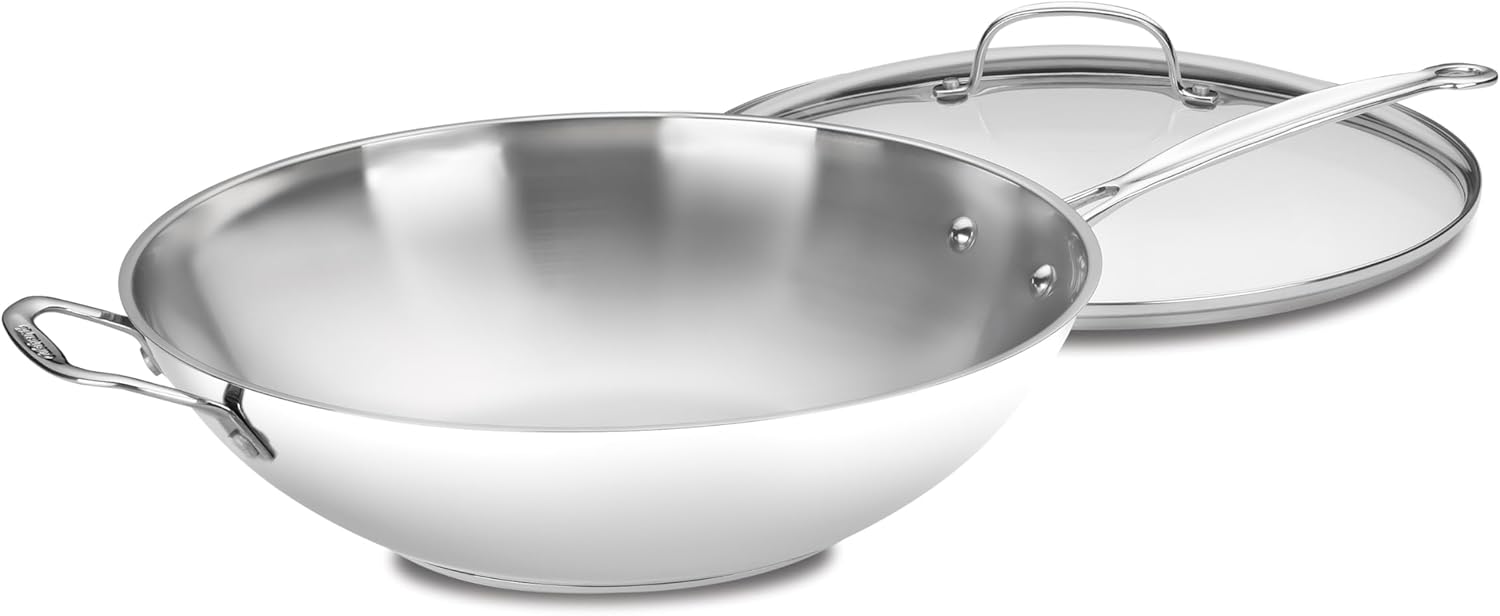
Deciding whether your cookware package includes a cover depends heavily on your preferred cooking methods and favorite everyday family recipes. Heavy-duty tempered glass lids allow you to closely monitor simmering sauces, braised meats, and steaming vegetables without lifting the cover and losing valuable thermal energy during the active cooking process, keeping flavors securely locked inside.
Conversely, models lacking an included lid require you to source separate universal covers if you plan to simmer liquids, steam ingredients, or retain moisture during extended cooking stages. Checking package component details carefully before purchasing ensures your chosen wok matches your exact moisture containment, steaming, and general recipe preparation requirements.
Clean-Up and Maintenance Requirements
Maintaining a stainless steel wok involves carefully understanding manufacturer cleaning guidelines, whether through automated dishwashers or traditional manual hand washing routines. Uncoated brushed metal interiors often handle routine dishwasher cycles quite well, though proper preheating techniques remain entirely essential prior to cooking to prevent stubborn food from sticking to the base.
Other pan models specifically mandate hand-wash-only care to protect natural wooden handles, riveted joints, or specialized polished exterior finishes from dulling or degrading over time. Aligning your daily kitchen cleanup habits with explicit product care instructions preserves the structural integrity and aesthetic appeal of your cookware surface for many years of service.
Cooktop Compatibility and Versatility
Ensuring your selected cookware works seamlessly with your kitchen stove is vital for achieving effective heat transfer and maintaining overall cooking safety during daily meal prep tasks. Most stainless steel woks support traditional gas burners, electric coils, and smooth induction cooktops through stable flat base designs that maintain constant physical contact with diverse thermal sources.
Oven compatibility further expands your cooking flexibility, allowing you to transition hot dishes directly from stovetop searing to oven broiling or baking when removable or heat-resistant handles permit. Carefully reviewing specific stove and oven temperature compatibility guidelines guarantees reliable, versatile performance across your entire kitchen appliance setup without encountering unexpected operational limitations.
Frequently asked questions
How do I prevent food from sticking to an uncoated stainless steel wok?
To achieve a natural food release on an uncoated stainless steel wok, preheat the pan dry over medium heat for approximately two minutes until water droplets dance across the surface when flicked. Once properly heated, add your cooking oil and swirl it around before introducing ingredients. This thermal preparation creates a temporary barrier that significantly reduces food sticking. Additionally, ensuring your food is properly thawed and dried before cooking helps maintain a smooth release during high-heat stir-frying tasks.
Can I use a stainless steel wok on an induction cooktop?
Yes, many stainless steel woks feature flat-bottom designs and magnetic metal cores that make them fully compatible with smooth-surface induction cooktops, gas burners, and electric coils. The flat base ensures stable, direct contact with the glass induction surface for efficient energy transfer. However, you should always check the manufacturer specifications to confirm compatible devices before purchasing, as certain traditional rounded-bottom styles require special adapter rings to function properly on flat glass or electric cooktops in your kitchen.
Are stainless steel woks dishwasher safe?
Dishwasher compatibility depends entirely on the specific product's construction and attached components. Many multi-clad stainless steel woks with metallic or removable handles are rated as dishwasher safe for convenient cleanup. Conversely, models featuring traditional wooden handles typically require manual hand washing to prevent the wood from swelling, cracking, or degrading over time. Always consult the manufacturer product care instructions to determine whether placing your specific wok in the dishwasher is recommended or if hand washing is required.
What is the advantage of a multi-ply stainless steel construction?
Multi-ply construction, such as tri-ply or five-layer builds, sandwiches a highly conductive aluminum core between layers of durable stainless steel. This advanced design promotes ultra-fast, edge-to-edge heat conductivity across the entire cooking surface, effectively eliminating annoying hot spots that can scorch food. It allows for precise temperature regulation whether you are searing meats, tossing noodles, or simmering sauces, ensuring consistent and professional culinary results during everyday meal preparation on your home stovetop.
How do I clean a stainless steel wok after high-heat cooking?
After high-heat cooking, allow the wok to cool down naturally to avoid warping from thermal shock, especially before exposing hot glass lids to cold water. If food residue remains stuck to the brushed or polished interior, soak the pan in warm soapy water to loosen debris. Use non-abrasive sponges or brushes to clean the surface, following the manufacturer care guidelines. For stubborn spots, mild cleaning pastes safe for stainless steel can help restore the brilliant finish without damaging the metal.