Appliances · Buying Guide
Best Large Stock Pot For Canning And Home Preservation
Finding the right large stock pot for canning transforms how you handle harvest surpluses, fruit preserves, and large batch cooking projects at home. Selecting a vessel with proper heat distribution and a flat, compatible base construction ensures your ingredients process evenly without scorching or damaging your glass jars during the active heating cycle.
Whether you are processing seasonal acidic fruits, simmering savory broths, or cooking large meals for family gatherings, matching your specific stovetop type and volume needs with the right cookware makes a noticeable difference. Explore these carefully curated options to find a reliable, durable setup ideally suited for your kitchen requirements and home preservation tasks.
As an Amazon Associate, StacyLaughs earns from qualifying purchases.
Buying guide
Material Composition and Durability
Selecting the right material for your large stock pot dictates how long the cookware will last and how well it handles regular exposure to moisture, heat, and acidic ingredients. Stainless steel models provide exceptional resistance to corrosion, rust, and everyday wear, ensuring your investment withstands countless cooking and preservation cycles over the years. Quality manufacturing prevents structural degradation during prolonged boiling sessions.
Non-reactive interior layers ensure that your foods do not pick up metallic tastes during long simmering or canning cycles. Look for heavy-duty grades that maintain their structural integrity without warping under intense burner heat, keeping your cookware reliable for heavy kitchen tasks. This material reliability protects your recipes from unwanted flavor alterations.
Capacity Requirements for Volume Cooking
Determining the correct capacity for your large stock pot depends heavily on the volume of food you plan to process at one time. Pots ranging from twenty to twenty-one point five quarts comfortably accommodate standard batch sizes and typical jar loads for home canning enthusiasts processing seasonal garden yields. These sizes successfully balance physical manageability with high-volume output.
Larger thirty-five quart options serve high-volume needs for feeding crowds or preparing massive batches of soup and bone broth. Assess your typical batch sizes carefully before purchasing to avoid acquiring a vessel that is either too restrictive for large gatherings or overly cumbersome for daily storage and heavy lifting tasks.
Stovetop Compatibility and Heat Distribution
Ensuring your stock pot works seamlessly with your specific kitchen range is vital for achieving consistent cooking results and safe preservation processing. Many modern stainless steel pots feature encapsulated or impact-bonded bases that deliver uniform heat dispersion across gas, electric, glass top, and induction ranges without causing burner inefficiencies. This uniform heating is absolutely critical for successful canning.
An even base construction minimizes troublesome hot spots, which prevents localized food scorching and protects sensitive glass cooktops from thermal stress during prolonged boiling sessions. Checking stove compatibility beforehand ensures your cookware performs reliably regardless of your specific kitchen setup or individual burner configuration.
Lid Design and Visual Monitoring
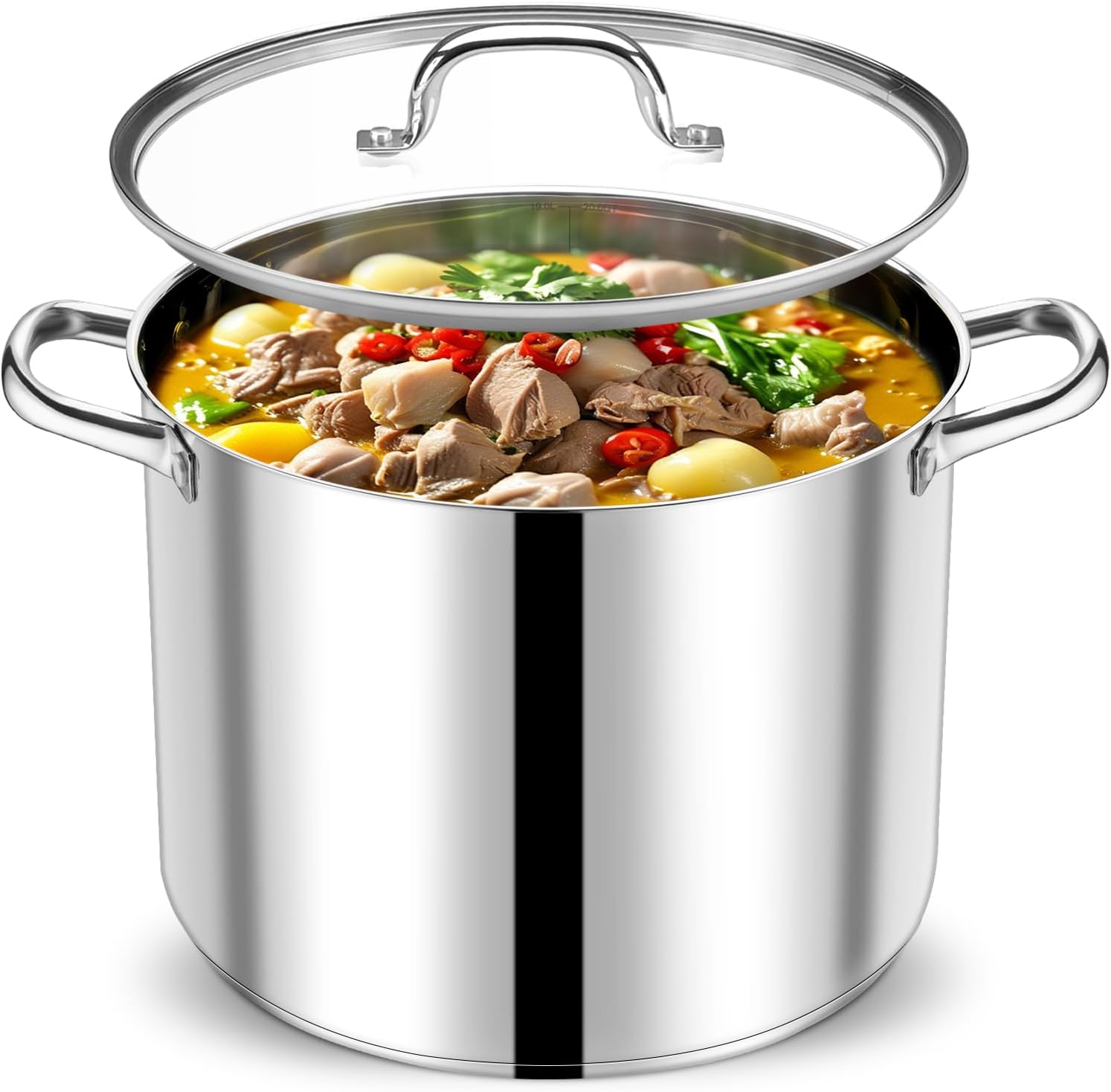
The choice between a glass lid and a solid metal lid significantly impacts how you monitor your culinary creations and preservation batches. Tempered glass lids provide visual transparency, allowing you to check water activity and simmering progress without lifting the cover and losing valuable heat or steam pressure during active processing cycles.
Solid stainless steel lids trap moisture and pressure efficiently while offering enhanced durability against accidental kitchen drops. Consider whether you prefer the real-time visibility of glass or the rugged simplicity of all-metal construction when choosing your pot to match your preferred cooking style, storage habits, and routine safety practices.
Handles and Ergonomic Lifting Comfort
Lifting a heavy, liquid-filled stock pot requires sturdy handles designed for a secure grip and stable control. Look for pots featuring securely riveted handles that distribute weight evenly and prevent structural failure when moving heavy loads across the kitchen floor or countertop surfaces. Reliable attachment methods are absolutely essential for overall kitchen safety.
Silicone wrapping on metal wire handles adds comfort by shielding your hands from conducted heat during prolonged boiling tasks. Evaluating handle construction protects you from accidental slips and ensures confident maneuvering of your large cookware during demanding cooking sessions and home canning routines. Ergonomic shapes comfortably accommodate different hand sizes for all users.
Included Accessories and Preservation Kits
Purchasing a stock pot that includes specialized canning accessories can streamline your preservation projects right out of the box. Kits that bundle jar racks, lifter tongs, funnels, and magnetic lid lifters save you time and effort by eliminating the need to source individual tools separately from different retail suppliers. Comprehensive starter kits offer immediate operational utility for all users.
Evaluate whether you need an all-inclusive set or a standalone pot depending on your existing kitchen inventory and home preservation goals. Choosing the right bundled configuration ensures you possess all necessary implements for safe and efficient home canning without unnecessary extra expenses or missing core components during active processing tasks.
Frequently asked questions
Can I use a standard stock pot for water bath canning?
You can use a standard stock pot for water bath canning as long as it is deep enough to allow at least one to two inches of boiling water to cover the tops of your filled jars during processing. Additionally, you must use a canning rack inside the pot to keep jars elevated off the bottom, preventing direct contact with high heat that can cause cracking. If your stock pot lacks a rack or sufficient depth, dedicated canning pots provide safer and more reliable performance for preservation tasks.
How do I choose between a water bath canner and a steam canner?
Choosing between a water bath canner and a steam canner depends on your preferred preservation methods and water usage preferences. Traditional water bath canning submerges jars completely in boiling water, which works well for high-acid foods like fruits and jams. Steam canners use a shallow amount of water to generate a steam environment, requiring less time to reach boiling temperatures and saving water during the heating process. Some versatile pots support both methods by utilizing a reversible rack insert for convenience.
Are stainless steel stock pots safe for induction cooktops?
Many stainless steel stock pots are fully compatible with induction cooktops, provided they feature an encapsulated or impact-bonded base constructed with magnetic metals. Induction cooktops rely on magnetic fields to generate heat directly within the cookware base, meaning standard non-magnetic aluminum or copper pots will not function unless bonded with a compatible steel layer. Always check the manufacturer specifications to verify induction compatibility before purchasing a large stock pot for your specific glass or induction kitchen range.
How should I clean and maintain my stainless steel canning pot?
Cleaning and maintaining your stainless steel canning pot is straightforward because most models are dishwasher safe and feature smooth polished interior surfaces that resist food sticking. For routine care, wash the pot with warm soapy water and a soft dishcloth to preserve the exterior shine and prevent abrasive scratches. If mineral deposits or discoloration appear from boiling water during canning cycles, applying a mild stainless steel cleaner or a vinegar solution will help restore the original polished appearance effectively.
What capacity stock pot do I need for processing quart jars?
Processing quart jars effectively requires a stock pot with sufficient height and a capacity of at least twenty to twenty-one point five quarts. This size accommodates the taller height of quart jars while leaving adequate space for the required water level above the jar lids and a bottom jar rack. Smaller pots lack the necessary vertical clearance to submerge quart jars properly, making twenty-quart or larger models the ideal choice for standard home preservation projects involving larger glass containers.