Appliances · Buying Guide
Best Le Creuset Paella Pan Choices and Cast Iron Cookware
Selecting the right pan for Spanish rice dishes and broad-surface searing involves balancing material performance, heat retention, and stovetop compatibility. Whether exploring enameled cast iron or traditional carbon steel, home cooks encounter distinct manufacturing methods that change how heat moves across the base during active preparation.
This overview examines five distinct options, including enameled cast iron and bonded metal variants, detailing their known attributes to help match your kitchen setup and cooking habits without relying on speculative claims or unverified performance guarantees.
As an Amazon Associate, StacyLaughs earns from qualifying purchases.
Buying guide
Material Composition and Thermal Conductivity
Choosing cookware materials like carbon steel, tri-ply stainless steel, or enameled cast iron directly dictates how heat transfers from your burner to the food. Carbon steel heats rapidly and adjusts swiftly, making it exceptionally responsive to temperature fluctuations during active stovetop preparation.
Bonded stainless steel spreads heat evenly via internal aluminum cores, preventing localized hot spots. Enameled cast iron offers unmatched thermal retention, keeping food warm long after burners shut off. Evaluating your preferred cooking style helps determine which material profile supports your daily recipes.
Stovetop Compatibility and Heat Sources
Burner compatibility varies significantly across different pan constructions, influencing where and how you can cook. Certain models accommodate induction cooktops through magnetic base layers, while others function best on gas flames, electric coils, or open campfire setups.
Verifying your kitchen appliances before purchasing ensures seamless integration. Selecting a pan matching your primary cooking source prevents uneven heating issues and protects the structural integrity of the cookware over years of frequent culinary use.
Size, Capacity, and Portion Planning
Pan diameter and volumetric capacity determine how many servings you can prepare in a single batch. Wide, shallow designs encourage rapid liquid evaporation, which is essential for achieving proper textures in traditional rice dishes and broad-surface sautés.
Compact models suit smaller households or limited storage spaces, whereas larger fifteen-inch variants accommodate generous family gatherings. Balancing physical dimensions with your typical meal volume prevents overcrowding ingredients and ensures thorough, uniform cooking results.
Surface Finishes and Maintenance Needs
Interior surface options range from pre-seasoned carbon steel and quantanium nonstick to polished stainless steel and satin enamel. Each finish requires specific cleaning routines, with many models specifying hand washing to preserve protective patinas or exterior coatings.
Understanding maintenance requirements helps maintain cookware longevity. Non-abrasive cleaning pads and manual washing steps protect specialty finishes from premature wear, ensuring reliable performance across countless meals without damaging sensitive exterior or interior layers.
Handle Design and Ergonomic Lifting
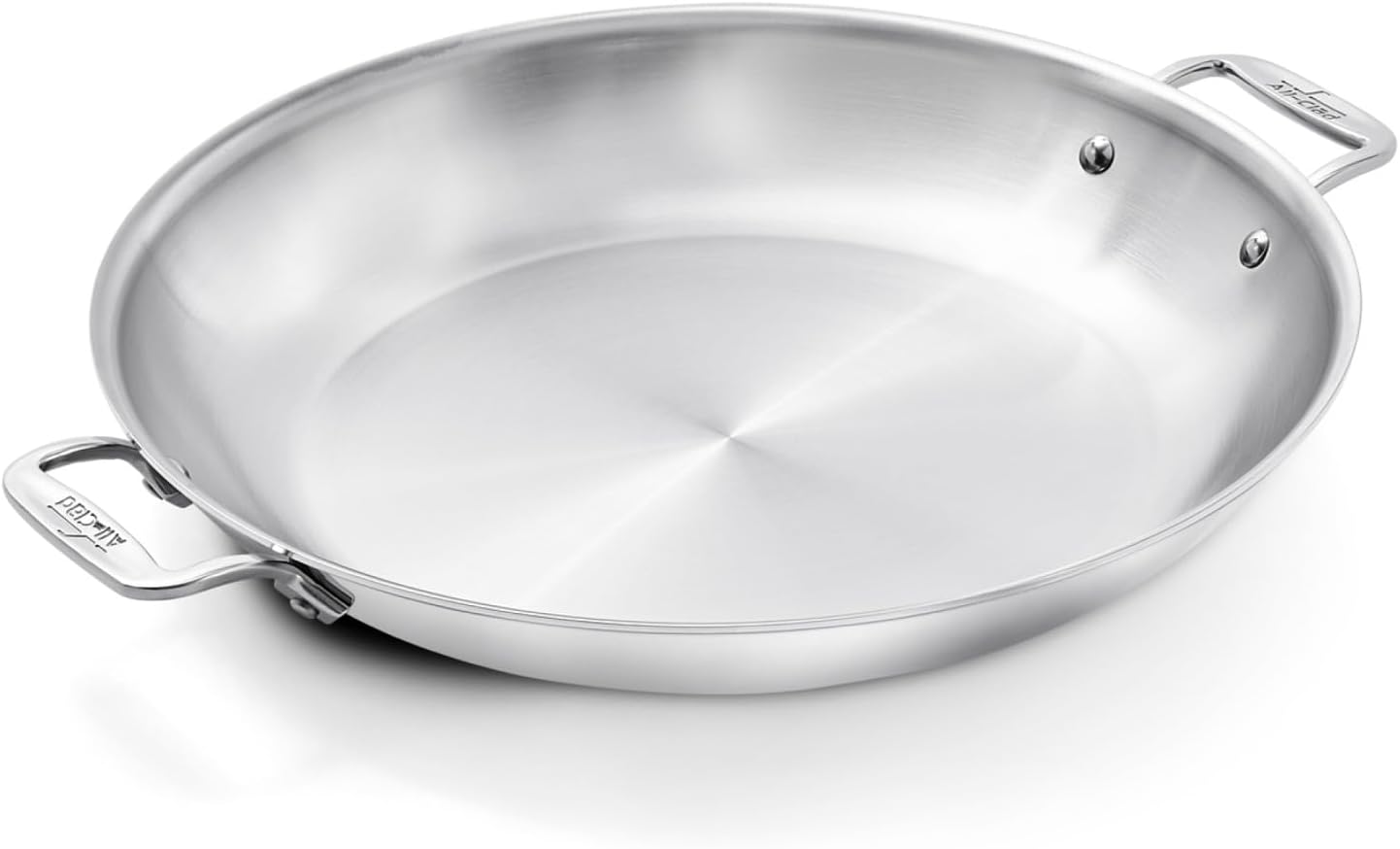
Handle construction affects safety, maneuverability, and storage convenience when moving heavy pans filled with food. Solid stainless steel riveted handles provide secure gripping points, while detachable mechanisms simplify placement in tight ovens.
Cast iron variants incorporate integrated loops or handles designed for balanced lifting despite substantial material weight. Assessing how handles attach and whether they remain cool during stovetop use enhances overall kitchen safety and cooking comfort.
Edge Design and Pouring Precision
Flared edges and sloped sides expand the active cooking perimeter while facilitating smooth liquid transfers. Well-designed rims minimize spills and drips when pouring sauces, broths, or cooking liquids out of the main vessel.
Examining rim profiles ensures you can stir, layer, and pour ingredients cleanly without messing up stovetops or counters. Practical edge engineering complements the pan's primary surface area, improving everyday usability during complex meal preparation tasks.
Frequently asked questions
What stovetops work with carbon steel pans?
Carbon steel pans generally support multiple heat sources, including electric coils, gas burners, smooth surface induction, and smooth surface non-induction cooktops. Because they withstand high temperatures up to 660 degrees Fahrenheit, they are also frequently used for outdoor grilling and open campfire cooking. Checking the manufacturer specifications ensures your specific model matches your kitchen appliances or outdoor setup before you begin cooking meals.
Can tri-ply stainless steel pans go in the dishwasher?
Certain tri-ply stainless steel pans are listed as dishwasher safe, allowing automated cleaning cycles after preparing meals. However, manufacturers often recommend hand washing to preserve the exterior shine and overall finish over the long term. Hand washing prevents potential dulling caused by harsh detergent chemicals and high water temperatures found in commercial or home dishwashers.
Why do induction cookers cause some pan bases to bulge?
Tri-ply stainless steel features rapid thermal conductivity. When heated quickly on a magnetic induction cooker, the bottom may slightly bulge upward due to normal thermal expansion. Manufacturers note this behavior is completely normal and not a structural defect; the base typically settles back to its flat position as the cookware cools down completely after cooking.
How should enameled cast iron pans be cleaned?
Enameled cast iron cookware requires careful cleaning following manufacturer instructions. Many enameled cast iron items specify dishwasher safety, but utilizing warm soapy water and gentle cleaning techniques helps protect the exterior enamel and interior satin finish from chipping, staining, or dulling over time. Always allow the pan to cool before washing to prevent thermal shock.
What benefits do detachable handles provide?
Detachable handles offer significant versatility by allowing large pans to fit easily into compact home ovens or restricted kitchen cabinets. By removing the handle, storage space requirements decrease dramatically, and baking tasks inside standard ovens become much simpler. This feature combines the generous cooking area of a large pan with convenient storage capabilities.